TLDR
• Core Points: MSI’s GPU Safeguard actively monitors power cables to detect potential issues, enhancing safety for high-end GPUs.
• Main Content: Four Titanium-rated PSUs (MPG Ai1600TS, MPG Ai1300TS PCIe5, MAG A1200PLS, MAG A1000PLS PCIe5) power MSI graphics solutions with SiC MOSFETs and 105°C capacitors.
• Key Insights: Proactive cable monitoring complements robust PSU design, reducing risk of power delivery faults during demanding workloads.
• Considerations: Real-world effectiveness depends on integration with various GPUs and user adherence to recommended cabling practices.
• Recommended Actions: Users should ensure proper cabling, keep firmware/BIOS up to date, and follow MSI guidance for PSU and GPU configurations.
Content Overview
MSI has introduced a GPU safety feature designed to shield systems from power-related faults during intense graphical workloads. The MSI GPU Safeguard program emphasizes proactive monitoring of power cables to identify potential issues before they escalate into instability, component damage, or unexpected shutdowns. This approach aligns with the growing complexity of modern gaming rigs and professional workstations, where high-performance GPUs demand stable and reliable power delivery.
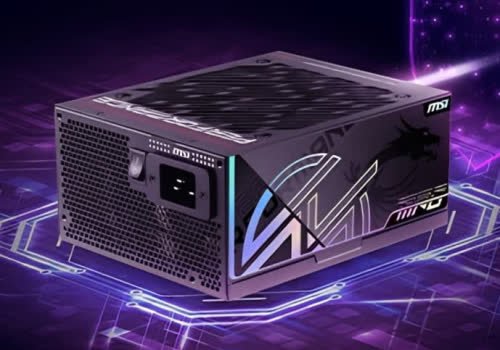
MSI’s latest PSU lineup supports these safety objectives while delivering top-tier efficiency and longevity. The four models—MPG Ai1600TS, MPG Ai1300TS PCIe5, MAG A1200PLS PCIe5, and MAG A1000PLS PCIe5—represent MSI’s commitment to robust power infrastructure for contemporary graphics cards and compute accelerators. All four units are Titanium efficiency-rated, indicating exceptionally high energy conversion efficiency across a range of loads. In addition, they employ high-performance silicon carbide (SiC) MOSFETs and 100 percent Japanese 105°C capacitors, underscoring the emphasis on durability, thermal resilience, and stable output under demanding conditions.
This article provides an in-depth look at how MSI’s GPU Safeguard integrates with the broader PSU ecosystem, the technical attributes of the four power-supply units, and the potential impact on system reliability and user experience. It also considers the practical implications for enthusiasts and professionals who push their hardware with overclocked GPUs, memory-heavy tasks, or sustained rendering workloads.
In-Depth Analysis
MSI’s GPU Safeguard concept reflects a trend in PC hardware design where safety, reliability, and intelligent monitoring are treated as integral features rather than afterthought add-ons. The core idea is to monitor key points in the power delivery chain—particularly the cables that connect power supply units to GPUs and other components—to detect anomalies that could signal failing connectors, loose pins, degraded insulation, or insufficient gauge for a given load. By catching these conditions early, the system can alert the user, throttle performance, or trigger a safe shutdown to prevent damage.
Power delivery remains a critical bottleneck in high-performance PC configurations. Modern GPUs, especially those with high boost clocks and substantial memory bandwidth, place significant demand on both the PSU and the cabling harness. Even with high-quality PSUs, cable issues can lead to voltage drops, hot spots, or intermittent faults that hamper stability during gaming marathons, long rendering sessions, or synthetic stress tests. MSI’s safeguard approach seeks to reduce the likelihood of such scenarios by combining hardware-level protections with software or firmware-level monitoring that can interpret cable health signals in real time.
Turning to the specific PSUs in MSI’s lineup, the three key characteristics shared across all four models are Titanium efficiency, PCIe5 support, and the integration of SiC MOSFETs paired with high-grade capacitors. Titanium efficiency denotes extremely efficient energy conversion, especially across a wide range of loads. This efficiency is not only beneficial for electricity bills and heat management but also contributes to system stability, as cooler and more consistent power delivery can reduce thermal stress on connected components. The PCIe5-capable units reflect MSI’s alignment with the latest interconnect standard, enabling higher data bandwidth and faster device communication, which can indirectly influence power demand patterns and the efficiency profile of the entire system.
Silicon carbide MOSFETs are prized for low switching losses and high-temperature performance relative to traditional silicon devices. When paired with Japanese-made 105°C capacitors, the overall robustness of the PSU increases, particularly under surge conditions or extended periods of heavied use. The use of high-temperature capacitors helps maintain performance even when ambient temperatures rise, a common situation in densely packed mid- to high-end builds.
In practice, the GPU Safeguard feature would be beneficial during scenarios that stress the power delivery path: overclocking attempts, benchmark sessions that push peaks in GPU utilization, or long durations of heavy compute work. The real-world impact would depend on the specific integration of the safeguard technology with MSI’s software stack, how the monitoring signals are surfaced to users, and whether automated protective actions (for example, throttling or staged shutdown) are enabled by default or require user confirmation.
From a system-design perspective, a holistic approach to power reliability also involves cable quality and fit. Even with a top-tier PSU, using mismatched or low-quality cables can compromise power delivery, especially when GPUs demand rapid transient currents. MSI’s emphasis on cable monitoring suggests a broader intent to educate users about the importance of proper cabling and to mitigate risk from the most common failure vectors in high-performance desktop builds.
The four PSUs under discussion likely share a similar module architecture: robust power stages to handle high loads, PCIe connectors appropriate for next-generation GPUs, and a focus on long-term durability. The distinct models can be differentiated by capacity (wattage), form factor, and PCIe5 compatibility level. The TITANIUM-rated efficiency ensures that even at partial loads, the units maintain excellent efficiency, minimizing heat and reducing the burden on the system’s cooling strategy. This is particularly relevant for enthusiasts who keep their rigs under heavy usage for extended periods, such as during rendering, streaming, or competitive gaming.
MSI’s strategy also has implications for the broader aftermarket and user education. As more OEMs and third-party partners implement proactive safety features, end-users can expect more integrated monitoring, better fault detection, and clearer guidance when issues arise. However, this also adds a layer of complexity that requires users to be aware of warning signals and recommended maintenance actions. The balance between automation and user control will be critical to ensure that safety features do not become a source of confusion or unnecessary interruptions to workflows.

*圖片來源:Unsplash*
Practical considerations for potential buyers include confirming compatibility with their existing GPUs and motherboards, ensuring the chosen PSU’s connectors and rails align with their system’s power requirements, and integrating the PSU into a well-ventilated chassis to maximize cooling efficiency. For systems with multi-GPU configurations, the importance of well-designed power distribution becomes even more pronounced, and a safeguarding mechanism could be a valuable addition to overall reliability.
Future implications of MSI’s GPU Safeguard concept may extend beyond individual PSUs. If successful, similar approaches could become standard in the PSU market, with more vendors adopting real-time cable health monitoring as a core feature. This would push cable manufacturers to improve connector durability and cable integrity, further reducing failure rates in high-performance builds. It could also prompt more sophisticated software ecosystems that aggregate electrical measurements across components, enabling users and technicians to diagnose and optimize power delivery with unprecedented precision.
While the GPU Safeguard presents a compelling safety proposition, it is essential to recognize that it is one element of a broader reliability strategy. The ultimate effectiveness depends on an ecosystem of good cables, properly rated connectors, adequate cooling, thorough system testing, and informed user practices. Users should view such features as enhancements to existing best practices rather than silver bullets that replace standard maintenance routines.
Perspectives and Impact
The introduction of proactive power-cable monitoring signals a maturing of the PC hardware landscape, where safety, reliability, and user empowerment are increasingly prioritized. For enthusiasts and professionals who rely on GPUs for extended, compute-heavy tasks, the prospect of early fault detection translates into lower risk of unexpected downtime and potential hardware damage. This aligns with a general industry trend toward smarter, self-dending components that can communicate status, anticipate problems, and guide users toward safer configurations.
From a market perspective, MSI’s approach may create healthy competitive pressure. If GPU-Safeguard-like features prove effective and user-friendly, competitors might accelerate the development of similar protections or even go further to offer end-to-end power integrity solutions, encompassing cables, connectors, and chassis cooling in a unified package. This could spur innovation in cable technologies, such as more resilient pin designs or smarter connectors that provide real-time health diagnostics to system firmware.
In terms of ecosystem impact, the move toward smarter power delivery aligns with broader trends in modularity and system scalability. As GPUs and accelerators continue to evolve, consumers will increasingly demand power platforms that can adapt to changing performance envelopes without compromising safety. Standards bodies and industry groups could respond by formalizing guidelines for cable ratings, connector durability, and diagnostic interfaces, thereby raising baseline reliability across the sector.
There are also practical considerations for system integrators and boutique builders who customize PCs for enthusiasts, content creators, and researchers. Integrating MSI’s PSUs with other components requires careful planning around electrical load distribution, cable management, and thermal design. For many builders, MSI’s GPU Safeguard could become a differentiator when marketing systems that emphasize reliability in demanding workloads, such as 3D rendering farms, AI inference rigs, or high-resolution rasterization workflows.
From a user experience standpoint, the success of GPU Safeguard hinges on clear feedback mechanisms. If a monitoring feature simply logs data without actionable guidance, users may miss opportunities to preempt failures. Conversely, if MSI’s software delivers intuitive alerts, actionable recommendations, and automatic protective actions (where appropriate), the feature can become an essential part of daily use. The balance between proactive protection and uninterrupted performance will shape how users perceive the value of such a feature.
Looking ahead, future research and development could explore deeper integration with system monitoring suites, predictive analytics (forecasting potential failures based on historical data), and cross-compatibility with other hardware platforms. The ultimate aim is to create a resilient ecosystem where electrical health is continuously monitored, interpreted, and acted upon in ways that minimize risk while maximizing uptime and performance.
Key Takeaways
Main Points:
– MSI’s GPU Safeguard introduces proactive monitoring of power cables to detect potential problems before they cause failures.
– The four PSUs in MSI’s Titanium-efficient family (MPG Ai1600TS, MPG Ai1300TS PCIe5, MAG A1200PLS PCIe5, MAG A1000PLS PCIe5) share advanced power components like SiC MOSFETs and Japanese 105°C capacitors.
– High-efficiency, high-reliability power delivery supports demanding GPU workloads and enhances overall system stability.
Areas of Concern:
– Real-world effectiveness depends on software integration, user interaction, and consistent cabling practices.
– The feature requires user awareness and proper maintenance to realize its benefits.
– Compatibility with diverse GPUs and systems may influence how universally applicable the safeguard is.
Summary and Recommendations
MSI’s GPU Safeguard represents a forward-looking step in PC hardware safety, emphasizing proactive power-cable monitoring as part of a broader strategy to improve system reliability during heavy GPU use. The four Titanium-efficient PSUs—MPG Ai1600TS, MPG Ai1300TS PCIe5, MAG A1200PLS PCIe5, and MAG A1000PLS PCIe5—offer robust electrical performance, leveraging SiC MOSFETs and 105°C capacitors to sustain stable output under demanding conditions. While this approach can reduce the risk of power-delivery issues, its success depends on effective software integration, user education, and proper cabling practices. Builders and enthusiasts should ensure compatibility with their hardware, maintain clear cable management, and follow MSI’s guidance on setup and maintenance. As power-management technologies evolve, proactive health monitoring of critical components like cables may become a new standard, pushing the industry toward safer, more reliable high-performance systems.
References
– Original: TechSpot article: MSI’s GPU Safeguard actively monitors power cables for potential problems
– Additional references (to be added by user or editor): industry commentary on PCIe5 power demands, SiC MOSFET benefits in PSUs, and cable health monitoring technologies.

*圖片來源:Unsplash*