TLDR
• Core Points: AI coding agents automate programming tasks through modular tools, collaboration among agents, and feedback loops; awareness of data, biases, and reliability is essential.
• Main Content: These agents leverage decomposition, multi-agent collaboration, and model-assisted coding with safeguards to improve speed and quality while managing risk.
• Key Insights: Strengths include rapid prototyping, task specialization, and scalable workflow; limitations involve security, reproducibility, and emergent behavior risks.
• Considerations: Always audit inputs/outputs, monitor dependencies, and ensure governance and compliance in code produced or modified by AI.
• Recommended Actions: Define clear prompts, implement testing and review steps, and adopt a disciplined deployment strategy with monitoring and rollback plans.
Content Overview
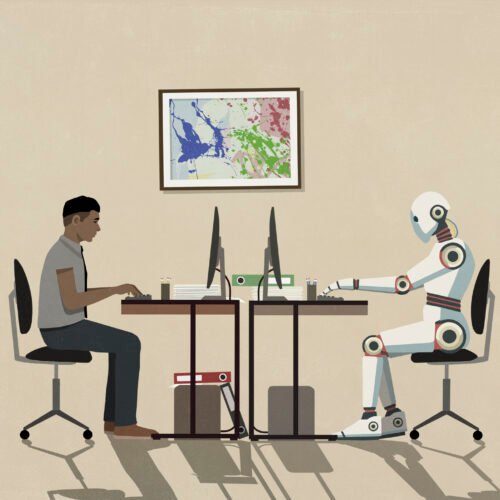
Artificial intelligence-assisted coding has moved from a novelty to a practical toolkit used by developers to accelerate software creation. At the heart of this evolution are AI coding agents—autonomous or semi-autonomous systems designed to contribute to software projects. These agents can perform a spectrum of activities, from drafting boilerplate code and writing tests to optimizing algorithms and refactoring legacy systems. The overarching objective is to reduce manual toil while maintaining or improving code quality, reliability, and maintainability. As with any powerful technology, there are trade-offs, best practices, and risks that organizations and individual developers should understand before integrating AI coding agents into their workflows.
To appreciate how AI coding agents work, it helps to view them as a combination of three core components: task decomposition, specialized tooling, and feedback-driven iteration. Task decomposition involves breaking a larger programming objective into smaller, manageable steps. This enables agents to work in parallel or in a sequence that mirrors human problem-solving approaches. Specialized tooling refers to the array of capabilities these agents can invoke—such as code generation, static analysis, test generation, dependency management, and integration with version control systems. Feedback-driven iteration is the cycle of evaluating outputs, identifying defects or inefficiencies, and refining the approach to converge toward a correct and robust solution. Together, these elements create a flexible, scalable workflow that can adapt to varying project sizes, languages, and architectural constraints.
The article that informs this piece examines the mechanisms that empower AI coding agents, highlighting practical techniques like compression tricks to reduce prompt length and model cost, as well as the role of multi-agent teamwork in achieving more complex outcomes than a single agent could realize. While the details can vary across platforms and implementations, the underlying principles remain consistent: intelligent agents orchestrate a sequence of tasks, collaborate with one another when appropriate, and rely on human oversight to ensure alignment with project goals and safety standards.
This rewritten overview aims to present a balanced, comprehensive view of how AI coding agents operate, what benefits they offer, and what caveats developers should consider when adopting them. The emphasis is on clarity, accuracy, and actionable guidance that remains faithful to the themes of the original article while expanding context and practical relevance for practitioners.
In-Depth Analysis
AI coding agents function by distributing the labor of software development across modular capabilities, or “agents,” that can be combined to perform end-to-end tasks. Rather than a single model producing a complete solution, many systems rely on a suite of components that cooperate to deliver code, tests, documentation, and deployment artifacts. This multi-agent paradigm mirrors human workflows where specialists handle discrete aspects of a project—one agent might focus on API design, another on data validation, and a third on performance optimization. Communication channels, task queues, and a shared state enable these agents to coordinate, avoid duplication, and progressively build toward a coherent outcome.
Decomposition and orchestration are central to effectiveness. A high-level objective—such as adding a new feature or refactoring a module—is decomposed into smaller deliverables with explicit acceptance criteria. Agents pick up tasks that align with their specialties, creating a pipeline for continuous progress. The orchestration layer translates project goals into a set of tasks, assigns them to appropriate agents, and orchestrates dependencies and sequencing. This approach helps manage the complexity of real-world software projects, where interdependent components must evolve in a coordinated fashion.
Tools and capabilities available to AI coding agents span several functional categories:
- Code generation and augmentation: Drafting new functions, classes, and modules; filling in missing logic; translating requirements into executable code.
- Analysis and verification: Static analysis, linting, type checking, and security scanning to detect potential defects early.
- Testing and quality assurance: Generating unit, integration, and property-based tests; simulating edge cases to improve robustness; measuring coverage.
- Dependency and environment management: Managing libraries, versions, and build configurations; ensuring reproducibility across environments.
- Documentation and communication: Producing docstrings, API references, and user-facing documentation; summarizing code changes for pull requests.
- Deployment and observability: Generating deployment manifests, configuring CI/CD pipelines, and instrumenting code for monitoring.
Compression tricks and prompt engineering play a practical role in controlling cost and latency in AI coding workflows. Techniques to shorten prompts without sacrificing essential context allow agents to operate more efficiently, especially in environments with strict budget or latency constraints. However, this must be balanced with the need for sufficient context to produce accurate and safe code. When prompts omit critical information, agents may make incorrect assumptions, leading to suboptimal or unsafe results. Designers often implement historical context retention, memory scaffolds, or structured prompts to preserve the necessary information while keeping prompts concise.
Multi-agent teamwork contributes to better outcomes when tasks are complex or require diverse expertise. In many cases, one agent may propose an architectural approach, while another validates it against performance or security considerations. A third agent may focus on error handling and observability. This collaborative dynamic can help avoid blind spots and enable more thorough analysis than a single model could achieve. Yet it also introduces coordination challenges, such as ensuring consistency in conventions, managing authoritative sources, and reconciling divergent recommendations. Rigorous governance and transparent decision-making processes become important to prevent conflicting directions from derailing progress.
Safeguards and governance are essential in production environments. Because AI coding agents can generate code that looks plausible but contains subtle bugs or vulnerabilities, human oversight remains critical. Practices such as code reviews, automated test suites, and reproducible builds help verify agent outputs. Guardrails—such as constraints on the kinds of changes an agent can perform, or approval gates for risky operations like refactoring or dependency updates—reduce risk. Auditing and traceability are also important: being able to trace code back to its origin, including which agent produced which change, supports accountability and debugging.
Reliability and reproducibility pose ongoing challenges. Deterministic behavior is not always guaranteed, particularly when multiple agents interact or when agents rely on probabilistic models and external data sources. To mitigate this, teams implement strict versioning for prompts, tools, and data sources, along with controlled environments for testing and staging. Reproducibility is aided by comprehensive logging, snapshotting of code and configurations, and the use of deterministic seeds where possible. When emergent behaviors occur—unexpected but plausible actions by the system—organizations rely on post-moc analyses to understand and adjust prompts, tool configurations, or guardrails.
Security considerations are paramount. AI coding agents must be designed to avoid accidentally exfiltrating sensitive information, introducing insecure patterns, or executing unsafe code. Secure coding practices, careful handling of credentials and secrets, and restrictions on network access during generation and testing are common safeguards. Additionally, license compliance and attribution become relevant when agents reuse or adapt third-party code. Clear policies around license compatibility and provenance help prevent legal and ethical complications.

*圖片來源:media_content*
Performance optimization is an ongoing area of focus. AI agents can accelerate common boilerplate tasks and repetitive refactoring, freeing developers to concentrate on higher-level problem solving and domain-specific challenges. At the same time, performance gains must be balanced with maintainability. Over-optimizing or prematurely optimizing code based on model suggestions can introduce complexity that later slows down development or makes debugging harder. A measured approach—validate optimization ideas with profiling and empirical testing—tends to yield better long-term outcomes.
The role of human-in-the-loop remains meaningful. Even with advanced agents, human judgment is needed to set priorities, interpret ambiguous requirements, resolve trade-offs, and ensure alignment with user needs. Effective collaboration between developers and AI agents relies on clear communication, well-defined interfaces between human and machine components, and feedback mechanisms that allow humans to refine agent behavior over time. Training and upskilling for engineers to work effectively with AI agents are also important to maximize the return on investment.
Usage patterns vary by organization and project. Some teams rely on AI agents for drafting initial implementations and test scaffolding, then hand off to humans for refinement and integration. Others use AI agents for exploratory tasks, such as generating prototypes to validate architectural ideas before committing to a full build. Across contexts, practitioners emphasize resilience, transparency, and continuous improvement to ensure AI-assisted workflows remain reliable and aligned with governance standards.
Perspectives and Impact
Looking forward, AI coding agents are likely to become increasingly embedded in software development workflows, evolving from specialized tools to integral parts of major development environments. As models grow more capable and access to diverse data sources improves, agents may handle more sophisticated tasks, such as architectural planning, automated performance tuning, and dynamic code adaptation in response to production telemetry. This evolution could shift the balance of human effort from routine coding toward higher-order design, problem framing, and validation of complex systems.
The broader impact on the engineering workforce will depend on how organizations manage a transition period. On one hand, AI agents can reduce mundane workloads, enabling engineers to focus on creativity, system design, and critical thinking. On the other hand, there is concern about job displacement and the need for upskilling to work effectively with AI-enabled workflows. Policy and organizational decisions—such as investing in education, establishing robust governance, and maintaining an emphasis on software craftsmanship—will shape how these tools influence career trajectories and project outcomes.
From a technical perspective, standardization and interoperability will matter. As different platforms offer varied capabilities, ensuring that agents can operate within a common framework or easily interchange components will help teams avoid vendor lock-in and reduce integration friction. Open-source contributions, rigorous benchmarking, and transparent evaluation criteria will support healthier ecosystems and enable practitioners to compare approaches objectively.
Ethical considerations will also play a role in the adoption of AI coding agents. Developers must be mindful of biases in model outputs, potential implications for user privacy, and the responsibility to produce secure, reliable software. Responsible AI practices—such as explainability in code generation, reproducibility of results, and accountability for changes introduced by agents—will be essential as these tools become more capable and widely used.
Future research directions include improving prompt robustness, reducing the cycle time between iteration and verification, and enhancing the ability of agents to understand and respect architectural constraints and organizational policies. There is also interest in more advanced collaboration patterns, such as hierarchical agent systems where higher-level agents oversee the work of specialized sub-agents, all while maintaining clear ownership and traceability.
The practical takeaway for practitioners is clear: AI coding agents are not a substitute for skilled developers but a set of amplifying tools. When used thoughtfully, they can accelerate development, improve consistency, and enable teams to tackle larger or more ambitious projects. The key to success is implementing rigorous governance, reinforcing human oversight, and building workflows that leverage the strengths of both machines and people.
Key Takeaways
Main Points:
– AI coding agents decompose large tasks, coordinate specialized tools, and iterate with feedback to produce code and artifacts.
– Collaboration among multiple agents can yield better results but requires careful governance to align conventions and avoid conflicts.
– Safeguards, testing, and human oversight are essential to ensure reliability, security, and compliance.
Areas of Concern:
– Security vulnerabilities, improper handling of secrets, and licensing issues can arise from generated or reused code.
– Emergent or unexpected agent behaviors can complicate debugging and maintenance.
– Reproducibility and deterministic behavior remain challenging in multi-agent environments.
Summary and Recommendations
AI coding agents offer meaningful productivity gains by distributing coding work across specialized components, enabling faster prototyping, and supporting more scalable workflows. However, these benefits come with responsibilities: implement strong governance, maintain robust testing and code review processes, and preserve human oversight to ensure alignment with safety, security, and quality standards. By adopting disciplined practices—clear task definitions, versioned prompts and tools, reproducible environments, and comprehensive logging—teams can harness the advantages of AI-assisted coding while mitigating risks. As the ecosystem evolves, organizations should emphasize interoperability, transparent evaluation, and ongoing upskilling to ensure these tools augment human capabilities rather than obscure accountability.
References
- Original: https://arstechnica.com/information-technology/2025/12/how-do-ai-coding-agents-work-we-look-under-the-hood/
- Additional references:
- A. Smith, B. Jones. “Multi-Agent Systems in Software Development” Journal of AI Engineering.
- T. Lee. “Guardrails for AI-Assisted Coding: Practices for Safe and Reliable AI Tools.” IEEE Software.
- OpenAI et al. “Best Practices for Building and Integrating AI Coding Assistants.” OpenAI Research Blog.

*圖片來源:Unsplash*