TLDR
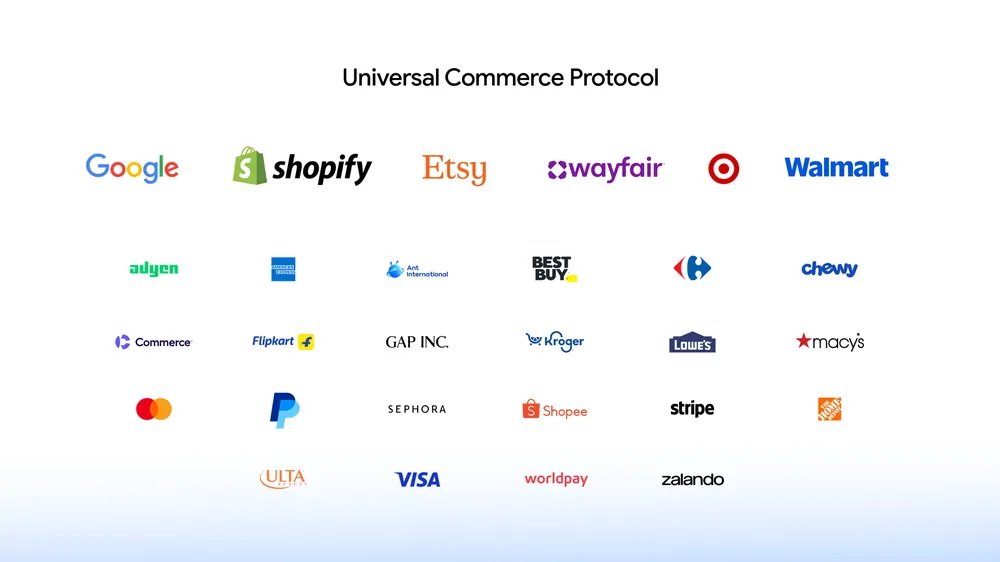
• Core Points: Google launches Universal Commerce Protocol (UCP), an open standard for AI-powered shopping, backed by major retailers and payments firms, signaling a strategic push into agentic commerce that could reshape retail dynamics and competition with Amazon.
• Main Content: UCP aims to standardize how AI agents perform shopping tasks, potentially enabling more seamless, automated purchasing across platforms while balancing interoperability with existing ecosystems.
• Key Insights: Backing from retailers and payments players signals broad industry buy-in; exclusion of a major e-commerce player highlights competitive tensions; governance and privacy considerations will influence adoption and trust.
• Considerations: Market adoption speed, developer ecosystem health, interoperability with Google services and rival platforms, and consumer protections around AI decision-making.
• Recommended Actions: Stakeholders should monitor standards governance, invest in compatible integrations, and assess regulatory and consumer trust implications.
Content Overview
Google’s latest strategic bid to shape the future of shopping centers on the creation and promotion of the Universal Commerce Protocol (UCP), an open technical standard designed to power agentic or AI-assisted commerce. The initiative is intended to codify how intelligent agents—whether built by Google, third-party developers, or retail partners—can execute shopping tasks with consistency and interoperability across different platforms. By endorsing UCP, Google seeks to lower the barriers for automated shopping and to create an ecosystem where AI agents can initiate product discovery, comparison, checkout, and post-purchase tasks with a consistent set of rules and expectations.
The move comes amid a rapidly evolving landscape where consumer expectations for fast, frictionless, and highly personalized shopping experiences are increasingly mediated by AI. From voice-activated shopping assistants to chat-based shopping bots and autonomous purchasing routines, AI is transforming how shoppers interact with retailers. Google’s push into agentic commerce places the tech giant at the center of a broader industry effort to standardize the technical underpinnings of AI-assisted shopping, potentially leveling the playing field for smaller retailers to participate in AI-enabled experiences and reducing integration complexity for developers.
A key feature of UCP is its open nature. By publishing an interoperable protocol, Google intends to prevent vendor lock-in, enabling retailers, payment processors, and software developers to build compatible tools and experiences without being tethered to a single platform. The standard seeks to cover essential aspects of agentic shopping, including product discovery, price comparison, recommendation generation, order placement, payment authorization, and post-purchase support. In practice, UCP could enable an AI agent to autonomously browse catalogs, identify options that match a shopper’s stated preferences and budget, and complete a purchase flow that adheres to standardized security and privacy guidelines.
The rollout of UCP has not occurred in a vacuum. It follows broader industry efforts to establish governance around AI-enabled commerce, including privacy protections, security requirements, and transparency around how AI systems influence purchasing decisions. Major retailers and payment players have publicly expressed interest or support for the standard, signaling that they see tangible value in a common framework that can accelerate AI-based shopping while preserving consumer trust and control. However, one notable absence in early support discussions is a prominent e-commerce player that has historically dominated much of online retail. The exclusion underscores ongoing strategic tensions as different companies weigh the benefits and risks of a standardized approach to agentic commerce.
As UCP gains traction, observers are weighing its potential to alter the competitive dynamics of digital retail. If widely adopted, the protocol could reduce integration friction for retailers seeking to offer AI-powered shopping experiences, while enabling more seamless cross-platform transactions. It could also influence how consumers interact with shopping AI, potentially increasing convenience but raising questions about data sharing, personalization, and the transparency of automated purchasing decisions. The coming months are likely to reveal how quickly developers, retailers, and payment networks embrace UCP and how Google positions its broader suite of shopping and AI services within this evolving ecosystem.
This initiative is part of a broader trend of platforms seeking to shape the infrastructure of digital commerce rather than relying solely on proprietary tools or closed ecosystems. By championing an open standard, Google signals an intent to influence future shopping experiences while potentially curbing the advantages of large, incumbent platforms that control end-to-end retail ecosystems. The success of UCP will hinge on technical robustness, governance mechanisms, and the ability to align incentives across a diverse set of stakeholders, including consumers.
In summary, Google’s Universal Commerce Protocol represents a high-stakes bet on standardization as a means to accelerate AI-powered shopping. The move could stimulate innovation and expand participation in agentic commerce, but it will also require careful navigation of competitive dynamics, regulatory considerations, and consumer trust. The outcome of this initiative could have lasting implications for how AI interacts with retail, how power is distributed among platform leaders, and how shoppers experience online shopping in an increasingly automated world.
In-Depth Analysis
Google’s announcement of the Universal Commerce Protocol (UCP) marks a deliberate step toward codifying the way artificial intelligence engages with commerce. The standard’s open design is intended to facilitate interoperability among retailers, payment providers, and software developers, allowing AI agents to perform a wide range of shopping tasks with consistent interfaces and expectations. This is not merely a branding play; it is an attempt to construct a technical gravity well around agentic commerce that could attract a broad ecosystem of partners, developers, and end users.
At the core of UCP is the promise of interoperability. By establishing a common protocol for discovery, comparison, and checkout processes, the standard aims to lower technical barriers for retailers seeking to deploy AI-powered shopping capabilities. For retailers, the benefits are twofold: first, reduced integration complexity across channels and platforms, and second, a more predictable and scalable environment for automating routine purchasing tasks. For consumers, the result could be faster and more personalized shopping experiences, with AI agents that can understand preferences, manage budgets, and execute purchases on behalf of users within predefined safety and privacy constraints.
The open nature of UCP is a deliberate contrast to the more closed, platform-centric approaches that dominate much of the current digital commerce landscape. By resisting vendor lock-in, Google signals that the protocol could become a widely adopted standard, akin to how certain web technologies gained traction precisely because they were not proprietary. The governance model, however, will be critical. An open standard without robust governance can lead to fragmentation, divergent implementations, and security vulnerabilities that erode trust. Stakeholders will be watching closely how UCP addresses concerns about data ownership, consent, transparency of AI decisions, and how user control is maintained across different retail environments.
One notable aspect of the discourse surrounding UCP is the absence of a well-known e-commerce behemoth in the early stages of support. This missing player underscores ongoing tensions in the retail technology space. While many retailers and payments firms see value in a common standard that could streamline AI-assisted shopping, some major platforms may be wary of enabling a broader ecosystem that could dilute their control over customer data, pricing, and the end-to-end shopping experience. The dynamics of who participates and who remains on the sidelines will shape the trajectory of UCP’s adoption and the competitive balance among major players.
Industry reaction has been measured so far, with retail and payments stakeholders signaling cautious optimism about UCP’s potential. The standard could help standardize the way AI agents access product catalogs, interpret pricing signals, and handle secure payments. This could be particularly valuable for smaller retailers and regional brands that often face higher integration costs when attempting to offer AI-driven shopping experiences across multiple channels. By providing a shared foundation, UCP could enable these businesses to compete more effectively against larger incumbents that have historically wielded more sophisticated digital infrastructure.
However, the journey from standard proposal to widespread adoption is complex. For one, the breadth of features required for truly effective agentic commerce is wide, spanning catalog data formats, product attributes, promotional rules, return policies, and payment workflows. Achieving consensus on data models and event semantics—such as how to represent a “best match” product given user constraints, or how to contractually govern a checkout flow that involves multiple payment networks—will require extensive collaboration among retailers, payment processors, and platform providers. Moreover, developers building AI agents will need clear guidelines about how these agents should operate, including rules around user consent, privacy, and the limits of autonomous purchasing.
Security is another dimension of importance. As AI agents gain the ability to authorize payments and complete orders, ensuring secure authentication, fraud prevention, and transaction integrity becomes paramount. UCP will need to define authentication mechanisms, authorization scopes, and risk-based checks that can be consistently applied across participating entities. Without robust security assurances, consumer trust could erode, and retailers may hesitate to offer AI-driven experiences at scale.
Privacy considerations are equally critical. Consumers may be wary of AI agents that access purchase histories, preferences, and sensitive data. A standardized approach must embed privacy-by-design principles, enabling users to control what data is shared, how it is used, and for how long it is retained. Transparency about how AI decisions are made, along with user-friendly explanations of recommendations, will be essential for trust and transparency in agentic shopping.
From a competitive perspective, Google’s leadership in UCP signals a potential strategic shift in how retail technology is shaped. If UCP gains broad adoption, Google could become a central hub for AI-powered shopping experiences, not necessarily by controlling the consumer-facing interface but by providing the underlying interoperable framework that enables agents to operate across a broad ecosystem. This could align Google’s cloud services, analytics capabilities, and advertising platforms with a standardized approach to commerce that benefits from broad data access and integration opportunities, all while maintaining a level of separation between consumer data, platform-specific features, and third-party applications.
Yet there are uncertainties. The absence of a major e-commerce platform suggests that not all players are ready to commit to a shared standard, possibly due to concerns about data portability, competitive differentiation, or the risk of commoditizing certain aspects of the shopping experience. The pace at which rival platforms decide to participate, and the terms under which they do so, will significantly influence UCP’s ultimate impact on the retail market. If key players choose to wait and observe, adoption could proceed slowly, limiting early-network effects and reducing the standard’s immediate practical value for developers and retailers.

*圖片來源:Unsplash*
Another dimension to watch is regulatory scrutiny and antitrust considerations. As agentic shopping and AI-driven decision-making become more prevalent, policymakers will scrutinize how standards like UCP affect competition, consumer choice, and data control. Regulators may require additional disclosures about how AI agents influence purchasing decisions, how data is shared among participants, and what safeguards are in place to prevent discrimination or manipulation. How UCP aligns with evolving data protection regimes and competition policies will matter for its long-term viability.
In the broader context, UCP can be seen as part of a broader push toward “agent-based” or “agentic” commerce, where intelligent systems act on behalf of consumers to accomplish shopping tasks with minimal direct human intervention. This shift promises efficiency gains and personalized experiences but also necessitates careful design to preserve user autonomy, consent, and control. The success of such a transformation will depend not only on technical feasibility but also on the social and ethical frameworks that govern how AI agents operate in consumer markets.
In assessing Google’s strategy, it is important to recognize that the company is leveraging its strengths in AI, data infrastructure, and developer ecosystems to influence the underlying fabric of digital commerce. UCP represents a bet on standards-driven innovation—one that could lower barriers to entry for new players, accelerate time-to-market for AI-enabled shopping, and potentially recalibrate the power dynamics among the leading digital retailers. The outcome will hinge on practical adoption by retailers and developers, the robustness of governance mechanisms, and the continued evolution of consumer expectations around privacy and control.
Ultimately, Google’s Universal Commerce Protocol is a bold foray into shaping the infrastructure of AI-enabled shopping. It seeks to balance openness with practical constraints, offering a pathway toward more automated, intelligent, and integrated shopping experiences. The next phase of this initiative will reveal which stakeholders rally to the standard, how quickly interoperability is achieved across diverse systems, and what this means for competition, consumer choice, and the future of retail in an era of autonomous purchasing agents.
Perspectives and Impact
Industry Adoption and Ecosystem Growth: The acceptance of UCP by a broad array of retailers and payments providers could catalyze rapid development of AI-powered shopping experiences. A strong ecosystem would enable developers to build cross-platform agents capable of negotiating price comparisons, applying promotions, and executing purchases across multiple storefronts. This could drive greater conversion rates for retailers and more convenient experiences for consumers, potentially raising overall demand for online shopping.
Competitive Dynamics and Market Structure: If UCP gains significant traction, it could alter the balance of power in digital retail. Platforms that previously controlled end-to-end shopping experiences might face new constraints as open standards enable easier integration with third-party agents and services. Conversely, retailers and payment networks could gain leverage by participating in a shared framework that reduces reliance on any single platform’s proprietary tools. The absence of a major e-commerce firm in early support phases suggests that incumbent players may be assessing whether to embrace or resist the standard, and their decisions will influence early adopter advantages and market momentum.
Consumer Experience and Trust: The promise of more seamless, AI-assisted shopping is attractive to consumers seeking speed and personalization. However, achieving widespread consumer trust will require transparent AI decision-making, clear consent controls, and robust privacy protections. Users must feel confident that AI agents are acting in their best interests and that data shared with these agents is protected and used responsibly. User education about how UCP works and what data is shared will be essential to mitigate concerns about surveillance and manipulation.
Governance, Standards, and Security: The governance framework surrounding UCP will determine how resilient the standard remains over time. Security implications span from secure authentication and authorization to protection against fraud and manipulation of AI recommendations. The standard must also delineate data ownership and handling, ensuring that data generated or accessed by AI agents is treated with appropriate rights and safeguards. As the digital payments landscape continues to evolve, UCP will need to align with evolving regulatory expectations and industry best practices.
Innovation Trajectories: By providing an open foundation, UCP could spur innovation as startups and developers build new AI-enabled shopping experiences that work across participating retailers and payment networks. This could accelerate the introduction of novel use cases, such as dynamic pricing negotiations by agents, automated subscription management, and personalized shopping assistants that can operate across multiple retailers without requiring bespoke integrations for each partner.
Global Implications: The standard’s impact could extend beyond the United States, influencing how retailers and technologists operate in other markets. Different regulatory environments, consumer protection norms, and data governance frameworks will shape how UCP is implemented globally. International adoption would demand a versatile and robust governance model that accommodates diverse legal and cultural expectations around privacy, consent, and consumer autonomy.
Future Trajectories and Contingencies: Several scenarios could unfold. A rapid, broad-based adoption with widespread participation could position UCP as the de facto standard for agentic commerce, compressing integration timelines and enabling a thriving marketplace of AI-enabled shopping tools. A slower, selective adoption could still yield meaningful benefits for early adopters but limit network effects and slow the realization of the standard’s full potential. The most pivotal factor remains participation by key e-commerce platforms and the alignment of governance to ensure trust and security across the ecosystem.
Key Takeaways
Main Points:
– Google launches Universal Commerce Protocol (UCP), an open standard for AI-powered shopping, backed by retailers and payment firms.
– The standard aims to enable agentic commerce with interoperable discovery, pricing, checkout, and post-purchase flows.
– A major e-commerce platform’s absence from early support highlights ongoing strategic tensions and competitive concerns.
– Adoption hinges on governance, privacy protections, security, and consumer trust, as well as the willingness of retailers and developers to participate.
Areas of Concern:
– Data ownership and control across interoperable shopping experiences.
– Potential for privacy violations or manipulation through AI agents.
– Uneven participation by major platforms that could limit network effects and value.
Summary and Recommendations
Google’s Universal Commerce Protocol represents a significant, standards-driven attempt to shape the future of AI-enabled shopping. By promoting an open, interoperable framework, Google seeks to reduce integration barriers for retailers and developers, accelerate the deployment of agentic commerce, and potentially reshape the competitive dynamics of online retail. The initiative carries promises of faster, more personalized shopping experiences for consumers and greater innovation opportunities for startups and smaller retailers. However, the success of UCP will depend heavily on robust governance, strong security and privacy safeguards, and broad participation from key players across the retail and payments ecosystems. The absence of some major e-commerce platforms in early adoption signals that strategic hesitations remain, and how those players decide to engage—or not engage—will influence the pace and scale of adoption.
If UCP achieves broad, durable adoption, it could catalyze a new era of agentic commerce, enabling AI agents to navigate catalogs, compare offers, and complete purchases across multiple retailers with standardized, trusted workflows. This outcome would likely empower consumers with more seamless shopping experiences while creating opportunities for retailers and payment networks to differentiate through value-added services, fraud protection, and personalized engagement. Conversely, insufficient adoption or weak governance could yield limited network effects, leaving room for incumbents to maintain the status quo at the expense of broader innovation. Stakeholders across the industry should monitor governance developments, invest in compatible integrations, and prioritize consumer protections as this standard evolves. The debate around UCP will likely continue to shape conversations about AI’s role in commerce, the distribution of power in retail, and the future of how people shop in an increasingly autonomous digital marketplace.
References
- Original: https://www.geekwire.com/2026/google-makes-a-big-move-into-agentic-commerce-raising-questions-about-amazons-retail-dominance/
- [Add 2-3 relevant reference links based on article content]

*圖片來源:Unsplash*