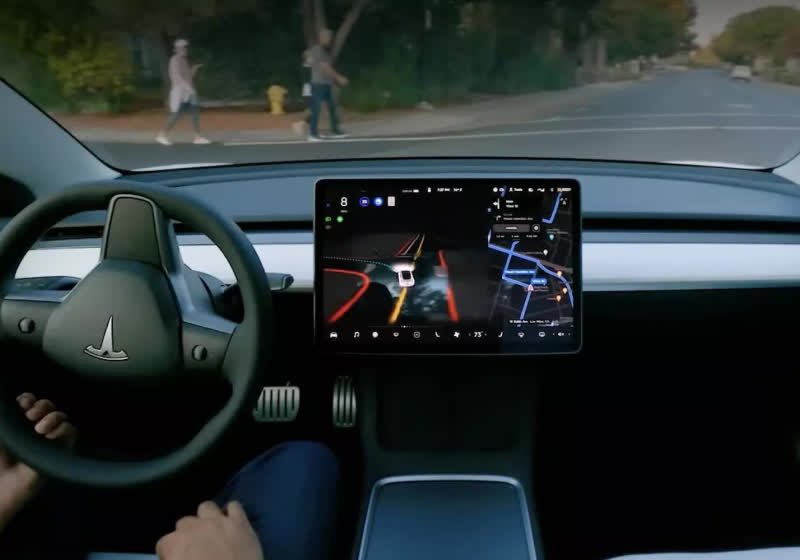
TLDR
• Core Points: Tesla is transitioning from selling Full Self-Driving (FSD) as a one-time purchase to a subscription model starting next month, as announced by Elon Musk on X.
• Main Content: The shift follows years of debate over FSD’s value, safety, and regulatory hurdles, placing ongoing access behind a recurring fee rather than a perpetual license.
• Key Insights: The change aligns with a broader industry trend toward software-as-a-service for autonomous-driving features and could affect vehicle resale value and customer budgeting.
• Considerations: Questions remain about pricing, feature reliability, regulatory approvals, and how this will impact existing FSD buyers and long-term ownership costs.
• Recommended Actions: Potential buyers should evaluate total cost of ownership under a subscription versus the previous upfront purchase and monitor official Tesla communications for specifics.
Content Overview
Tesla, one of the defining companies in the electric-vehicle and autonomous-driving space, has announced a strategic shift in how it offers Full Self-Driving (FSD) capabilities. In a move that mirrors software licensing practices more common in other tech sectors, Tesla will discontinue selling FSD as a one-time purchase and will instead offer access to FSD through a subscription model starting next month. This announcement came from Tesla CEO Elon Musk via an X post, where he did not provide a detailed rationale for the transition beyond confirming the change.
The decision represents a notable pivot in Tesla’s product strategy and follows public discussions about the maturity, safety, and regulatory considerations surrounding autonomous driving technologies. While exact pricing, terms, and eligibility criteria for the new subscription model were not immediately disclosed in the initial post, information from the company’s communications and subsequent updates is expected to clarify how customers can opt in, how renewal and cancellation will work, and how this shift might affect current FSD purchasers.
The broader market context includes ongoing investments in self-driving software, regulatory scrutiny of autonomous features, and competitive pressure from other automakers and tech firms pursuing similar capabilities. Tesla’s move to a software-subscription framework for FSD suggests a longer-term strategy aimed at steady revenue streams, potential feature updates, and a more flexible business model for customers who may want to enable or disable FSD based on need.
This article provides a comprehensive look at what the transition means for Tesla customers, the automotive and tech ecosystems, and the broader implications for the development and commercialization of autonomous driving technologies.
In-Depth Analysis
The announcement that Tesla plans to end the sale of Full Self-Driving as a one-off purchase and migrate to a subscription-based access model marks a significant shift in the way sophisticated driver-assist features are monetized. Historically, Tesla offered FSD as an optional add-on that customers could buy upfront at a fixed price. That model implied a long-term, near-permanent license to access ongoing software features, subject to hardware compatibility and regulatory allowances. The new approach reframes FSD as a service, where customers pay a recurring fee to access the same or enhanced capabilities over time.
Several strategic motivations can be inferred from this transition. First, a subscription model provides Tesla with a predictable revenue stream and the opportunity to more effectively monetize ongoing software development, maintenance, and data collection. Autonomous-driving software typically requires continuous updates, improvements in perception and decision-making, and frequent safety audits. A subscription framework aligns pricing with ongoing value delivery, particularly as Tesla releases over-the-air updates, expands feature sets, or tweaks performance based on real-world data.
Second, shifting to subscriptions may offer more pricing flexibility for customers, enabling cost customization based on usage patterns, residency, or regulatory allowances. It also introduces a possibility for trial periods or promotional pricing that could attract new customers while keeping existing users engaged over longer horizons.
However, the move also invites scrutiny from several angles. For existing FSD purchasers, the transition raises questions about retroactive value, ownership rights, and potential refunds or credits. Consumers who already paid upfront for FSD may expect some form of accommodation, whether in the form of a grandfathered plan, prorated credits, or continued access to the old licensing terms. Tesla’s statements or policy updates will be critical in addressing these concerns and ensuring a fair transition.
From a regulatory perspective, autonomous-driving features operate within a complex and evolving legal landscape that varies by jurisdiction. The subscription model could be influenced by regulatory requirements related to safety oversight, disclosure of limitations, and accountability for performance. Regulators may scrutinize how software-enabled driving features are marketed, how updates are deployed, and what constitutes “fully self-driving” versus assisted driving. The clarity of messaging and adherence to safety standards will be crucial in preserving consumer trust and regulatory compliance.
Industry-wide implications also bear consideration. If Tesla’s subscription approach proves financially viable and popular among consumers, it could spur other automakers and software developers to explore similar models. The software-driven auto industry is increasingly blending traditional hardware sales with ongoing services, and this transition could accelerate convergence between automotive and tech subscription ecosystems. Yet the success of such a model depends on transparent pricing, reliable performance, and demonstrable value over time, including how updates translate to improved safety, efficiency, and convenience.
From a product-management standpoint, a subscription-based FSD could enable more rapid iteration cycles and closer alignment between software capabilities and customer demand. Tesla can roll out new features, performance enhancements, and safety improvements through over-the-air updates with a recurring revenue model providing justification for continuous investment. The company may also explore tiered or modular offerings, where higher tiers unlock more advanced features, or geographic access that reflects regulatory differences and infrastructure readiness.
Financial-market observers will watch how the shift affects Tesla’s margins, cash flow, and investor sentiment. A subscription model may alter the company’s revenue recognition patterns and capital expenditure planning, given that software development and cloud-based services have different cost structures compared with one-off hardware sales. The transition could also influence vehicle resale dynamics, as prospective buyers weigh whether a vehicle’s FSD capability remains active or requires ongoing payments to access the feature.
The customer experience aspect is equally important. For some users, a subscription could reduce upfront costs and improve budget predictability, making high-end driver-assist capabilities more accessible. For others, the cumulative cost over time may exceed the original purchase price, particularly for long-term ownership. The perceived value of FSD will hinge on real-world performance, feature set, reliability, and the perceived safety impact of the software’s ongoing improvements.
In practice, Tesla will need to provide clear guidance on how the subscription is activated, how much it costs, what happens if the service is paused or canceled, and whether there are regional differences in availability or pricing. The company will also need to address how FSD interacts with other driver-assistance features, including those offered by competing automakers and third-party developers, and how updates will be reflected in the user interface and driving experience.
Tesla’s decision also raises considerations about customer communication and change-management. When a company updates a long-standing pricing model, it’s important to avoid confusion and ensure that customers understand what changes to expect. Clear explanations regarding the scope of FSD under subscription—such as what constitutes “self-driving” capability, what features are included, and how usage is governed—will be essential to maintaining trust. Public communications, onboarding materials, and in-vehicle prompts will play a key role in guiding users through the transition.
Longer-term implications for the electric-vehicle ecosystem include the potential for greater integration of software services with vehicle hardware. If FSD access is tied to a subscription, updates may be delivered with more agility, allowing Tesla to respond quickly to safety concerns, regulatory feedback, and real-world performance data. This could lead to a more dynamic feature set, with improvements that outpace those typically seen in traditional automotive product cycles.

*圖片來源:Unsplash*
In summarizing, Tesla’s move to discontinue one-time FSD purchases in favor of a subscription model next month signals a broader shift in how automakers monetize autonomous-driving capabilities. The decision reflects ongoing advances in software-defined mobility, the desire for steady revenue streams, and a strategic approach to delivering iterative improvements. The success of this transition will depend on transparent pricing, fair treatment of existing customers, regulatory alignment, and the continued delivery of tangible value through safer, more capable driving features.
Perspectives and Impact
The change to a subscription-based model for Full Self-Driving represents more than a pricing adjustment; it signals a rethinking of how consumers access advanced vehicle technologies. For Tesla, the move can be seen as aligning FSD with other software services the company already monetizes, such as connected services and premium features that are updated over time. In practical terms, subscribers may expect ongoing access to a suite of driver-assistance capabilities that improves with each software revision, subject to hardware compatibility and regulatory permission.
From a consumer perspective, the transition may offer both flexibility and risk. On the one hand, a subscription can lower immediate upfront costs, making it easier for customers to upgrade to FSD without a large initial expenditure. On the other hand, paying over the long term can exceed the original purchase price, especially for owners who plan to keep their vehicle for many years. The finance implications extend beyond mere cash flow; they touch on resale value, as a vehicle may retain its FSD capability through software licenses that live in the cloud rather than on the vehicle’s internal systems.
Regulators’ responses will also shape the trajectory of this policy shift. Autonomous-driving features are subject to rigorous scrutiny, and regulators may require ongoing disclosures about the capability’s limitations, conditions under which the driver must intervene, and safety performance metrics. Any perceived gap between advertised capabilities and actual performance could prompt regulatory reviews or investigations, potentially affecting the speed and scope of updates that can be deployed through the subscription model.
Industry observers may interpret Tesla’s move as part of a broader trend toward software-defined mobility. Other automakers and tech firms are exploring subscriptions for software features, cloud-connected services, and autonomous-driving functionalities. If successful, such models could standardize recurring revenue streams across the auto industry while enabling more rapid iteration and deployment of improvements. However, competition will remain intense, as customers weigh the value proposition of FSD against alternative offerings, including features offered by rivals and the broader suite of safety technologies available in modern vehicles.
Users who currently own FSD licenses will be watching closely for transition details. Key questions include whether existing owners will be grandfathered into the new system, if credits or prorated fees will be offered, and how the change affects the availability of FSD features in regions with varying regulatory landscapes. Tesla’s communications should address these concerns comprehensively, outlining the steps customers must take to migrate to the subscription, the anticipated price point, and any potential caps or limits on usage.
Additionally, the shift could influence consumer behavior in the secondhand market. If FSD access is tied to cloud-based subscriptions rather than a one-time feature, prospective buyers of used Teslas may need to understand whether the vehicle’s capabilities will persist after transfer of ownership and what ongoing costs, if any, would be incurred by the new owner. Transparent disclosures at the point of sale will be essential to avoid disputes and maintain confidence in the value proposition of Tesla vehicles equipped with FSD.
On the technology front, the subscription approach reinforces the importance of over-the-air updates and cloud-enabled processing. Tesla’s software-centric strategy relies on continuous data collection, neural-network improvements, and safety validations, all of which are typically delivered via software updates rather than discrete hardware changes. The subscription model could facilitate more frequent feature enhancements and better alignment with real-world driving conditions, provided that regulatory and safety considerations are adequately addressed.
In this context, expert commentary suggests a cautious but optimistic outlook. If Tesla can deliver consistent, meaningful improvements to FSD while maintaining robust safety standards and transparent pricing, a subscription-based approach may become a durable model for software-defined driving. The company will need to balance user expectations with technical realities, ensuring that every update advances safety and reliability and that customers clearly understand the capabilities and limits of the system at any given time.
The broader implications for the electric-vehicle ecosystem include potential changes in how software partnerships, data sharing, and platform interoperability are managed. As cars become increasingly connected and capable of remote updates, collaborations between automakers and technology providers could proliferate, creating opportunities for new services, analytics, and monetization strategies. However, these shifts also raise concerns about data privacy, cybersecurity, and the standardization of interfaces that allow third-party developers to contribute to or extend the driving experience.
Looking ahead, several scenarios could unfold over the next 12–24 months. Tesla may introduce multiple subscription tiers, offering different levels of FSD functionality and different geographic eligibility. Regulatory approvals could shape which markets receive certain features first, influencing how the rollout is staged. The company may also experiment with promotional periods, discounted rates for current customers, or bundling FSD with other services to maximize perceived value. Regardless of the exact structure, the underlying objective appears to be sustaining a dynamic, software-driven capability that evolves with user needs and safety requirements.
In summary, Tesla’s decision to end one-time purchases of Full Self-Driving and move to a subscription model next month is a transformative development with wide-ranging implications. It reflects a broader industry shift toward software-as-a-service paradigms in automotive technology, with potential benefits in continuous improvement, pricing flexibility, and service delivery. Yet it also introduces questions about cost, affordability, equity of access, and how regulatory frameworks will respond to ongoing, cloud-enabled autonomous-driving capabilities. The ultimate measure of success will be whether the subscription model can consistently deliver safer, more capable driving experiences while maintaining transparency and fairness for customers across diverse regions and ownership scenarios.
Key Takeaways
Main Points:
– Tesla will discontinue selling Full Self-Driving as a one-time purchase and switch to a subscription-based model next month.
– The transition emphasizes ongoing software updates, potential pricing flexibility, and recurring revenue for Tesla.
– Regulatory, consumer, and resale implications will require careful management and clear communication from the company.
Areas of Concern:
– How existing FSD purchasers are treated and whether credits or refunds will be offered.
– The exact pricing, terms, geographic eligibility, and duration of the subscription.
– The impact on resale value and potential hidden long-term costs for owners.
Summary and Recommendations
Tesla’s shift from a one-time FSD purchase to a subscription model represents a significant strategic move in the autonomous-driving software landscape. For customers, the decision should be assessed through the lens of total cost of ownership, affordability, and a clear understanding of what the subscription guarantees in terms of capabilities, updates, and safety assurances. For Tesla, transparent pricing, straightforward migration paths for current owners, and proactive regulatory engagement will be essential to implementing this transition smoothly. As the industry observes how this model performs, it may influence other automakers and tech firms exploring software-driven monetization strategies in mobility.
References
- Original: https://www.techspot.com/news/110922-tesla-ends-one-off-full-self-driving-purchases.html
- [Add 2-3 relevant reference links based on article content]

*圖片來源:Unsplash*