TLDR
• Core Points: Studio 4°C’s adaptation of Hiroshi Sakurazaka’s light novel, later inspiring Edge of Tomorrow, offers a visually inventive but uneven narrative experience.
• Main Content: The film experiments with looping time and surreal imagery, delivering striking sequences and emotional moments while occasionally stumbling over coherence and pacing.
• Key Insights: Visual bravura and a hauntingly human core characterize the work, yet its ambition outpaces its clarity at times.
• Considerations: Viewers new to the material may benefit from prior context; enthusiasts will appreciate the film’s depth and risks.
• Recommended Actions: Seek out the film for its art direction and concept, but adjust expectations for narrative astringency and accessibility.
Content Overview
Studio 4°C’s anime feature adaptation of Hiroshi Sakurazaka’s acclaimed light novel All You Need Is Kill arrives in theaters on January 16. The story follows a soldier trapped in a time loop on a war-ravaged battlefield, reliving a brutal few days as he and his allies strive to break the cycle and avert catastrophe. The project also provided the seed for the big-screen Hollywood rendition Edge of Tomorrow, starring Tom Cruise, which reframed many core elements for a broader audience. Studio 4°C, renowned for its visually daring and often experimental animation, undertakes a high-stakes translation of the source material—one that foregrounds stylistic invention, mood, and emotional texture as much as plot propulsion.
The film’s premise—one man reliving the same deadly day on a planet under siege—offers fertile ground for exploring themes of memory, resilience, and the cost of even incremental progress under relentless pressure. Yet the adaptation by 4°C does more than simply reproduce the novel’s beats; it reimagines them through a lens of surreal, sometimes disorienting imagery, rapid shifts in tone, and a non-linear sense of time that mirrors the protagonist’s fracturing perception. For audiences familiar with the novel and its later cinematic cousin, the film presents a familiar skeleton with a new, visually arresting musculature.
In terms of production, the film leverages 4°C’s strengths: bold color palettes, kinetic frame-by-frame animation, and a willingness to experiment with narrative structure. The result is a work that feels both intimate and expansive—intimate in its emotional stakes and human moments, expansive in its world-building and conceptual scope. The film’s score and sound design reinforce the sense of an ongoing, looping present, where sounds from the past echo into the present and shape characters’ decisions.
The film’s reception hinges on how well viewers balance appreciation for its formal audacity with engagement with its story. Its looping mechanic—central to the source material—functions as a clever device to reveal character growth, reveal hidden details, and heighten tension. However, the same device can also produce repetition fatigue or narrative opacity, particularly for audiences less acquainted with the source material or with complex time-travel storytelling. As such, the film succeeds as a visual and emotional experience, while occasionally faltering in delivering a consistently clear cinematic throughline.
This release represents a notable instance of how a relatively niche studio can push stylistic boundaries within a franchise framework that has already seen mainstream reinterpretation. It also exemplifies the ongoing dialogue between Japanese animation traditions and global audiences’ expectations for high-concept science fiction. The movie’s premiere is timely for fans who crave innovative animation that challenges conventional storytelling, and for viewers who seek a meditation on courage, memory, and the moral burden of survival.
In-Depth Analysis
The core engine of All You Need Is Kill’s narrative is the time loop. The protagonist’s exposure to repeated combat scenarios creates opportunities for character refinement, strategic experimentation, and the gradual accumulation of hard-won wisdom. The film uses this structure not merely as a plot gimmick but as a mechanism to examine how trauma and repetition shape identity. Each loop provides a chance to test a new approach—changing tactics, forming uneasy alliances, and confronting personal fears. This iterative process is visually represented through changes in animation style, color temperature, and pacing, offering the audience a tactile sense of how the protagonist’s perception evolves with repeated exposure to danger.
From a storytelling perspective, the adaptation attempts to balance action-forward sequences with quieter, more introspective beats. When the narrative leans into human relationships and the emotional toll of ongoing conflict, the film resonates with a quiet intensity. The character dynamics—the mentor-student relationships, the camaraderie among soldiers, and the intimate bonds that form under pressure—are given room to breathe before returning to the pulsing centerpiece of the loop. This gives the film a dual identity: a kinetic action piece and a character study of endurance in the face of a seemingly endless loop of violence.
However, this duality sometimes strains the pacing. Episodes of rapid-fire action can collide with slower, more contemplative passages, leading to moments where the flow feels unsettled. The looping device, while elegantly deployed, occasionally becomes a barrier to momentum, especially for viewers who crave a consistently forward-driving plot. The film’s more experimental sequences—often accompanied by surreal imagery, dreamlike transitions, and abstract visual motifs—enhance mood and thematic resonance but can also obscure plot cues, forcing audiences to recalibrate expectations mid-viewing.
Sound design and music play crucial roles in maintaining emotional continuity across loops. The score threads together past and present, reinforcing the sense that the protagonist’s choices in one iteration reverberate across subsequent ones. The soundscape blends martial percussion with ambient textures, creating a sonic environment that mirrors the protagonist’s mental state: vigilant, exhausted, and increasingly purposeful. The audiovisual marriage is a highlight of the film’s ambitions, translating abstract notions of time and memory into a compelling sensory experience.
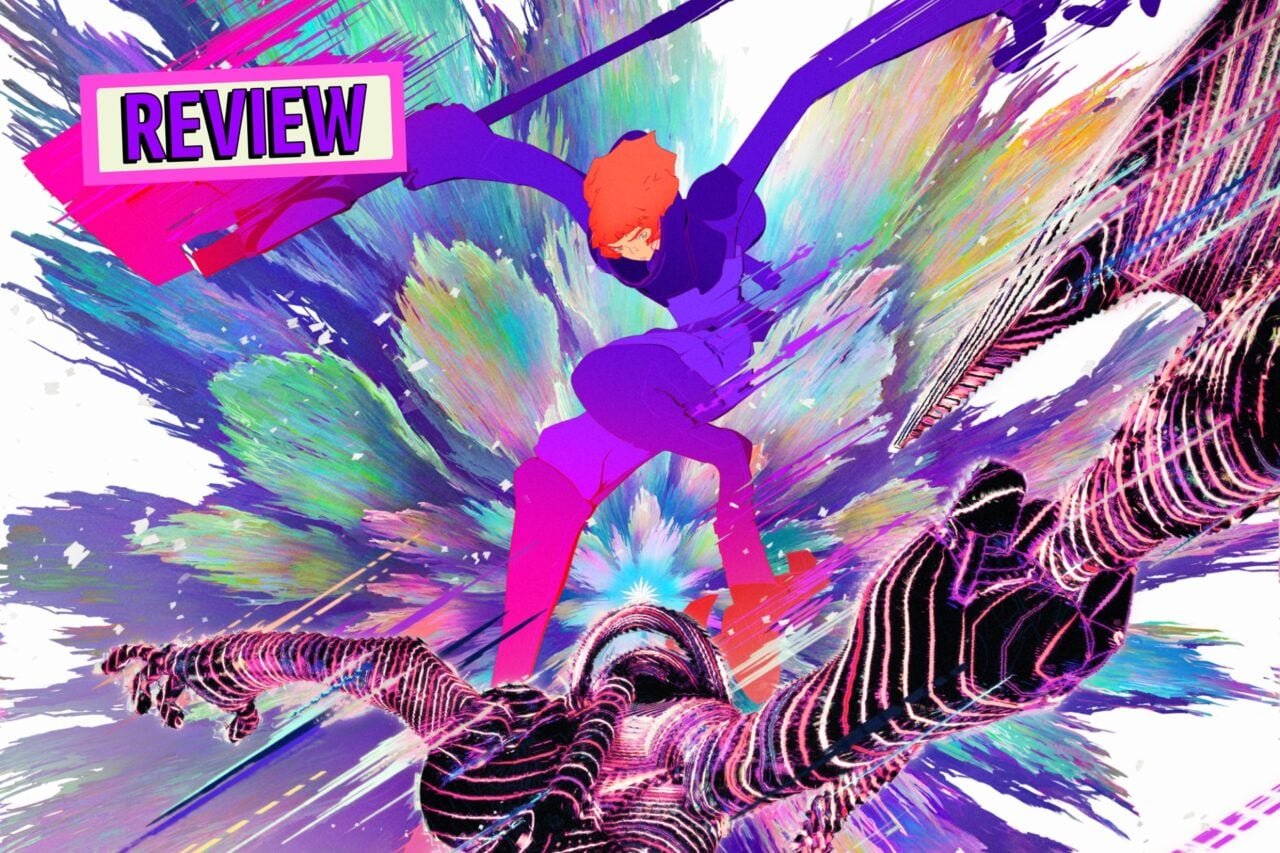
Animation-wise, Studio 4°C leverages its signature aesthetic to deliver sequences that are at once beautiful and jarring. The studio’s approach to color, line, and motion creates a tactile sense of otherworldliness, distinguishing the film from more conventional adaptations. The texture of the animation—its grain, lighting, and shading—contributes to a dreamlike atmosphere that suits the looping conceit. Yet with such an emphasis on form, some viewers may feel that narrative clarity takes a backseat to spectacle in certain moments. The visual poetry of individual scenes often compensates for, but does not entirely rectify, the occasional gap in plot coherence.
Character portrayal in the film is anchored by a core ensemble that includes a diverse array of soldiers and supporting figures whose arcs intersect with the protagonist’s journey through multiple timelines. The performances—whether conveyed through voice acting, body language, or facial expressions—emphasize resilience, humor amid hardship, and the stubborn hope that drives the human spirit even when the odds are stacked against them. The film also takes care to acknowledge the ethical weight of annihilating enemies when one’s own life exists in a fragile loop, inviting viewers to consider the emotional and philosophical stakes of perpetual combat.
Contextualizing the film within both its source material and the broader cinematic landscape is essential. Hiroshi Sakurazaka’s original light novel has long been celebrated for its concept—combining ground-level military realism with a speculative twist on time travel. The story’s popularity led to a Hollywood adaptation that reframed the material for mainstream audiences, emphasizing blockbuster action while retaining core thematic concerns. Studio 4°C’s interpretation, by contrast, remains more philosophically ambivalent and artistically audacious. It leans into metaphor, texture, and mood as engines of meaning, even as it risks leaving some plot threads undernourished for viewers seeking a tight, linear narrative.
Another layer of analysis concerns the film’s thematic preoccupations. Beyond the mechanics of the loop, the story interrogates how individuals cope with unending threat and how small, incremental changes can accumulate into meaningful transformation. The repeated cycles mirror real-world processes of learning under pressure: trial, error, and ultimately, a redefinition of purpose. The narrative also grapples with the ethics of violence and the cost of survival—questions that acquire nuance as the protagonist’s understanding deepens across iterations. The sense of fatigue that accumulates through repeated battles is not merely physical but existential, as the character’s sense of agency is repeatedly tested and renegotiated.
An essential component of the film’s appeal is its willingness to risk narrative ambiguity for the sake of thematic density. Some viewers will appreciate the interpretive openness—the sense that the loop is not just a device but a mirror for inner change. Others may feel that the film’s complexity creates distance, requiring patience and attentive viewing. In this light, the film can be seen as a piece that rewards repeat viewings. Each rewatch offers an opportunity to glean new details about relationships, strategic choices, and subtle foreshadowing woven into the looping structure.
From a production standpoint, the collaboration between writer, director, and animation team is evident in how the film’s rhythm evolves. The pacing decisions, the choice of sequences to foreground, and the balance between dialogue-driven scenes and action sequences all reflect deliberate artistic choices intended to shape audience engagement. The result is an aesthetically cohesive work that nonetheless invites discussion about its narrative economy and emotional range.

*圖片來源:Unsplash*
In summary, All You Need Is Kill is a provocative blend of experimental animation and time-loop storytelling. It succeeds most when it foregrounds character growth and emotional resonance within the loop, rather than relying solely on spectacle. Its trippy, heart-flecked presentation creates a memorable cinematic experience that lingers in the viewer’s mind, even if certain narrative elements feel underdeveloped or opaque at times. For fans of the source material and admirers of Studio 4°C’s distinctive style, the film offers a bold and emotionally charged counterpoint to more conventional sci-fi cinema.
Perspectives and Impact
The film’s release contributes to an ongoing discourse about how time-loop narratives can function within different cultural and stylistic frameworks. Japanese animation, with its long-standing history of blending intense action with introspective character moments, provides fertile ground for experiments in how repetition can reveal psychological truths. Studio 4°C’s interpretation leans into the psychological dimension, using looping as a lens to examine memory formation, grief, and the stubborn persistence of hope under duress.
From a cultural perspective, the project exemplifies how a relatively niche studio can influence global perceptions of genre storytelling. By translating a time-honored concept into a vividly stylized cinematic language, the film invites audiences to consider not just what happens in the story, but how it feels to experience time in a world where every decision might be undone by a single recurring moment. This emphasis on subjective experience contributes to a broader conversation about the role of animation in conveying complex metaphysical ideas, a thread that has grown more visible in recent years as audiences increasingly expect depth from animated features.
The film’s relationship to its Hollywood adaptation is also noteworthy. While Edge of Tomorrow brought the concept to a mainstream audience with a high-octane, blockbuster approach, Studio 4°C’s version re-centers existential concerns and aesthetic risk. The two works highlight different trajectories for the same source material: one that prioritizes mass appeal and adaptability, and another that prioritizes singular artistic vision and thematic density. This juxtaposition reflects a broader industry pattern in which original Japanese adaptations of popular novels are leveraged to create both widely accessible and highly specialized cinematic experiences.
Looking ahead, the film could influence future projects in several ways. Its bold use of visual texture and time-manipulation storytelling may inspire other studios to experiment with non-linear narrative forms within animated features. It may also encourage directors to integrate deeper emotional arcs into high-concept science fiction, balancing the thrill of speculative ideas with the gravity of character-driven storytelling. For audiences, the film offers a template for appreciating animation as a medium capable of nuanced, thought-provoking emotion and philosophical inquiry, not just spectacular action sequences.
In terms of legacy, the film stands as a testament to Studio 4°C’s willingness to push the boundaries of form and function. It contributes to a lineage of animation that values experimentation and the articulation of mood, atmosphere, and inner life. Even when it doesn’t fully land in every regard, it remains a reference point for how time-based storytelling can be realized through a distinctive animation language, and for how a story about learning to endure can be told with both intimacy and audacity.
Key Takeaways
Main Points:
– The looping narrative structure underpins character development and thematic exploration of memory and resilience.
– Studio 4°C’s distinctive animation and sound design deliver a memorable sensory experience that enhances the film’s emotional depth.
– Narrative clarity sometimes sacrifices momentum for atmospheric ambition, yielding a mixed but ultimately thought-provoking result.
Areas of Concern:
– Occasional opacity in plot progression may challenge viewers unfamiliar with time-loop conventions.
– The balance between experimental visuals and coherent storytelling is uneven at times.
– Some emotional beats feel underdeveloped relative to the film’s ambitious stylistic goals.
Summary and Recommendations
All You Need Is Kill represents a bold artistic decision within the sci-fi animation landscape. It embraces a high-contrast blend of surreal imagery, time-loop mechanics, and intimate human moments, guided by Studio 4°C’s penchant for experimental aesthetics. The result is a film that can be interpreted on multiple levels: as a kinetic action narrative, a meditation on memory and endurance, and a showcase of animation as a high-art medium capable of conveying complex emotional truth.
For viewers, the film rewards those who approach it with patience and an appreciation for visual experimentation. It’s particularly resonant for fans of the source material who desire a fresh, stylistically daring interpretation that foregrounds mood and meaning over straightforward plot propulsion. Those seeking a brisk, linear blockbuster may find the film’s deliberate pacing and abstract sequences challenging, but it remains a meaningful counterpoint to more conventional sci-fi cinema.
In terms of future work, the film’s success could encourage more studios to pursue high-concept adaptations that prioritize artistic integrity and thematic depth without sacrificing emotional accessibility. It also invites further discussion about how time-loop narratives can be used to explore inner life and ethical considerations in the context of war and survival.
Overall, All You Need Is Kill is a daring and visually arresting entry into the time-loop subgenre. It lands most effectively when it foregrounds its human core—the courage, fear, and determination of its central character—while using its trippy, heart-flecked visuals to illuminate rather than overshadow the story’s emotional truths. It may not be universally accessible, but its ambition and artistry mark it as a significant, if imperfect, milestone in contemporary animated science fiction.
References
- Original: https://gizmodo.com/all-you-need-is-kill-spins-a-trippy-heart%e2%80%91flecked-loop-that-only-partially-lands-2000707828
- Additional references:
- Related analysis of time-loop narratives in animation and their emotional resonance
- Studio 4°C portfolio and artistic approach to high-concept science fiction
- Comparative review of Edge of Tomorrow and its source material adaptations
Forbidden:
– No thinking process or “Thinking…” markers
– Article starts with “## TLDR”

*圖片來源:Unsplash*