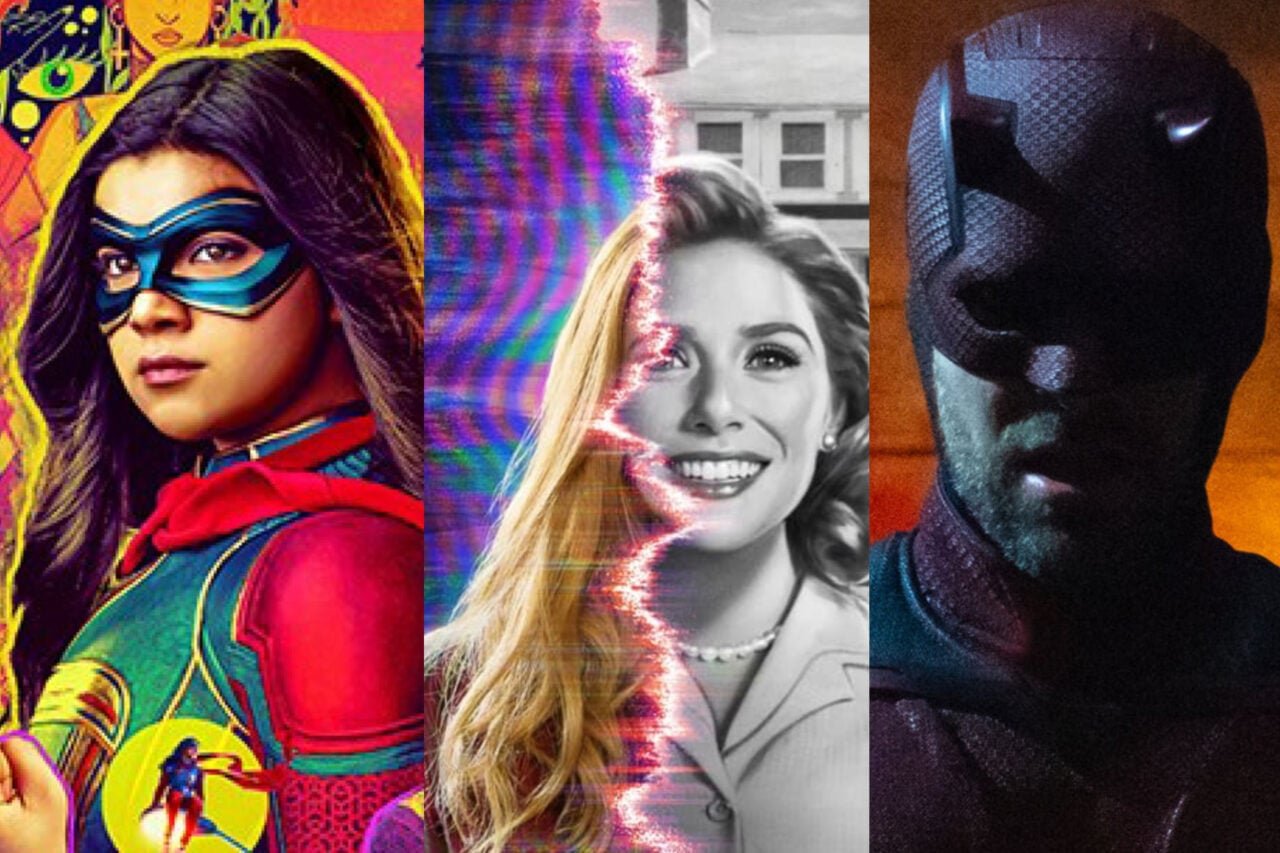
TLDR
• Core Points: The MCU’s foray into television starting with WandaVision reshaped storytelling, production, and audience expectations, demanding substantial strategic shifts from Marvel and Disney.
• Main Content: A five-year look at how MCU TV evolved from experimental spinoffs to integral components of a broader, interconnected saga, weighing creative risks, audience reception, and industry impact.
• Key Insights: TV series bridged character depth and serialized storytelling with film-grade production, but faced consistency, pacing, and continuity challenges.
• Considerations: The model hinges on cross-platform storytelling, streaming economics, and balancing retailer/box-office incentives with fan demand for connective tissue.
• Recommended Actions: Maintain agile development, invest in writer-driven series, ensure clear canon integration, and adapt release and pricing strategies to evolving viewer habits.
Content Overview
The Marvel Cinematic Universe (MCU) has long been a powerhouse of cinematic storytelling, but its expansion into television began a measured transformation. WandaVision, premiering in early 2021 on Disney+, marked a turning point—both as a bold creative gamble and as a strategic experiment in how the MCU could leverage serialized TV to deepen character arcs, explore new formats, and broaden the universe beyond the constraints of feature films. This shift reflected larger industry trends: streaming platforms seeking high-value IP to fuel subscriber growth, and major franchises experimenting with narrative structures that reward long-form storytelling, puzzle-box plotlines, and character-centered misdirections.
Looking back over five years, the MCU’s TV venture moved from its audacious, sometimes uncertain, beginnings to a more structured, purpose-driven approach. Disney and Marvel faced a multi-faceted set of challenges: translating the fast-paced, image-driven cadence of cinematic chapters into episodic arcs; maintaining consistent quality across varied projects; managing fan expectations in a universe where every series could potentially alter ongoing storylines; and navigating the economics of streaming, licensing, and cross-media publication. The result has been a mixed but generally positive assessment: television has become a legitimate extension of the MCU, offering both fan servicing and new entry points for audiences who might not engage with films as frequently.
The early episodes and seasons foregrounded experimentation. WandaVision emerged not only as a resident tale of grief and healing for Wanda Maximoff but also as a deliberate stylization exercise, blending classic television tropes with modern superhero mythos. Subsequent titles such as Falcon and the Winter Soldier, Loki, Hawkeye, Moon Knight, Ms. Marvel, and She-Hulk leaned into different tonal palettes, formats, and thematic concerns. Some emphasized espionage and political subtext, others leaned into cosmic adventures or family-friendly storytelling, and a few ventured into more meta or genre-crossing territory. Across these shows, Marvel attempted to sustain serialized suspense while ensuring each project could stand alone and also contribute to the larger MCU mosaic.
As a result, audiences gained greater access to supporting characters, new perspectives on familiar faces, and a broader range of representation and storytelling styles. But the TV forms also surfaced trade-offs: depth could come at the cost of pacing, and the time spent on TV arcs sometimes challenged the tightness fans expect from MCU films. Continuity across films and series became a central concern, with Marvel repeatedly asserting that cross-show canon would be maintained, while still permitting occasional resets or reimaginings for narrative clarity or creative reinvention. The balancing act has required careful editorial discipline, clear communication with fans, and a willingness to adjust plans when a given story or format did not perform as anticipated.
Viewership data, critical reception, and industry commentary over this period reveal a nuanced verdict. On one hand, the television entries widened the MCU’s demographic reach, offered more in-depth character development (particularly for supporting cast), and provided a testing ground for new ideas that could inform film productions later. On the other hand, some series faced criticism for uneven pacing, inconsistent tonal alignment with the cinematic material, or moments where fan expectations outpaced the storytelling logic of the broader saga. The evolution shows a mature industry learning curve: embrace the benefits of long-form storytelling and character-driven arcs, while building robust continuity mechanisms and ensuring that the TV slate remains a value-add rather than a distraction from the cinematic core.
Industry impact extended beyond fan reactions and critical reviews. MCU TV productions underscored the viability of premium streaming as a home for highly produced, blockbuster-adjacent content. They redefined production pipelines, with overlapping teams, shared visual effects resources, and cross-series coordination that demanded new levels of project management and scheduling discipline. The TV initiative also influenced talent strategies, enabling actors to explore varied character interpretations and, in some cases, re-energizing franchises through fresh performers and creative leadership. For Disney, the strategy aimed to create a compelling, season-by-season subscription hook, providing a steady stream of content while maintaining the star power and cultural relevance of the MCU.
Yet, the five-year arc has not occurred in a vacuum. The broader streaming landscape—competitive offerings, shifting subscriber economics, and ongoing debates over licensing and windowing—has shaped how MCU TV titles are developed, released, and monetized. Disney’s decision to consolidate its streaming ecosystem around Disney+ and its successive emphasis on ambitious originals has affected how Marvel prioritizes budget, talent, and the balance between exclusive streaming premieres and other distribution channels. The Marvel strategy remains to integrate TV projects into a coherent long-term plan for the MCU’s narrative universe, and to leverage the unique strengths of episodic storytelling to deepen emotional resonance and character investment, while ensuring that the broader arc remains accessible and coherent for readers and viewers who follow the franchise across multiple formats.
Looking forward, the question of enduring value hinges on several factors. How effectively can future MCU TV offerings maintain narrative momentum without sacrificing the cinematic tempo that fans expect from Marvel? Can series continue to offer transformative character development that influences film plots while remaining accessible to new viewers who discover the universe through TV? Will the MCU’s approach to cross-title continuity and canonical rules remain flexible enough to accommodate bold storytelling experiments while preserving a stable, comprehensible storyline? These questions will shape not only the trajectory of future series but also audience trust, engagement metrics, and the overall health of Marvel as a cross-platform entertainment brand.
In-Depth Analysis
The WandaVision launch was a deliberate strategic jab at format experimentation. By embracing a serialized, mystery-driven story told through a changing homage to different eras of television, Marvel signaled that the MCU could pivot from straightforward action spectacle toward intimate character study and narrative risk-taking. The risks paid off in terms of cultural impact and critical interest, and the series achieved a strong early viewership and streaming engagement. It also helped establish a new tonal vocabulary for the MCU: the idea that a project could be deeply personal while still being consequential within a wider universe of superheroes and high-stakes battles.
Subsequent shows brought further diversification in content and approach. Falcon and the Winter Soldier leaned into political and social themes, questioning responsibility, accountability, and the cost of leadership within a global framework. Loki emphasized time travel, alternate realities, and existential stakes, testing fans’ willingness to accept non-linear storytelling and complex mythologies. Hawkeye offered a more grounded, holiday-season-oriented story that foregrounded family dynamics and holiday cheer, while Moon Knight explored mental health, dissociative identity, and myth-inspired adventure with a distinctly darker edge. Ms. Marvel introduced a younger audience to the MCU, foregrounding adolescence, cultural identity, and the experience of growing up with superpowers in a world already saturated with superheroes. She-Hulk played with metatextual humor, genre-blending, and fourth-wall-breaking devices, reflecting Marvel’s willingness to experiment with form in service of character-centric narratives.
This variety is both a strength and a complexity. It demonstrates Marvel’s commitment to experimental storytelling while expanding the scope of who can inhabit the MCU’s spaces. But it also created practical challenges. The scale and budget required for high-quality television production often rivaled those of feature films, particularly when it comes to special effects, action choreography, and production values for episodic content. Maintaining cinematic polish across a television schedule demanded robust, scalable pipelines, efficient VFX workflows, and tight editorial oversight. When projects lagged behind schedules or budgets, even temporarily, the ripple effect could impact cross-series planning, actor availability, and the broader release calendar.
Continuity remains a pivotal issue. The MCU’s intrinsic appeal rests on the sense that everything—films and television—exists in a shared multiverse with interlocking plots and recurring characters. To satisfy this, Marvel has increasingly deployed connective tissue through overarching narratives, mid-credits scenes, and essential character developments that ripple into films and vice versa. Achieving this balance requires careful canonical governance: when a TV series modernizes or reinterprets a character, film writers must decide whether to incorporate those changes, adjust timelines, or selectively ignore certain plot threads to preserve coherence. The risk is that inconsistencies can annoy enthusiasts who eagerly track every ripple across the franchise. Conversely, a well-handled integration can deepen immersion and reward attentive fans with meaningful payoff during film premieres.
The economics of streaming also shape the MCU’s TV ambitions. TV productions operate with distinct cost structures, risk profiles, and revenue models compared with blockbuster films. For Disney, the streaming model is not simply about immediate box-office returns but about subscriber acquisition, retention, and the long-tail monetization of content libraries. The MCU’s television slate must therefore balance high production values with sustainable budgets, ensuring that each series justifies its cost within the streaming ecosystem while offering content that can attract and retain subscribers over time. This dynamic influences decisions about series length, episode counts, release cadence, and the degree of high-concept ambition versus character-driven drama.

*圖片來源:Unsplash*
Audience reception metrics further complicate strategy. Traditional box-office metrics do not apply to television in the same way, and streaming platforms frequently rely on engagement data, completion rates, and subscriber churn as indicators of success. For Marvel, the goal is to create content that yields strong word-of-mouth, broad appeal, and a sense of ongoing relevance across media formats. Some series have amassed dedicated fan communities and generated strong social dialogue, while others have faced criticism for pacing, tonal inconsistencies, or overly dense cross-references that can alienate casual viewers. The challenge is to maintain a level of accessibility while still delivering the depth and novelty that fans crave.
From a creative standpoint, the TV offshoots have been a proving ground for new writers, directors, and creative voices within the Marvel ecosystem. This expansion enabled a more diverse range of storytelling styles and perspectives, which can enrich the overall canon and invite broader audience participation. Yet, the internal risk remains: if TV narratives become too divergent from the core cinematic identity, they may fracture the sense of a unified MCU, reducing the cross-pollination benefits that fans have valued.
Looking ahead, several strategic considerations will shape the next phase of MCU TV. One is the ongoing tension between experimentation and coherence. Marvel will likely continue to test unusual formats, tonal registers, and character-driven arcs, but with an emphasis on ensuring that such experiments connect more clearly to the MCU’s cinematic direction and future installments. Another consideration concerns audience onboarding. While long-time fans may relish the depth of cross-series continuity, new viewers must be able to appreciate individual titles without feeling compelled to study every prior installment. That may entail more self-contained stories within the broader framework, alongside more explicit entry points for newcomers.
Technological and production enhancements also influence the trajectory. Advances in visual effects, virtual production techniques, and real-time rendering have the potential to streamline TV budgets while preserving high production values. As streaming technology evolves, so too can the pacing and structure of episodic storytelling, enabling more ambitious season arcs and layered narratives without excessive delays between seasons. Cross-platform synergism—tie-ins with toys, comics, and merchandise, as well as interactive or immersive experiences—offers additional avenues for engagement and revenue.
Finally, the cultural impact of MCU TV should be considered. The shows do more than expand a fictional universe; they reflect and influence contemporary conversations about representation, identity, and storytelling innovation in mainstream media. By providing opportunities for diverse voices and stories within the superhero framework, Marvel has contributed to a broader shift in how audiences experience franchise entertainment. The long-term cultural footprint will depend on the quality and consistency of future projects, as well as how effectively the franchise maintains momentum across formats and mediums.
In sum, the MCU’s five-year TV journey demonstrates both ambition and pragmatism. WandaVision opened a door to experimental, character-forward television that could coexist with blockbuster film storytelling. Subsequent series expanded the scope of what Marvel could explore on screen, embracing a spectrum of genres and tones while wrestling with the practicalities of continuity and production scale. The result is not merely a series of standalone TV hits but a broader experimentation that continues to redefine how megafranchises leverage television to augment, rather than merely extend, cinematic universes.
Perspectives and Impact
- Creative ambition: The MCU’s television strategy pushed for bolder, more personal storytelling within a shared universe, encouraging writers and directors to test fresh formats and tonal experiments. This openness helped attract new talent and allowed established creators to explore previously untapped angles on beloved characters.
- Fan engagement: TV releases created ongoing engagement between film releases, enabling fans to dwell in the MCU between theatrical events. This sustained attention translated into online discourse, fan theories, and a more constant sense of anticipation, albeit with potential risks of fatigue if pacing and continuity are not well-managed.
- Industry influence: Marvel’s approach influenced how other studios view cross-media storytelling, particularly the viability of streaming platforms as homes for premium, high-production-value content tied to a major film franchise. It underscored the value of serialized storytelling for complex mythologies and character arcs.
- Canon and continuity: The interconnected nature of MCU storytelling raised expectations for coherence across formats. The balancing act – delivering standalone quality while ensuring cross-title narrative coherence – remains central to the strategy. The ongoing challenge is to implement governance structures that maintain consistency without stifling creativity.
- Talent development: TV expansion broadened opportunities for actors, writers, and directors to contribute to the MCU in varied capacities. This diversification can yield fresh perspectives that benefit both television and film projects, though it requires careful coordination to align creative visions with the overarching franchise goals.
Future implications include a more nuanced understanding of how to deploy episodic arcs within a larger cinematic universe. If the MCU can refine its approach to continuity, maintain high production standards, and deliver character-driven narratives that resonate emotionally, TV projects could become even more integral to the franchise’s long-term vitality. Conversely, should continuity lapses or inconsistent pacing undermine audience trust, the value proposition of TV within the MCU could be questioned. The best path forward appears to be one of disciplined experimentation—pushing creative boundaries while preserving a clear throughline that makes the MCU feel coherent, purposeful, and rewarding across multiple formats.
Key Takeaways
Main Points:
– WandaVision demonstrated that MCU TV could be a bold platform for character-focused and format-wide experimentation.
– A diverse slate of series broadened the universe’s tonal and thematic range, expanding audience reach.
– Maintaining continuity across films and TV remains a central, ongoing challenge requiring governance and clear communication.
Areas of Concern:
– Inconsistent pacing and tonal alignment across some series with respect to film canon.
– Production costs on TV projects approaching those of feature films, impacting budgeting and scheduling.
– Risk of alienating casual fans if cross-series references become too dense or opaque.
Summary and Recommendations
Over five years, the MCU’s television journey has proven valuable as a tool for deeper character exploration, stylistic experimentation, and extended audience engagement between films. The approach has helped Marvel diversify storytelling and strengthen its brand across platforms, while highlighting the necessity of careful canonical management and scalable production practices. To sustain and enhance this trajectory, several actions are recommended:
– Prioritize writer-driven series that can deliver strong, self-contained episodes while contributing meaningfully to the larger MCU arc.
– Strengthen canon governance to ensure continuity without constraining creative risk-taking, using clear communication with fans about how different titles relate to one another.
– Invest in scalable production pipelines and advanced VFX workflows to sustain high quality across episodes and seasons while controlling costs.
– Design entry points and onboarding strategies for new viewers, ensuring that individual series offer accessible entry points without requiring extensive prior viewing.
– Explore cross-media experiences and merchandising opportunities that reinforce the MCU’s storytelling through varied consumer touchpoints.
If these strategies are implemented effectively, the MCU’s television arm can continue to serve as a dynamic engine for narrative innovation and audience growth, while preserving the cinematic identity that has driven its global success.
References
- Original: https://gizmodo.com/five-years-later-has-the-mcus-tv-excursion-worked-2000709110
- Additional sources:
- https://www.theverge.com/2021/1/15/22232060/marvel-wandavision-disney-plus-review
- https://www.hollywoodreporter.com/tv/tv-news/marvel-moon-knight-she-hulk-disney-plus-1234965221/
- https://variety.com/2023/tv/news/marvel-she-hulk-vision-wanda-abbott-1235550263/

*圖片來源:Unsplash*