TLDR
• Core Points: Lego unveils The Legend of Zelda: Ocarina of Time – The Final Battle (set 77093) with 1,003 pieces, featuring Link, Zelda, and Ganondorf minifigures in a ruined Ganon’s castle display including Recovery Hearts and game-inspired details.
• Main Content: A deluxe Lego model commemorating Ocarina of Time’s climactic battle, emphasizing faithful character depictions, signature scenery, and collectible appeal for fans.
• Key Insights: The set merges classic The Legend of Zelda aesthetics with Lego design, expanding Nintendo collaboration while appealing to both builders and collectors.
• Considerations: Collectibility and price may affect accessibility; packaging and play value align more with display than interactive action.
• Recommended Actions: Fans of Zelda and Lego should consider this set for display, nostalgia, and potential future crossovers that deepen the Zelda-Lego collaboration.
Content Overview
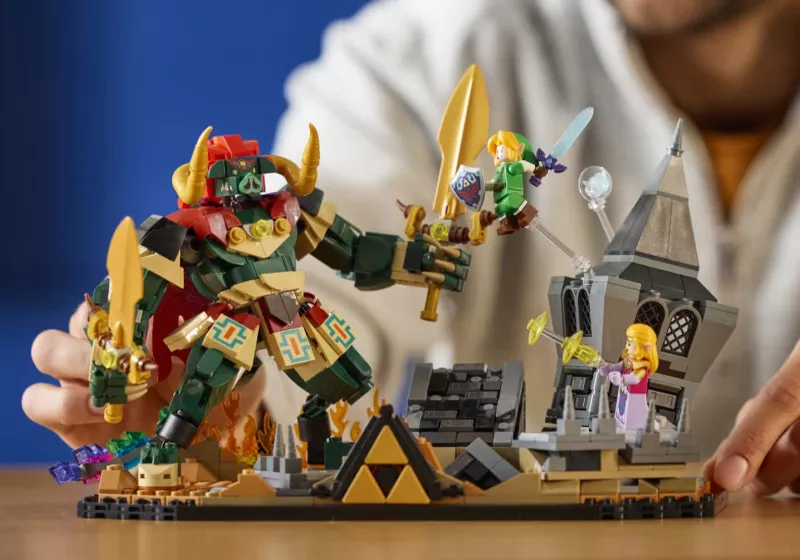
Lego Group has announced a new The Legend of Zelda set that pays homage to one of Nintendo’s most enduring adventures: Ocarina of Time. Officially titled The Legend of Zelda: Ocarina of Time – The Final Battle, this model is designated as set number 77093 and comprises 1,003 pieces. The presentation centers on a faithful recreation of Ganon’s ruined castle, a pivotal locale in the game’s climactic confrontation. The set ships with three minifigures representing Link, Zelda, and Ganondorf, enabling fans to stage the iconic encounter between hero, princess, and the villain, just as fans remember from the Nintendo classic.
The decision to serialize this homage as a Lego set continues Nintendo and Lego’s broader collaboration in expanding The Legend of Zelda into brick-built form. The Final Battle set invites builders to recreate, or reimagine, one of gaming’s most storied showdowns within a physical diorama that blends Lego’s brick-built versatility with the atmospheric cues of Ocarina of Time. While details are still rolling out in initial coverage, the model’s emphasis on the ruined castle environment, recognizable character representations, and embedded game elements such as Recovery Hearts suggests a design intention that respects both playability and display value.
For collectors and players who grew up with Ocarina of Time, the set offers a tangible connection to the game’s lore. The inclusion of Link, Zelda, and Ganondorf extends beyond mere caricature; each minifigure is crafted to evoke the character’s design cues from the Zelda series while remaining consistent with Lego’s stylized articulation. The set’s 1,003 pieces indicate a sizeable build that likely emphasizes architectural detailing, modular stabilization, and display-ready presentation. As with other high-piece-count Lego sets, assembly time will be a factor for buyers, but the result is expected to be a dramatic centerpiece for shelves, display cabinets, or dedicated Zelda collections.
In a broader context, this release aligns with the continued expansion of licensed Lego offerings that intersect with beloved video game franchises. The Zelda brand, which has a storied history of adventure and puzzle-solving narratives, benefits from Lego’s ability to translate its iconic imagery into tactile, brick-based models. The Final Battle set is positioned to appeal to a dedicated fan base that appreciates both the art of diorama-building and the nostalgia of Zelda’s most memorable moment.
In-Depth Analysis
The 77093 The Legend of Zelda: Ocarina of Time – The Final Battle represents a carefully curated intersection of video game memory and brick-building craft. The model’s centerpiece—the ruined castle setting—offers a dramatic stage for the trio of minifigures. The castle’s weathered, crumbling aesthetic nods to the game’s atmospheric use of ruin and decay as the pinnacle of the Dark Link’s and Ganondorf’s machinations. Lego’s design approach likely leverages a mix of angled slopes, distressed textures, and architectural detritus to convey the sense of a site that has endured a protracted siege and battle.
The minifigure selection is particularly resonant for Zelda fans. Link, Zelda, and Ganondorf have long served as canonical avatars for the series’ heroism, royal lineage, and antagonistic force, respectively. Lego’s adaptation of these figures typically focuses on distinctive color palettes, accessories, and facial expressions that imply personality within the constraints of a brick-built figure. Link’s figure would be expected to carry the iconic green tunic and cap, perhaps with a sword accessory; Zelda would likely feature a regal ensemble consistent with her royal status, and Ganondorf would present as a imposing, darker portrayal with appropriate attire and weapon options. The inclusion of three minifigures elevates the set from a simple diorama to a narrative tableau capable of staging the essential Ocarina of Time moment in miniature form.
The Recovery Hearts element embedded in the set reflects a design philosophy common to cross-franchise collaborations: integrate recognizably game-centric mechanics or motifs into the physical build. In the original game, Recovery Hearts are a recurring healing mechanic, and their inclusion here serves as both a nod to players and as a collectible visual cue that enhances the display’s storytelling potential. The Recovery Hearts, if represented as brick-based components, could provide interactive or decorative value, depending on their placement and integration with surrounding scenery.
From a manufacturing and product strategy standpoint, the 1,003-piece count positions this set among mid- to high-density Lego constructs rather than a compact display piece. The piece count implies a substantial build with multiple subassemblies that likely mirror the game’s environmental layers: ruin, terrain, and vantage points that enable a dynamic display. The instruction design for such sets typically emphasizes modular construction, encouraging builders to complete individual sections before combining them into the final scene. This approach not only helps with assembly but also supports potential reconfiguration or expansion in a larger Zelda-themed display.
The broader implications for Lego’s portfolio are notable. The Legend of Zelda collaboration continues to diversify Lego’s catalog with licensed properties that resonate across different age groups—from younger builders who enjoy splashy, accessible builds to older fans who value intricate detailing and display-worthy dioramas. The Final Battle set’s emphasis on a climactic sequence from a classic game could catalyze interest in other Zelda-themed sets or expansions, potentially tying into a larger, cohesive display collection that enthusiasts can extend over time.
In terms of play value, the set appears to be designed with display in mind rather than interactive play. While minifigures enable role-playing narratives, the primary appeal is likely the diorama’s visual fidelity and the collectibility factor, rather than a fully functioning interactive set with moving parts and varied play scenarios. This aligns with many licensed, high-piece-count Lego offerings that prioritize display aesthetics and collector appeal over rugged, action-oriented play.
From a reception standpoint, early coverage suggests fans appreciate the faithful homage to Ocarina of Time, as well as the opportunity to own a brick-built interpretation of a defining moment in the Zelda canon. The Final Battle serves as both a commemorative piece and a potential gateway for younger builders to encounter Ocarina of Time’s imagery through a hands-on medium. The success of this set may influence future collaborations, including whether Lego expands into additional pivotal scenes, alternative Link-Zelda-Ganondorf face-offs, or other beloved sequences from the Zelda series.
Future-proofing considerations for collectors include potential reissues, alternate colorways, or companion sets that extend the Ocarina of Time narrative beyond the Final Battle. As with other licensed sets, demand is often influenced by the speed of new releases, the visibility of the brand in other media, and the availability of the minifigure molds for years to come. Collectors may also weigh the desirability of the minifigures as standalone figures for custom builds or display alongside other Zelda-themed Lego products.

*圖片來源:Unsplash*
In sum, The Legend of Zelda: Ocarina of Time – The Final Battle (set 77093) represents a thoughtful homage to a landmark gaming moment, packaged in a sizable brick-built diorama that combines iconic character representations with a recognizably ruined castle setting. It reinforces Lego’s ongoing strategy to expand its licensed offerings by delivering not just a model, but a narrative tableau that fans can display and share. The release invites both nostalgic adults and younger builders to explore the magic of Ocarina of Time through construction, curation, and freeform display, with the potential to inspire future crossovers and an enduring fusion of Zelda lore with brick artistry.
Perspectives and Impact
The introduction of The Legend of Zelda: Ocarina of Time – The Final Battle adds a notable chapter to Lego’s collaboration playbook with video game franchises. It signals a sustained commitment to producing high-detail sets that honor classic titles while providing collectors with durable, display-ready models. For Nintendo’s Zelda brand, the set represents a tangible extension of its storytelling universe into tangible form, allowing fans to engage with the narrative from a new spatial angle. The diorama format—centered on the Ganon’s ruined castle—gives fans an opportunity to interpret a familiar scene through the tactile lens of lego bricks, which can foster deeper appreciation for how video game environments are constructed and perceived.
The impact on the collecting community could be meaningful, particularly for fans who value co-branded, nostalgia-driven releases. The mix of iconic characters and a recognizable battleground offers a compelling anchor for display shelves and hobby collections. Moreover, the set’s presence in retail and official outlets helps keep Zelda’s visual language present in popular culture between game releases and media events. This continuous visibility can reinforce the franchise’s cultural footprint and expand the pool of potential new builders who encounter Zelda through Lego.
From a broader industry perspective, Nintendo’s ongoing partnerships with Lego illustrate a growing willingness among entertainment brands to cross-pollinate with physical building toys. Such collaborations can drive cross-generational engagement, bridging generations of fans who may have first encountered Zelda on the Nintendo 64 in the 1990s with contemporary brick-based enthusiasts. The Final Battle contributes to a trend in which classic gaming moments are recast as collectible display pieces, expanding the lifecycle of beloved games beyond their initial release window.
For future implications, success with this set could incentivize Lego and Nintendo to explore additional moments from Ocarina of Time or other Zelda titles. Fans might anticipate reimagined scenes, race-to-the-finish battles, or dungeons and temples reinterpreted in brick form. The potential for modular extensions could enable builders to assemble broader environments around Hyrule, equipping them with more flexible dioramas and expansive displays.
However, potential concerns accompany the release. The price point and accessibility may affect how broadly the set reaches audiences beyond established collectors. As with other high-piece-count licensed sets, the cost-to-value ratio is a factor for buyers weighing it against alternative display pieces. Additionally, some enthusiasts may prefer more interactive play features, which may not be the primary design objective for a diorama-focused release. Balancing fidelity to the game with playability and pricing remains an ongoing challenge in licensed collaborations, and future Zelda-Lego sets will likely need to navigate these trade-offs.
Overall, the Ocarina of Time Final Battle set strengthens Lego’s role as a platform for expressing cherished gaming memories in tangible form. It also reinforces The Legend of Zelda’s status as a timeless narrative that continues to inspire fans to build, display, and reminisce. While future releases remain to be seen, this set establishes a thematic anchor for what fans can expect from future collectibles at the intersection of Zelda and Lego—detailed dioramas that honor the franchise’s most iconic locations and moments.
Key Takeaways
Main Points:
– Lego unveils The Legend of Zelda: Ocarina of Time – The Final Battle (set 77093) with 1,003 pieces and minifigures of Link, Zelda, and Ganondorf.
– The build centers on Ganon’s ruined castle and includes Recovery Hearts as an in-universe nod to the game.
– The set emphasizes display value and nostalgia, appealing to both Lego builders and Zelda collectors.
Areas of Concern:
– Accessibility and price may limit broad adoption beyond dedicated collectors.
– Play potential is likely oriented toward display rather than interactive play.
– Long-term availability of minifigures and potential future expansions remain factors for consideration.
Summary and Recommendations
The Legend of Zelda: Ocarina of Time – The Final Battle stands as a notable addition to Lego’s catalog of licensed sets, delivering a substantial, display-ready diorama that honors a landmark gaming moment. By featuring Link, Zelda, and Ganondorf as minifigures and recreating the atmosphere of Ganon’s ruined castle, the set offers both a nostalgic experience for longtime fans and an engaging building challenge for enthusiasts. The inclusion of Recovery Hearts and other game-inspired details reinforces the piece’s fidelity to the source material, enhancing its appeal as a collectible centerpiece.
For potential buyers, The Final Battle is best considered as a display-oriented investment that captures a pivotal scene from a beloved narrative. It is well-suited for adult collectors, long-time Zelda aficionados, and builders who enjoy assembling intricate dioramas. Prospective purchasers should weigh the cost against the display value, the piece count, and their interest in completing a broader Zelda-themed Lego collection. Those seeking interactive play experiences or lower-price entry points may want to explore smaller Zelda-inspired sets or other Lego themes before committing to this more expansive, premium offering.
In terms of future opportunities, the collaboration between Lego and The Legend of Zelda appears to be gaining momentum. If Lego continues to expand the Ocarina of Time universe or introduces other Zelda moments—such as dungeons, temples, or major battles—fans could look forward to a richer, multi-set display ecosystem that spans multiple games and eras. Such expansions would enhance cross-generational engagement and provide a cohesive platform for bringing Zelda’s world into the brick-built realm for years to come.
References
- Original: https://www.techspot.com/news/110959-lego-next-zelda-set-celebrates-ocarina-time.html
- The Legend of Zelda (official materials and product announcements from Lego and Nintendo partners)
- Additional coverage and historical context on licensed Lego collaborations and Zelda merchandising trends

*圖片來源:Unsplash*