TLDR
• Core Points: Claude Code draws 150+ Seattle tech professionals to a meetup to discuss Anthropic’s AI coding tools and practical use cases.
• Main Content: The event highlights growing adoption of Claude Code among engineers, with emphasis on speed, efficiency, and real-world workflows.
• Key Insights: AI-assisted coding is moving from concept to everyday practice, prompting collaboration, best-practice sharing, and broader industry dialogue.
• Considerations: Adoption considerations include reliability, integration with existing tools, code quality, security, and governance.
• Recommended Actions: Teams should pilot Claude Code on defined projects, establish coding guidelines, and monitor outcomes to inform broader rollout.
Content Overview
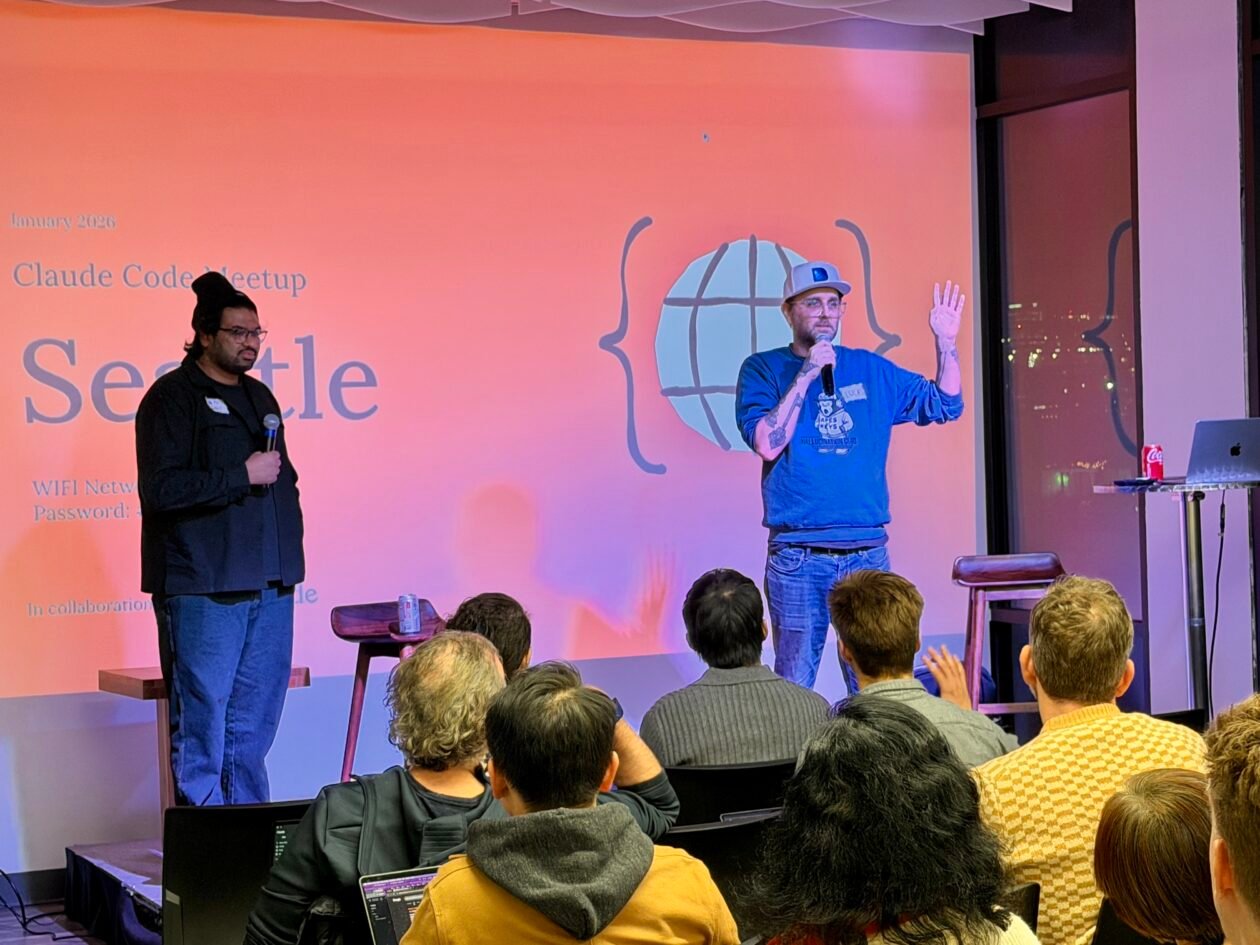
A recent gathering in Seattle underscored the momentum behind Claude Code, Anthropic’s AI coding assistant. More than 150 technology professionals attended the meetup on a Thursday evening, illustrating a strong appetite for practical AI-powered coding solutions within the local engineering community. The event served as a forum for attendees to exchange use cases, share hands-on experiences, and discuss how Claude Code integrates with current development workflows. By highlighting real-world applications and performance observations, the meetup aimed to move AI-assisted coding from experimental demonstrations into established practice.
The Seattle meetup reflects a broader industry trend: developers are increasingly looking to AI tools to accelerate software creation, reduce repetitive tasks, and enhance code quality. While the term “AI coding” encompasses a range of capabilities—from code generation and autocompletion to error detection and testing assistants—participants at the event emphasized how Claude Code is being leveraged in daily workflows. The discussions touched on practical scenarios such as boosting productivity for feature implementation, refactoring tasks, and maintaining consistency across large codebases. Attendees also explored integration with existing development environments, version control systems, and CI/CD pipelines to ensure smooth and scalable adoption.
The presence of a sizable developer community in Seattle, a city known for its robust tech footprint, underscores the competitive landscape of AI coding tools and the ongoing interest from enterprises, startups, and independent developers alike. As AI-driven development tools become more capable, engineers are keen to understand not only the potential speed gains but also how these tools affect code quality, security, and maintainability. The meeting conveyed a sense of cautious optimism: AI coding is advancing, but it must be implemented with thoughtful governance, clear guidelines, and measurable outcomes to maximize benefits while mitigating risks.
In this context, Claude Code’s role appears to be a focal point for conversations on the next phase of AI-enabled software development. The meetup highlighted real-use cases and pathways for integrating Claude Code into standard development practices, signaling that AI-assisted coding is transitioning toward broader industry acceptance. Attendees left with a better sense of how Claude Code can complement human expertise, the types of tasks where it can add the most value, and the considerations necessary for successful deployment in production environments.
In-Depth Analysis
The recent Seattle meetup illuminated several critical dynamics shaping the adoption of Claude Code and similar AI coding tools. First, there is a clear demand for practical demonstrations that translate abstract capabilities into tangible benefits. Engineers are seeking concrete examples—such as accelerating routine coding tasks, generating boilerplate structures, or suggesting improvements to existing implementations—that can demonstrably reduce development time without compromising quality. In this context, Claude Code’s ability to generate code and assist with debugging must align with developers’ expectations for reliability and accuracy. The event’s focus on real-world use cases indicates a shift from theoretical potential to measurable impact.
Second, integration with existing development ecosystems remains a central concern. AI coding tools must work seamlessly with common IDEs, version control systems, and CI/CD pipelines to be adopted at scale. Participants discussed how Claude Code fits into current workflows, including workflow automation, code reviews, and testing practices. The successful incorporation of AI-driven suggestions depends on configuration options, safety checks, and governance mechanisms that prevent disruptions to established processes. This emphasis on interoperability suggests that the most valuable AI coding solutions will offer flexible integration points and tunable behavior to accommodate diverse project requirements.
Third, there is a growing emphasis on collaboration between human developers and AI assistants. Rather than replacing programmers, Claude Code is being positioned as a partner that can handle repetitive tasks, propose options, and accelerate exploration of multiple approaches. This collaborative dynamic can free engineers to focus on higher-value work—architecture decisions, complex debugging, and creative problem-solving—while the AI handles scaffolding, repetition, and pattern-based tasks. The Seattle event underscored the importance of designing interfaces that support this collaboration, ensuring that AI-generated suggestions are transparent, auditable, and easy to modify.
Fourth, governance, security, and quality considerations are increasingly salient. As AI-generated code becomes more prevalent, teams must address concerns about code correctness, security vulnerabilities, licensing, and potential biases in the AI’s outputs. The meetup’s discussions likely touched on best practices such as enforcing code reviews for AI-generated snippets, establishing guidelines for when human oversight is mandatory, and implementing automated tests to validate AI-produced code paths. These governance mechanisms are essential to build trust and ensure production readiness.
Fifth, the geographic and professional diversity of participants reflects a broad interest in AI coding across industries. Seattle’s rich tech ecosystem—spanning cloud services, software development, and platform engineering—provides fertile ground for examining how Claude Code can be applied to a variety of domains, from web and mobile development to data processing and infrastructure tooling. The gathering’s size and engagement suggest that AI coding is gaining traction not only among early adopters but also among teams seeking practical, scalable improvements to their coding workflows.
Finally, the event signals a broader market dynamic: AI coding tools are entering a phase where performance, reliability, and governance become the differentiators between pilots and enterprise-wide adoption. Vendors like Anthropic are likely to invest in features that address real-world needs, such as deeper integration with codebases, better alignment with project standards, and enhanced safety and explainability. For developers and teams, this means adopting a structured approach to evaluation, piloting in controlled projects, and gradually expanding usage as success metrics accumulate.

*圖片來源:Unsplash*
Perspectives and Impact
The momentum around Claude Code and similar tools carries implications for the software development landscape over the next several years. On one hand, AI-assisted coding has the potential to significantly reduce development cycles, enabling teams to deliver features faster and with fewer manual steps. If adoption scales, organizations could see improvements in productivity, code consistency, and rapid prototyping, allowing them to respond more nimbly to market demands.
On the other hand, widespread AI-assisted coding raises considerations about workforce dynamics, skill development, and governance. Engineers may need new competencies in effectively collaborating with AI agents, interpreting AI-generated code, and implementing robust validation pipelines. Organizations will also need to establish governance frameworks to monitor and manage AI outputs, ensure compliance with security and licensing standards, and maintain accountability for code quality.
The Seattle meetup’s emphasis on practical use cases suggests an industry move toward standardized patterns for AI-assisted development. As teams share successful workflows, best practices are likely to emerge around when to rely on AI for code generation, how to integrate AI suggestions into review processes, and how to measure impact through objective benchmarks (such as lines of code, defect rates, and deployment velocity). This collaborative ecosystem—consisting of developers, toolmakers, and governance professionals—will shape how Claude Code and similar tools mature.
From an educational perspective, AI coding tools may influence how new programmers learn and how experienced developers upskill. Students and junior engineers could gain exposure to coding best practices quickly through AI-assisted suggestions, while seasoned developers could leverage AI to handle repetitive tasks and keep focus on architectural decisions. As tools evolve, training programs may increasingly incorporate AI-assisted workflows to prepare the next generation of software engineers for a more integrated future.
Industry-wide, the emergence of AI coding at scale could drive shifts in tool ecosystems. If Claude Code becomes a standard part of development pipelines, there could be increased demand for compatible plugins, extended documentation, and community-driven patterns for common tasks. Vendors may respond by enhancing compatibility with popular platforms, offering more granular control over AI behavior, and providing safety rails that reinforce code quality and security. The Seattle meetup signals that such developments are not merely speculative but actively shaping the conversation among engineers who are at the forefront of these changes.
The human element remains critical. While AI can accelerate many coding tasks, the expertise, intuition, and critical thinking of developers are indispensable for solving complex problems, making architectural judgments, and ensuring robust, scalable systems. The ongoing success of Claude Code and similar tools will hinge on how well they augment human capabilities without eroding the skills developers rely on. Responsible adoption—grounded in testing, oversight, and ongoing evaluation—will be key to realizing the positive potential of AI-assisted software development.
Key Takeaways
Main Points:
– A large Seattle meetup indicates strong interest in Claude Code and AI-assisted coding among engineers.
– Attendees focused on practical use cases, interoperability with existing tools, and real-world workflow integration.
– The discussion emphasized collaboration between developers and AI, governance, and the importance of measurable outcomes.
Areas of Concern:
– Ensuring reliability and accuracy of AI-generated code.
– Integrating AI tools into existing workflows without disruption.
– Addressing security, licensing, and governance considerations for production use.
Summary and Recommendations
The Seattle gathering serves as a snapshot of a field at a pivotal transition. AI coding tools like Claude Code are moving from promising demonstrations to practical, scalable components of software development. The event’s success—evidenced by the attendance of more than 150 tech professionals—highlights a community eager to explore how AI can streamline coding tasks, enhance collaboration, and shorten time-to-delivery. However, realizing these benefits requires more than advanced algorithms; it demands thoughtful integration, rigorous governance, and a clear framework for evaluating impact.
Organizations looking to adopt Claude Code or similar AI coding assistants should pursue a structured approach:
– Begin with pilot projects that have well-defined goals, success metrics, and risk profiles. Use these pilots to quantify time savings, accuracy improvements, and any changes in defect rates.
– Develop and enforce coding guidelines for AI-generated outputs, including review procedures, security checks, and licensing considerations.
– Invest in tooling and processes that facilitate integration with existing development ecosystems, such as IDEs, version control, and CI/CD systems, ensuring that AI-assisted code conforms to project standards.
– Focus on collaboration patterns that maximize human-AI synergy, encouraging developers to leverage AI for repetitive tasks while retaining control over architectural decisions and critical logic.
– Establish ongoing training and upskilling opportunities so teams can effectively interpret, validate, and improve AI-produced code.
If executed thoughtfully, AI-assisted coding has the potential to accelerate software development while maintaining—and potentially improving—code quality and security. The Seattle event underscores a growing maturity in the field: engineers are not simply curious about AI capabilities but are actively shaping how these tools fit into everyday development practices. As Claude Code and other AI coding assistants evolve, continued emphasis on interoperability, governance, and measurable impact will be essential to unlock durable value across the software industry.
References
- Original: https://www.geekwire.com/2026/a-new-era-of-software-development-claude-code-has-seattle-engineers-buzzing-as-ai-coding-hits-new-phase/
- Additional context: Industry reports on AI-assisted software development trends and governance best practices (to be linked as relevant).
*圖片來源:Unsplash*