TLDR
• Core Points: PowerLight’s laser-powered system aims to wirelessly recharge airborne drones, enabling extended flight for military use.
• Main Content: Real-world deployment for the US Army is nearing, following successful tests of core components.
• Key Insights: Wireless laser charging could significantly extend drone endurance, reducing downtime and logistics needs.
• Considerations: Technical, regulatory, and safety hurdles remain for widespread deployment and field operations.
• Recommended Actions: Monitor field trials, evaluate integration with existing drone fleets, and develop safety and standards frameworks.
Content Overview
The concept of extending unmanned aerial vehicle (UAV) endurance through wireless power transfer has long captured the imagination of defense technology researchers. PowerLight, a company focused on laser-powered propulsion and charging technologies, has announced progress that positions its platform as a potential enabler of drones that can remain airborne for extended periods without frequent landings to recharge. According to the company, its core components have undergone testing that demonstrates the feasibility of wirelessly recharging drones while they are in flight. With these advances, PowerLight indicates that real-world deployment capabilities for the U.S. Army are approaching, signaling a potential shift in how military drones are operated and sustained in the field.
To understand the significance of this development, it helps to consider the broader context of drone logistics, mission duration, and the strategic value of persistent ISR (intelligence, surveillance, and reconnaissance) assets. Modern military operations increasingly rely on unmanned systems to gather battlefield information, perform reconnaissance, and carry out precision effects with minimal risk to human pilots. However, the endurance limitations of conventional batteries and the logistical challenges of frequent recharging can constrain mission planning, especially in contested or remote environments. If sustained flight can be achieved through an onboard energy source that is replenished without landing, it could transform how missions are conducted, enabling longer surveillance windows, more comprehensive area coverage, and faster response times.
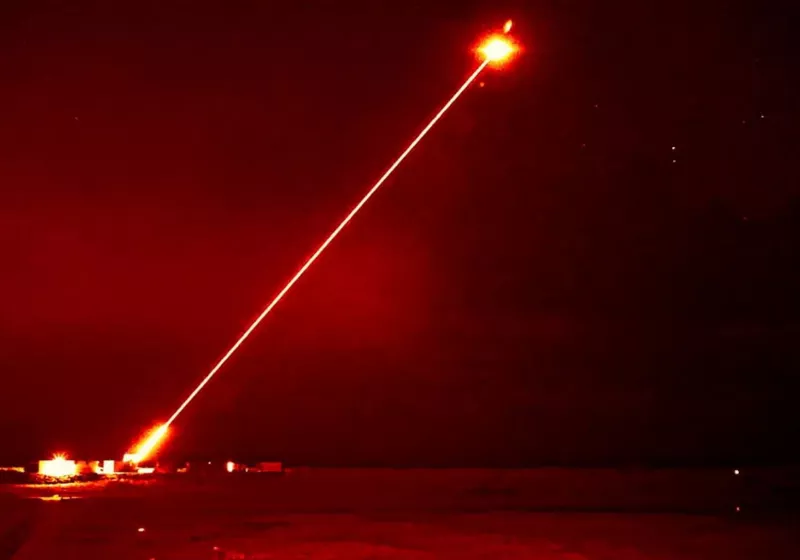
PowerLight’s approach centers on a laser-based power beaming method. In essence, a ground- or vehicle-mounted laser system transmits a focused beam to a receiver on the drone. The drone’s power system converts this incoming laser energy into usable electrical power, which can recharge its batteries or directly supply propulsion and payload systems. The practical challenges involve maintaining a stable link with tight beam quality, ensuring safety for operators and bystanders, and managing the energy transfer efficiently under variable atmospheric conditions. The company’s public statements emphasize that their tests have validated the core components required for wireless energy transfer, and that the technology is moving toward staged field trials and potential integration with Army platforms.
The potential benefits of laser-powered drone endurance are clear. Prolonged loiter times and extended patrols could reduce the need for frequent ground-based recharging infrastructure, lower the number of support sorties, and potentially increase mission success rates in persistent surveillance roles. For military planners, the ability to keep a force multiplier in the air longer can translate into more responsive and comprehensive situational awareness. However, these benefits must be weighed against several considerations, including safety, reliability, and the broader implications for warfare where long-range, persistent drones could alter the tempo and cost structure of air operations.
The path to deployment is inherently incremental. While the core components have reportedly passed critical tests, many layers remain before a full system can be used in active military missions. These layers include validating end-to-end reliability under diverse environmental conditions, ensuring robust fail-safes and emergency shutoff mechanisms, integrating with varied drone architectures and mission payloads, and complying with stringent safety and regulatory standards for laser emissions and airborne energy transfer. Additionally, the logistical framework for deploying and maintaining ground-based laser charging stations, including mobility considerations in dynamic theaters, must be developed and tested. The U.S. Army and other defense stakeholders typically require extensive demonstrations to certify new power sources, assess interoperability with existing platforms, and evaluate overall cost-effectiveness in relation to more traditional recharging methods and mission planning assumptions.
In-Depth Analysis
The concept of in-air laser charging intersects several fields of engineering: optical power transmission, high-efficiency energy conversion, and autonomous drone operation. At the core, the proposition is straightforward: supply a drone with energy while it remains aloft, thereby circumventing the need for periodic landings for battery swaps or recharging. Yet realizing this in a reliable, field-ready format involves addressing a complex set of technical challenges and operational considerations.
Beam stability and alignment are fundamental concerns. A drone in flight is dynamic, subject to wind, turbulence, and rapid maneuvers. Maintaining a precise, continuous focus of a laser beam on a moving receiver requires sophisticated tracking systems, high-precision sensors, and robust control algorithms. The energy conversion process—from laser light to electrical power, and then to chemical energy in the battery or direct electrical power for propulsion—must be highly efficient to make the approach viable, especially when energy demands fluctuate with payload, altitude, and flight profile. Even small losses in the energy transfer chain can negate the advantages of wireless charging, particularly over longer distances or in adverse weather.
Safety is another critical dimension. High-power laser systems pose significant risks to eyes and skin, and there are broader concerns about the potential for unintended exposure to bystanders, aircraft, or other equipment within line of sight of the beam. Operational protocols would need to address scenarios such as beam obstruction, misalignment, or system faults that could cause accidental energy deposition on unintended targets. In addition, the presence of laser-based charging systems in a military environment could attract attention from adversaries, potentially making charging nodes targets for countermeasures or interference. Regulatory frameworks governing laser emissions and airborne power transfer would shape how and where such systems can be deployed, particularly in civilian airspace or mixed-use environments.
Reliability and resilience also come into play. Military systems require high availability, with failover mechanisms that ensure continued operation even in the face of component failures or degraded link quality. Redundancy in both the energy source and the receiver, as well as robust shielding or contingency procedures for loss of link, would be essential. The integration with drone platforms adds another layer of complexity. Drones vary in size, weight, and power budgets, and a universal charging approach may not be feasible. Instead, modular solutions tailored to specific airframes and mission profiles might emerge, with different laser wavelengths, power levels, and receiver geometries optimized for particular drones.

*圖片來源:Unsplash*
Feasibility studies would likely explore tradeoffs between energy transfer distance, beam divergence, and transfer efficiency. For short-range operations, a ground-based or airborne laser can deliver higher power with tighter control, potentially enabling rapid recharging between mission legs. Over longer ranges, maintaining beam focus becomes more challenging due to atmospheric disturbances and geometric spreading. The system’s ability to function in diverse weather conditions—fog, rain, dust, and aerosol concentrations—will be a key determinant of its practicality in real-world military theaters.
Beyond the technical aspects, the strategic implications of durable, persistent drones are substantial. Drones equipped with in-flight charging could sustain continuous surveillance cycles in critical zones, reducing the need for frequent human or maintenance presence in contested environments. This could alter how command structures plan reconnaissance missions, with longer-duration data collection enabling more comprehensive situational awareness, event correlation, and rapid decision-making. However, persistent presence also raises ethical and legal questions about the encroachment of automated systems in conflict areas, potential escalation dynamics, and the risk of attributing or misattributing actions performed by autonomous platforms.
Perspectives and Impact
Experts in defense technology observe that advancing energy transfer to airborne platforms represents a significant frontier in military aerospace capabilities. If proven reliable and scalable, laser-powered charging could complement other approaches to extending drone endurance, such as advanced lightweight batteries, hybrid propulsion, or tethered power when feasible. The synergy between laser charging and autonomous flight systems could enable networks of drones operating in tandem, where a “charger drone” or fixed charging lattice maintains contact with a broader fleet, enabling a more persistent reconnaissance and response capability.
The U.S. Army’s interest underscores the strategic importance of extended endurance for mission effectiveness and risk reduction. In line with broader trends toward multi-domain operations and manned-unmanned teaming, continuous aerial awareness can provide higher-fidelity intelligence, surveillance coverage, and rapid targeting data to support decision-making across the battlefield. Yet the path from lab-scale validation to field deployment is nontrivial. It requires iterative testing, multi-scenario evaluations, and credible demonstrations of safety, reliability, and cost-effectiveness. The cost-benefit calculus must consider not only the price of the laser charging infrastructure and compatible drones but also maintenance, training, and the potential to reduce or reallocate personnel and logistic footprints.
Adversaries may respond to such technological advances with countermeasures. The emergence of robust laser charging capabilities could prompt rivals to invest in equally capable defense against energy transfer threats, including spoofing, jamming, or physically obstructing charging beams. This dynamic could drive parallel advances in secure beam control, hardening of drone receivers against spoofed energy signals, and the development of alternative energy sources that are less susceptible to disruption. The competitive landscape for this technology will likely touch on civilian research in laser communications, directed-energy applications, and advanced energy harvesting, with potential spillovers into aerospace, telecommunications, and industrial sectors.
Key Takeaways
Main Points:
– Laser-powered energy transfer aims to recharge airborne drones during flight, potentially extending mission endurance.
– Early testing reportedly validates core components needed for wireless energy transfer to drones.
– Army deployment prospects highlight growing interest in persistent ISR and unmanned operation capabilities.
Areas of Concern:
– Safety risks associated with high-power laser emissions and potential collateral exposure.
– Reliability challenges in dynamic flight conditions, weather, and beam alignment.
– Regulatory and standardization hurdles for deploying airborne energy transfer in military and civilian airspace.
Summary and Recommendations
The development of laser-based wireless charging for drones represents a bold step toward increasing the persistence and reach of unmanned systems in defense contexts. While early results from PowerLight indicate progress on core components and a path toward field demonstrations, the technology must pass through rigorous stages of testing to ensure reliability, safety, and interoperability with diverse drone platforms. The potential benefits include extended reconnaissance windows, reduced logistics footprints, and more flexible mission planning. However, success hinges on achieving robust beam-control systems, ensuring safe operation in varied environments, and addressing regulatory constraints that govern laser emissions and energy transfer in the air.
For policymakers, military planners, and technology developers, the prudent course is to pursue a structured development program that balances ambition with risk management. This includes:
– Advancing multi-domain demonstrations that couple laser charging with real-world drone missions.
– Establishing safety and operating standards to protect personnel, aircraft, and bystanders.
– Engaging with regulatory bodies to clarify permissible use cases and airspace considerations.
– Exploring modular drone architectures that can maximize energy transfer efficiency while maintaining payload flexibility.
– Preparing countermeasures and defense-in-depth strategies to address potential adversarial actions targeting charging links.
If these steps are effectively executed, laser-powered in-flight recharging could become a foundational technology for future unmanned fleets, enabling more persistent, responsive, and capable aerial operations in contested environments. The next phase will determine whether this concept remains a promising lab innovation or matures into a practical capability that reshapes how military drones are deployed and sustained.
References
– Original: TechSpot article reporting on PowerLight’s laser-powered drone charging near deployment with the US Army.
– Related sources: discussions of laser power beaming, airborne energy transfer research, and military applications of persistent UAVs. Additional reference links would be provided to complement the article and offer broader context on directed-energy concepts, drone endurance challenges, and policy considerations.

*圖片來源:Unsplash*