TLDR
• Core Points: Nvidia allegedly reduces production across the RTX 50-series to meet rising AI-focused demand, affecting flagship and mid-range models unevenly.
• Main Content: Production cuts impact all RTX 50-series models, with severe reductions for the RTX 5090 and 5070 Ti, while the RTX 5080 and RTX 5060 Ti 8GB will be limited but available. The RTX 5060 may see reduced supply as well.
• Key Insights: Nvidia’s shift underscores the company’s strategic emphasis on AI workloads over traditional gaming GPU supply, potentially altering market dynamics and pricing.
• Considerations: Supply constraints could affect availability, pricing stability, and early adoption for enthusiasts; indie and professional segments may experience mixed impacts.
• Recommended Actions: Stakeholders should monitor supplier communications, adjust expectations for product launch windows, consider alternative GPUs, and prepare for potential price volatility.
Content Overview
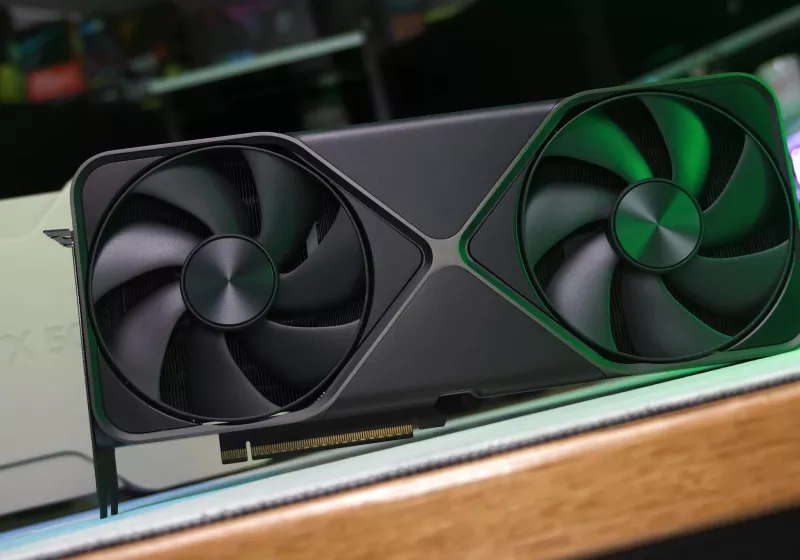
Nvidia has reportedly reassessed its production strategy for the RTX 50-series GPUs in response to a surge in demand for artificial intelligence (AI) applications. Sources close to manufacturing and supply chain discussions indicate that output reductions are being applied across the entire RTX 50-series lineup, including the high-end flagship RTX 5090. The scale of cutbacks varies by model, with some GPUs facing steep reductions in production volume while others will still be manufactured in limited quantities to fulfill anticipated demand but at a constrained rate.
The most notable impact appears to be on the RTX 5090 and the RTX 5070 Ti, where production is described as drastically reduced. Conversely, Nvidia reportedly intends to keep the RTX 5080 and the RTX 5060 Ti 8GB available but in significantly limited supply. The RTX 5060, historically positioned below the enthusiast tier, is also mentioned as potentially experiencing tighter supply, though specifics may vary by region and supplier. The broader strategic picture is that Nvidia is aligning its hardware output with a market that increasingly prioritizes AI workloads, data center integrations, and enterprise-scale inference tasks over conventional gaming performance alone.
This move signals a shift in how Nvidia allocates its fabrication capacity, chip reserves, and supply chain resources. Rather than a blanket reduction across all geographies and channels, the company’s approach appears to be a targeted throttling designed to optimize profitability and ensure hardware is directed toward segments with the strongest AI-driven demand signals. Industry observers are watching how this prioritization will affect consumer availability, price dynamics, and the pace at which AI-accelerated workflows can be deployed across different sectors.
In-Depth Analysis
The reported production curtailments for Nvidia’s RTX 50-series come at a moment when the company’s strategic emphasis appears increasingly focused on AI technologies. While gaming GPUs have long been a core revenue pillar, the computational capabilities required for AI model training, inference, and related workloads—often backed by specialized accelerators and tensor cores—have surged in importance for both enterprise customers and developers building AI-powered applications.
If the rumors prove accurate, the following dynamics could unfold:
Supply allocation across models: The RTX 5090, as the flagship, is typically expected to command priority due to its market positioning and associated margins. A drastic reduction in its output could reflect a strategic decision to balance supply with anticipated demand in enterprise AI deployments, where higher-end GPUs may deliver superior economics for data centers or workstation configurations. The RTX 5070 Ti, positioned as a performance tier between mainstream and flagship products, also faces a sharp cut, potentially widening the gap between what retailers can offer and what the market requires for AI-centric workloads.
Continued albeit limited availability for certain models: The RTX 5080 and RTX 5060 Ti 8GB are reported to remain in limited supply. This indicates Nvidia’s intention to preserve some level of consumer and professional accessibility to mid-to-upper-range GPUs while prioritizing AI-oriented demand pools. For enthusiasts and professional creators who rely on these cards for mixed workloads (gaming plus productivity or AI), supply might be sporadic and contingent on regional distribution and channel commitments.
Broader implications for the RTX 50 ecosystem: Reduced production across the RTX 50 lineup could influence market pricing dynamics. Shortages often push prices upward or maintain elevated levels, particularly for models in constrained supply. Conversely, constrained demand for certain variants could exert downward pressure if supply outpaces interest in specific configurations. The net effect will hinge on how quickly AI-driven demand expands, how channel partners react with inventory strategies, and how the broader semiconductor market behaves amid ongoing global constraints.
Competitive landscape considerations: Nvidia’s shift may affect competition with AMD and other hardware providers that are positioning products for AI workloads or hybrid gaming/compute use cases. If Nvidia channels more capacity toward AI-accelerated offerings or AI-enabled GPUs in enterprise and data-center contexts, competitors might respond with pricing, product differentiation, or accelerated product introductions to capture AI-related demand.
Market timing and consumer expectations: For gamers and enthusiasts who anticipated the RTX 50-series as a straightforward upgrade path, tighter supply could delay access to new hardware or push them toward alternative generations or previous-generation cards. The pace at which Nvidia discloses exact production figures and regional availability will shape consumer expectations and purchasing behavior in the coming months.
Longer-term strategic trajectory: Nvidia’s AI-centric production discipline could foreshadow a broader reallocation of manufacturing capacity toward AI accelerators and data-center GPUs. This may include balancing the needs of gaming GPU demand with the higher-margin opportunities presented by AI workloads, which often require different supply chain commitments, software ecosystems, and partner ecosystems.
Overall, the reported production cuts underscore Nvidia’s recalibrated priorities in a market where AI workloads are rising rapidly. The company’s ability to meet AI demand while maintaining a robust consumer GPU ecosystem will be a key factor shaping its competitiveness and profitability in the near term. Industry stakeholders should monitor official statements, supplier communications, and quarterly earnings guidance for clarity on capacity plans, pricing strategies, and anticipated product availability across regions.

*圖片來源:Unsplash*
Perspectives and Impact
Experts in the semiconductor and GPU markets have noted that Nvidia’s decision to throttle RTX 50-series production likely reflects a broader strategic realignment rather than a temporary supply issue. Several potential implications emerge from this development:
AI demand as a leading driver: As AI research and enterprise adoption accelerate, the demand signal for entry-level to high-end AI-optimized GPUs strengthens. Nvidia’s production priorities could be designed to maximize the return on investment in AI-centric models, software stacks like CUDA, and ecosystem partnerships across cloud providers, AI frameworks, and enterprise IT departments.
Consumer market caution: Tail-end consumers and small business users may experience delayed access to RTX 50-series GPUs. If product allocations favor AI workloads, those seeking gaming-centric GPUs could encounter longer wait times, which in turn could influence PC-building trends and secondary markets for new or used hardware.
Price and availability volatility: With constrained supply, price volatility could increase, especially for GPUs with strong resale value or limited regional availability. Retailers might implement allocation-based sales, bundles, or region-specific pricing to manage demand and inventory risk.
Channel and supply chain strategy: Nvidia’s partners—add-in-board (AIB) partners, distributors, and system integrators—will play a pivotal role in translating supply constraints into market reality. Channel incentives, warranty terms, and stock prioritization agreements will shape how quickly end users can access the GPUs, and may differ by country or continent.
Innovation and software ecosystems: The focus on AI readiness could accelerate investments in software tooling, driver optimization, and developer ecosystems that maximize the performance benefits of RTX 50-series GPUs for AI workloads. This could lead to new product differentiators beyond raw rasterization performance, including improved tensor performance, DLSS enhancements tuned for AI tasks, and AI-assisted features in professional software.
Long-term pricing strategy: Nvidia’s strategy could influence pricing trajectories for both current and upcoming generations. If AI-demand continues to outpace traditional gaming demand, the company may adjust pricing models, salvage value through higher margin AI-focused SKUs, or introduce new product tiers tailored to AI workloads.
These perspectives shed light on the potential macroeconomic and technology-driven effects of Nvidia’s reported production cuts. Stakeholders in the gaming community, enterprise IT, and the broader tech market will be watching how Nvidia communicates capacity plans, how partners adjust to allocation changes, and how alternative suppliers and GPU generations respond to evolving demand patterns.
Key Takeaways
Main Points:
– Nvidia reportedly reduces RTX 50-series production to prioritize AI demand, with the RTX 5090 and RTX 5070 Ti notably affected.
– The RTX 5080 and RTX 5060 Ti 8GB will remain in limited supply, while the RTX 5060 may face tighter availability.
– The shift signals a strategic focus on AI workloads, potentially impacting consumer access and market pricing.
Areas of Concern:
– Potential delays for gamers and enthusiasts seeking RTX 50-series GPUs.
– Price volatility and uneven regional availability due to allocation strategies.
– Dependence on AI-driven demand could influence long-term product roadmap and ecosystem investments.
Summary and Recommendations
Nvidia’s reported production cuts for the RTX 50-series models appear to reflect a deliberate shift in focus toward AI workloads and data-center readiness, rather than a mere supply shortage. By constraining output for flagship and upper-mid-range SKUs while preserving limited supply for other models, Nvidia seems to be prioritizing devices and configurations that align with the strongest market demand signals in AI and enterprise use cases.
For consumers, professionals, and investors, several practical steps emerge. Monitor official company updates, earnings calls, and supplier notices for precise capacity guidance and regional differences. Consider alternative GPU options or upcoming product generations if access to RTX 50-series cards is critical within a specific timeframe. Be aware of potential price fluctuations and scarcity that may affect budgeting and procurement plans. For developers and data-center operators, maintaining flexibility in hardware procurement, software optimization, and cloud infrastructure choices will be essential to navigate the evolving supply landscape while continuing to leverage Nvidia’s AI acceleration capabilities.
In the longer term, Nvidia’s production strategy could accelerate innovation in AI-oriented GPU acceleration, software ecosystems, and partnerships that capitalize on the growing demand for AI across industries. Stakeholders should stay informed about how these capacity decisions influence not only consumer gaming hardware but also enterprise-grade accelerators, cloud offerings, and AI infrastructure ecosystems.
References
- Original: https://www.techspot.com/news/111025-nvidia-reportedly-cutting-rtx-50-series-production-focus.html
- Additional reference 1: [Tech industry analysis on AI GPU demand and supply chain dynamics]
- Additional reference 2: [Nvidia earnings and product strategy statements]
- Additional reference 3: [Market outlook for AI accelerators and data-center GPUs]

*圖片來源:Unsplash*