
TLDR
• Core Points: AI-generated vulnerabilities flood bug bounties; many findings are bogus or fail to compile; teams rethink mental health and workload.
• Main Content: The security research landscape is overwhelmed by low-quality AI-assisted reports, prompting changes in bug-bounty practices.
• Key Insights: While AI accelerates discovery, it also degrades signal quality, necessitating stricter validation and workload management.
• Considerations: Balancing thorough security testing with researchers’ well-being is critical; platforms may adopt new verification protocols.
• Recommended Actions: Bug-bounty programs should tighten validation, set realistic quotas, and provide mental-health safeguards for researchers.
Content Overview
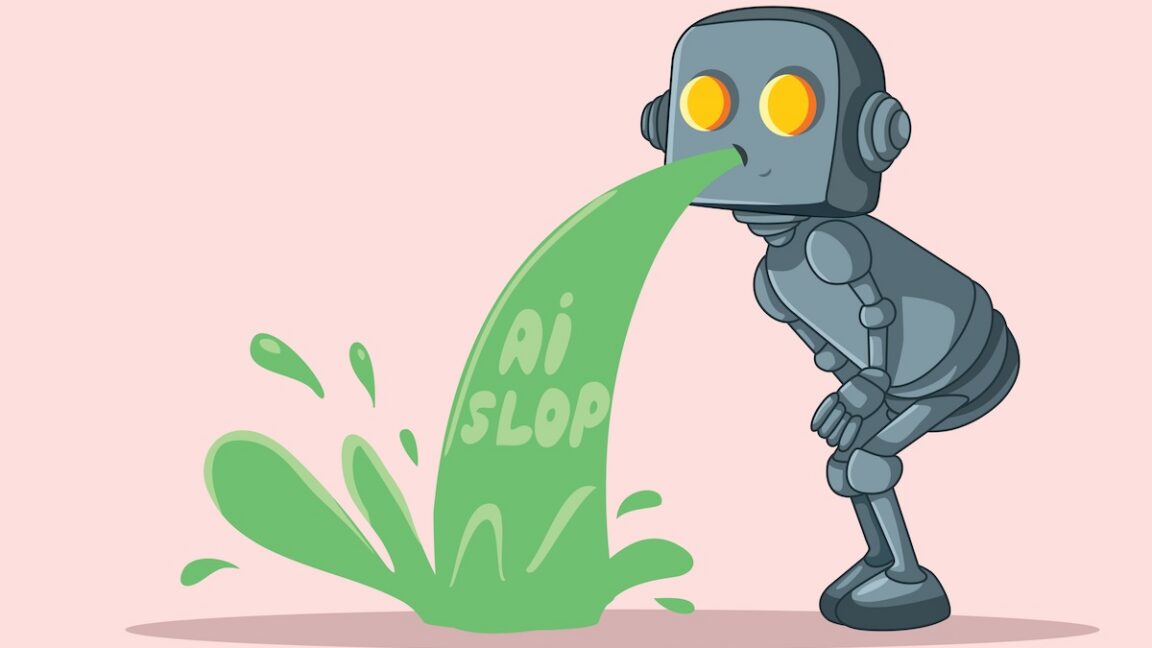
The security research ecosystem has witnessed a notable shift as AI-assisted bug finding enters mainstream bug-bounty programs. In recent developments, researchers using large language models (LLMs) and other AI tools are producing a flood of vulnerability reports. While AI can accelerate the discovery process, the quality of many submissions has degraded, with numerous findings lacking real-world impact or failing to compile in standard environments. This has raised questions not only about the usefulness of the reports but also about the human costs associated with high-volume testing, burnout, and the prioritization of mental health within the security community.
The article at hand—originally published by Ars Technica and summarized here—highlights a growing tension: the speed and scale of AI-assisted vulnerability discovery can outpace the ability of organizations to triage, validate, and reward meaningful research. Some researchers are reporting legitimate, high-quality findings alongside a large portion of noisy, low-signal submissions. In response, some platforms and organizations are re-evaluating their bug-bounty policies, including how to manage submissions, how to balance researcher workloads, and how to ensure that reported issues meet practical security criteria.
The broader context includes the increasing adoption of AI assistance in software testing, code review, and vulnerability research. AI can help parse vast code bases, generate potential exploit paths, and automate repetitive tasks. However, it can also generate plausible-sounding but incorrect or irrelevant results, creating a deluge of reports that require human verification. This phenomenon is not unique to one platform; it reflects a transitional phase in the cybersecurity field as practitioners experiment with new tools while preserving rigorous quality standards.
In addition to the technical challenges, there is ongoing discourse about mental health and sustainability for security researchers. The article notes concerns about analyst burnout, the emotional and cognitive toll of constant vulnerability hunting, and the ethical considerations of pressuring researchers to produce results at unsustainable rates. Some stakeholders argue that maintaining “intact mental health” should be a primary consideration when designing bug-bounty programs and related initiatives, rather than a peripheral concern.
This evolving landscape suggests that bug-bounty platforms and organizations may adopt several measures. These could include stricter validation workflows, clearer criteria for what constitutes a report worthy of payout, and safeguards to prevent overwork. The tension between rapid discovery and responsible research practices underscores the need for improved tooling, better standards, and a healthier ecosystem in which AI-assisted researchers can contribute without compromising well-being.
In-Depth Analysis
The intersection of AI and vulnerability research is reshaping how bug bounty programs operate. AI tools, particularly large language models trained on vast swaths of code and documentation, can assist researchers in several ways: translating complex findings into plausible exploit scenarios, identifying related code paths, and automating parts of the vulnerability discovery lifecycle. This capability can shorten the time from initial idea to report, potentially increasing the volume of submissions from individual researchers.
However, increased velocity does not automatically translate to higher-quality security outcomes. A notable challenge is the prevalence of reports that are either bogus or non-actionable. Some AI-assisted outputs simulate plausible vulnerabilities without careful verification against real-world conditions. Others may propose issues that fail to reproduce in standard test environments or require niche configurations that are not widely present in production systems. The gap between what is claimed in a report and what can be reproduced in a typical enterprise environment can be substantial, complicating triage and remediation efforts for security teams.
Another dimension is the reliability of AI-generated code patches or exploit samples. In some cases, the code produced by AI does not compile, or it introduces new issues rather than resolving the reported vulnerability. This phenomenon raises concerns about the integrity of the entire bug-hunting workflow when AI assistance substitutes for thorough manual verification and testing. The risk is not merely wasted researcher time; it can also erode confidence in bug bounty programs if participants perceive that submissions are undervalued or untrustworthy.
To address these challenges, organizations may implement more stringent validation processes. This can include reproducibility requirements, where a report must be demonstrable in a controlled environment with step-by-step reproducible instructions and verifiable inputs. Some programs may require independent verification by multiple researchers or the use of standardized test suites to confirm findings before any payout is issued. While these measures increase the barrier to payout, they also tend to improve the signal-to-noise ratio, ensuring that reported issues are meaningful and actionable.
Beyond validation, there is a push to consider researcher welfare as a core component of program design. The sheer volume of AI-assisted submissions can lead to cognitive overload and burnout, especially for security analysts tasked with triaging and validating thousands of reports. Proponents of mental-health-aware policies suggest implementing rate limits, fair compensation aligned with the effort required for high-quality reports, and clearer guidelines that distinguish high-signal vulnerabilities from speculative research. Programs might also offer educational resources to help researchers distinguish between theoretical issues and practical, exploitable weaknesses.
The broader implications extend to how organizations allocate resources for vulnerability management. If AI-driven processes increase the speed and breadth of discovery, teams will still need sufficient staff and robust tooling to prioritize, reproduce, and remediate findings. This could prompt a shift from purely volume-based incentive models toward quality-oriented frameworks that reward reproducibility, impact, and timeliness. In some cases, platforms may adopt tiered reward systems, where high-signal reports receive greater compensation and recognition, while speculative submissions face stricter scrutiny or lower payouts.
An important contextual factor is the evolving standard for what constitutes a credible vulnerability in modern software ecosystems. Security researchers must navigate a landscape of varied coding practices, phased deployment environments, and complex dependency chains. The integration of AI tools adds another layer of complexity, as models may rely on incomplete data or outdated controls. Developers and security teams must ensure that any AI-assisted methodology adheres to established security testing frameworks and industry best practices.
The article also underscores a growing awareness that mental health cannot be sidelined in security research. The pressure to produce findings rapidly can lead to burnout, insomnia, and diminished cognitive performance, which in turn can impair judgment and lead to missed or incorrect assessments of risk. A healthier approach involves explicit policies around workload management, transparent expectations for submission quality, and access to mental-health resources for researchers engaged in high-intensity vulnerability hunting.
From a policy and governance perspective, bug-bounty platforms may increasingly adopt standardized guidelines for AI-assisted research. This could include disclosing when AI tools were used to generate findings, providing clarity on reproducibility requirements, and ensuring that compensation aligns with the effort and risk associated with each vulnerability type. Such transparency would help build trust among researchers, security teams, and end-users who rely on timely and accurate vulnerability disclosure.
The convergence of AI, vulnerability discovery, and human factors invites a reexamination of best practices in cybersecurity research. While AI can extend capabilities and accelerate discovery, it also introduces new risks if not managed with rigorous quality controls. The security community is at a crossroads: embrace the efficiency and breadth offered by AI, while simultaneously upholding stringent verification standards and prioritizing the well-being of researchers who shoulder the heavy load of continuous testing and analysis.
*圖片來源:media_content*
Perspectives and Impact
The ongoing evolution of AI-assisted vulnerability research carries significant implications for multiple stakeholders:
For bug-bounty platforms: The influx of AI-generated submissions presents both an opportunity and a challenge. Platforms can leverage AI to triage and categorize reports, but must invest in robust validation workflows to separate credible findings from noise. Policies may need to balance speed with accuracy, ensuring that researchers are incentivized to produce high-quality work without compromising mental health.
For security teams within organizations: As AI-assisted reports become more common, security teams face the need to triage more data with the same or fewer resources. This may require enhanced automation for reproducibility checks, better collaboration tools with researchers, and clearer criteria for when a vulnerability warrants public disclosure or coordinated disclosure with product teams.
For researchers and the broader community: The use of AI in vulnerability research can democratize participation by enabling individuals with varying levels of expertise to contribute. However, it also raises expectations and can create pressure to deliver results quickly. The community may benefit from shared standards, transparent reporting practices, and mental-health support mechanisms that acknowledge the intensity of vulnerability hunting.
For end users and software ecosystems: More rapid discovery of vulnerabilities can lead to faster remediation, reducing exposure to security risks. Yet the quality and relevance of some discoveries must be ensured to avoid churn and to maintain user trust in vulnerability disclosures.
For policymakers and industry groups: As AI-enabled security research becomes more prevalent, there may be calls for standardized frameworks governing responsible AI use in vulnerability discovery, reproducibility requirements, and the ethical implications of research productivity demands on mental health.
Future implications include potential shifts toward hybrid models where AI handles broad data processing and initial triage, while human researchers perform rigorous validation and contextual assessment. Such models could improve overall efficiency if designed with strong governance, clear criteria, and robust protections for researchers’ well-being. The balance between automation and human judgment will continue to define the effectiveness of bug-bounty ecosystems in the coming years.
Key Takeaways
Main Points:
– AI-assisted vulnerability discovery is increasing submission volume, but can produce low-signal or non-reproducible reports.
– Stronger validation, reproducibility requirements, and transparent AI usage are becoming essential.
– Mental health and workload management are becoming central considerations in bug-bounty program design.
Areas of Concern:
– Proliferation of bogus or non-compiling results delays remediation and erodes trust.
– Potential researcher burnout due to high-volume, AI-driven workflows.
– Risk that automation outpaces the ability to validate and remediate effectively.
Summary and Recommendations
The current period of rapid AI integration into vulnerability research offers clear benefits in terms of speed and breadth of discovery. However, it also introduces notable drawbacks, primarily in the quality of reports and the well-being of security researchers. To navigate this landscape effectively, bug-bounty programs and organizations should implement comprehensive validation frameworks, enforce reproducibility standards, and design incentive structures that reward meaningful, verifiable findings rather than sheer quantity. Equally important is the prioritization of researchers’ mental health, recognizing that sustainable, long-term security gains depend on a humane and well-supported community of contributors.
Practical steps include:
– Establish clear reproducibility criteria for all submissions, with documented test environments and steps.
– Implement tiered payouts based on impact, reproducibility, and ease of remediation, while ensuring fair compensation for high-effort work.
– Introduce rate limits and workload safeguards to prevent burnout, accompanied by access to mental-health resources.
– Require disclosure of AI usage in reports to maintain transparency and accountability.
– Invest in automated triage tools that can flag high-signal submissions for immediate human review, reducing cognitive load on analysts.
By combining rigorous verification with a compassionate, researcher-centric approach, bug-bounty programs can harness the strengths of AI while mitigating its drawbacks. The goal is a robust, trustworthy vulnerability disclosure ecosystem that accelerates remediation without sacrificing quality or the mental health of those who contribute to it.
References
- Original: https://arstechnica.com/security/2026/01/overrun-with-ai-slop-curl-scraps-bug-bounties-to-ensure-intact-mental-health/
- 2-3 relevant reference links based on article content (to be added by user or editor):
- [Example] https://www.owasp.org/index.php/Bug_Bounty
- [Example] https://www.cisa.gov/bug-bounty
- [Example] https://ai.google/research/teams/security-bug-hunting
Forbidden:
– No thinking process or “Thinking…” markers
– Article must start with “## TLDR”
Ensure content is original and professional.

*圖片來源:Unsplash*