TLDR
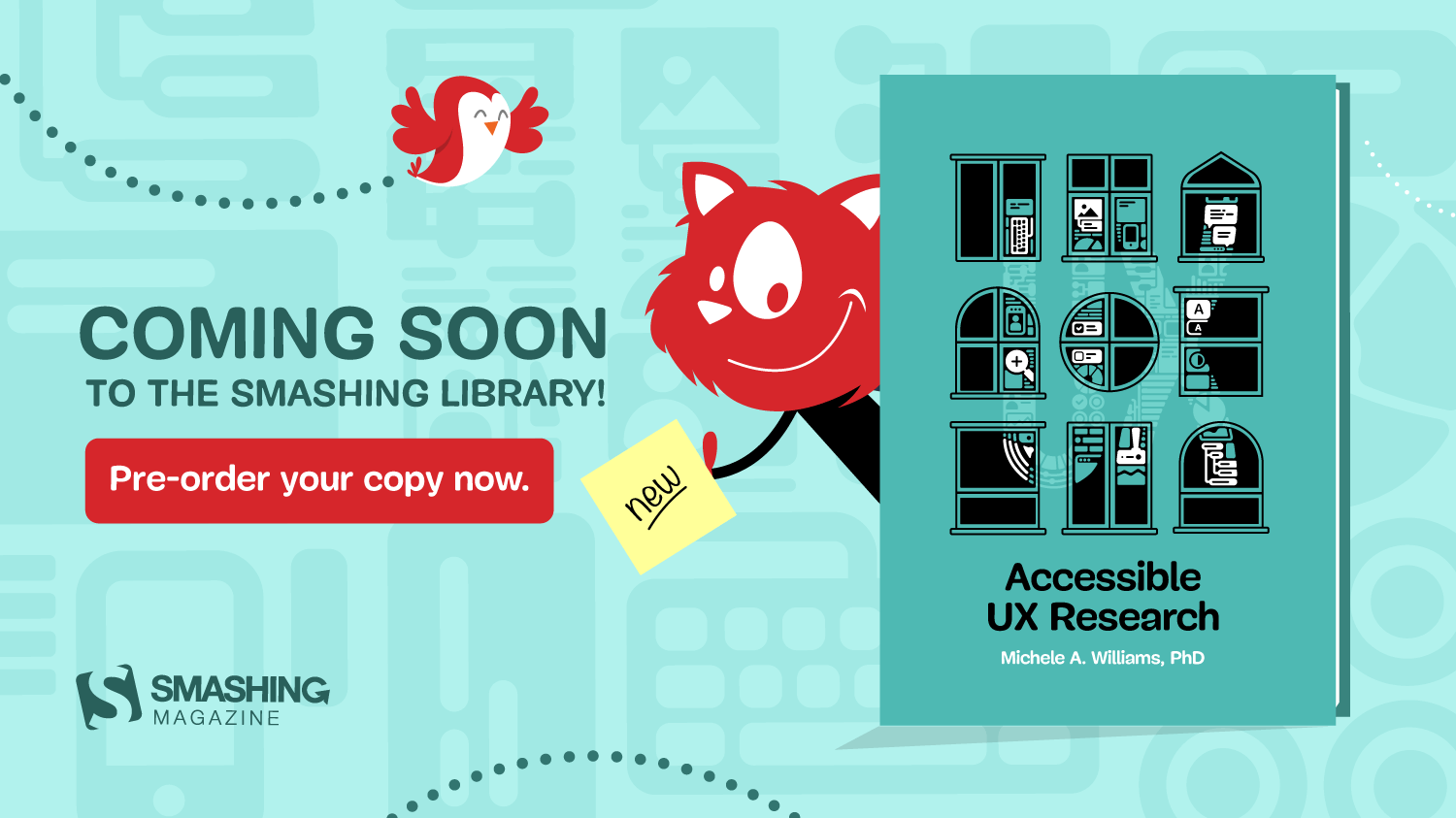
• Core Points: Accessible UX Research eBook by Michele A. Williams is available for instant download; presale options for the print edition are open.
• Main Content: The eBook version is ready for immediate access, with a print copy available at a discount during presale.
• Key Insights: The publication targets UX professionals seeking accessible, inclusive research practices and practical guidance.
• Considerations: Readers should note the upcoming printer release and potential delays for physical copies.
• Recommended Actions: Download the eBook now and reserve the print edition at the presale price if preferred.
Content Overview
Accessible UX Research is a new Smashing Book authored by Michele A. Williams, addressing how to conduct user experience research with an emphasis on accessibility and inclusion. The eBook version has reached a release milestone, making it available for instant download. This marks a critical step before the book proceeds to print, signaling the transition from digital to physical distribution. The presale option invites interested readers to reserve a print copy at a discounted rate, helping publishers gauge demand and plan production accordingly.
The core aim of Accessible UX Research is to equip researchers, designers, and product teams with methodologies that ensure accessibility is integrated throughout the research lifecycle. Williams blends theory with practical approaches, offering frameworks, checklists, case studies, and actionable techniques to capture diverse user experiences—especially for people with disabilities and accessibility-related considerations. The book situates accessible research not as a separate specialty but as an essential component of comprehensive UX practice.
In the broader context of UX publishing, Smashing Magazine’s Smashing Books series has built a reputation for practical, hands-on guidance. This title contributes to that lineage by foregrounding accessibility as a central research principle rather than an afterthought. The move to an eBook format aligns with contemporary reading patterns, enabling quick access for professionals who may need to reference chapters during fieldwork or collaborative sessions. The presale option for the print edition reflects a common strategy in publishing to balance demand forecasting with production logistics.
The announcement comes at a time when accessibility regulations, inclusive design standards, and ethical considerations are increasingly influential in product development. Researchers and teams are encouraged to adopt inclusive research practices, recruit diverse participants, and design studies that capture a wide range of user experiences. By foregrounding these elements, Accessible UX Research aims to help organizations make informed decisions that improve usability for all users, including those who are often underserved.
In-Depth Analysis
Accessible UX Research presents a structured approach to conducting user research with accessibility at the core. The eBook format allows readers to access content instantly, enabling agile integration into project workflows. The book’s core sections likely cover topics such as defining inclusive research goals, recruiting diverse participants, designing accessible study materials, and analyzing findings through an equity-focused lens. While the exact table of contents is not provided here, the emphasis on accessibility suggests a combination of theory, practical methods, and checklists designed to help teams implement inclusive practices without compromising rigor.
Michele A. Williams is positioned as an authority capable of translating accessibility principles into actionable research steps. This involves concrete guidance on choosing appropriate research methods, adapting data collection tools for accessibility, and presenting results in ways that stakeholders can act upon. The eBook format supports rapid updates and distribution, which is beneficial in a field where best practices evolve with new standards and technologies.
The transition to print, signaled by the presale offer, indicates a dual distribution strategy. Ebooks provide immediate access and broad reach, while print copies offer a tangible product for teams that prefer physical resources, training materials, or references in workshops. The presale pricing also serves as a courtesy to early adopters who want to secure a discounted rate, aiding forecasting for print production and inventory management.
From a methodological perspective, accessible UX research requires attention to several key dimensions:
– Participant diversity: Ensuring representation across abilities, ages, cultural backgrounds, and contexts.
– Material accessibility: Designing surveys, interview guides, and usability tasks that are perceivable, operable, and understandable by people with varying abilities.
– Data interpretation: Analyzing findings with sensitivity to accessibility-related biases and ensuring that insights do not overlook marginalized groups.
– Ethical considerations: Protecting participant privacy, obtaining informed consent in accessible formats, and minimizing any potential harm.
– Communication of results: Presenting insights in formats that stakeholders can apply to product design, with clear implications for improving accessibility.
The inclusion of case studies or practical examples would enhance the book’s value by showing how accessible research translates into design decisions, product improvements, and policy changes within organizations. Readers can expect templates, checklists, and exemplars that facilitate the adoption of inclusive research practices without slowing down project timelines.
In the broader landscape of UX publishing, Accessible UX Research aligns with a growing demand for practical guidance on accessibility. As organizations confront legal, ethical, and user-centered imperatives, resources that demystify accessible research can accelerate adoption and improve outcomes for diverse user populations. The ebook’s availability also reflects a trend toward flexible, digital-first distribution strategies that respond to the needs of working professionals who require rapid access to knowledge.
—

*圖片來源:Unsplash*
Perspectives and Impact
The release of Accessible UX Research as an ebook, with a forthcoming print option, has potential implications for practitioners, educators, and organizations focused on inclusive design. For practitioners, the immediate download means they can begin applying inclusive research principles to current projects without delay. Quick access can facilitate live study adaptations, iterative testing, and stakeholder alignment around accessibility goals.
Educators and trainers benefit from a readily distributable resource that can be integrated into curricula, workshops, and professional development programs. The ebook format enhances portability, enabling students and professionals to reference content during lectures, labs, or fieldwork. Print presales provide a bridge to classroom use where physical copies may be preferred for note-taking, annotation, or group study sessions.
For organizations, Accessible UX Research supports strategic objectives related to accessibility compliance and user inclusivity. By equipping teams with concrete methods to recruit diverse participants, design accessible research instruments, and interpret findings through an equity lens, the book can contribute to more inclusive products and better user experiences across a broader audience. The publication also speaks to the ongoing shift toward integrating accessibility into the core of UX practice, rather than treating it as a specialized or peripheral concern.
Future implications include the potential for follow-up editions or companion resources that expand on industry-specific applications, such as accessibility testing for mobile apps, websites, enterprise software, or emerging technologies. As accessibility standards evolve (e.g., WCAG guidelines, accessibility laws, and inclusive design frameworks), the book could serve as a foundational reference that practitioners revisit when updating research practices or conducting training sessions.
journals, conferences, and professional networks may reference Accessible UX Research as a practical toolkit that complements theoretical discussions. Its impact could be measured by adoption rates in teams that report improved participation rates among diverse users, more representative data, and clearer pathways from research insights to accessible product improvements.
—
Key Takeaways
Main Points:
– An eBook version of Accessible UX Research by Michele A. Williams is available for instant download.
– A print edition is available for presale at a discounted price, with production planned after the ebook release.
– The book emphasizes accessibility and inclusion as integral components of user research.
Areas of Concern:
– Potential delays between ebook release and print production could affect delivery timelines for physical copies.
– The effectiveness of the book depends on readers’ ability to implement inclusive practices within their specific organizational contexts.
– Availability and pricing dynamics may influence early adoption and distribution in different markets.
Summary and Recommendations
Accessible UX Research represents a timely and practically oriented contribution to the field of user experience. By prioritizing accessibility within the research process, the book aims to help professionals design studies, gather data, and translate insights into products that better serve a wide range of users. The immediate availability of the eBook supports rapid knowledge transfer, enabling researchers, designers, and teams to begin integrating inclusive practices into ongoing projects. The presale option for the print edition offers a thoughtful mechanism to balance demand forecasting with production planning, while also providing early supporters with cost benefits.
For readers and organizations considering this resource, the recommended approach is as follows:
– Download the eBook now to access the content without delay and start applying inclusive research techniques in current projects.
– If a physical reference is preferred for training sessions, workshops, or lengthy onboarding programs, place a presale order for the print edition to lock in the discounted price and aid production planning.
– Use the book as a practical companion to implement accessible research practices, incorporating diverse participant recruitment, accessible materials design, and equity-centered analysis.
As accessibility standards continue to influence product development and policy, Accessible UX Research can serve as a foundational guide. Readers should anticipate updates, supplementary materials, or future editions that expand on industry-specific applications and evolving accessibility guidelines, further strengthening the linkage between research processes and inclusive design outcomes.
References
- Original: https://smashingmagazine.com/2025/12/accessible-ux-research-ebook-release/
- Additional references:
- WCAG 2.2 and accessibility standards overview
- Inclusive Design Principles and case studies in UX research
- Best practices for recruiting diverse participants in accessibility studies

*圖片來源:Unsplash*