TLDR
• Core Points: Spring Boot’s RestClient provides a synchronous HTTP client that streamlines inter-service communication, improving readability, error handling, and maintainability compared to RestTemplate.
• Main Content: The article argues that modern backend architectures require services to call other services and consume external APIs, and that RestClient offers a cleaner, more robust approach than RestTemplate.
• Key Insights: RestClient simplifies HTTP interactions with better defaults, clearer code paths for responses and errors, and a more future-proof API surface within Spring Boot.
• Considerations: While RestClient improves ergonomics, developers should still consider features like retries, backoff strategies, circuit breakers, and observability.
• Recommended Actions: Evaluate migrating from RestTemplate to RestClient for new code, and plan an incremental migration for legacy codebases with attention to compatibility and testing.
Content Overview
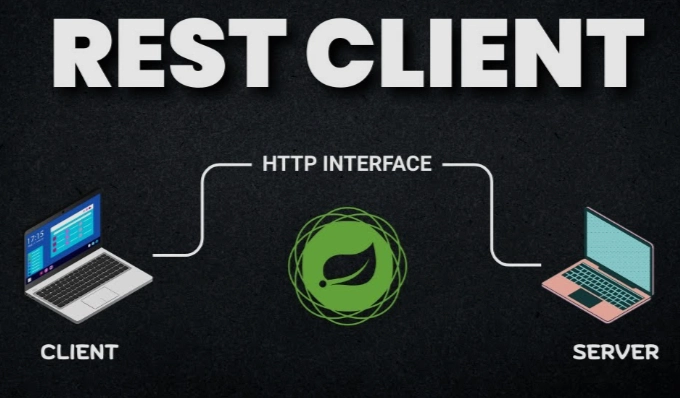
In the Spring Boot ecosystem, developers frequently focus on creating REST endpoints to expose functionality. However, real-world applications also demand consuming external services and APIs. This bidirectional communication—where a backend service must call other services and parse their HTTP responses—poses challenges around readability, error handling, and reliability when using older HTTP client approaches such as RestTemplate.
The central premise of the discussion is that RestClient, Spring Boot’s modern HTTP client, offers a cleaner and more maintainable solution for making synchronous HTTP calls compared to RestTemplate. The author argues that RestClient aligns better with typical backend requirements: concise request construction, straightforward response handling, and a more natural code rhythm for dealing with successes and failures. While not a wholesale replacement of all HTTP interaction patterns, RestClient provides a refined approach that reduces boilerplate and improves clarity, especially in projects with significant inter-service communication.
This article aims to articulate why developers might prefer RestClient, outline its core characteristics, and discuss practical implications for teams considering migration from RestTemplate or starting new projects with RestClient from the outset.
In-Depth Analysis
Spring Boot’s evolution in HTTP client design has been driven by the needs of microservices architectures, where services frequently consume the endpoints of other services. RestTemplate, once a staple in many Spring applications, has reached a point where developers encounter increasing boilerplate and complexity as they handle various response types, error scenarios, and compatibility concerns with newer HTTP features. RestClient emerges as a more modern alternative designed to address these issues by offering a streamlined, synchronous API that emphasizes readability and maintainability.
Key characteristics of RestClient include:
- Synchronous HTTP calls with a simple, expressive API surface. The client aims to reduce the cognitive load required to configure requests, execute them, and process responses. This translates to more readable service code where the intent of the HTTP interaction is immediately clear.
- Built-in handling for HTTP responses and errors. RestClient provides clear pathways for dealing with common patterns such as successful responses, client/server errors, and network failures. The design seeks to make error handling more predictable and less error-prone than legacy approaches.
- Cleaner abstraction for request/response mapping. While you still map JSON or other payloads to Java objects, RestClient tends to offer a more ergonomic integration with Spring’s data binding and validation ecosystems, reducing repetitive boilerplate code.
- Better compatibility with evolving Spring Boot features. As Spring Boot and the wider Spring ecosystem evolve, RestClient is positioned to integrate with modern practices around configuration, properties binding, and testability, aligning with the direction of Spring’s development roadmap.
From a developer’s perspective, migrating to RestClient can yield several practical benefits:
- Reduced boilerplate: A leaner API surface means less repetitive code for constructing requests, parsing responses, and handling common error cases.
- Clearer error semantics: A more predictable approach to error propagation helps ensure that failures are surfaced and handled in a consistent manner across services.
- Improved testability: With a simpler API and more consistent behavior, writing unit and integration tests for HTTP interactions becomes more straightforward.
- Alignment with Spring’s direction: Using RestClient can help teams stay aligned with ongoing Spring Boot improvements and recommended practices for HTTP communication.
However, adopting RestClient is not a silver bullet. Teams should still consider:
- Reliability patterns: Retries, backoff policies, and circuit breakers may still be necessary for robust inter-service communication, particularly in distributed systems.
- Observability: Centralized tracing, metrics, and logs remain essential for diagnosing HTTP calls. Ensure RestClient integrations complement your existing observability stack.
- Migration impact: For established projects heavily reliant on RestTemplate, a careful migration plan is essential to avoid destabilizing behavior, especially for edge-case error handling or custom interceptors.
- Feature parity: While RestClient covers common use cases well, some niche scenarios or legacy integrations may require bespoke approaches or continued use of RestTemplate in specific paths.
In practice, teams starting new projects or actively redesigning service boundaries may benefit from adopting RestClient from the outset. For existing codebases, an incremental migration strategy—prioritizing high-traffic endpoints or new service integrations—can yield benefits without overwhelming the development process.

*圖片來源:Unsplash*
Overall, the argument centers on maintainability and clarity. RestClient represents a cleaner, more modern way to perform HTTP calls within Spring Boot, especially in environments where services frequently talk to other services and consume external APIs. By reducing boilerplate, clarifying error handling, and aligning with the Spring ecosystem’s evolution, RestClient can be a compelling choice for developers seeking a streamlined approach to REST communication.
Perspectives and Impact
The shift from RestTemplate to RestClient reflects a broader trend in software engineering: favoring cleaner abstractions that reduce boilerplate and improve readability without sacrificing robustness. As microservice ecosystems expand, the number of inter-service HTTP interactions grows, amplifying the importance of maintainable code that developers can reason about quickly.
Adopting RestClient can influence several aspects of a project and organization:
- Developer productivity: Cleaner code paths for HTTP interactions enable faster implementation and easier onboarding for new team members.
- Code quality: Reduced boilerplate lowers the surface area for bugs in request construction, response parsing, and error handling.
- Consistency: A unified approach to HTTP communications across services fosters more predictable behavior and easier governance.
- Tooling and testing: Improved testability and compatibility with Spring Boot’s testing utilities can lead to more effective end-to-end and integration tests.
- Roadmap alignment: Aligning with current and future Spring Boot directions helps teams future-proof their architectures and reduce technical debt.
Future implications include continued refinements to RestClient and related Spring components, broader ecosystem adoption, and potential integrations with additional features such as reactive extensions, client-side caching, and enhanced observability. While RestClient may not solve every problem in distributed systems, its emphasis on clarity and maintainability makes it a strong candidate for teams prioritizing robust inter-service communication.
Key Takeaways
Main Points:
– RestClient offers a cleaner, more maintainable alternative to RestTemplate for synchronous HTTP calls.
– It emphasizes clearer error handling, reduced boilerplate, and better alignment with Spring Boot’s modern practices.
– Migration decisions should weigh reliability patterns and observability needs, with an incremental approach for existing codebases.
Areas of Concern:
– Ensuring compatibility during migration and preserving edge-case behaviors.
– Implementing advanced resilience patterns (retries, backoff, circuit breakers) alongside RestClient.
– Maintaining observability across diverse service interactions.
Summary and Recommendations
For teams building modern Spring Boot applications that depend on inter-service communication or consumption of external APIs, RestClient represents a compelling option to simplify HTTP interactions. Its streamlined API and improved error handling can lead to clearer, more maintainable service code, which in turn reduces development friction and accelerates feature delivery.
Organizations should assess their current HTTP client usage, identify willingness to invest in migration efforts, and consider starting with new endpoints or high-impact services. An incremental migration strategy—prioritizing frequently accessed paths or newer services—can provide early benefits while minimizing risk. Complement RestClient adoption with robust resilience patterns, comprehensive observability, and thorough testing to ensure reliable and observable inter-service communication as part of a broader, resilient Spring Boot architecture.
References
- Original: https://dev.to/shashwathsh/i-stopped-using-resttemplate-spring-boot-restclient-is-cleaner-3hg
- Additional references:
- Spring Boot Reference Guide: HTTP Clients and RestTemplate Deprecation (official Spring docs)
- Spring Cloud Documentation on resilience patterns (retry, circuit breaker) and Spring’s reactive vs. synchronous HTTP clients
- Community discussions and migration guides comparing RestTemplate and RestClient usage patterns

*圖片來源:Unsplash*