TLDR
• Core Points: Showrunner Ira Parker explains the stylistic choice to narrate the series entirely from Dunk’s perspective, preserving George R.R. Martin’s novella voice.
• Main Content: The series maintains a single-narrator approach, aligning with the source material and Martin’s storytelling style.
• Key Insights: POV consistency shapes tone, character focus, and pacing, while balancing fan expectations with literary fidelity.
• Considerations: Maintaining this perspective requires careful scene selection and faithful adaptation of Dunk’s insights and narration.
• Recommended Actions: Viewers should approach episodes as a direct extension of Dunk’s narration, with attention to how memory and guidance drive the plot.
Content Overview
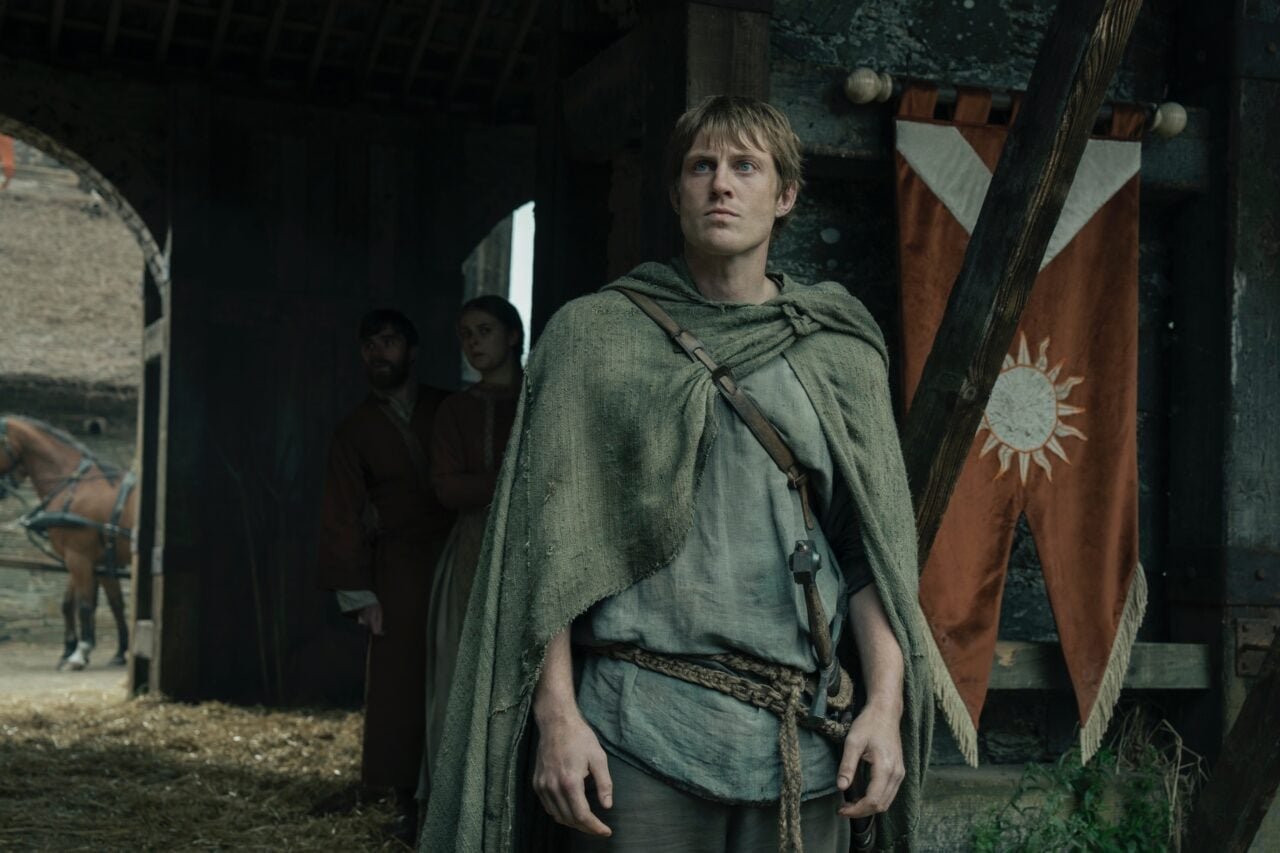
A Knight of the Seven Kingdoms is a television project that embraces a distinctive narrative strategy: it is told almost entirely through the eyes of Dunk, the young knight who anchors George R.R. Martin’s novella. Showrunner Ira Parker has articulated the decision to preserve the storytelling texture and cadence of Martin’s original writing, aiming for a faithful adaptation that resonates with fans familiar with the source material as well as new audiences discovering Dunk’s world. The approach is not merely a stylistic flourish but a deliberate method to translate a literary voice into a visual medium, ensuring that the series reads like an extension of Martin’s prose.
The decision to center the narrative on Dunk’s perspective has several practical and creative implications. First, it establishes a consistent frame of reference throughout the episodes. Viewers experience events filtered through Dunk’s observations, memory, and moral compass, which in turn shapes how action unfolds and how characters are perceived. This constraint fosters a cohesive tonal quality, aligning the series with the novella’s contemplative pace and attention to personal detail. Second, the POV approach influences the pacing of reveals and backstory. Dunk’s recounting of past deeds and experiences guides viewers toward a measured sense of history within the Seven Kingdoms, balancing immediacy with reflective storytelling. Finally, the choice positions the show as a faithful homage to Martin’s work, signaling respect for the source material while inviting audiences to engage with the adaptation on its own terms.
The conversation around this creative decision has drawn attention to the challenges of translation from page to screen. Capturing the air of Martin’s prose—its subtle humor, its moral ambiguity, and its sense of mythic scope—requires careful scriptwriting, casting, and direction. Parker and the production team have been tasked with ensuring that Dunk’s voice remains credible across different contexts, from intimate character moments to sweeping episodes that cover major battles or political maneuvers. The result is a narrative approach that prizes depth over breadth, seeking to immerse viewers in the inner life of a knight who grew from squire to legend.
In summarizing the approach, Parker emphasizes fidelity to the source material while acknowledging the inherent differences between a novella’s format and a serialized television experience. The adaptation aims to preserve Dunk’s cadence—the way he frames events, weighs decisions, and interprets the actions of others—so that the audience shares in his provisional judgments and evolving understanding of chivalry, honor, and consequence. The production thus foregrounds Dunk’s perspective as a lens through which the broader world of the Seven Kingdoms is perceived, interpreted, and ultimately understood.
Overall, the series stands as a careful act of literary-to-television translation. By anchoring the storytelling in Dunk’s point of view, it seeks to maintain a strong sense of voice, a disciplined narrative structure, and a connection to George R.R. Martin’s novella that inspired the adaptation. The result is a project that aims to honor the source material while offering viewers a cohesive, character-driven experience that unfolds through the eyes of a knight who has become a touchstone for readers and fans alike.
In-Depth Analysis
The central conceit of A Knight of the Seven Kingdoms’ adaptation is its unwavering commitment to Dunk’s point of view. This approach is not merely a narrative gimmick but a deliberate stylistic choice designed to reproduce the cadence and texture of Martin’s writing on screen. Dunk’s perspective acts as both guide and filter: it shapes what is shown, how it is interpreted, and why certain moments resonate with readers in the same way they do with television audiences.
From a craft standpoint, maintaining a single, consistent narrator offers several advantages. It creates a stable emotional throughline across episodes and seasons, allowing viewers to form a durable emotional attachment to Dunk. It also constrains the scope of the story in meaningful ways, forcing writers to justify each scene’s inclusion through Dunk’s memories, insights, or moral judgments. This constraint mirrors the novella’s introspective style, where events are often framed within Dunk’s reflective narration, rather than through an omniscient or multi-angled perspective.
The production team’s aim to stay faithful to Martin’s voice involves more than replicating plot points. It requires translating the novella’s tonal shading—the humor, humility, and occasional bluntness of Dunk’s observations—into dialogue, performance, and imagery. Actors are tasked with delivering lines that feel both specific to a moment in Dunk’s life and representative of his broader worldview. Directors seek visual motifs that echo the novella’s literary mood, using pacing, lighting, and shot composition to evoke the sense of a memory being recollected or a lesson being passed from mentor to apprentice.
Parker’s commentary underscores the balance between fidelity and cinematic necessity. While the POV approach anchors the adaptation to Dunk’s consciousness, the series must also justify its own dramatic demands. Certain moments originally presented as straightforward recollection in the novella may unfold with increased immediacy on screen, requiring scenes to visualize Dunk’s recollection in ways that feel faithful while still engaging for a television audience. Conversely, some events may be recontextualized or elaborated upon to satisfy the visual and narrative grammar of a serialized format, all while staying true to Dunk’s interpretive frame.
Another layer of complexity arises from the interplay between Dunk and other characters in the story. Since the narrative is filtered through his experiences, his interactions with figures such as stablehands, squires, and rival knights are often refracted through his memory and judgment. This can lead to moments where other characters’ motivations are inferred rather than shown directly, which is a deliberate creative risk, intended to preserve the intimate, subjective feel of the novella. The challenge lies in achieving a balance between internal perspective and external action so that the audience remains engaged with Dunk’s discoveries, growth, and evolving understanding of honor in the Seven Kingdoms.
The adaptation also grapples with the expectations of a built-in fanbase that reveres Martin’s work. Die-hard readers bring a precise sense of Dunk’s voice, his mythic origins, and the moral complexities that define his era. To satisfy these expectations, the series emphasizes faithfulness to the source material’s core themes: chivalry versus pragmatism, the burdens of leadership, the fragility of memory, and the dangers of power. However, even as the show leans into Martin’s world-building, it must expand Dunk’s narrative to fit a serialized format, offering richer context for viewers who may not be as familiar with the novella while still honoring the literary texture that fans treasure.
Critically, the storytelling approach invites comparisons to other works that employ a single-narrator or limited viewpoint across episodes. The success of this method hinges on a distinctive voice that can sustain audience interest over long arcs. Dunk’s voice must be more than a narration; it must be a living presence whose choices and reflections propel the plot and illuminate the broader tapestry of Westeros. This requires careful writing that gives Dunk agency within his limitations, allowing him to influence events in meaningful ways while acknowledging the constraints of his role in the larger mythos.
In terms of world-building, the approach also models a particular relationship between past and present. The novella’s retrospective quality—Dunk recounting episodes from years prior—lends a sense of historical texture to the series. The show thus has an opportunity to explore how memory shapes identity and honor, making Dunk’s recollections a vehicle for conveying the kingdom’s history, politics, and social codes. Viewers are invited to consider how the past informs present decisions and how the knight’s evolving understanding of what it means to be a hero can influence both personal fate and the broader arc of the realm.
From a technical vantage point, the production must translate literary devices into cinematic equivalents. Metaphorical language, inner dialogue, and nuanced moral judgments must find expression through the actors’ performances, the director’s framing of scenes, and the editor’s pacing. The series thus becomes a collaboration between screenwriter, actor, composer, and designer, each contributing to a unified realization of Dunk’s inner world. Music and sound design, for instance, can reinforce the internal tone of Dunk’s narration, signaling shifts in mood, recollection, or realization without overt exposition.
The reception of this narrative strategy will largely depend on its execution. If the audience feels consistently anchored in Dunk’s point of view, the series can achieve a strong sense of unity and purpose. Conversely, if the storytelling becomes too insular or if Dunk’s perspective fails to provide adequate context for readers unfamiliar with the novella, viewers may experience confusion or fatigue. Therefore, the balance between intimate narration and accessible storytelling is crucial, especially in moments where Dunk’s memory requires supplementation with external context to clarify direction, alliances, or historical stakes.
As the series progresses, it will also be interesting to observe how the Dunk-centric framework interacts with larger events in the world of Westeros. The Seven Kingdoms has a long and intricate history, and the masterful integration of memory-driven narration with dynamic political plots presents both a challenge and an opportunity. The extent to which the show can hint at broader conspiracies, rivalries, and the development of a knightly ethic will test the endurance of the single-narrator approach. However, if executed with precision, the POV structure offers a distinctive lens through which the audience can experience the saga’s moral weight and its sense of legendary destiny.

*圖片來源:Unsplash*
In sum, the deliberate choice to tell A Knight of the Seven Kingdoms almost entirely through Dunk’s point of view foregrounds a commitment to stylistic authenticity and narrative coherence. It reflects a nuanced understanding of how a literary voice can be translated into a compelling television experience without sacrificing the intimate, contemplative nature of Martin’s storytelling. By carefully calibrating performance, production design, and script, the series aspires to honor the novella while offering a fresh, immersive adaptation that resonates with both longtime fans and newcomers eager to explore the world of Dunk and the Knights of Westeros.
Perspectives and Impact
The decision to center the series on Dunk’s perspective has broader implications for how fantasy adaptations can balance fidelity to source material with the demands of modern television. Dunk’s voice carries with it a certain authority—an aging knight recounting lessons learned—whose narration can serve as a mnemonic device for audience memory. This narratological choice invites viewers to engage with the material in a reflective way, prompting consideration of how memory shapes the moral compass of a hero and how stories are passed down through generations of knights and lords.
For fans, the approach offers a clear throughline that mirrors the experience of reading the novella: Dunk’s experiences, values, and evolving sense of duty become the lens through which the audience understands the larger world. It reinforces the idea that heroism in the Seven Kingdoms is not merely about combat prowess but about judgment, restraint, and the burden of leadership. The show’s faithfulness to Dunk’s POV thus elevates not only action sequences but also the attentive, memory-tinged narration that gives context to each decision and consequence.
From a cultural standpoint, the adaptation highlights the enduring appeal of Martin’s fictional universe. The choice to preserve a novella’s voice in a serialized format underscores the franchise’s potential to explore themes such as honor, legacy, and the complexity of power through a single, coherent perspective. This approach may influence future adaptations, encouraging creators to consider how POV-centric storytelling can yield both stylistic consistency and emotional depth across episodic storytelling.
In terms of narrative longevity, Dunk’s perspective offers potential for a durable legacy in the franchise. By maintaining a narrator who embodies the values and limitations of a younger version of a knight, the series can reflect on how ideals mature over time and how the scars of previous choices inform the hero’s later decisions. This continuity can help the series build a sense of mythic time, where past choices reverberate through the present and shape the next generation of knights and rulers in Westeros.
The show’s reception will depend on how effectively it preserves the novella’s voice while exploiting the cinematic strengths of television. Critics and audiences will scrutinize whether the single-narrator structure remains engaging over multiple episodes and whether the adaptation can convey political nuance, social dynamics, and thematic complexity without breaking the immersion of Dunk’s inner world. A successful implementation could establish a template for future adaptations of literary texts that aim to translate a distinct narrative voice into a durable, serialized visual medium.
Looking ahead, the series could expand its reach by exploring how Dunk’s memory intersects with later developments in the broader world. While staying true to his perspective, it might weave in occasional external commentary or perspectives that enrich the audience’s understanding without violating the core narrative constraint. Such an approach could expand the show’s scope while preserving the integrity of the Dunk-centric storytelling framework.
Ultimately, the impact of this artistic choice will be measured by its ability to sustain a compelling, emotionally resonant experience that honors Martin’s original work while offering fresh, cinematic insights. If the series succeeds, it will serve as a compelling case study in the viability of POV-driven adaptations in fantasy—an approach that binds literary fidelity with cinematic imagination in a way that informs and inspires future productions in the genre.
Key Takeaways
Main Points:
– The series is narrated almost entirely from Dunk’s point of view to preserve George R.R. Martin’s novella voice.
– This narrative constraint shapes tone, pacing, and character interpretation across episodes.
– Faithfulness to source material is balanced with the demands of serialized television storytelling.
Areas of Concern:
– Maintaining audience clarity while staying within a single-narrator framework.
– Ensuring other characters’ motivations are effectively conveyed through Dunk’s perspective.
– Delivering complex political and world-building elements without excessive exposition.
Summary and Recommendations
A Knight of the Seven Kingdoms adopts a deliberate artistic strategy: to tell the story almost exclusively through Dunk’s perspective, mirroring the voice and cadence of George R.R. Martin’s novella. Showrunner Ira Parker has emphasized that this approach is more than stylistic; it is a faithful translation of a literary voice into a televised experience. The core challenge lies in sustaining a consistent, credible narrator while ensuring that the narrative remains accessible and engaging for a broad audience. To succeed, the series must carefully balance Dunk’s memory-driven narration with cinematic storytelling techniques, ensuring that action, character development, and world-building are conveyed through Dunk’s lens without sacrificing clarity or dramatic momentum.
If managed with precision, Dunk-centric storytelling can yield a distinctive and immersive fantasy series that honors its source material while offering an original television experience. Viewers should engage with the episodes as extensions of Dunk’s recollections—moments where memory, judgment, and the knight’s evolving sense of honor illuminate the broader battles, loyalties, and tragedies of the Seven Kingdoms. The result could be a memorable addition to the tapestry of Westeros, one that deepens readers’ and viewers’ appreciation for the intricate art of medieval-inspired storytelling.
To maximize its impact, the production team should continue to refine how memory and narration translate to screen, ensuring that every scene—whether intimate or expansive—contributes to a coherent, Dunk-driven narrative arc. Engaging performances, thoughtful pacing, and faithful adaptation of Martin’s themes will be essential to delivering a compelling, enduring work that stands as a faithful homage to the source material while also offering fresh, cinematic dimension to the Dunk legend.
References
- Original: gizmodo.com
- Additional references:
- https://www.hollywoodreporter.com
- https://www.theverge.com
- https://www.indiewire.com
Forbidden:
– No thinking process or “Thinking…” markers
– Article must start with “## TLDR”
Ensure content is original and professional.

*圖片來源:Unsplash*