TLDR
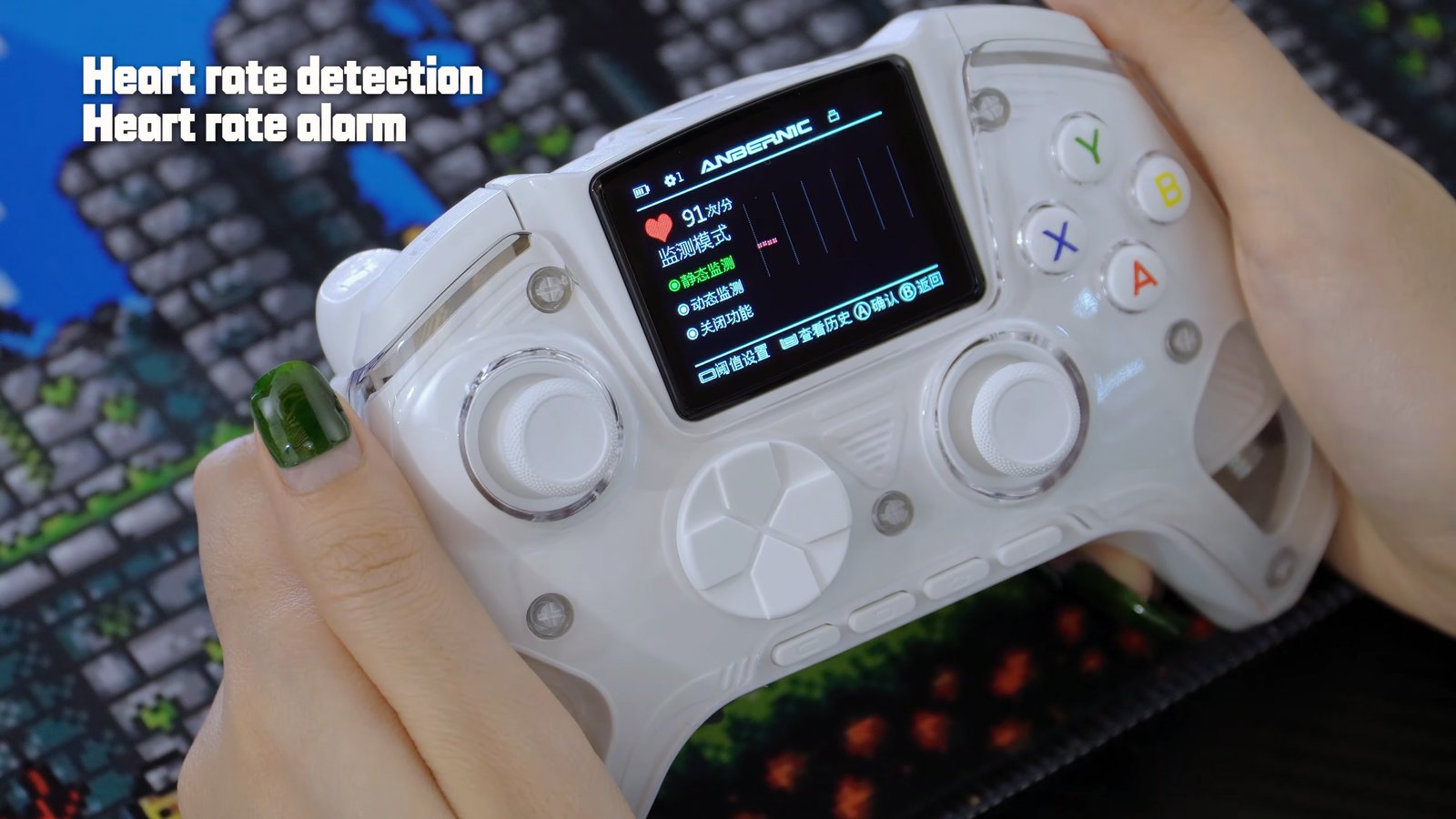
• Core Points: Anbernic introduces the RG G01, a gamepad featuring a 2.5-inch HD display and a heart rate sensor, designed to streamline customization without enabling dual-screen gameplay.
• Main Content: The RG G01 departs from Nintendo’s dual-screen approach, focusing on an integrated display to simplify user customization while adding a health-tracking sensor.
• Key Insights: The device signals a broader trend toward multifunction game controllers that blend hardware inputs with health and fitness data, raising questions about practicality and battery life.
• Considerations: It remains unclear how the screen will impact battery life, comfort during extended play, and the breadth of supported software ecosystems.
• Recommended Actions: For potential buyers, assess whether on-device screen utilities and health features align with actual gaming needs and whether it justifies the added cost.
Product Specifications & Ratings (Product Reviews Only)
| Category | Description | Rating (1-5) |
|---|---|---|
| Design | Compact gamepad with integrated 2.5″ HD display and sensors | 4/5 |
| Performance | Standard control inputs with a focus on customization features | 4/5 |
| User Experience | Intuitive customization via on-device display; health sensor adds novelty | 3.5/5 |
| Value | Niche feature set may appeal to enthusiasts; price varies by market | 3.5/5 |
Overall: 3.8/5.0
Content Overview
Anbernic, known for retro-inspired handheld gaming devices, is expanding its hardware lineup with a novel controller called the RG G01. This device stands out in the market because it integrates a built-in 2.5-inch HD display directly into the controller chassis. The intent behind the screen is not to enable additional on-screen gameplay in the manner of Nintendo’s Wii U dual-screen concept. Instead, Anbernic positions the display as a tool to simplify and accelerate customization, allowing users to adjust settings, profiles, and potentially on-device diagnostics without needing to tether to a separate screen or computer. In addition to the screen, the RG G01 includes a heart rate sensor, signaling Anbernic’s willingness to blend wellness-oriented data with traditional gaming inputs. The combination of a display and health sensor on a handheld controller marks a notable departure from typical controller designs and invites discussion about practicality, battery life, and the evolving role of controllers as multi-function devices.
The broader context for this device is the ongoing experimentation within the gaming hardware space to incorporate more on-board features that reduce reliance on companion apps or external screens. While many competitors lean into more powerful processors, higher refresh rates, or modular accessories, Anbernic’s approach emphasizes immediacy and accessibility. The RG G01 could appeal to gamers who value quick on-device tweaks and who are curious about health-tracking capabilities during play sessions, even if the latter feature remains peripheral to core gaming experiences.
In-Depth Analysis
Anbernic’s RG G01 represents a conceptual pivot for a company known primarily for retro-flavored handhelds and compact standalone units. The central feature is a 2.5-inch HD display embedded in the periphery of the controller. This is not a secondary screen for extra gameplay, as seen with some earlier dual-screen controllers. Instead, it serves as a practical interface for the user to navigate menus, switch profiles, preview saved configurations, and potentially display rudimentary telemetry or in-game data relevant to the player’s preferences. The design intention is to streamline customization workflows, reducing the number of steps a user must perform to adjust how games are presented or controlled.
The inclusion of a heart rate sensor adds another layer of novelty and potential utility. While the precise mechanics of how this data would be used remain ambiguous in early communications, possible applications include real-time health monitoring during play, fitness-oriented game modes, or long-term health data logging that could be synced with other devices or apps. This feature aligns with a broader industry interest in wearable-like capabilities embedded within gaming devices, suggesting a future where wellness metrics might inform game difficulty, session length recommendations, or personalized content curation.
From a hardware standpoint, embedding a display and biometric sensor into a handheld controller presents several engineering considerations. Power consumption rises with the display, even if it is relatively small, potentially affecting battery life and the unit’s thermal profile during extended use. The physical ergonomics of having a screen integrated into the controller must be carefully balanced to avoid added weight or uncomfortable angles that might distract or fatigue users during long gaming sessions. Additionally, developers would need to consider how on-device display capabilities could be leveraged by their software, whether through official APIs or community-driven integrations, to maximize value.
Software ecosystem support is another critical factor. For a new controller with an integrated screen and sensor to gain traction, it needs robust documentation and a clear roadmap for developers. If the screen is primarily a control panel or menu surface, third-party apps and games would require a straightforward way to render content on the device or at least to integrate with it for profile management. The heart rate data, while intriguing, would ideally be treated as an optional enhancement rather than a mandatory gameplay mechanic, ensuring accessibility for players who prefer a traditional control experience.
In terms of market positioning, the RG G01 sits at the intersection of retro-inspired hardware and modern sensorized devices. It could attract enthusiasts who enjoy tinkering with their setups, as well as users who are curious about health-tracking features beyond what their smartphones or dedicated wearables offer. The question for potential buyers is whether the added hardware—namely the screen and heart rate sensor—translates into meaningful benefits beyond novelty. For some, quick access to on-device settings and profiles could reduce friction and improve customization speed. For others, the extra weight, potential battery drain, or $X price premium might not be worth it if they rarely use the features beyond standard button inputs.
We should also consider compatibility and content support. If the RG G01 interacts with a range of retro and indie titles via a common platform, the value proposition improves. Players might appreciate the ability to quickly switch between configurations that optimize control schemes for different genres. However, if the device relies on a limited library of compatible titles or requires frequent software updates to maintain feature parity, users could experience friction that undermines the appeal of the built-in screen.
The historical arc of Anbernic’s product development indicates a strategy anchored in accessibility, compact form factors, and a nostalgic aesthetic. The RG G01 appears to push beyond nostalgia into a space where hardware features—such as a screen and biosensor array—arguably transform the controller into a small, independent device capable of delivering quick customization feedback and wellness data. The long-term payoff of this approach will hinge on how effectively the screen and heart rate data are integrated into the user experience and whether developers embrace new input and display paradigms offered by the device.
As with many innovative hardware products, consumer reception will hinge on real-world usability. If the RG G01 delivers reliable performance, a comfortable grip, and tangible time-savings on setup and customization, it could carve out a niche among collectors and power users who value on-device management. If the device struggles with battery life, display glare in certain lighting, or inconsistent sensor readings, it risks being perceived as offering more flash than practical function.

*圖片來源:Unsplash*
Perspectives and Impact
The RG G01’s design choices reflect a broader industry trend: blending traditional control inputs with on-device interfaces and health-centric features to create more self-contained gaming hardware. This approach reduces reliance on companion apps and may streamline user workflows by letting players adjust settings, calibrate controls, or monitor biometrics without leaving the game environment. In practice, this could lead to a more integrated user experience, where gaming hardware acts as a consolidated hub for input, customization, and health-aware data.
From a consumer standpoint, the RG G01 raises several questions about usability and value. First, how intuitive is the on-device display for a broad audience? While a compact screen can speed up access to settings, tiny text and menus may pose challenges for some users, particularly during fast-paced gaming sessions. Second, how actionable is the heart rate data in the context of gaming? At present, it is unclear whether the sensor outputs data in a way that can influence gameplay directly or if it primarily serves a post-session wellness readout. Third, what is the impact on battery life? The additional electronics will draw power, and the impact will vary with display brightness, refresh rate, and usage patterns. These factors will influence both day-to-day usability and the viability of longer gaming sessions away from a power source.
From a broader perspective, the RG G01 highlights how hardware manufacturers are experimenting with comfort, customization, and health-conscious features to differentiate products in a crowded market. If successful, Anbernic’s approach could inspire similar devices that combine pragmatic on-device tools with biometric sensing, possibly sparking a wave of “smart” controllers designed to offer more than input alone. However, the success of such innovations depends on clear use cases, robust software support, and reliable hardware performance. The industry will watch to see whether the RG G01’s screen and sensor offerings translate into meaningful improvements in the user experience or whether they remain luxuries that rarely justify their presence.
Future iterations of this concept could expand on several fronts. Better integration with cloud-based profiles and cross-device synchronization would amplify the convenience of on-device customization. More advanced health features could translate into adaptive gameplay, where biometrics influence game pacing or difficulty in a controlled, privacy-conscious manner. Conversely, there is a risk that feature bloat could overcomplicate a device that consumers expect to be simple and reliable. Clear, transparent messaging about how health data is used and stored will be essential to foster trust, particularly given growing consumer sensitivity around biometric information.
Ultimately, the RG G01’s fate will depend on how well Anbernic can balance novelty with practicality. If the screen offers meaningful shortcuts and the heart rate sensor delivers accurate, useful data without draining the battery or complicating the user experience, the device could establish a durable niche within the retro and indie gaming community. If not, it may be remembered as an ambitious concept that struggled to translate its ideas into everyday value.
Key Takeaways
Main Points:
– Anbernic launches the RG G01, a gamepad with a built-in 2.5-inch HD display and a heart rate sensor.
– The display is designed to facilitate on-device customization rather than enable dual-screen gameplay.
– The combination of a screen and biometric sensor represents a move toward multifunction gaming hardware.
Areas of Concern:
– Unclear practical benefits of heart rate data in gaming scenarios.
– Potential impact on battery life and comfort during extended play.
– Dependence on software support and ecosystem maturity for meaningful value.
Summary and Recommendations
The RG G01 marks an intriguing step for Anbernic, introducing an on-device screen and a heart rate sensor to a traditional gamepad form factor. The device’s primary value proposition appears to be streamlined customization—allowing users to adjust profiles and settings directly on the controller without external apps or connections—paired with the novelty of biometric data collection. For enthusiasts who enjoy tinkering with hardware and exploring new interaction paradigms, the RG G01 could offer a fresh, compact solution that reduces setup friction and adds wellness-oriented data to the gaming experience.
However, several practical considerations will shape its reception. Battery life is a critical factor for portable devices, and the added display and sensors could shorten playtime between charges. Usability of the built-in screen depends on legibility and intuitive navigation; if the menus are too complex or the display makes the device bulkier or heavier, some users may prefer traditional controllers. The heart rate sensor’s value will ultimately depend on software integration and whether biometric data informs gameplay or remains a side feature.
If Anbernic can deliver solid software support, reliable hardware performance, and a clear value proposition that justifies the added cost, the RG G01 has the potential to carve out a distinctive niche. It may also push competitors to explore similarly integrated designs, driving innovation in how controllers combine input, display, and health data. For potential buyers, a cautious but optimistic approach is advisable: assess personal need for on-device customization, interest in health metrics during gaming, and tolerance for potential trade-offs in battery life and ergonomics. As with any first-generation feature set, the true test will be real-world usage and ongoing software support that expands the device’s capabilities beyond its initial release.
References
- Original: https://www.engadget.com/gaming/retro-handheld-maker-anbernic-has-a-new-gamepad-with-a-screen-and-heart-rate-sensor-201651899.html?src=rss
- Additional:
- Related coverage on embedded displays in game controllers
- Reports on biometric sensing in gaming hardware
Forbidden:
– No thinking process or “Thinking…” markers
– Article must start with “## TLDR”
Ensure content is original and professional.

*圖片來源:Unsplash*