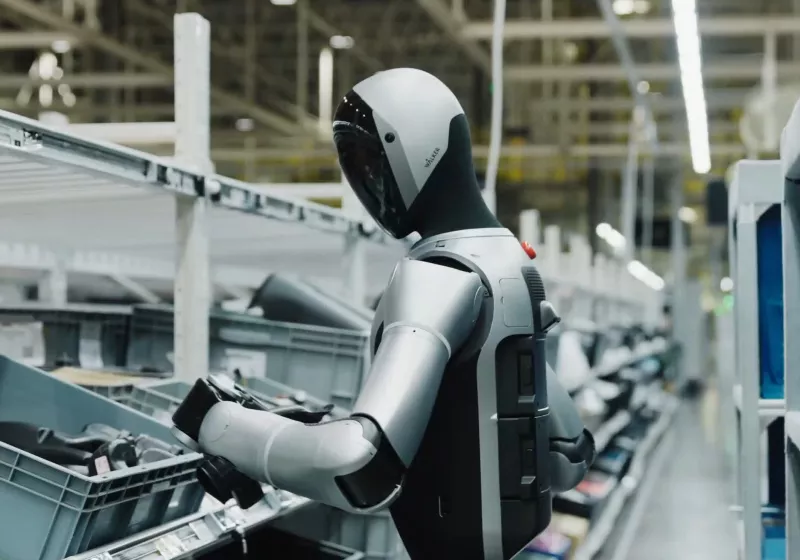
TLDR
• Core Points: Humanoid robots lag humans in speed but are increasingly adopted by manufacturers to ease labor shortages and bolster automation competitiveness.
• Main Content: BYD and Foxconn, in partnership with UBTech, are testing humanoids to address labor gaps, with rising demand despite performance limitations.
• Key Insights: The investment signals a strategic shift toward adaptable, human-robot collaboration in manufacturing, emphasizing reliability, safety, and cost considerations.
• Considerations: Real-world productivity, maintenance, integration with existing lines, and economic viability remain central to adoption decisions.
• Recommended Actions: Stakeholders should pilot programs, quantify ROI, and ensure robust safety and workforce transition plans alongside technology upgrades.
Content Overview
In the evolving landscape of manufacturing automation, humanoid robots have emerged as a notable trend. Although these robots currently operate at roughly half the speed of human workers, industry interest remains strong. Several major manufacturers are exploring humanoid deployments as a strategy to mitigate labor shortages, improve production planning, and maintain a competitive edge in automation-driven operations. Notably, BYD and Foxconn—two global leaders in electronics and automotive manufacturing—are collaborating with UBTech, a prominent robotics company, to experiment with humanoid solutions on their shop floors. The broader context reflects a push in manufacturing toward more flexible, human-inspired robotics that can navigate complex tasks, integrate with existing processes, and potentially reduce reliance on scarce or expensive human labor in an environment shaped by pandemic-era disruptions and ongoing talent shortages.
The persistence of demand despite current speed limitations suggests manufacturers see value in factors beyond mere throughput. Humanoid robots promise capabilities such as versatile task handling, safer collaboration with human workers, and the potential to operate across multiple lines with minimal reprogramming. As with any emerging automation technology, the decision to scale such deployments hinges on a nuanced assessment of productivity gains, maintenance requirements, lifecycle costs, and the ability to complement rather than replace human labor. This article examines the motivations behind the growing interest, the realities of humanoid performance, and the implications for factories, workers, and the broader economy.
In-Depth Analysis
The core performance metric for humanoid robots in factory settings—speed—has not yet matched that of human workers in many tasks. Industry trials and early deployments often reveal that these machines operate at roughly 50% of human velocity when performing analogous duties. This gap in speed is more than a simple productivity figure; it informs decisions about line layout, cycle times, and overall production capacity. When a robot completes a task in twice the time a human would, manufacturers must carefully assess whether its other advantages compensate for the lag. Such advantages may include higher precision, consistent repeatability, the ability to work around the clock, and reduced physical strain on human workers.
Despite the speed deficiency, interest in humanoid platforms continues to rise. The factors driving this trend include the following:
Labor Shortages and Skill Gaps: In regions and industries experiencing talent shortages, humanoid robots offer a scalable solution to fill gaps without the same long lead times associated with hiring and training new staff. These machines can be deployed across multiple tasks and lines with appropriate programming and adaptation, reducing the need for specialized labor in the short term.
Safety and Ergonomics: Humanoid robots can take on repetitive, hazardous, or ergonomically challenging tasks, lowering safety risks for human workers and helping organizations meet regulatory requirements related to workplace safety.
Collaborative Potential: The humanoid form factor is designed to work alongside humans, with emphasis on safe interaction in shared spaces. This collaborative capability can enable more fluid task handoffs, reduce downtime between operations, and allow human workers to focus on higher-value activities that benefit from judgment, creativity, and complex decision-making.
Flexibility and Adaptability: Unlike fixed automation solutions that excel at repetitive, single-task operations, humanoid robots are built with a broader set of capabilities, including fine motor control, object manipulation, and dynamic adjustment to varying tasks. This makes them potentially well-suited for factories that regularly reconfigure lines or introduce new products.
Strategic Partnerships and Branding: Leading manufacturers like BYD (a prominent electric vehicle and electronics manufacturer) and Foxconn (a major electronics contract manufacturer) are partnering with UBTech to explore humanoid solutions. These collaborations enable testing at scale, share risk, and accelerate learning about optimal use cases and best practices.
Automation Momentum: Even with slower operation, the incremental productivity gains from consistent 24/7 operation, reduced human fatigue, and predictable performance can compound to meaningful overall improvements. The cumulative effects may justify investment, particularly as costs trend downward and reliability improves over time.
UBTech’s involvement in these pilots underscores a broader industry pattern: robotics companies are tailoring humanoid platforms for manufacturing environments and seeking partnerships that validate performance in real-world settings. The trials focus on real tasks such as material handling, assembly assistance, quality checks, and line support. The outcomes from BYD and Foxconn approaches will influence broader market expectations, guide investment decisions, and shape the design and feature sets of next-generation humanoid robots.
Important considerations accompany the excitement around these platforms. Integration with existing automation systems, enterprise resource planning (ERP) software, and manufacturing execution systems (MES) is essential to maximize benefits. Interoperability challenges can impede the speed and cost-effectiveness of deployment. Robotics teams must address programming and maintenance needs, including updates to perception, navigation, manipulation, and safety systems. The humanasque form factor, while offering intuitive interaction with human workers, also introduces limitations in areas such as dexterity, precision, and speed when compared to specialized industrial robots built explicitly for high-speed, repetitive tasks.
From an economic perspective, decision-makers weigh the total cost of ownership (TCO) of humanoid robots against alternative automation options. This includes upfront purchase or leasing costs, ongoing maintenance, software updates, and potential savings from reduced labor costs, improved quality, and safer workplaces. In some cases, humanoids may be chosen for tasks requiring a broader set of skills, where a traditional robot would require multiple different specialists or reprogramming efforts to cover occasional non-standard tasks. In others, the priority may be to provide a “face” for automation to workers and customers, leveraging the humanoid presence to signal modernization and technological leadership.
One critical dynamic shaping adoption is the learning curve associated with deploying humanoid platforms. Manufacturers test different configurations, such as task assignments, sensor capabilities, and collaborative modes (shared workspaces, worker-robot handoffs, or fully supervised operation). The learning curve includes not only technical integration but also organizational change management—ensuring that human teams are trained to program, monitor, and collaborate with robots, while maintaining new roles and responsibilities for staff in a transformed production environment.

*圖片來源:Unsplash*
Safety remains a paramount concern when deploying humanoid robots in factory settings. Collaborative robots, or cobots, must adhere to rigorous safety standards to prevent unintended contact or interference with workers. This includes implementing speed and force limits, safe stopping mechanisms, clear demarcations of work areas, and robust fault detection to prevent dangerous situations. As the robots become more capable, safety protocols and regulatory compliance will continue to evolve. The industry is watching how standards bodies, regulatory authorities, and corporate risk management teams address the deployment of humanoid systems at scale.
Beyond factory floors, the broader implications of humanoid automation extend to the labor market, training ecosystems, and global supply chains. If humanoid deployments prove cost-effective and scalable, manufacturers in multiple sectors may accelerate automation adoption, potentially reshaping job roles and demand for certain skills. Workers may experience shifts in responsibilities, with more emphasis on monitoring, programming, and troubleshooting, while hands-on, physically demanding tasks could transition to automated systems. Education and retraining programs will be critical to ensure a smooth transition for workers and to maximize the return on automation investments.
In sum, the interest in humanoid robots persists even as performance gaps remain. The BYD and Foxconn pilots, in collaboration with UBTech, illustrate a pragmatic approach: experiment with humanoids where they can coexist with human labor, test their efficiency in real-world tasks, and determine where they offer the greatest value. The results of these pilots will inform future product development, integration strategies, and broader market adoption. The industry’s trajectory suggests a cautious but purposeful movement toward more versatile, collaborative automation, with humanoid robots occupying a growing, albeit still evolving, role in modern manufacturing.
Perspectives and Impact
Looking ahead, the deployment of humanoid robots in manufacturing could influence several dimensions of the industrial landscape. First, the labor equation could tilt more toward automation in production environments facing persistent talent shortages. When combined with other automation layers—such as robotic arms, automated guided vehicles, and advanced sensors—humanoids may contribute to more resilient and flexible production lines. The trajectory will depend on continued improvements in speed, efficiency, reliability, and ease of integration with existing systems.
Second, the role of workers could shift from performing routine, physically demanding tasks to roles centered on oversight, programming, and system optimization. This shift could necessitate targeted training programs, reskilling initiatives, and changes in workplace culture to ensure effective human-robot collaboration. As robots take on more repetitive and hazardous tasks, human workers could gain opportunities to engage in higher-value activities, driving a more dynamic and knowledge-based manufacturing workplace.
Third, supply chain resilience could benefit from diversified automation strategies. Humanoids that can operate across multiple tasks and adapt to new products quickly may reduce downtime associated with retooling or retraining. This flexibility can be particularly valuable in industries experiencing rapid product cycles or frequent line changes. However, the economic viability of such systems will depend on total cost of ownership, reliability, service networks, and the ability to maintain performance over time.
Fourth, safety and regulatory considerations will shape adoption paths. As humanoid robots become more capable, regulators may implement stricter safety standards and certification processes. Companies that proactively align with evolving guidelines and invest in robust safety systems are likely to gain more favorable acceptance from stakeholders, including workers, unions, and customers.
Fifth, market dynamics and competition will influence the pace of adoption. Partnerships between manufacturers and robotics providers can accelerate learning and drive down costs through scale. Demonstrating concrete ROI—through metrics such as reduced cycle times, improved yield, lower injury rates, and higher uptime—will be essential to convincing leadership teams to commit significant capital expenditures.
Finally, public perception and corporate identity may benefit from visible automation efforts. A humanoid presence on the factory floor can symbolize modernization and technological leadership, potentially enhancing employer branding and customer confidence. The intangible benefits—such as improved worker morale, a more attractive career path for technicians, and a sense of progress—should not be underestimated as part of the broader value proposition.
In sum, the strategic deployment of humanoid robots in manufacturing represents a measured response to labor shortages, rising automation expectations, and the desire for flexible, resilient production systems. While speed remains a key limitation, the potential benefits in safety, adaptability, and continuous operation position humanoids as a meaningful, if evolving, component of next-generation factories. The ongoing pilots with BYD, Foxconn, and UBTech will help delineate where these systems fit best, how to optimize their integration with human labor, and what the long-term implications may be for productivity, employment, and regional manufacturing competitiveness.
Key Takeaways
Main Points:
– Humanoid robots currently operate about half as fast as human workers in many tasks, yet demand persists.
– Major manufacturers like BYD and Foxconn are partnering with UBTech to explore humanoid deployments to address labor shortages.
– The strategic value of humanoids lies in collaboration, safety, and adaptability, not just speed.
Areas of Concern:
– Real-world productivity and cost-effectiveness remain uncertain.
– Integration with existing automation systems and maintenance requirements pose challenges.
– Safety, regulatory compliance, and workforce transition must be carefully managed.
Summary and Recommendations
The exploration of humanoid robots in manufacturing reflects a cautious yet proactive approach to handling persistent labor shortages and the push for greater automation. While speed limitations persist, the potential for humanoids to complement human labor, enhance safety, and enable flexible production is driving continued investment. The BYD and Foxconn pilots with UBTech exemplify how large-scale manufacturers are testing the waters in real-world settings, evaluating not only technical performance but also organizational fit and ROI. For organizations considering similar deployments, a balanced strategy is essential: run pilot programs to quantify benefits, invest in robust safety and interoperability, and develop comprehensive workforce transition plans that retrain and redeploy staff to higher-value roles. As technology advances, the role of humanoids in factories is likely to become more pronounced, with improvements in speed, dexterity, and reliability narrowing the gap with human workers and expanding the range of tasks they can execute on the line. This evolution will hinge on ongoing collaboration among manufacturers, robotics developers, regulators, and labor stakeholders to ensure that adoption enhances productivity while supporting a stable and skilled workforce.
References
- Original: https://www.techspot.com/news/111069-humanoid-robots-can-only-work-half-fast-humans.html
- Additional references:
- Industry reports on humanoid robotics adoption in manufacturing (relevant market analyses and case studies)
- Safety and standards guidelines for collaborative robots (cobots)
- Company press releases from BYD, Foxconn, and UBTech detailing pilots and partnerships with humanoid platforms

*圖片來源:Unsplash*