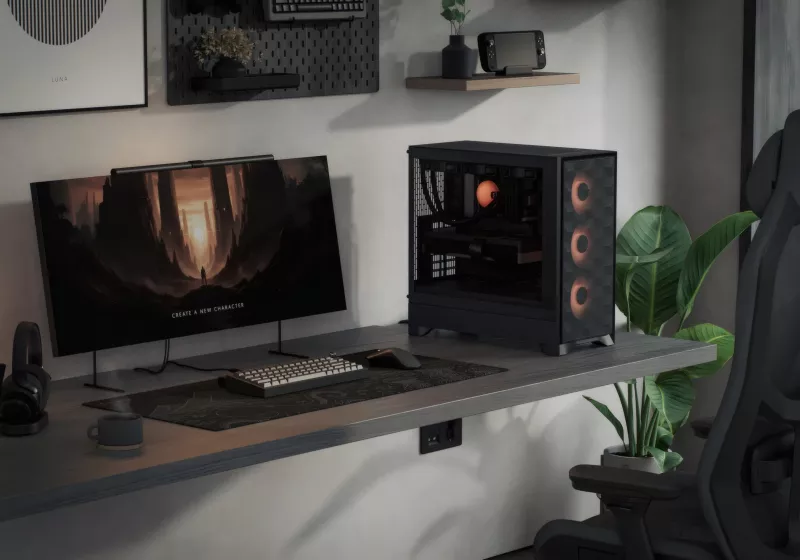
TLDR
• Core Points: Fractal Design introduces the Pop 2 Air case, featuring a scoop-like GPU air guide on the power supply shelf to direct fresh intake airflow toward graphics cards.
• Main Content: The design aims to address the growing thermal demands of high-power GPUs by ensuring cooler air reaches the GPU directly, rather than relying on downward-drifting airflow within the chassis.
• Key Insights: Targeted front-to-GPU airflow can improve cooling efficiency for GPUs pulling 300W+ under load, potentially enabling quieter operation and higher sustained clocks.
• Considerations: The effectiveness depends on overall system cooling, GPU height/vertical clearance, and compatibility with various cooling configurations and radiators.
• Recommended Actions: Prospective buyers should assess their GPU power limits, case dimensions, PSU placement, and fan curve strategy to maximize the Pop 2 Air’s airflow advantages.
Product Specifications & Ratings (Product Reviews Only)
| Category | Description | Rating (1-5) |
|---|---|---|
| Design | Case includes a scoop-shaped GPU air guide on the power supply shelf to direct intake air toward GPU slots | 4/5 |
| Performance | Aims to improve GPU cooling for high-power cards by delivering cooler intake air directly to GPUs | 4/5 |
| User Experience | Straightforward airflow-focused design; compatibility considerations with various GPUs and cooling setups | 4/5 |
| Value | Competitively positioned for enthusiasts prioritizing GPU temps; may influence broader system cooling choices | 4/5 |
| Overall: | 4.0/5.0 |
Content Overview
Fractal Design has continued its emphasis on intelligent airflow within PC builds with the Pop 2 Air case. The centerpiece of its cooling strategy centers on a GPU air guide—a scoop-shaped section integrated into the power supply shelf. This guide is designed to direct fresh front intake air directly toward the GPU slots, a notable shift from relying on ambient airflow that may drift downward as it travels through the chassis. In modern builds, graphics cards routinely pull 300W or more under heavy workloads, which places a premium on efficient cooling paths to maintain performance and acoustic comfort. By channeling cooler air to the GPU region, Fractal Design aims to address thermal bottlenecks more proactively and reduce hot spots that can limit GPU boost clocks.
The Pop 2 Air’s approach reflects a broader industry trend: recognizing that intelligent airflow management can complement high-efficiency cooling solutions such as radiators and fan arrays. Rather than depending solely on general case airflow, targeted guidance from the chassis itself can help ensure critical components receive adequate cooling force. This article examines how Fractal Design’s feature fits into current build practices, weighing its potential benefits against practical considerations for real-world systems.
In-Depth Analysis
Thermal performance has become a pivotal consideration for PC enthusiasts, particularly as graphics cards push higher power envelopes. GPUs routinely breach 300W during gaming sessions or intensive compute tasks, producing substantial heat that must be effectively managed to preserve performance, longevity, and acoustic comfort. Fractal Design’s Pop 2 Air responds to this challenge by introducing a dedicated air-guide mechanism on the power supply shelf. The scoop-shaped section acts as a redirector for incoming cooler air from the front of the case, guiding it up toward the GPU area rather than allowing air to meander through the chassis with less directional intent.
There are several potential benefits to this strategy. First, directing cooler air straight at the GPU region can reduce the thermal delta between the GPU’s hot exhaust and the incoming coolant, aiding heat rejection. In systems where GPUs are stacked relatively close to the power supply shroud or where there is limited direct airflow from the front toward the GPU, this targeted channel can help ensure that the hottest zones receive a consistent supply of cooler air. Second, improved GPU cooling can support higher sustained boost clocks by mitigating throttling caused by thermal limits. Third, better GPU temperatures can contribute to lower fan speeds or a more consistent fan curve, potentially reducing overall system noise for users who prioritize acoustics.
From a design perspective, integrating an air guide into the power supply shelf is a compact solution that leverages the existing airflow path in many mid-tower or compact cases. The airflow philosophy is not to eliminate general case airflow but to augment it with a targeted pathway that minimizes the chance that front intake air simply drifts downward or becomes obstructed by cables or other hardware before reaching the GPU. As with any airflow modification, the actual impact depends on the broader cooling setup: the number and placement of intake fans, exhaust configuration, radiator size and location if liquid cooling is present, and the vertical clearance between the GPU and the case roof or power supply shroud.
Practical considerations are important when evaluating the Pop 2 Air’s effectiveness. GPU height and overall height clearance must accommodate different card designs, especially battle-tested high-end GPUs with robust cooling shrouds and extra backplates. The design should also be compatible with various air and liquid cooling configurations without obstructing other components or limiting expansion options. For users who prefer higher cooling efficiency, the Pop 2 Air’s airflow path should be considered alongside fan curves and radiator placement to ensure that the direct-air route remains effective under load, particularly during sustained gaming sessions or compute tasks.
Another factor is compatibility with power supplies and modular cabling. Since the air guide is integrated near the PSU area, it’s important that cable routing does not block the airflow channel or introduce turbulence. Well-organized cable management will help preserve the intended airflow dynamics, ensuring that the scoop effectively channels air toward the GPU rather than creating localized turbulence or back-pressure.
In practice, the value of this design will vary by user. For those running high-power GPUs, especially those approaching or exceeding 300W, the Pop 2 Air’s focus on direct intake air could yield measurable gains in GPU temperatures and, by extension, boost stability and potentially cooler operation for related VRMs and memory components. For builds that already feature aggressive front-to-GPU cooling, the improvement might be incremental but still beneficial in maintaining consistent performance. Conversely, users with compact builds, dense radiators, or unconventional GPU orientations may find that the air guide’s impact is less pronounced or requires careful planning to avoid unintended airflow conflicts.
To maximize the Pop 2 Air’s potential, builders can adopt several best practices. Ensure adequate front intake with properly oriented fans to feed the air guide. Maintain a clean interior by reducing cable clutter that could disrupt airflow paths. Consider a balanced fan curve strategy that prioritizes a steady supply of cool air to the GPU while still maintaining effective exhaust, especially if the system uses a radiator or multiple fans. In some configurations, additional direct cooling methods for the GPU, such as a separate intake path or dedicated fan dedicated to the GPU area, could complement the case’s built-in air guide for even greater effect.
It is also worth noting that airflow improvements are just one facet of overall thermal management. Other elements, such as heat sink quality, VRM cooling, thermal pads, and memory cooling on the GPU, still play critical roles in maintaining performance under load. The Pop 2 Air does not replace other cooling strategies but provides a transportable benefit by more efficiently delivering front intake air to one of the most heat-sensitive components in a modern PC: the GPU.
In terms of aesthetics and build experience, the Pop 2 Air’s feature can be appealing for enthusiasts who manually tune their systems for optimal temperatures. The concept aligns with a broader trend toward a more intentional approach to airflow management, where case design helps direct cooling resources where they’re most needed. This approach also nudges users toward more deliberate cable management, sensor placement, and fan configuration, which can improve not only cooling but the overall usability and aesthetics of a build.

*圖片來源:Unsplash*
Perspectives and Impact
The introduction of a GPU-focused air guide within a case reflects ongoing concerns in PC thermal design: as GPUs demand more power, chassis builders look for ways to optimize air distribution without resorting to costly radiator upgrades or larger enclosures. Fractal Design’s Pop 2 Air approach acknowledges that a portion of thermal burden falls directly on the GPU, and it attempts to address this at the chassis level with a simple, passive feature. If successful, this strategy could influence future case designs to incorporate more targeted airflow channels that complement existing cooling solutions.
Industry observers may view this as a pragmatic addition rather than a radical paradigm shift. It underscores the importance of how air enters and travels inside a case, rather than solely focusing on the capacity or number of fans. The Pop 2 Air could encourage users to consider airflow anatomy at a more granular level—where the intake air is first delivered, how it interacts with the GPU, and how it ultimately exits the system.
From a market perspective, the feature might appeal to enthusiasts who frequently push GPUs to maintain higher performance levels for extended periods. It could also be attractive to builders who prioritize cleaner interiors and more predictable thermal behavior, since a well-directed airflow path can reduce hotspots and potential thermal throttling. However, the real-world impact will depend on user behavior, system configuration, and how well the case’s overall cooling strategy integrates with other components such as CPU cooling, storage arrangements, and noise preferences.
Looking ahead, this design choice could spur further innovation in case engineering. Manufacturers may explore additional integrated airflow guides or modular extensions that tailor air distribution to specific components or workloads. There is a potential for adaptive cooling concepts, where airflow channels are designed to be adjustable or more dynamic to suit different GPUs and workloads. The broader implication is a continued shift toward holistic cooling design, where case architecture, component selection, and thermal management strategies are considered in concert rather than in isolation.
As with any chassis feature, users should manage expectations. The Pop 2 Air’s GPU-direct airflow guide is a valuable refinement, but it is not a substitute for good overall cooling practices. It should be viewed as a complementary tool in the builder’s arsenal — one that can help keep temperatures in check when paired with appropriate intake and exhaust configurations, quality fans, and a sensible radiator plan if liquid cooling is employed. For those evaluating a build around a high-power GPU, the Pop 2 Air offers a compelling reason to examine how a case’s airflow philosophy can help sustain performance while maintaining a comfortable acoustic profile.
Ultimately, the success of the Pop 2 Air will be measured by real-world testing across a range of GPUs, workloads, and configurations. Independent reviews and user reports will likely shed light on how significant the airflow improvement is under diverse conditions. If the feature proves its worth, it may push the industry toward more case-level, component-targeted cooling innovations, enriching the landscape of PC building with practical, performance-oriented design enhancements.
Key Takeaways
Main Points:
– Fractal Design’s Pop 2 Air introduces a scoop-shaped GPU air guide on the PSU shelf to direct front intake air toward the GPU area.
– The design targets high-power GPUs (300W and above) to improve cooling efficiency and potentially sustain higher performance with lower noise.
– Effectiveness depends on overall cooling, clearance, and compatibility with various cooling setups; proper cable management and fan strategy enhance results.
Areas of Concern:
– Real-world impact may vary based on chassis configuration and GPU dimensions.
– The feature requires compatible layouts; it may not dramatically affect all builds.
– Interaction with other cooling components (CPU radiator, VRM cooling) needs evaluation on a case-by-case basis.
Summary and Recommendations
Fractal Design’s Pop 2 Air case adds a thoughtful airflow enhancement aimed at directly cooling GPUs by channeling fresh front intake air toward the graphics card area. This targeted approach acknowledges the rising power demands of modern GPUs and the need for effective thermal management beyond general case airflow. The scoop-shaped air guide on the power supply shelf represents a compact, design-driven solution that can contribute to cooler GPU operation, potentially supporting higher sustained performance and quieter operation.
For builders, the Pop 2 Air presents an attractive option if you anticipate heavy GPU workloads and want a case that actively assists cooling in critical regions. To maximize benefits, pair the case with a well-planned cooling strategy: ensure clean cable management to minimize turbulence, use adequate front intake and balanced exhaust, and consider radiator placement that complements the directed airflow. Compatibility with your specific GPU model, card height, and cooling configuration should be verified before purchase, as the effectiveness of this feature is contextual.
In the broader context of PC chassis design, Fractal Design’s approach signals a shift toward more intentional, component-aware airflow engineering within cases. As GPU power continues to rise, expected innovations may include additional built-in airflow channels, more nuanced guides for other heat-sensitive components, and modular options that allow builders to tailor airflow distribution to their hardware and workloads. The Pop 2 Air thus contributes to a forward-looking conversation about how chassis design can support performance through smarter cooling paths, without resorting to larger or more complex cooling ecosystems.
Reference this design as part of a growing trend toward holistic thermal management in PC builds. While not a universal solution for all configurations, it offers a practical, measurable tool for enthusiasts seeking to optimize GPU temperatures and overall system acoustics within a mid-tower form factor.
References
- Original: https://www.techspot.com/news/111087-fractal-design-new-pop-2-air-case-pushes.html
- Additional context on GPU cooling strategies and case airflow concepts
- General guidelines for chassis airflow optimization and cable management

*圖片來源:Unsplash*