TLDR
• Core Points: Maingear’s Retro98 blends vintage Quake-era design with contemporary hardware, delivering modern performance inside a beige, nostalgia-tinged chassis.
• Main Content: An expertly crafted, hand-built PC that looks retro but runs today’s AAA games smoothly, defying its classic exterior.
• Key Insights: The Retro98 is a statement piece for enthusiasts who crave both retro charm and current-gen gaming capability, not a mainstream showroom model.
• Considerations: The distinctive exterior may not suit all desks or budgets; upgradability and thermal design should be evaluated for future-proofing.
• Recommended Actions: If you value aesthetics and performance in equal measure, explore configurable options and ensure cooling and warranty terms meet your needs.
Content Overview
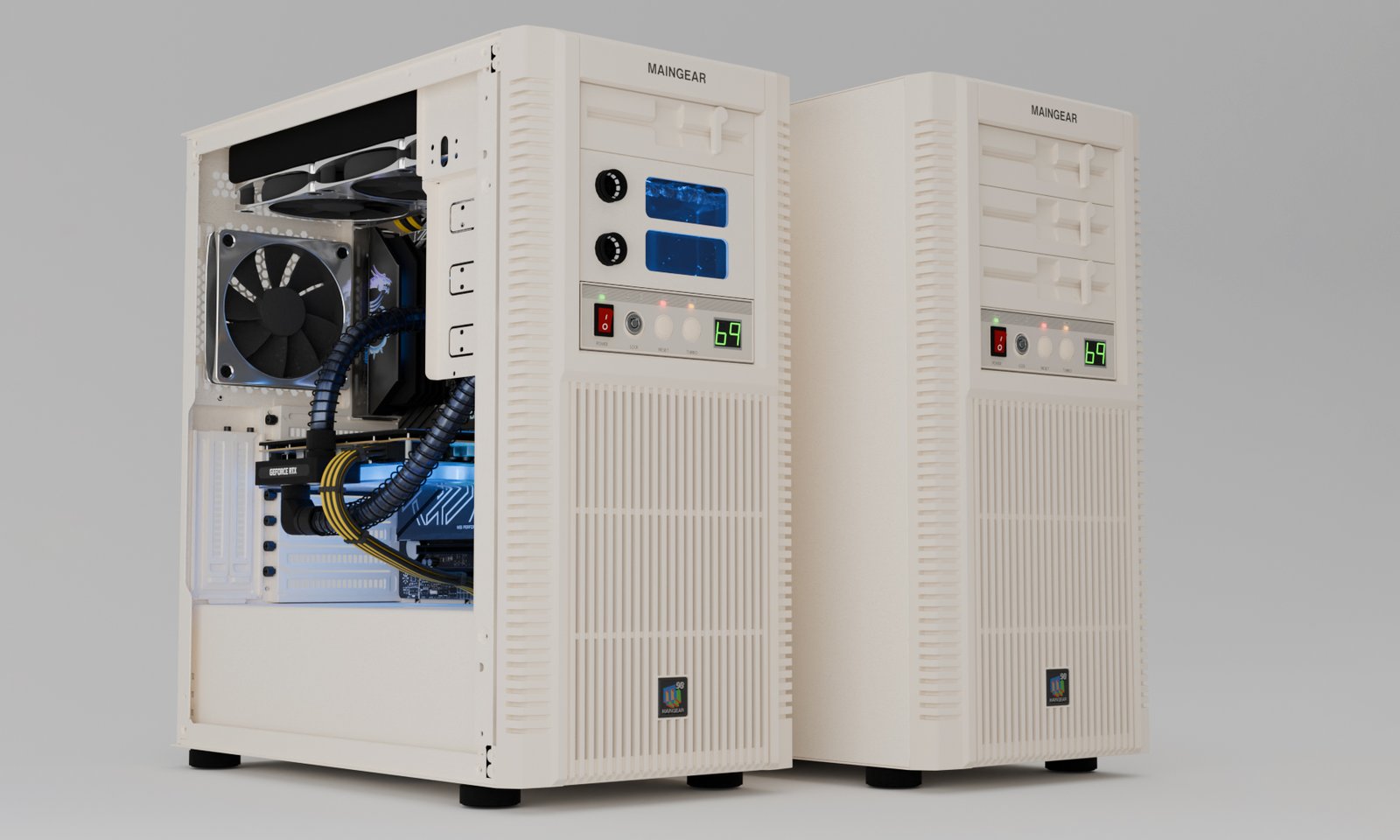
Maingear continues its tradition of crafting niche gaming rigs that evoke a specific era of PC hardware. The Retro98 is designed to transport users back to the late 1990s, a period defined by beige chassis, LED accents, and the ubiquitous presence of iconic titles like Quake. Yet this machine isn’t merely a retro showpiece. It is a modern, high-performance desktop engineered to handle today’s most demanding games at satisfying frame rates, all while presenting a visual language that resonates with enthusiasts who remember the era with a sense of nostalgia. Marketed with a wink to Radio Shack-era DIY builders, the Retro98 signals Maingear’s willingness to blend storytelling with engineering, offering a product that stands out in a crowded market of minimalist gaming rigs and aggressively styled gleaming towers.
The exterior of the Retro98 is immediately recognizable to anyone who has spent time around late-1990s PCs. The hand-built, beige box project a look that is both nostalgic and deliberate. An LED fan-speed display sits somewhere on the front panel, functioning as a nod to the era’s practical yet decorative hardware indicators. The chassis, while visually retro, is not a throwback; it houses modern components and a carefully designed cooling system that keeps components within thermal limits while maintaining quiet operation under load. The design language is less about chasing fashion and more about storytelling—an homage to a bygone era that still serves today’s gaming needs.
What makes the Retro98 particularly notable is how Maingear positions it within the contemporary PC landscape. It’s not a mass-market product; it’s a niche build tailored for enthusiasts who value the emotional resonance of retro design as part of their computing experience, alongside the performance thresholds required by current games. Users can expect typical modern configurations—fast processors, discrete GPUs, ample RAM, fast storage—packaged inside a chassis that softly rejects the sleek, all-black, high-gloss fashion of many contemporary gaming PCs in favor of something that feels, to some, more personal and characterful.
The underlying hardware choices aim to deliver solid 1080p, 1440p, and even 4K performance for a broad catalog of titles, with the flexibility that Maingear’s builds typically offer for upgrades and customization. While the exterior strongly signals retro sensibilities, the interior is built for current software demands, including contemporary graphics APIs, ray tracing where supported, and the latest driver ecosystems. The Retro98 thus offers a dual promise: the look and vibe of a gaming PC from the Quake era, and the power to run modern games with crisp visuals and reliable frame rates.
In terms of user experience, the Retro98 emphasizes reliability, serviceability, and a level of craftsmanship aligned with Maingear’s prestige in the boutique PC market. The hand-built nature of the chassis integration can account for slender internal wiring, thoughtful cable management, and accessible component installation, all of which can ease upgrades or replacements in the future. The revivals of retro aesthetic and modern performance are not mutually exclusive here; rather, they are blended to create a product that can appeal to both nostalgia-driven users and performance-focused gamers.
This machine also calls for a broader conversation about the evolving relationship between retro aesthetics and actual compatibility with modern software and gaming expectations. The retro exterior does not imply underpowered hardware; instead, it signals a design philosophy that embraces a particular era’s visual language while delivering a platform capable of handling today’s title libraries and workloads. For buyers, this means assessing not just the performance numbers but also the emotional and stylistic payoff—the perceived value of owning a PC that nods to the past while offering contemporary gaming capabilities.
In sum, Maingear’s Retro98 is more than a novelty; it is a thoughtfully engineered desktop that honors retro design without sacrificing current-day performance. For enthusiasts who find the beige chassis, retrofit LEDs, and period-appropriate accents compelling, the Retro98 provides a unique, premium option that stands out from the usual black or silver gaming towers. It’s a reminder that technology can be both functional and evocative—a honest tribute to the Quake era that still keens with modern computing power.
In-Depth Analysis
The Retro98 arrives as a deliberate statement from Maingear: this is not a standard gaming PC dressed in a retro skin, but a carefully curated build that integrates nostalgia into everyday performance. The exterior surfaces draw from late-90s design cues—beige or ivory tones, modest paneling, and a restrained footprint—that recall the era before aluminum and glass became dominant. The LED fan-speed indicator, while a modern nod, sits as a tasteful anachronism that signals the machine’s dual identity: a tribute to the past with the functionality expected of contemporary hardware.
Inside, the Retro98 hides a more complex reality. Maingear’s fabrication philosophy for a machine of this kind emphasizes high-quality components chosen not only for raw numbers but for the overall system coherence: thermals, acoustics, and upgradability all weigh into the final configuration. As with many boutique builds, you can anticipate a balanced mix of CPU power, GPU capabilities, memory capacity, and storage speed that supports a wide range of gaming titles at varying resolutions and settings. The result is a desktop that can handle AAA titles at high to ultra details in 1440p, with competent performance at 4K where desired, depending on the exact GPU and CPU pairing chosen by the buyer.
Thermal design is another crucial consideration for this style of chassis. Retro aesthetic does not automatically equate to poor thermals; Maingear’s approach typically includes strategic airflow channels, quality fans, and heat sink layouts that prevent thermal throttling under sustained workloads. The result is a system that maintains performance while minimizing noise, an important factor for users who want an immersive gaming experience without distracting fan whine.
From a usability standpoint, the Retro98 is designed with care for the end-user. The internal layout typically prioritizes cable management and accessibility, which translates into smoother upgrades and maintenance down the line. This is particularly valuable for a niche product where the desire for longevity and upgradability can differ from mainstream gaming PCs that emphasize shorter product cycles. Buyers can expect a configuration path that allows incremental improvements—additional RAM, more storage, a more capable GPU—without requiring a complete rebuild.
In terms of software experience, the Retro98 is compatible with modern operating systems and gaming platforms. It is built to run current game engines, drivers, and several generations of software, ensuring that users do not feel compelled to buy a new system at the moment they want to switch titles or push higher resolutions. The software environment is expected to be clean, optimized, and consistent with Maingear’s typical emphasis on premium build quality and professional assembly standards. This translates into a PC that is not only powerful but also reliable and predictable—an important consideration for enthusiasts who rely on a machine for both work and play.
The broader market context for the Retro98 sits at an intersection of nostalgia and practical performance. There is a notable segment of PC enthusiasts who appreciate the aesthetic of the late-90s and early-2000s hardware as a cultural artifact, not merely as a design choice. Maingear has identified and catered to this segment by delivering a product that satisfies both emotional resonance and technical expectations. This dual appeal can differentiate the Retro98 in a crowded field of gaming PCs that tend to emphasize either performance or minimalism, rarely both in equal measure.
The pricing and configuration options for the Retro98 will influence its reception significantly. As a boutique product, it commands a premium price relative to mainstream prebuilt desktops and mid-range gaming rigs. For some buyers, the aesthetic value—paired with solid performance and the reputation of a maker like Maingear—will justify the higher cost. For others, the price may be a barrier, particularly if they are primarily motivated by performance per dollar rather than the stylistic appeal. The purchasing decision, then, hinges on balancing the emotional payoff with practical expectations about upgradeability, noise, and long-term support.
In terms of future-proofing, the Retro98’s value proposition benefits from modular and upgrade-friendly design. Buyers should consider the pace at which they expect to upgrade components like the GPU or storage. A chassis designed with good airflow and accessible internals is more capable of accommodating future generations of components, especially if the power supply unit (PSU) supports room to upgrade to higher-widelity GPUs or more demanding CPUs. When evaluating the Retro98, prospective owners should ask about upgrade paths, warranty coverage, and service options that align with their long-term gaming and productivity goals.
The Retro98’s cultural significance should not be underestimated. It functions as a conversation piece that invites discussion about how far PC design has evolved while preserving the feelings of nostalgia that many players associate with the Quake era and similar milestones. This is more than a product; it’s a curated experience that resonates with a particular cohort of tech enthusiasts who remember the period fondly and want hardware that mirrors that memory in tactile, visual, and auditory ways.
In terms of market implications, Maingear’s Retro98 highlights a growing tolerance among enthusiasts for hybrid design approaches—where retro styling coexists with high-end performance. This signals an openness among buyers to invest in systems that make a personal statement as much as they deliver performance. It also shows that that the PC market can accommodate diverse aesthetics without compromising on modern capabilities. For manufacturers, the Retro98 demonstrates that there is room for unique, story-driven hardware in a landscape that often prioritizes performance metrics and minimalist design.
Overall, the Retro98 stands as a thoughtful, well-engineered product within Maingear’s lineup. It demonstrates how nostalgia can be integrated into modern technology in a way that is not merely decorative but functionally meaningful. Gamers with a passion for the era’s visuals and hardware languages will find in the Retro98 a compelling combination of form and function—an experience that invites both appreciation for retro design and confidence in contemporary performance.

*圖片來源:Unsplash*
Perspectives and Impact
The Retro98’s release invites broader reflection on how PC builders, and the industry at large, approach retro-inspired hardware. It demonstrates that there is a meaningful audience for products that marry a familiar look with cutting-edge performance. This convergence offers several potential impacts:
Consumer Perception: A retro-styled PC that does not compromise on speed or efficiency can redefine expectations about what “nostalgia” can mean in the context of high-performance computing. It challenges the stereotype that retro-themed hardware must concede on performance or modernity.
Brand Differentiation: For boutique builders like Maingear, the Retro98 serves as a differentiator in a market crowded with similarly styled, performance-focused machines. It showcases how storytelling and design can be leveraged to create a distinctive value proposition that resonates with a specific customer segment.
Design Trends: The success of retro-inspired forms could influence other manufacturers to explore hybrid aesthetics—where nostalgic cues are combined with modular internals and build-quality that satisfy enthusiasts who prize craftsmanship and longevity.
Upgradability and Longevity: The Retro98 highlights the importance of designing for future upgrades even within a niche aesthetic. As gaming titles demand more resources in the coming years, the ability to upgrade GPU, CPU, and memory without a complete platform overhaul becomes a practical advantage.
Cultural Resonance: Machines like the Retro98 contribute to a broader cultural dialogue about how technology evolves. They remind communities of the historical context of modern gaming, potentially attracting new generations of enthusiasts to retro computing culture.
Market Education: By aligning a retro design with robust performance, Maingear educates consumers that appearance and capability are not mutually exclusive. This can broaden the market to include buyers who previously equated retro aesthetics with obsolescence.
Looking ahead, the Retro98 could influence how the PC industry conceptualizes future themed builds. If demand persists, we may see more manufacturers offering historically inspired chassis with contemporary internals, potentially expanding the range of options for consumers who value personal expression alongside performance. It might also spur collaborative efforts between hardware designers and communities that celebrate retro gaming, ensuring that nostalgic aesthetics remain relevant in a rapidly advancing technology landscape.
In terms of gaming culture, retro-inspired systems may become recognized not only as collectibles but as practical, high-performing machines that enable modern players to replay classic titles in a thoughtfully paired environment. The Retro98 embodies this blend, suggesting that ownership of a gaming PC can be as much about identity and memory as about frames per second and resolution metrics.
Future iterations could refine the balance further—perhaps offering liturgical lighting schemes that mimic period-accurate glow, or adjustable bezel designs to vary the retro feel. The core idea remains compelling: nostalgia, when married to technical rigor, can yield products that are both emotionally satisfying and functionally solid.
Key Takeaways
Main Points:
– Maingear’s Retro98融合 nostalgic aesthetics with modern gaming performance inside a hand-built beige chassis.
– The design emphasizes retro visual cues (beige chassis, LED indicators) while delivering contemporary hardware capabilities.
– It targets enthusiasts who value both emotional resonance and practical performance, not mainstream affordability.
Areas of Concern:
– The unique appearance may not suit every workspace or budget.
– Upgradability and long-term value depend on configuration choices and warranty terms.
– Niche appeal means a potentially smaller market compared to conventional gaming desktops.
Summary and Recommendations
Maingear’s Retro98 stands out as a bold, thoughtfully engineered gaming PC that consciously borrows its exterior language from the Quake era while packing modern performance inside. For enthusiasts who cherish retro aesthetics and want a machine capable of running today’s titles at high settings, the Retro98 offers a compelling blend of form and function. It isn’t a universal solution for every buyer; its appeal rests with those who want a distinctive, premium desktop that doubles as a conversation piece and a reliable gaming platform.
Before purchasing, consider how important the retro look is relative to raw performance and price. Confirm the exact GPU, CPU, RAM, and storage configuration you need, inquire about upgrade paths, and discuss warranty and service options with Maingear or authorized partners. If the balance of nostalgia and capability aligns with your preferences, the Retro98 can deliver a satisfying gaming experience while standing out in any collection of PC hardware.
In a market where many gaming rigs converge on sleek minimalist aesthetics, Maingear’s Retro98 reminds us that technology can be both practical and personal. It provides a credible option for retro-minded players who do not want to sacrifice modern performance for style. As long as consumers recognize the premium nature of the build and the potential premium price tag, the Retro98 presents a unique, well-executed opportunity to own a desktop that honors a memorable era in PC history while still delivering today’s gaming experiences.
References
- Original: https://www.engadget.com/gaming/pc/maingears-latest-retro-gaming-desktop-takes-you-back-to-the-quake-era-174958445.html?src=rss
- Additional references (suggested for context and further reading):
- Maingear official Retro98 product page and configurator
- Retro PC culture and design analysis articles from reputable tech outlets
- Reviews of contemporary boutique gaming PCs focusing on design language and thermals

*圖片來源:Unsplash*