TLDR
• Core Points: TCP and UDP are foundational transport protocols with distinct guarantees; TCP prioritizes reliability, UDP prioritizes speed and simplicity.
• Main Content: HTTP sits atop TCP in practice, benefiting from TCP’s reliability, while UDP powers fast, low-latency services.
• Key Insights: Choosing between TCP and UDP depends on application requirements for reliability, ordering, latency, and bandwidth.
• Considerations: Network conditions, error handling, and traffic patterns influence protocol choice and performance.
• Recommended Actions: Assess your app’s tolerance for delay and data loss, then select TCP, UDP, or a hybrid approach accordingly.
Content Overview
Transport control is at the heart of how data moves across networks. Two of the most fundamental protocols enabling this movement are TCP (Transmission Control Protocol) and UDP (User Datagram Protocol). Both operate at the transport layer, but they embody markedly different philosophies. TCP emphasizes reliable, ordered delivery with error checking and congestion control. UDP, in contrast, offers a lightweight, connectionless approach with minimal overhead, delivering datagrams with little to no guarantee of delivery, order, or duplicate protection.
This article explores the core differences between TCP and UDP, clarifies where each protocol shines, and explains how HTTP, the Web’s application protocol, relates to TCP. By the end, you’ll understand why HTTP typically rides on TCP and when UDP might be the better fit for your networked applications.
In-Depth Analysis
- What TCP and UDP are at a high level
- TCP (Transmission Control Protocol) is a connection-oriented protocol. Before data can be exchanged, a reliable connection is established through a handshake. TCP ensures reliable delivery through acknowledgments, retransmissions, and sequencing. It also provides flow control and congestion control to regulate data transmission rates and prevent network overload.
UDP (User Datagram Protocol) is a connectionless protocol. It sends individual packets, called datagrams, without prior setup, without guaranteed delivery, and without ordering guarantees. UDP has minimal overhead, which reduces latency and increases efficiency for specific workloads.
Key differences between TCP and UDP
- Reliability: TCP guarantees data delivery and integrity; UDP does not guarantee delivery or order.
- Ordering: TCP preserves the order of bytes; UDP does not ensure order, and out-of-order packets may arrive.
- Overhead: TCP introduces additional headers and state management (connections, sequences, flow control); UDP has lightweight headers and stateless behavior.
- Congestion control: TCP uses sophisticated congestion control mechanisms; UDP does not manage congestion, leaving it to the application or underlying networks.
Use cases: TCP is well-suited for applications where accuracy matters (web pages, file transfers, email). UDP is well-suited for real-time or lossy scenarios (live streaming, online gaming, Voice over IP, DNS queries).
When to use TCP
- When data integrity and order are essential.
- For applications requiring reliable delivery, error recovery, and congestion control.
Common use cases: Hypertext Transfer Protocol (HTTP/HTTPS), secure socket layer transport (TLS over TCP), file transfers (FTP/SFTP), email (SMTP/IMAP/POP3), and many database protocols.
When to use UDP
- When speed and low latency are more important than guaranteed delivery.
- In environments where the application can tolerate some data loss or implement its own reliability mechanisms.
Common use cases: real-time communications (VoIP, video conferencing), live streaming, online gaming, DNS, and certain obsolete or specialized protocols.
What is HTTP and where it fits
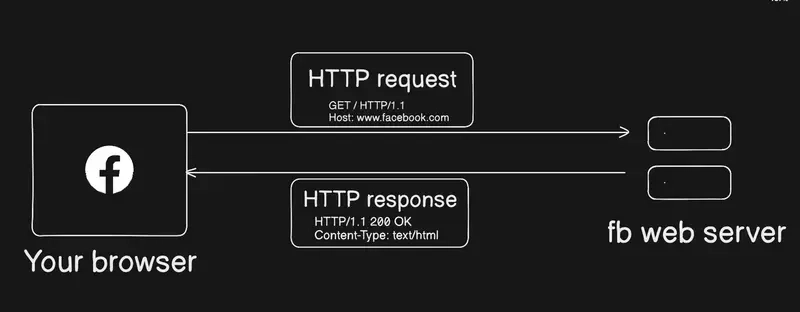
- HTTP is an application-layer protocol designed for transferring hypertext documents across the Web. For most of its history, HTTP runs on top of TCP.
- The typical stack is: HTTP (application layer) over TCP (transport layer) over IP (network layer). This combination provides reliable, ordered delivery of web content, which is essential for correctly rendering web pages, handling forms, and maintaining session state via cookies and TLS.
HTTP/2 and HTTP/3: HTTP/2 continues to use TCP as its transport, but introduces multiplexing, header compression, and stream prioritization to improve performance. HTTP/3 shifts to QUIC, a transport protocol built on UDP, which retains the benefits of TCP’s reliability while reducing some overhead and improving resilience to head-of-line blocking. This transition illustrates that HTTP’s relationship with transport protocols has evolved, balancing reliability and performance needs.
Relationship between HTTP and TCP
- In the traditional model, HTTP relies on TCP for reliable transport. The guarantees that TCP provides—order, integrity, and reliable delivery—are well aligned with HTTP’s expectations for delivering resources (HTML, CSS, JavaScript, images) in a consistent and complete form.
The evolution toward HTTP/3 demonstrates a nuanced relationship: while HTTP itself remains agnostic to the underlying transport, protocol designers seek to optimize performance. By using QUIC (which runs over UDP) for HTTP/3, developers aim to reduce latency and head-of-line blocking while preserving data integrity and delivery guarantees through QUIC’s own mechanisms, which include stream multiplexing and built-in encryption.
Practical implications
- Reliability vs. speed trade-offs: When building or deploying services, you must weigh the cost of potential data loss against the benefits of lower latency. For pages and resources where partial data is acceptable or can be reconstructed, UDP-based approaches or UDP with custom reliability can be advantageous.
- Network conditions and compatibility: TCP’s reliability can help in noisy networks, but it can also contribute to latency due to retransmissions and congestion control. UDP’s simplicity can be beneficial in controlled networks or where applications implement their own loss tolerance and ordering.
- Security considerations: Transport security (TLS) commonly sits atop TCP due to its well-established reliability, session management, and cryptographic handshakes. QUIC, used with HTTP/3, integrates encryption directly into the transport protocol, changing how security is implemented at the transport layer.

*圖片來源:Unsplash*
Perspectives and Impact
- Historical context and evolution
- TCP has been the backbone of reliable Internet communications for decades. Its robust features, like congestion control and reliable retransmission, make it an ideal default for most applications requiring correctness and completeness.
- UDP’s simplicity and low overhead have kept it relevant for time-sensitive services. Its stateless nature makes it scalable for certain workloads, where the application can tolerate accepted loss or implement its own redundancy.
HTTP’s progression from HTTP/1.1 (built on TCP) to HTTP/2 (still on TCP) and HTTP/3 (on QUIC, UDP-based) reflects ongoing efforts to optimize web performance while maintaining reliability and security. HTTP/3’s QUIC foundation reduces some typical transport-level bottlenecks, notably head-of-line blocking, and can improve page load times in poor network conditions.
Future implications for developers and operators
- The transport layer landscape is likely to become more nuanced. While TCP remains dominant for many traditional web services, UDP-based transports with advanced reliability (like QUIC) offer performance advantages in modern, latency-sensitive applications.
- Network infrastructure, edge computing, and mobile networks will increasingly influence protocol choice. Client and server implementations may adopt hybrid strategies, selecting protocols per connection or per service based on real-time conditions.
Education and tooling will need to reflect these shifts. Developers should be aware of the implications of transport choices on application design, debugging, and performance tuning.
Practical considerations for deployment
- If your web service primarily serves standard pages and resources with predictable delivery requirements, TCP-based HTTP remains a safe, well-supported choice.
- If you operate real-time services (voice, video, interactive gaming) or microservices requiring ultra-low latency, exploring UDP-based transports with appropriate reliability mechanisms can yield noticeable gains.
- For new web protocols or services that prioritize speed and persistence (such as multiplexed streams with reduced head-of-line blocking), HTTP/3 over QUIC presents a compelling option, provided your client and network support is robust.
Key Takeaways
Main Points:
– TCP offers reliable, ordered delivery with congestion control; UDP offers low overhead and minimal guarantees.
– HTTP traditionally relies on TCP for reliability, with HTTP/3 moving toward QUIC (UDP-based) to improve performance.
– The choice between TCP and UDP (and the corresponding HTTP transport) depends on data integrity requirements, latency sensitivity, and network conditions.
Areas of Concern:
– TCP’s reliability can introduce latency due to retransmissions in lossy networks.
– UDP’s lack of guarantees necessitates application-level reliability mechanisms in scenarios requiring data integrity.
– Transitioning to QUIC/HTTP/3 requires infrastructure and client support; not all environments may be ready for UDP-based transport at scale.
Summary and Recommendations
TCP and UDP solve fundamentally different problems. TCP is the workhorse of reliable data transport on the modern Internet, ensuring data is delivered accurately and in the correct order. UDP sacrifices reliability for speed and simplicity, making it ideal for real-time or lossy environments where delays are unacceptable. HTTP’s relationship with these transport protocols has evolved: standard HTTP still rides on TCP, while HTTP/3 leverages QUIC to bring improved performance characteristics by operating over UDP with built-in security and multiplexing features.
For most traditional web applications, sticking with TCP-based HTTP remains the prudent choice, benefiting from broad compatibility, mature tooling, and robust reliability. For new, latency-sensitive services—especially those involving interactive media, real-time communication, or heavily microservice-oriented architectures—consider evaluating QUIC-based transport options and, more broadly, UDP-oriented designs that can provide lower latency while still achieving acceptable reliability through application-level strategies.
Actionable steps:
– Analyze your application’s tolerance for latency and data loss; if reliability is non-negotiable, TCP-based HTTP remains suitable.
– If you’re building real-time services, prototype with QUIC or UDP-based approaches to measure latency improvements versus reliability trade-offs.
– Monitor client and network support for HTTP/3 and QUIC, and plan phased migrations if performance gains align with business goals.
– Ensure appropriate error handling, retransmission strategies, and security measures are in place when deviating from traditional TCP-based HTTP to UDP-based transports.
References
– Original: https://dev.to/souvik_blog_b790df30e8dea/tcp-vs-udp-when-to-use-what-and-how-tcp-relates-to-http-47dh
– Additional references:
– RFC 793: Transmission Control Protocol
– RFC 768: User Datagram Protocol
– IETF RFCs on QUIC and HTTP/3
– MDN Web Docs: HTTP Overview
– Chromium/QUIC design documents and HTTP/3 implementation notes
Note: This article provides a cohesive overview of TCP, UDP, and HTTP relationships, suitable for readers seeking a comprehensive, readable guide to protocol choices and their impact on modern web performance.

*圖片來源:Unsplash*