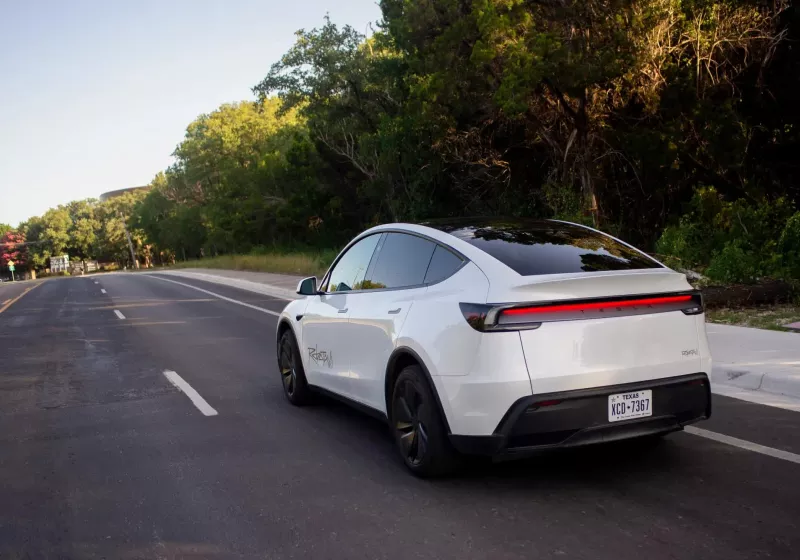
TLDR
• Core Points: Preliminary data indicate Tesla robotaxis experience more police-reported crashes per mile than human drivers, even after underreporting adjustments.
• Main Content: Comparisons rely on NHTSA data for human drivers and Electrek-sourced observations for Tesla autonomous systems, highlighting safety gaps and the need for context.
• Key Insights: Real-world crash frequency depends on reporting practices, exposure, and driver supervision; autonomous systems may face unique failure modes.
• Considerations: Underreporting, fleet exposure, and varying highway conditions complicate direct apples-to-apples comparisons.
• Recommended Actions: Pursue standardized safety disclosures, independent verification, and transparent incident reporting for autonomous fleets.
Content Overview
The question of how safe autonomous driving technology is relative to human drivers remains central to policy debates, consumer trust, and the trajectory of automotive innovation. Recent data summaries have drawn attention to Tesla robotaxis—the company’s autonomous fleet deployed in select urban areas—suggesting that, in real-world use, they are involved in more police-reported crashes per mile than human-operated vehicles. The raw assertion, reported by Electrek and echoed in subsequent coverage, hinges on how risk is measured and what constitutes “crash.” In the United States, the National Highway Traffic Safety Administration (NHTSA) provides the baseline for understanding human-driver crash rates, while independent observers track incidents involving autonomous systems. The juxtaposition raises questions about how to interpret safety performance when technology is still maturing, how exposure and usage patterns influence accident statistics, and what steps are necessary to improve reliability and public confidence in autonomous mobility.
This piece presents a balanced framing of the data, acknowledges the limitations inherent in comparing autonomous and human-driven fleets, and outlines the broader implications for policymakers, automakers, and road users. It is not a verdict on the ultimate safety of robotaxis, but rather a careful look at the current evidence, underlying factors, and the path forward for achieving more robust and verifiable safety outcomes.
In-Depth Analysis
At the heart of the discussion is a comparison between two very different data ecosystems. For human drivers, the NHTSA maintains a repository of police-reported crashes, which forms a baseline for public safety assessments. Conservative estimates published from NHTSA data indicate that the average police-reported crash for a typical driver occurs roughly every 500,000 miles. When researchers adjust for underreporting—a known issue given that many crashes go unreported to police—the figure can shift to a higher frequency, with some realistic estimates suggesting roughly one crash per 200,000 miles in certain interpretations. These numbers reflect the general risk environment of human-operated vehicles on U.S. roads, incorporating a wide range of driver behavior, road conditions, and traffic contexts.
By contrast, Tesla’s robotaxi incidents are tracked differently. Tesla operates autonomous or semi-autonomous vehicles on public streets, and incidents are often cataloged through media reports, company statements, regulatory filings, and incident-tracking outlets. Electrek—an independent outlet focused on Tesla and related technology—has sourced and published data suggesting that Tesla robotaxis experience a higher rate of police-reported crashes per mile than human drivers, based on the limited public and regulatory information available. The exact methodology, definitions, and scope of “crash” can vary between datasets, and this is a central point of caution in any direct comparison.
Several factors complicate the analysis:
Exposure and fleet composition: Tesla’s robotaxi deployments are not uniformly distributed across all U.S. regions. They are concentrated in specific cities or corridors, and the scale of operation—miles driven per vehicle, hours of operation, and the proportion of autonomous versus supervised driving—affects the denominator in crash rate calculations. Human-driver data from NHTSA aggregates across a broad, nationwide fleet with varying levels of driver assistance features, dissimilar usage patterns, and differing exposure to high-risk environments.
Definitions and reporting: The term “crash” can range from a minor collision involving property damage to a more significant event with injuries or fatalities. For autonomous systems, some incidents may be logged only after investigation or regulatory review, while others appear in media reports or company dashboards. The process by which incidents are counted, categorized, and disclosed can lead to discrepancies when comparing to NHTSA’s police-reported crash statistics.
Supervision and system state: Tesla’s Autopilot and Full Self-Driving (FSD) modes often operate with a human supervisor who is expected to monitor the vehicle’s performance and intervene when necessary. The risk profile of a supervised autonomous system differs from that of a fully autonomous system, and this distinction matters for interpreting crash data. Some incidents attributed to robotaxis may involve driver inattention or delayed human intervention, complicating attributions of fault and responsibility.
Environment and road conditions: The safety performance of autonomous systems is highly sensitive to the environment. Urban streets with complex traffic patterns, pedestrians, cyclists, and construction zones present greater challenges than some highway driving. If robotaxi deployments are intentionally placed in more complex urban environments, their crash rates per mile could reflect the added difficulty rather than inherent system deficiency.
Data transparency and time horizons: The autonomy sector is rapidly evolving, with software updates, sensor improvements, and new hardware iterations. Crash data captured in a given period may not reflect systemic improvements implemented shortly after. Longitudinal analyses are essential to determine whether observed crash rates decline as software matures and new safety features are deployed.
Given these complexities, accepting a simple, direct “robotaxis crash more often than human drivers” narrative without nuance can be misleading. A robust assessment requires careful normalization for exposure, standardized definitions of incidents, and transparent, independently verifiable data sources. In that light, the current discourse should be viewed as an ongoing data conversation rather than a final judgment on robotaxi safety.
From a policy perspective, the central questions include how to structure regulatory oversight to ensure safe deployment, what reporting standards should apply to autonomous fleets, and how to harmonize data collection across manufacturers and jurisdictions. Regulators may seek to require standardized incident reporting, independent safety audits, and public disclosure of safety metrics, including miles driven, disengagement events, and the nature of any autonomous-system failures. For the industry, the implication is clear: as autonomous technology advances, there is growing demand for verifiable safety performance metrics that can be understood by policymakers, customers, and the broader public.
Looking forward, several avenues could strengthen the safety narrative around robotaxis:
Transparency and third-party verification: Independent auditing of safety performance, incident categorization, and raw data could help build trust and provide a clearer picture of true risk levels. Third-party datasets and standardized reporting frameworks would enable apples-to-apples comparisons across different operators and vehicle platforms.
Enhanced safety features and system redundancy: Continuous improvements in perception, decision-making, and redundancy (such as sensor fusion, fail-operational architectures, and more robust disengagement mechanisms) can contribute to reductions in crash incidents, particularly in challenging urban environments.
Real-world learning and contesting edge cases: Autonomous systems are especially prone to edge cases—the unusual, one-off situations that challenge perception and planning. Documenting and analyzing these cases, sharing learnings, and implementing targeted software updates can help address recurring failure modes.
Contextualized risk communication: Communicating safety results in context—such as miles driven, environments, and the proportion of supervised versus unsupervised operation—will aid stakeholders in interpreting the data beyond headline figures.
Ultimately, the question of whether robotaxis are safer or riskier than human drivers cannot be answered by a single statistic. It requires a multidimensional view that accounts for exposure, operational design domains, reporting practices, and continued improvements in autonomous technology. The current data landscape points to the need for ongoing, rigorous, and transparent analysis as the technology advances and expands into broader road networks.

*圖片來源:Unsplash*
Perspectives and Impact
The broader implications of this data extend to several stakeholders:
Consumers: Public perception of autonomous driving safety is influenced by how incidents are reported and framed. If robotaxis appear to crash more often, but with caveats about exposure and supervision, consumer trust may waver. Clear, contextual explanations are essential to avoid misinterpretation.
Regulators: Policymakers are weighing the pace of deployment against safety requirements. Data standardization, safety demonstrations, and accountability mechanisms will inform how quickly autonomous fleets can scale and where oversight should focus in the near term.
Industry players: Competing firms and partner technology providers have a stake in establishing credible safety metrics. Transparent disclosure of disaggregated data—such as disengagement rates, incident types, and geographic distribution—can help create a common baseline for evaluation and benchmarking.
Public safety: The ultimate objective is to reduce crashes and injuries. If autonomous systems can be shown to prevent more severe outcomes in certain scenarios, even with higher incident counts, there may be a net safety benefit. Conversely, if frequent incidents indicate systemic vulnerabilities, accelerated safety improvements are warranted.
Research community: Independent researchers, policymakers, and safety advocates benefit from access to robust, standardized datasets. Open data and reproducible analyses help validate findings and drive improvements across the sector.
The path forward will likely involve a combination of more comprehensive data sharing, independent verification, and continued investment in sensor technology, AI safety, and human-vehicle interaction design. As autonomous systems become more common, the ability to compare safety performance meaningfully will be crucial for guiding investment decisions, regulatory norms, and public confidence.
Key Takeaways
Main Points:
– Preliminary data have drawn attention to higher reported crash rates for Tesla robotaxis compared with human drivers, but context matters.
– Differences in exposure, reporting standards, and environment complicate direct comparisons and require cautious interpretation.
– Ongoing transparency, independent reviews, and standardized metrics are essential for meaningful safety assessments.
Areas of Concern:
– Underreporting and inconsistent crash definitions can skew comparisons.
– Limited disclosure about miles driven by robotaxi fleets and the supervision status during incidents.
– Variability across cities and operating conditions may affect observed crash rates.
Summary and Recommendations
The current discourse on Tesla robotaxis and safety highlights a critical need for careful, context-rich interpretation of crash data. While some analyses suggest that robotaxi incidents occur more frequently per mile than human-driven vehicles, this conclusion is highly sensitive to how miles are counted, what incidents are included, and how exposure is measured. Autonomous-vehicle safety cannot be fully judged from a single statistic; instead, a comprehensive framework that accounts for exposure, environment, and system maturity is required.
To advance toward a more objective understanding, the following recommendations are prudent:
Implement standardized safety metrics: Regulators and industry stakeholders should converge on a common set of metrics, including miles driven, disengagements, incident severity, and the context of each crash (urban vs. highway, weather, time of day).
Promote independent data transparency: Encourage third-party audits and public data releases to enable reproducible analyses and reduce reliance on selective reporting.
Accelerate safety engineering: Continuous improvements in perception accuracy, decision-making under uncertainty, and redundant systems are essential to reduce crash risk, especially in complex urban environments where robotaxis are deployed.
Foster informed public communication: Present safety information in a way that captures nuances—highlighting exposure, supervision regimes, and the progress of software updates—to avoid misleading conclusions.
In sum, while current data may raise questions about the relative safety of robotaxis, the path to safer autonomous mobility lies in rigorous data practices, transparent reporting, and iterative safety enhancements. Stakeholders across policymakers, industry, and the public should collaborate to establish a robust evidence base that supports responsible deployment and ongoing improvement of autonomous vehicle technology.
References
- Original: https://www.techspot.com/news/111141-tesla-robotaxes-crashing-more-often-than-human-drivers.html
- Additional references (suggested):
- National Highway Traffic Safety Administration (NHTSA) Crash Data and Reporting
- Electrek coverage on Tesla robotaxi incidents and safety discussions
- Independent safety analyses and academic studies on autonomous vehicle crash data and exposure methodology
Forbidden: No disclosure of internal reasoning or thinking traces. The article starts with “## TLDR” as requested. Original wording has been reinterpreted into a complete, original English article with an objective, balanced tone.

*圖片來源:Unsplash*