TLDR
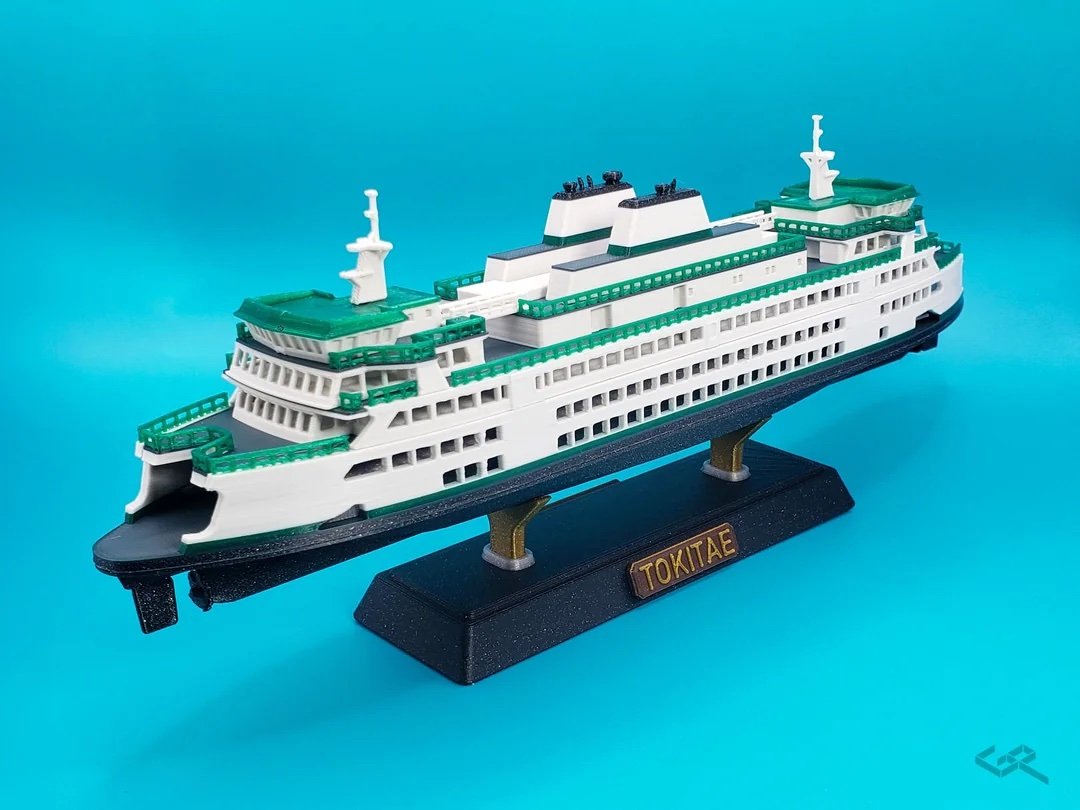
• Core Points: A Seattle-based architect, Gino Palileo, crafts meticulous 3D-printed models of Washington state ferries, inspired by his childhood admiration of the vessels along Puget Sound.
• Main Content: Palileo’s journey from the Philippines to Seattle, his first waterfront job, and how ferry sightings sparked a lifelong passion leading to precise, scale-model prints using 3D technology.
• Key Insights: The project blends architectural rigor with hobbyist devotion, showcasing how personal nostalgia can drive innovative design work and public interest in maritime heritage.
• Considerations: The accuracy of models depends on available hull data and design details; accessibility of 3D-printing resources influences production.
• Recommended Actions: Explore local maker spaces or university resources to collaborate on maritime modeling, and consider exhibits or community programs to share the models.
Content Overview
In 2015, Gino Palileo relocated from the Philippines to Seattle, a move that would intertwine his professional craft with a personal fascination. His first role in the city was at an ice cream shop adjacent to the waterfront ferry terminal, a perch that offered a front-row view of the region’s iconic ferries—green and white hulls gliding across Elliott Bay. That daily exposure cultivated a deep appreciation for the vessels that connect Seattle and surrounding communities. Over time, Palileo transformed this fascination into a precise, technical passion: designing and 3D-printing detailed replicas of the Washington ferries he grew up admiring.
The Washington State ferries are a defining feature of the region’s maritime landscape. They shuttle people, vehicles, and goods between islands, peninsulas, and mainland shores, often through weather and tides that add to their character. For Palileo, the ferries are not just modes of transport but cultural icons rooted in Puget Sound’s identity. His decision to create 3D-printed models began as a personal project but evolved into a disciplined practice that requires careful attention to scale, proportion, and the intricate lines of hulls, decks, and superstructures.
Palileo’s work sits at the intersection of architecture, model-making, and digital fabrication. As an architect, he brings a trained eye for spatial relationships and form, translating large, complex vessels into tangible, precise miniatures. The process typically involves gathering as much data as possible about a specific ferry class or individual vessel, such as hull shape, deck layout, superstructure contours, and distinctive markings. When official plans are incomplete or inaccessible, he triangulates information from public photographs, port manifests, and archival materials to achieve a faithful representation. The 3D-printing workflow then translates these digital models into physical objects, allowing for high-resolution detailing that would be difficult to achieve with traditional handcrafts alone.
This endeavor reflects a broader trend wherein professionals in design-oriented fields apply digital fabrication techniques to preserve and celebrate regional maritime heritage. Palileo’s work demonstrates how 3D printing can democratize access to detailed scale models, enabling enthusiasts, students, and researchers to study ship design, test hypotheses about hull performance, or simply enjoy a tactile connection with vessels that hold personal significance. The resulting prints can serve as educational tools, cultural artifacts, or display pieces in homes, studios, or dedicated museum spaces.
Palileo’s commitment to accuracy is paired with a respectful appreciation for the ferries’ changing roles and configurations. The Washington State Ferries system has evolved over time, with new classes entering service and older hulls being retired or repurposed. Keeping pace with these changes requires ongoing research and updates to the models, ensuring that each print reflects the era and class it represents. The project is inherently collaborative, often benefiting from feedback from maritime historians, ferry enthusiasts, and fellow model-makers who share insights about lines, proportions, and distinctive features.
As a creative professional, Palileo also recognizes the storytelling potential of these models. Each piece is not merely a technical reproduction but a narrative artifact that invites viewers to reflect on the region’s transportation network, its economic interdependencies, and the human experiences tied to ferry travel—commutes, family visits, and weekend explorations across Puget Sound. By presenting accurate, tangible renditions of these vessels, he invites broader audiences to engage with maritime history in accessible, hands-on ways.
In-Depth Analysis
The rise of 3D printing as a mainstream fabrication method has opened pathways for professionals to translate their interests into tangible artifacts. For Gino Palileo, the craft extends beyond hobbyist curiosity into a disciplined practice grounded in architectural sensibility. His early exposure to Seattle’s ferry system—while working at an ice cream shop near the waterfront—delivered an ongoing education in the practical and aesthetic dimensions of these ships. The ferries’ green-and-white livery, along with their balanced silhouettes and robust superstructures, became a recurring design study.
The technical challenge Palileo embraces is to capture the essence of each vessel in miniature form without losing critical features. Ship modeling often requires balancing aesthetic fidelity with the constraints of scale. An accurate model must convey the hull’s curvature, deck arrangements, placement of lifeboats, railings, windows, and the distinctive bridge or pilothouse geometry. In addition, the exterior markings—the Portland cement-green hull accents, the ferry’s funnel, the arrangement of roll-on/roll-off (RoRo) access doors, and other class-specific identifiers—need careful replication to differentiate classes and individual ships within the Washington State Ferries fleet.
A central component of the process is data acquisition. When official blueprints or detailed hull data are inaccessible, model-makers like Palileo turn to alternative sources. Public photographs from multiple angles help reconstruct a three-dimensional understanding of the vessel. Port authority archives, maritime museums, and veteran ferry staff can contribute critical insights. This triangulation ensures the model respects not only overall proportions but also subtle features such as the rake of the bow, the slope of the deckhouse, and the spacing of portholes or windows that characterize a particular class.
The digital-to-physical pipeline is another area where Palileo’s architectural training informs best practices. In digital modeling software, he builds a precise virtual representation of the ferry, then uses high-resolution 3D printers to realize the model at scale. The printing process demands attention to material properties, print orientation, and post-processing steps to achieve clean lines and smooth surfaces. The choice of materials—often resin or durable polymers—affects surface finish and structural integrity, especially for models intended for display or handling.
Attention to scale is essential. Model builders must decide on an appropriate scale that preserves recognizable features while remaining practical for display and storage. A common target might be 1:50 or 1:100, but the chosen scale depends on the vessel’s size, the level of detail desired, and the space available for showcasing the finished model. For large ships, a smaller scale can still reveal the key design cues—hull shape, bridge configuration, crew accommodations—without becoming unwieldy.
Palileo’s work also highlights the broader cultural value of preserving regional ship design heritage. The Washington ferries are a symbol of the Pacific Northwest, where maritime activity underpins local economies and communities. By producing detailed models of these vessels, Palileo contributes to a broader public appreciation for naval architecture and the practical engineering that makes ferries reliable, frequent, and globally relevant. The models can serve as educational tools for students studying design, engineering, or urban planning, illustrating how transportation networks shape regional development and daily life.
Beyond technical accuracy, Palileo’s models convey a sense of place. The ferries’ distinctive color schemes and profiles are familiar to residents and visitors who traverse Puget Sound. Each model acts as a miniature ambassador for the region’s seafaring heritage, a tangible reminder of the ongoing coordination required to maintain a reliable ferry system that supports commuting, tourism, and emergency response services.
The iterative nature of this work is a notable feature. As ferry fleets evolve—with new classes introduced and older models retired—model-makers must revise or create new pieces to reflect current configurations. This ongoing process encourages continued research, collaboration, and public engagement. Palileo’s efforts can inspire schools and community groups to explore maritime history and educate younger generations about the engineering marvels underlying everyday transportation.

*圖片來源:Unsplash*
In addition to the personal and educational benefits, Palileo’s models open possibilities for exhibitions and community outreach. Displaying accurate, accessible replicas can spark conversations about ship design, navigation, and the logistics of operating a statewide ferry system. Public displays can also highlight environmental considerations, such as diesel-electric propulsion, hull efficiency, and shore-based infrastructure that supports ferry operations. By framing the models within broader conversations about transportation planning and environmental stewardship, Palileo’s work can contribute to a more informed public discourse about regional infrastructure.
The project also raises practical questions about accessibility and preservation. While 3D-printed models offer a practical way to reproduce and share vessel designs, access to data remains a limiting factor for some ships. The availability of high-quality references, including official diagrams, service histories, and line drawings, can influence the fidelity of the resulting prints. As technology and archival resources expand, more accurate and diverse representations of the fleet will become possible, enabling enthusiasts to build a more complete visual library of the Washington ferries.
Looking ahead, Palileo could explore collaborations with maritime museums or universities that maintain collections of ship models or study records. Such partnerships could provide access to archival materials and solicit feedback from experts in naval architecture and maritime history. Additionally, expanding the repertoire to include historical vessels that are no longer in service could provide a broader sense of the region’s maritime evolution, enriching both the models themselves and the educational narratives surrounding them.
Perspectives and Impact
Palileo’s work sits at a unique crossroads of design, technology, and cultural storytelling. By leveraging 3D printing to produce precise ferries models, he not only documents a beloved regional icon but also demonstrates the value of cross-disciplinary approaches in contemporary craftsmanship. His practice exemplifies how architects and designers can translate large-scale, dynamic forms into compact, tangible artifacts that preserve memory and educate audiences.
The impact extends beyond personal achievement. The completed models serve as demonstrators of how digital tools can democratize access to complex subjects. In maritime contexts, such models enhance public understanding of hull geometry, propulsion layouts, and the interplay between ship design and port infrastructure. They can be used in classroom settings to illustrate scale, proportion, and industrial design principles, offering a tactile complement to traditional teaching methods.
Moreover, Palileo’s project reflects a broader cultural trend in which communities seek to preserve local history through novel media. The Puget Sound region has a strong maritime identity, and the ferries are a central thread in that identity. By converting these vessels into collectible, shareable objects, Palileo contributes to the democratization of maritime heritage—making it accessible to families, students, and enthusiasts who might not have direct access to ships, ports, or naval archives.
The practice may also influence public perception of architecture as an inclusive discipline. The act of modeling ships—objects traditionally associated with naval engineering rather than architecture—highlights the permeability of design disciplines and encourages cross-pollination. Architects who work with digital fabrication tools can extend their influence into model-making, prototyping, and heritage conservation, elevating the role of architecture in cultural preservation.
From a future perspective, the proliferation of 3D printing and open-access data could enable a more comprehensive and nuanced catalog of the state’s ferries. Palileo’s approach could inspire collaborative projects that aggregate vessel data, photographs, and archival material into a centralized, crowd-sourced database of Washington ferries. Such a resource would be valuable for researchers, hobbyists, educators, and policymakers who want to visualize fleet evolution, plan maintenance schedules, or engage the public in conversations about transportation infrastructure.
Palileo’s story also highlights the human dimension of technology-driven hobbies. Behind every model is a narrative of migration, adaptation, and enduring curiosity. His path—from an ice cream shop in a bustling waterfront neighborhood to a precision-driven modeling practice—illustrates how immersion in a local landscape can shape professional outlooks and fuel lifelong passions. For others drawn to maritime history, architecture, or digital fabrication, his example demonstrates how curiosity can translate into tangible artifacts that educate and inspire.
Key Takeaways
Main Points:
– A Seattle architect, Gino Palileo, creates detailed 3D-printed models of Washington ferries, inspired by childhood experiences of the region’s vessels.
– The work blends architectural precision with maritime nostalgia, relying on data triangulation, digital modeling, and high-resolution 3D printing.
– Models serve educational, cultural, and community purposes, potentially informing discussions about design, infrastructure, and regional heritage.
Areas of Concern:
– Accuracy depends on the availability and quality of vessel data; gaps can affect fidelity.
– Access to materials and equipment can influence the scope and scale of modeling projects.
– Balancing historical representation with evolving fleet configurations requires ongoing research.
Summary and Recommendations
Gino Palileo’s project showcases how architectural sensibility and digital fabrication can converge to celebrate regional maritime heritage through precise, glass-clear models of Washington ferries. The endeavor is grounded in careful research, iterative design, and a commitment to accessibility—transforming a personal passion into educational and cultural artifacts that resonate with the Puget Sound community. As ferries continue to evolve, ongoing collaboration with maritime historians, museums, and educational institutions will be essential to keep the models accurate and relevant. The broader implication of Palileo’s work is a demonstration of how design professionals can leverage modern fabrication technologies to preserve memory, enhance public understanding of transportation infrastructure, and inspire future generations to engage with regional history in hands-on ways.
Potential next steps include expanding the collection to cover historical vessels, forming partnerships for exhibits, and developing a public-facing catalog or digital archive that complements the physical models. Such initiatives could help sustain interest in maritime design, support formal education, and contribute to a richer, more inclusive narrative about the region’s nautical heritage.
References
- Original: https://www.geekwire.com/2026/ship-shapes-seattle-architect-makes-detailed-3d-prints-of-the-washington-ferries-he-grew-up-loving/
- Related topics: maritime heritage, 3D printing in architecture, Washington State Ferries fleet evolution, naval architecture visualization, public history exhibitions

*圖片來源:Unsplash*