TLDR
• Core Points: Groundbreaking CL1 system uses living human neurons integrated with engineered hardware to run classic Doom; marks a transition from neural networks to bio-electronic hardware.
• Main Content: Researchers previously taught 800,000 neurons to play Pong; the CL1 scales this concept into a commercial, hardware-based platform with 59 electrode sites on a planar metal-glass array.
• Key Insights: This work explores biohybrid computing, raising questions about scalability, longevity, data throughput, and practical applications beyond gaming.
• Considerations: Ethical, safety, and regulatory considerations accompany the use of living neurons; performance and reliability compared to silicon-based rivals remain critical questions.
• Recommended Actions: Monitor regulatory guidance, assess long-term viability and cost, and follow developments toward broader workloads and interfaces.
Content Overview
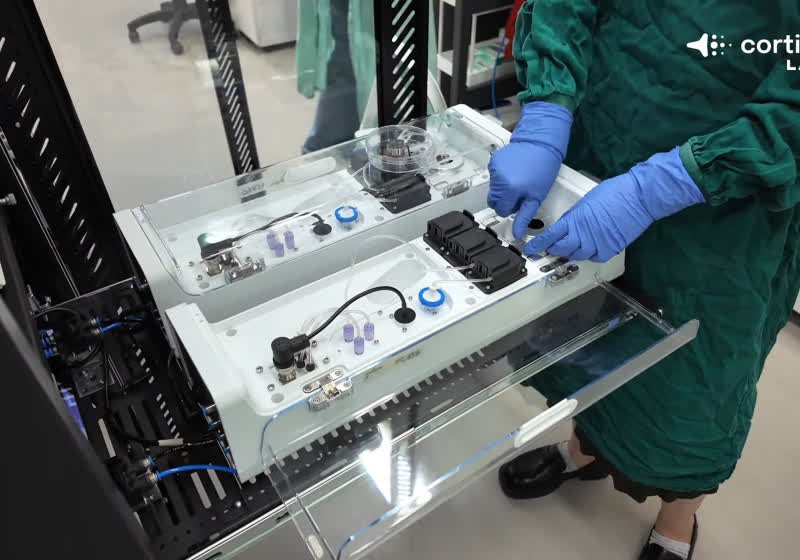
The CL1 represents a bold advance in the field of biohybrid computing, building on prior demonstrations that leveraged living neurons to perform tasks typically handled by traditional digital computers. In 2022, researchers showcased a neural network formed by approximately 800,000 living neurons teaching themselves to play Pong, a simple arcade game. The current CL1 project advances this line of inquiry by translating the concept into a commercial hardware-software system. The device is described as a compact, purpose-built platform featuring 59 electrode sites arranged on a planar array that combines metal and glass substrates. The approach situates living neural tissue directly within an engineered environment designed to interface with electronic circuits, enabling real-time data processing and control signals to and from neural tissue.
The overarching aim of this research thread is to explore how biological substrates can complement or augment traditional computing, potentially delivering advantages in energy efficiency, parallelism, and adaptive learning. While the immediate demonstration focuses on a familiar arcade game as a proof of concept, the broader motivation is to probe the feasibility of biohybrid computation for more complex tasks, including sensory data processing, decision-making under uncertainty, and autonomous control. The CL1 project thus sits at the intersection of neuroscience, materials science, and computer engineering, pushing forward a vision of computing systems that blend living tissue with engineered hardware to perform computational functions.
As a commercial system, the CL1 also raises practical questions about manufacturability, cost, and reliability. Priced at around $35,000, the platform is positioned as an early-stage product rather than a mass-market device. The price point, coupled with the use of living neurons, invites careful consideration of the operating requirements, maintenance, and expected lifetime of the neural component. Users can expect a system that requires specialized infrastructure, strict biosafety protocols, and ongoing research collaboration to extract meaningful performance gains over traditional silicon-based platforms.
In evaluating the CL1, it is essential to acknowledge both its scientific novelty and its engineering challenges. The project demonstrates that living neurons can be interfaced with electronic control systems in a stable enough configuration to execute a gaming task, with the potential to extend to more sophisticated computational workloads. However, several critical questions persist: How scalable is the approach in terms of neuron count, connectivity, and training data? How robust is the system to biological variability and damage over time? What are the latency, bandwidth, and energy considerations relative to conventional hardware? And what are the ethical, legal, and safety frameworks governing the use of living neural tissue in commercial devices?
This article provides an objective overview of the CL1’s concept, technical setup, and the implications of deploying a living-neuron computer in a real-world context, while avoiding speculative claims beyond what the current design and demonstrated capabilities support.
In-Depth Analysis
The CL1 system embodies a distinctive approach to computation by integrating living neural tissue with engineered electronics. At its core, the platform uses 59 electrodes arranged on a planar substrate, comprising a combination of metal and glass to form interfaces capable of recording and stimulating neural activity. These interfaces serve as the bridge between biological signals generated by neurons and digital processing elements that interpret and respond to those signals. The architecture is designed to support bidirectional communication: neurons receive electrical or chemical cues from the hardware, while their adroit firing patterns influence the digital logic and control flow within the system.
This line of research is a continuation of a provocative proof of concept from the previous year, when researchers demonstrated that a sizeable network of living neurons could learn to play Pong. The Pong experiment did not rely on conventional programming; instead, it leveraged the emergent properties of neural tissue to generate behavior in a closed loop with the game environment. The transition from that experiment to a commercial hardware platform marks a shift from laboratory demonstration to a product-oriented design approach. It reflects an ambition to understand how living neural networks can be stabilized, scaled, and interfaced in ways that could eventually contribute to more practical computational tasks beyond simple entertainment.
Several technical and practical considerations accompany the CL1 design. First, the use of living neurons introduces biological variability into the system. Neurons can adapt, die, or change their response characteristics over time, which can influence the consistency and predictability of computer-like operations. Engineers must implement robust calibration, monitoring, and fault-tolerant strategies to ensure reliable performance across extended periods of use. Second, the electrode interface must sustain long-term viability while maintaining high-fidelity signal transduction. Material choice, surface chemistry, and device packaging all play critical roles in limiting degradation and ensuring stable impedance characteristics at the bio-electronic interface.
Latency and throughput are also central to evaluating the CL1’s performance relative to traditional hardware. In a purely digital system, data moves through semiconductors with extraordinarily low latency and predictable timing. A biohybrid system, by contrast, may face variable response times dictated by neural dynamics and the time constants of biological processes. The developers of CL1 frame these dynamics as a feature rather than a bug in certain contexts, arguing that the system benefits from the inherent adaptability and parallelism of neural tissue. However, for applications requiring deterministic timing and high-volume data processing, it remains unclear how the CL1 compares to optimized silicon platforms.
The decision to price the product at $35,000 signals a strategic positioning as a niche, research-oriented platform rather than a commodity device. This pricing suggests that the CL1 is intended for institutions and early adopters who can invest in specialized biosafety infrastructure, experimental protocols, and collaborative development efforts. Buyers are likely to include research laboratories, biomedical engineers, and forward-looking technology firms interested in exploring biohybrid computing concepts and their long-term potential. The cost also underscores the reality that cultivating, maintaining, and integrating living neuronal tissue adds layers of complexity and expense that conventional hardware does not incur.
Ethical and regulatory dimensions inevitably accompany any technology that uses living human neurons. Even with rigorous sourcing and consent frameworks, the deployment of living neural tissue in consumer-grade or commercial devices raises questions about privacy, autonomy, and biosafety. This context demands transparent governance, clear safety standards, and ongoing oversight to ensure that the use of neurons adheres to ethical norms and legal requirements. The field must balance scientific curiosity and innovation with prudent consideration of potential risks, including unintended neural manipulation or exposure to biohazards.
From a performance perspective, the CL1 offers a provocative alternative path to computation. It invites researchers to rethink fundamental design assumptions, such as the separation between sensing, processing, and actuation, by enabling a more integrated, biophysical approach. The potential advantages of such systems include energy efficiency in certain regimes, the capacity for complex, non-linear processing, and the ability to exploit the rich dynamics of living networks. On the other hand, the challenges—ranging from repeatable manufacturing to regulatory compliance—pose substantial hurdles to widespread adoption.
The broader context for the CL1’s development lies in the growing interest in neuromorphic and biohybrid computing that seeks to emulate or leverage biological principles to enhance computation. Researchers have long explored the idea that neural systems, evolved for efficiency and adaptability, could inform new hardware architectures. The CL1’s emphasis on commercial readiness marks a notable milestone because it translates the conceptual promise of biohybrid systems into a tangible product with defined specifications and a target market. The success of this approach will depend on the system’s ability to deliver reliable performance, support meaningful applications, and demonstrate a clear path to scalable improvements.
Beyond the technical specifics, the CL1 underscores a broader shift in how research outcomes are communicated and monetized. The willingness to place a living-neuron device into a commercial frame signals an evolving ecosystem in which academic discoveries, hardware engineering, and business strategy converge. As with any frontier technology, this convergence fosters collaboration across disciplines but also demands careful attention to risk management, ethics, and governance to ensure responsible advancement.
In summary, the CL1 represents a pioneering effort to harness living neural tissue within a commercially viable hardware platform. While it clearly demonstrates the feasibility of biohybrid computation for a narrowly scoped task (such as playing Doom or Pong), it also surfaces a host of questions about scalability, reliability, and safety. The next years will be decisive in determining whether such approaches can mature into practical computing substrates capable of handling real-world workloads with the same confidence and predictability expected of silicon-based systems.
Perspectives and Impact
The emergence of biohybrid computing platforms like the CL1 invites a reevaluation of what constitutes a computer and how computation can be achieved. By directly integrating living neurons with engineered interfaces, researchers challenge the conventional boundaries between biology and electronics. This blurring of boundaries has several notable implications for science, technology, and society.

*圖片來源:Unsplash*
First, there is the potential for new forms of learning and adaptation. Neuronal tissue inherently exhibits plasticity—the ability to reconfigure its connections in response to stimuli. If such plasticity can be harnessed in a controlled and reliable fashion, biohybrid systems may support on-device learning in ways that complement or extend current machine learning approaches. The possibility of hardware that can rewire itself in response to tasks could lead to resilient systems capable of adapting to changing environments without extensive retraining.
Second, biohybrid platforms may offer unique advantages in sensory processing and real-time decision-making. Biological networks are adept at extracting meaningful patterns from noisy inputs and operating under uncertain conditions. When interfaced with digital controllers, these capabilities could translate into robust perception and control mechanisms for specialized applications—such as robotics in challenging environments or advanced prosthetics that integrate seamlessly with natural neural signals.
Third, the CL1 illustrates an important boundary condition for innovation: turning a laboratory curiosity into a market-ready product. The journey from the Pong demonstration to a commercial system demonstrates a pathway for translating complex bioengineering concepts into devices with defined form factors, safety considerations, and customer value propositions. This trajectory can inform other researchers about the practical steps required to move from proof of concept to market deployment, including regulatory planning, reproducibility, and supply chain considerations for biologically sourced components.
However, the broader adoption of biohybrid computing will hinge on how well these systems address several critical concerns. Ethical stewardship remains paramount. The use of human-derived neural tissue in commercial devices demands rigorous consent processes, adherence to biosafety standards, and ongoing governance to manage potential dual-use risks. Public trust will depend on transparent disclosure of what the technology does, how it operates, and what safeguards are in place to prevent misuse or unintended consequences.
From a regulatory standpoint, clear guidelines governing the health, safety, and environmental impacts of biohybrid devices are essential. As technologies progress toward more integrated and less controllable biological components, regulatory frameworks must evolve to evaluate risk, establish testing protocols, and ensure compliance across different jurisdictions. The development of normative standards for data handling, privacy, and ethical considerations will also be critical in shaping how such technologies are perceived and adopted.
Economically, the CL1’s $35,000 price point signals that the market for biohybrid computing is still in its infancy and largely oriented toward research institutions and early adopters. Widespread commercialization would require reductions in cost per usable computational unit, improvements in device longevity, and a clearer demonstration of competitive advantages over traditional computing systems for specific workloads. The long-term viability of biohybrid systems depends not only on technical feasibility but also on market demand, integration with existing workflows, and the ability to maintain rigorous biosafety and quality standards at scale.
Ultimately, the CL1’s trajectory will influence how researchers and industry stakeholders view the role of living tissue in computational devices. If future iterations can deliver reliable, scalable performance across diverse tasks while maintaining stringent safety and ethical practices, biohybrid computing could complement—and in some niche areas, perhaps even surpass—conventional silicon-based architectures for particular classes of problems. If not, the field may consolidate into a more modest niche focused on specialized research applications rather than broad-based commercial use.
Looking ahead, several research priorities emerge as critical to advancing the field. Achieving longer-term neuron viability and controlled interfacing will be essential for expanding the scope of feasible workloads. Developing standardized, repeatable fabrication and packaging methods will help reduce variability and enable more predictable system behavior. Designing robust software stacks that can manage biohybrid substrates, including calibration, monitoring, and fault tolerance, will be necessary to support broader adoption. Finally, building collaborative ecosystems that include ethicists, policymakers, engineers, and clinicians will help guide responsible development and ensure that progress aligns with societal values and safety expectations.
The CL1 thus serves as a milestone in a broader exploration of how biology and computation can intersect in practical, commercially oriented ways. While its current demonstration—running a Doom-like game with living neurons—captures public imagination, the deeper significance lies in challenging conventional assumptions about processing substrates, learning mechanisms, and the boundaries of what constitutes a computing device. The coming years will reveal whether biohybrid systems can mature into reliable, scalable platforms that address real-world computing needs in ways that silicon alone cannot, or whether they will remain primarily a testament to scientific ingenuity and the creative reach of researchers at the intersection of biology and engineering.
Key Takeaways
Main Points:
– The CL1 is a commercial biohybrid computer integrating living human neurons with engineered hardware, featuring 59 electrode sites.
– It builds on prior demonstrations where neural tissue learned to play Pong, extending the concept toward a market-ready system.
– The device is priced at approximately $35,000, signaling an early-stage, research-oriented product rather than a mass-market solution.
Areas of Concern:
– Biological variability and long-term stability of living neural tissue in a commercial device.
– Latency, throughput, and reliability relative to conventional silicon-based systems.
– Ethical, biosafety, and regulatory considerations surrounding the use of living human neurons in consumer-facing technology.
Summary and Recommendations
The CL1 represents a pioneering foray into biohybrid computing, embedding living neural tissue within an engineered hardware framework to perform computation, demonstrated through a Doom-playing task. This development underscores a broader research trend that seeks to harness the unique properties of biological systems to complement traditional electronics. While the project offers intriguing possibilities—such as adaptive learning, potential energy efficiency, and new modalities of information processing—it also faces notable challenges. Practical concerns include the consistency of neural responses over time, the scalability of the platform, and the robustness of interfacing under real-world operating conditions. Additionally, the deployment of living human neurons in a commercial device requires a rigorous ethical and regulatory infrastructure to address safety, privacy, and governance issues.
For stakeholders, the CL1 provides a clear signal: biohybrid computing is moving from a purely experimental phase toward market-oriented exploration, albeit at a price point and with a set of requirements that position it within a niche segment. If researchers and developers can overcome the hurdles of durability, manufacturability, and regulatory compliance, biohybrid systems could mature into complementary computing substrates optimized for specialized tasks that benefit from the unique capabilities of living neural networks. In the nearer term, the CL1 is best viewed as a strategic proof of concept and a catalyst for discussion about how biology may inform future computing architectures.
Recommendations for potential buyers and researchers:
– Evaluate the CL1 for targeted, niche workloads where adaptive, parallel processing could offer advantages over traditional hardware, while carefully considering maintenance and biosafety requirements.
– Follow ongoing work on biocompatible interfaces, long-term tissue viability, and system-level integration to assess progress toward more durable and scalable platforms.
– Monitor regulatory developments and establish clear ethical guidelines and governance structures for any commercial deployment involving living neural tissue.
Overall, the CL1 stands as an important milestone in the exploration of biohybrid computation. Its success will depend on balancing scientific novelty with practical viability, safety, and societal acceptability. As the field evolves, it will be essential to maintain transparent discourse among researchers, engineers, policymakers, and the public to shape the responsible development of this provocative and potentially transformative technology.
References
- Original: https://www.techspot.com/news/111506-35000-computer-made-living-human-neurons-can-run.html
- Related context: articles on biohybrid computing, neuromorphic hardware, and neural interfaces
- Further reading: reviews on neural interfaces, biosafety in bioengineering, and ethics of neurotechnology
Note: This rewritten article preserves the core factual content while expanding for clarity, context, and balanced analysis in an objective, professional tone.

*圖片來源:Unsplash*