TLDR
• Core Points: Claude Code and Anthropic’s AI coding tools are fueling a surge of excitement among Seattle software engineers, signaling a new phase in AI-assisted development.
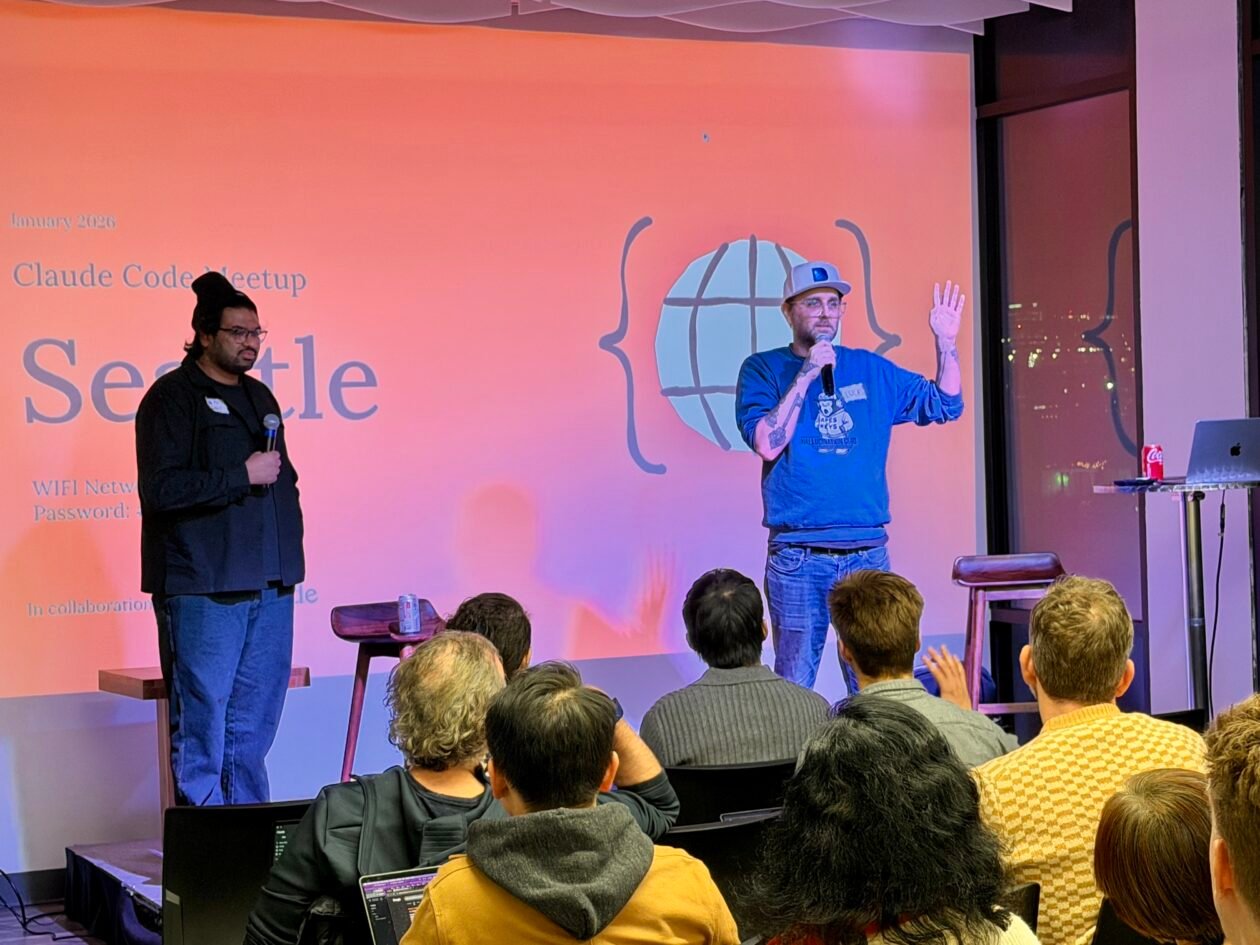
• Main Content: A Claude Code meetup attracted over 150 tech professionals in Seattle, highlighting practical use cases and evolving workflows with Anthropic’s fast-growing AI platform.
• Key Insights: AI-assisted coding is gaining traction across engineering teams, with emphasis on speed, collaboration, and ethical guardrails.
• Considerations: Adoption hinges on reliability, security, integration with existing toolchains, and transparent evaluation of AI outputs.
• Recommended Actions: Teams should pilot Claude Code in scoped projects, establish governance for AI-generated code, and share best practices across the community.
Content Overview
A recent gathering in Seattle underscored the rising momentum of AI-powered coding tools, particularly Anthropic’s Claude Code. The event drew more than 150 software professionals who were eager to learn how their peers are applying Claude Code to real-world development tasks. Attendees explored a range of use cases—from automating boilerplate code to accelerating debugging and refactoring—while discussing how AI copilots can fit into established development workflows. The meetup served not only as a forum for demonstrating capabilities but also as a space for engineers to exchange lessons learned, cautionary notes, and best practices for integrating AI-assisted coding into teams with diverse tech stacks and project requirements. The discussions reflect a broader industry trend: as AI coding tools mature, developers are moving beyond experimental pilots toward broader, pragmatic adoption that can reshape productivity, collaboration, and software quality.
Claude Code, a product from Anthropic, is designed to assist developers by generating code, offering suggestions, and helping with debugging and code reviews. The Seattle event highlighted how practitioners are balancing speed with accuracy, and how they are implementing safeguards to ensure that AI-generated code aligns with project standards, security practices, and compliance requirements. In this context, the meetup emphasized the importance of evaluating AI outputs, conducting rigorous testing, and maintaining human-in-the-loop oversight where necessary. The gathering also illustrated the growing ecosystem around Claude Code, with participants sharing integration techniques, tooling alignments, and strategies for measuring impact on delivery timelines and code quality.
The city of Seattle, known for its robust tech community and proximity to leading software firms, provided a dynamic backdrop for such discussions. The meetup’s success — both in attendance and engagement — signals a broader shift in the software development landscape where AI-assisted coding is becoming a mainstream consideration for engineering teams seeking to accelerate delivery while managing risk. As interest continues to rise, more organizations are likely to host similar events, publish case studies, and contribute to a shared repository of best practices that can guide adoption across industries.
In-Depth Analysis
The emergence of Claude Code as a focal point for AI-assisted software development reflects several converging trends in the tech industry. First, the demand for faster delivery cycles and reduced time-to-market has driven developers to explore automation and AI augmentation as viable pathways to productivity gains. Claude Code’s capabilities—ranging from code generation to intelligent suggestions and debugging assistance—offer a complementary workflow that can reduce repetitive tasks, free up engineers to focus on higher-value work, and help teams scale their coding efforts.
Second, the Seattle meetup exemplifies how engineering communities are coalescing around practical, hands-on learning. Rather than theoretical discussions about AI potential, participants shared concrete use cases, such as:
- Automating repetitive boilerplate code to accelerate scaffolding and onboarding for new projects.
- Accelerating bug fixing by proposing fixes, identifying root causes, and suggesting remediation strategies.
- Assisting with code reviews by offering objective suggestions and highlighting potential anti-patterns.
- Helping with refactoring efforts by proposing cleaner abstractions and evaluating performance trade-offs.
These real-world demonstrations underscore a shift from experimentation to disciplined adoption. Developers are not merely curious about AI tools—they are actively integrating them into established pipelines, version control practices, and testing strategies. The ability to maintain quality while leveraging AI-assisted capabilities hinges on robust governance, clear responsibilities, and rigorous verification processes.
Third, the conversations around safeguards and governance point to an essential discipline: trust and reliability in AI-generated code. Engineers recognize that AI outputs must be validated, tested, and aligned with security and compliance requirements. This includes implementing human-in-the-loop review stages, establishing guardrails to prevent leakage of sensitive information, and ensuring that generated code adheres to organizational coding standards. As AI tools mature, the balance between automation and oversight will continue to shape best practices for teams deploying Claude Code in production environments.
From a technical perspective, the integration of Claude Code with existing toolchains matters. Teams are exploring how Claude Code can fit with popular IDEs, CI/CD pipelines, testing frameworks, and code repositories. The effectiveness of AI-assisted coding depends not only on the quality of the language models but also on how well the tools can be integrated into the software development lifecycle without introducing fragmentation or security vulnerabilities. The Seattle discussions suggest growing interest in standardizing workflows, developing shared evaluation metrics, and benchmarking AI contributions against traditional development timelines.
The event also highlights the broader ecosystem around AI coding. As more organizations experiment with Claude Code, there is potential for richer collaboration between developers, platform providers, and tooling vendors. Knowledge sharing through meetups, case studies, and community-driven repositories can accelerate the maturation of best practices, including methods for measuring impact on code quality, team velocity, and defect rates. This collaborative dynamic is likely to spur feature requests, performance improvements, and more nuanced control over AI-generated outputs, enabling teams to tune models to their unique project contexts.
Finally, the geographic and professional composition of attendees matters. Seattle’s dense tech scene, with its mix of startups, established software firms, and research-driven organizations, provides fertile ground for rapidly iterating on AI-assisted development. The level of engagement observed at the meetup suggests a readiness within the engineering community to explore the frontiers of AI-enabled coding and to contribute to an evolving playbook for responsible, effective adoption.
Looking ahead, several implications emerge:
- Adoption trajectory: Early pilots are giving way to broader rollouts within teams that have established testing and code review practices.
- Skill evolution: Developers may need upskilling to maximize the benefits of Claude Code, including understanding how to prompt effectively, interpret AI suggestions, and implement guardrails.
- Security and compliance: As AI-generated code becomes more common, organizations will need formal processes to assess security implications and ensure compliance with internal and external standards.
- Measurement and governance: Clear metrics for AI-assisted productivity, code quality, and defect reduction will be essential to justify continued investment and to guide improvements.
The Seattle meetup thus serves as both a barometer and a catalyst. It measures the current sentiment among engineers regarding Claude Code and AI-driven development while stimulating deeper exploration of practical implementation strategies and governance frameworks.
Perspectives and Impact
The excitement surrounding Claude Code among Seattle engineers highlights a broader industry shift toward AI-augmented software development. This shift promises several potential benefits and challenges:
- Productivity and speed: AI-assisted coding can help teams accelerate routine tasks, reduce time spent on boilerplate code, and streamline debugging processes. In fast-moving project environments, even marginal gains in efficiency can compound into substantial delivery improvements.
- Quality and consistency: AI tools can promote coding consistency by suggesting standardized patterns and anti-pattern detection. Over time, this consistency can translate into easier maintenance and clearer collaboration across teams.
- Collaboration and knowledge sharing: The adoption of AI copilots often fosters collaborative workflows, with seniors and juniors benefiting from shared AI-driven insights. Community forums and meetups become valuable knowledge repositories where practitioners exchange prompts, evaluation criteria, and integration tips.
- Trust, transparency, and governance: A critical aspect of AI adoption is ensuring that the generated code is trustworthy. This involves implementing robust testing, code reviews, and documentation, as well as establishing policies for when and how AI-generated code should be used.
- Security and risk management: As with any software tool, there are security considerations, including the potential for data leakage, exposure of sensitive information through prompts, and the inadvertent introduction of vulnerabilities. Firms will need to implement controls, access management, and data handling practices tailored to AI workflows.
- Talent and skill development: Engineers may require new competencies, such as prompt engineering, model evaluation, and AI-assisted debugging. Training and ongoing education will play a pivotal role in maximizing the value of Claude Code without compromising safety or quality.
- Economic and operational considerations: The cost-benefit calculus of AI-assisted coding will influence organizational decisions. This includes licensing, usage limits, and the total cost of ownership associated with integrating Claude Code into development pipelines.

*圖片來源:Unsplash*
The Seattle event’s emphasis on real-world use cases suggests that organizations are moving beyond theoretical demonstrations toward pragmatic adoption. As teams accumulate practical experience, standardized best practices are likely to emerge, shaping how AI-assisted coding is taught, implemented, and evaluated across the software industry.
Looking to the future, several scenarios could unfold as Claude Code and similar tools mature:
- Deeper integration into IDEs and development environments, enabling smoother, more seamless AI-assisted workflows.
- Expanded capabilities to cover more programming languages, frameworks, and domain-specific libraries, increasing versatility for diverse teams.
- More sophisticated governance features, including lineage tracking of AI-generated code, provenance for AI suggestions, and automated compliance checks.
- Broader deployment across organizations of varying sizes, from startups to large enterprises, as trust and infrastructure mature.
- Emergence of industry benchmarks and standardization efforts that quantify the impact of AI-assisted coding on delivery speed, defect density, and maintainability.
These trajectories point to AI coding as more than a temporary trend; it is likely to become an integral component of modern software development, transforming how engineers approach coding tasks, collaborate, and deliver software products.
Key Takeaways
Main Points:
– Claude Code is gaining traction among Seattle engineers, signaling a broader move toward AI-assisted software development.
– Industry discussions emphasize practical use cases, governance, and integration within existing workflows.
– The community is building a shared knowledge base to accelerate responsible adoption and continuous improvement.
Areas of Concern:
– Ensuring reliability and accuracy of AI-generated code.
– Managing security, privacy, and compliance considerations.
– Balancing automation with meaningful human oversight to maintain quality and trust.
Summary and Recommendations
The Seattle Claude Code meetup reflects a pivotal moment in AI-assisted software development. As engineers increasingly leverage Claude Code to accelerate coding tasks, the industry stands at a crossroads between enthusiasm for efficiency gains and the need for disciplined governance to ensure safety, quality, and security. The event underscored that AI copilots are not a substitute for skilled developers but a powerful augmentation that, when used thoughtfully, can reduce repetitive work, speed up development cycles, and enhance collaboration.
To capitalize on this momentum, organizations should approach Claude Code adoption with a structured strategy:
1) Pilot strategically: Start with scoped projects that involve repetitive coding patterns, boilerplate generation, or debugging tasks where AI assistance can provide immediate value. Use these pilots to establish baseline metrics for velocity, defect rates, and code quality.
2) Establish governance: Create clear policies for when and how AI-generated code should be reviewed, tested, and integrated. Define roles for human oversight, acceptance criteria for AI outputs, and processes for documenting AI-derived decisions.
3) Invest in testing and validation: Integrate robust testing, static analysis, and security reviews into AI-assisted workflows. Employ automated checks to catch issues early and ensure alignment with security and compliance requirements.
4) Build prompts and prompts governance: Develop standardized prompt templates and evaluation criteria to maximize the usefulness of Claude Code while minimizing ambiguity and misinterpretation. Track prompt effectiveness to refine prompts over time.
5) Foster knowledge sharing: Encourage internal and external forums for engineers to share best practices, case studies, and lessons learned. Contribute to community resources that help the broader ecosystem mature.
6) Prepare for governance and auditing: Implement tooling to trace AI-generated code back to prompts, model versions, and decision points. Ensure auditable workflows that support governance, compliance, and accountability.
7) Monitor impact and iterate: Continuously measure outcomes related to delivery speed, code quality, defect rates, and maintenance effort. Use findings to iterate on tooling choices, integration approaches, and training needs.
As the AI coding landscape evolves, the experiences and insights from Seattle’s engineering community will likely influence broader industry standards and practices. Claude Code’s trajectory—from a promising tool to a core component of many development teams—will depend on how well organizations balance productivity gains with the essential safeguards that ensure reliable, secure, and maintainable software.
References
- Original: https://www.geekwire.com/2026/a-new-era-of-software-development-claude-code-has-seattle-engineers-buzzing-as-ai-coding-hits-new-phase/
- Additional context on AI-assisted coding trends and governance discussions:
- https://www.technologyreview.com/2024/11/12/1095823/how-ai-coding-boosts-developer-productivity-and-what-inevitably-could-go-wrong/
- https://venturebeat.com/2025/08/ai-coding-tools-are-moving-beyond-pilots-toward-enterprise-adoption/
- https://www.acm.org/binaries/content/assets/publication-templates/sample-article-style-guide.pdf
*圖片來源:Unsplash*