TLDR
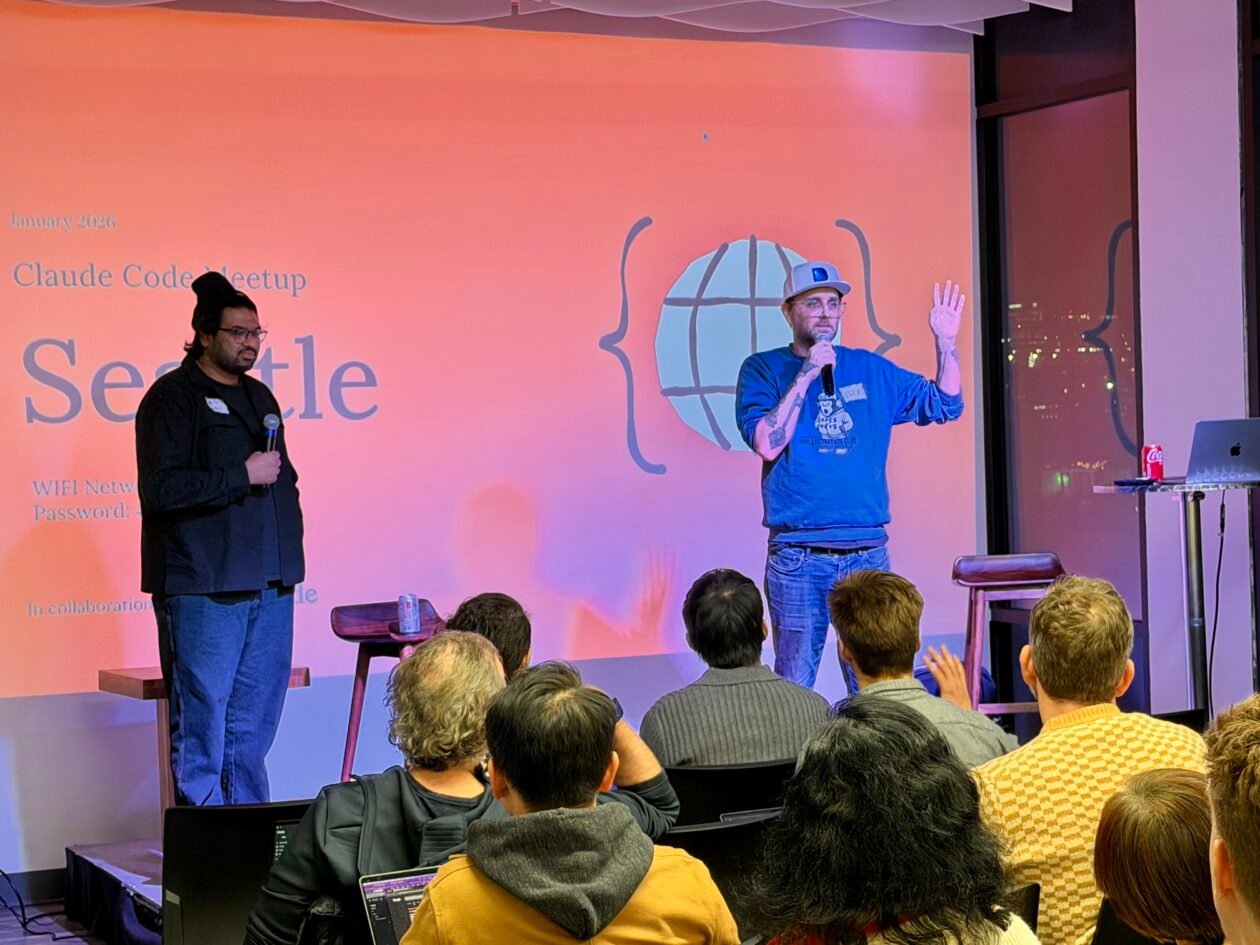
• Core Points: Claude Code draws 150+ Seattle tech professionals to a Claude Code meetup to explore Anthropic’s AI coding advances and practical use cases.
• Main Content: Attendees shared experiences, workflows, and ambitions for integrating Claude Code into real-world software development.
• Key Insights: The event signals growing adoption of AI-assisted coding in reputable engineering teams, with emphasis on speed, collaboration, and code quality.
• Considerations: Participants raised questions about reliability, security, governance, and long-term maintainability of AI-generated code.
• Recommended Actions: Teams should pilot Claude Code on targeted tasks, establish governance, and measure impact on productivity and error rates.
Content Overview
On a Thursday evening in Seattle, more than 150 technology professionals gathered at a Claude Code meetup to discuss the latest developments in AI-assisted software creation. The event, organized around Anthropic’s Claude Code platform, brought together engineers, product managers, and researchers who are actively experimenting with AI-driven code generation. Attendees exchanged use cases, demonstrated workflows, and considered how Claude Code fits into existing development ecosystems and practices. The session highlighted a broader industry trend: AI coding is entering a more mature phase where developers are balancing automation with human oversight, aiming to accelerate delivery while preserving code quality and security.
Seattle has long been a hub for software innovation, boasting a dense concentration of engineering talent across cloud services, fintech, healthcare tech, and enterprise software. The meetup underscored how local teams are integrating Claude Code into daily development tasks—from scaffolding and boilerplate generation to more complex problem solving like refactoring, bug fixing, and optimization. As AI coding tools evolve, engineers are increasingly evaluating them not only for speed but also for reliability, maintainability, and the ability to collaborate within existing codebases and CI/CD pipelines. Attendees discussed how AI can assist in translating requirements into software architecture decisions, offering suggestions for design patterns and best practices while keeping human reviewers in the loop.
The event’s format balanced formal presentations with informal demonstrations and roundtable discussions. Speakers shared real-world examples of how Claude Code has impacted their workflows, including time savings on repetitive tasks, earlier detection of potential issues through AI-assisted analysis, and the potential for standardized coding conventions across teams. The prevailing sentiment was cautiously optimistic: Claude Code is not a replacement for human developers but a powerful collaborator that can reduce routine drudgery and amplify productive coding sessions when used thoughtfully.
In-Depth Analysis
The meetup illustrated several dimensions of Claude Code’s current capabilities and the practical considerations engineers weigh when adopting AI-assisted coding tools. First, attendees described the tangible benefits in day-to-day development work. For many teams, Claude Code accelerates mundane and repetitive tasks—such as generating test scaffolds, creating API client templates, and wiring up common authentication flows—allowing engineers to devote more time to architecture, problem-solving, and user-focused features. The ability of Claude Code to understand project context, infer intent from user prompts, and produce idiomatic, well-structured code was repeatedly cited as a key advantage.
Second, the discussions touched on code quality and maintainability. Participants emphasized the necessity of human oversight to review AI-generated output. AI tools can produce elegant solutions quickly, but engineers stressed the importance of rigorous code reviews, adherence to style guides, and alignment with organizational standards. There was particular interest in how Claude Code can support refactoring efforts, while ensuring that generated changes preserve correctness and do not introduce regression risks. Some teams described integrating Claude Code within established linting, testing, and CI/CD pipelines to maintain high quality while benefiting from automation.
Third, governance, security, and reliability emerged as critical considerations. Attendees raised questions about how AI-generated code handles sensitive information, dependency management, and compliance with industry regulations. They discussed the need for clear provenance trails showing how and why the AI produced specific code, which helps with auditing and accountability. There was also interest in tool capabilities for tracing decisions, reverting AI changes, and maintaining robust rollout strategies to minimize disruption.
Fourth, the social and collaborative dimensions of AI coding were highlighted. A recurring theme was how Claude Code can act as a collaborative partner across teams with varying levels of expertise. Engineers noted that AI-assisted tooling can lower the barrier to entry for junior developers, speed up onboarding by offering consistent scaffolding, and support cross-functional collaboration by generating shared artifacts such as API contracts and documentation drafts. Yet, participants cautioned against over-reliance on AI to the point where human mentorship and peer review become undervalued.
Fifth, the Seattle context matters. The region’s ecosystem—characterized by a mix of large cloud platforms, startups, and established software enterprises—creates fertile ground for experimenting with AI coding tools. Meetup attendees suggested that organizations in Seattle and similar tech hubs are uniquely positioned to pilot Claude Code at scale, iterating rapidly across teams and projects. The event also served as a barometer for the broader community: how many developers are comfortable integrating AI into their workflow, and how organizations address governance, risk, and return on investment.
Finally, the conversations pointed toward a developing corridor between AI code generation and traditional software engineering practices. As Claude Code matures, engineers are exploring integration strategies that maximize synergy: AI-generated code can lay down scaffolds, generate tests, and propose optimizations, while human engineers perform critical review, domain-specific adjustments, security hardening, and performance tuning. The result could be a more efficient development lifecycle that preserves clarity, accountability, and trust in the software being built.

*圖片來源:Unsplash*
Perspectives and Impact
The Seattle meetup reflects a broader industry shift—the gradual normalization of AI-assisted coding tools as standard components of the software development toolbox. The enthusiasm among attendees signals growing confidence that Claude Code can deliver measurable productivity gains without sacrificing code quality or security. For leadership, this implies opportunities to reallocate developer time toward higher-value activities such as system design, user research, and feature experimentation. It also raises questions about how to structure teams and workflows to incorporate AI responsibly, including governance processes, risk management, and ongoing training.
From an innovation standpoint, Claude Code represents a concrete step toward more resilient and scalable development practices. By generating boilerplate, tests, and boilerplate, AI can reduce the friction involved in spinning up new features or services. In turn, engineers can focus on the creative tasks that differentiate products in competitive markets. The tool’s ability to propose design patterns and highlight potential pitfalls can serve as an educational resource for teams, especially those with varying levels of experience, helping democratize access to best practices.
However, the event also underscored the need for caution. As AI-generated code becomes more prevalent, organizations must address potential blind spots: misinterpretation of requirements, misconceptions about what the AI can and cannot do, and the risk of introducing subtle bugs that pass automated checks but fail in real-world scenarios. Ensuring robust testing, thorough reviews, and security checks remains essential. The Seattle community’s emphasis on these governance aspects indicates a mature approach to adoption, one that balances innovation with discipline.
Looking ahead, Claude Code and similar AI coding platforms may push software development toward more iterative and collaborative models. Teams could adopt shorter feedback loops, integrate AI validation into their review processes, and implement metrics that quantify the impact of AI assistance on velocity, quality, and defect detection. The long-term implications for the broader tech ecosystem include potential shifts in job roles, with some routine tasks becoming automated while engineers focus on higher-order problem solving, architecture decisions, and user-centric design.
Education and training will play a key role in realizing these benefits. As AI coding tools become more widespread, developers will need guidance on best practices for prompting, prompt tuning, and effectively evaluating AI outputs. Organizations may invest in upskilling programs to help engineers harness AI capabilities responsibly, including understanding when to rely on AI and when to defer to human judgment. The Seattle meetup contributes to a growing dialogue about how to integrate AI into professional development and to establish expectations for reliability and accountability.
Key Takeaways
Main Points:
– AI-assisted coding is transitioning from novelty to practical, scalable use in professional software development.
– Meetups like the Seattle Claude Code event highlight real-world use cases, workflows, and the balancing act between automation and human oversight.
– Governance, security, and maintainability are central concerns as teams integrate AI-generated code into production environments.
Areas of Concern:
– Reliability and correctness of AI-generated code across diverse coding languages and frameworks.
– Governance, risk management, and compliance in environments that require strong provenance and auditability.
– Dependence on AI tools potentially impacting developer skills, onboarding, and long-term maintainability.
Summary and Recommendations
The Claude Code-focused meetup in Seattle captured a snapshot of a software development community actively exploring AI-assisted coding as a mainstream capability. Participants reported practical benefits, including faster scaffolding, more efficient workflow iterations, and enhanced collaboration. Yet they also emphasized critical guardrails: rigorous review processes, clear provenance, robust security practices, and thoughtful governance structures. The overarching message is that Claude Code can be a powerful partner to human developers, enabling them to focus on higher-value activities while AI handles repetitive and well-defined tasks. However, realizing this potential requires intentional implementation: pilot programs with targeted tasks, defined success metrics, and governance policies that articulate when and how AI-generated code should be used, reviewed, and deployed.
Organizations looking to adopt Claude Code or similar AI coding tools should consider a staged approach:
– Start with non-critical components to establish baselines for productivity and quality improvements.
– Integrate AI outputs into existing review pipelines to preserve accountability and maintain coding standards.
– Implement provenance and rollback mechanisms to track AI-generated changes and revert if necessary.
– Invest in training for developers on prompting techniques, evaluation criteria, and security considerations.
– Measure outcomes across velocity, defect rates, security issues, and team satisfaction to inform broader rollouts.
The Seattle event reinforces the notion that AI-assisted coding is becoming a tangible, value-adding element of modern software development. As tools mature and organizations accumulate practical experience, AI coding is likely to become a staple in engineering workflows, augmenting human capabilities rather than replacing them. The ongoing conversation in Seattle and beyond will shape how programming teams navigate the evolving landscape—balancing speed and innovation with reliability, governance, and responsible AI practice.
References
- Original: https://www.geekwire.com/2026/a-new-era-of-software-development-claude-code-has-seattle-engineers-buzzing-as-ai-coding-hits-new-phase/
- Additional context sources on AI-assisted coding, governance, and best practices (placeholder suggestions):
- Industry analysis on AI in software development and code generation
- Case studies of AI-assisted coding in engineering teams
- Articles on governance, risk, and compliance for AI-assisted software tools
*圖片來源:Unsplash*