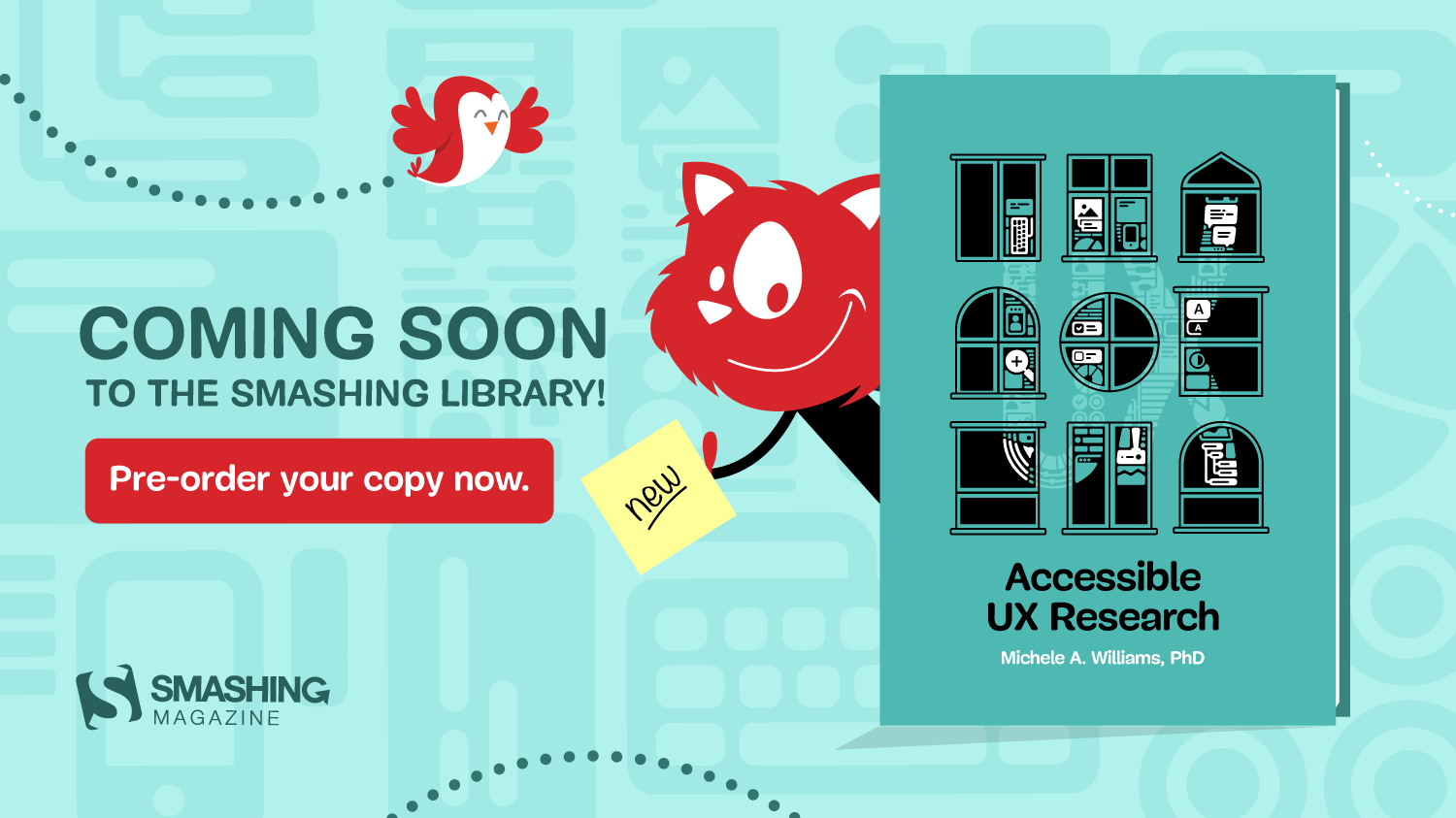
TLDR
• Core Points: eBook versions of Accessible UX Research by Michele A. Williams are available for instant download; print edition preorder follows.
• Main Content: The Smashing Book explores accessible UX research practices, with the eBook ready for immediate download as the print edition moves toward printing.
• Key Insights: Accessibility-focused research methods can broaden user inclusion and improve product outcomes; timing favors early digital access and presale pricing for the print copy.
• Considerations: Readers should weigh digital convenience against eventual print benefits; ensure compatibility with preferred e-reading platforms.
• Recommended Actions: Download the eBook now to start learning; reserve the print copy at presale pricing if you value a hardcover/printed edition.
Content Overview
Accessible UX Research marks a notable addition to the Smashing Book lineup, authored by Michele A. Williams. The publication centers on inclusive research practices within user experience design, emphasizing approaches that consider diverse abilities, contexts, and backgrounds. The decision to release eBook editions ahead of the print version aligns with a growing trend in the publishing industry: delivering rapid access to high-value content while preparing a tangible, physical edition for readers who favor a printed format. This strategy serves both new and established practitioners who seek timely guidance on designing for accessibility, while also preserving opportunities for those who prefer the ergonomics and longevity of a printed book.
The eBook’s availability provides immediate value for professionals, educators, and students who require flexible, portable access to research frameworks, case studies, and actionable methodologies. By offering an instant download, Williams and Smashing Magazine facilitate quick onboarding into accessible UX research concepts, enabling practitioners to incorporate inclusive practices into ongoing or upcoming projects without delay. The impending print version, offered at a presale price, signals planned durability and a different reading experience—one that some readers may prefer for annotation, note-taking, and long-term reference.
In the broader context of UX research, Accessible UX Research contributes to a critical conversation about how design teams gather, interpret, and apply insights from diverse user populations. The book’s emphasis on accessibility as a core consideration rather than a peripheral requirement reflects a maturation in the field, recognizing that inclusive design benefits all users by reducing barriers, improving usability, and expanding market reach. As organizations increasingly adopt accessibility standards and guidelines, authoritative resources like this Smashing Book become valuable references for implementing practical, research-backed strategies.
This release also illustrates how publishers balance the immediacy of digital formats with the enduring value of print. The eBook provides instant access to content, while the print edition—traditionally favored by many professionals for deep engagement and note-taking—will arrive later in a presale framework. For readers, this dual-path approach means they can start applying insights immediately and later revisit the material in a physical form, potentially enhancing retention through annotated reading and reference.
Overall, the Accessible UX Research eBook release signifies a timely investment in education and practical guidance for researchers, designers, and product teams seeking to advance accessibility-centered practices. The forthcoming print option reinforces Smashing Magazine’s commitment to offering versatile formats that accommodate different learning preferences and professional workflows.
In-Depth Analysis
Accessible UX Research addresses the essential question of how researchers can ethically and effectively engage with users who possess a range of abilities, disabilities, and contexts. The core premise is that accessibility is not merely a compliance checkbox but a foundational aspect of meaningful user experience research. The book presumably provides frameworks, methodologies, and case studies illustrating how to design inclusive studies, recruit diverse participants, and analyze data in ways that surface insights applicable to real-world products.
One likely strength of the publication is its practical orientation. By translating accessibility concepts into concrete research activities—such as inclusive interview protocols, accessible prototype testing, and adaptive recruitment strategies—the book can help teams operationalize inclusion in day-to-day practice. This practical lens helps researchers move beyond general ethical considerations and into actionable steps that improve both the research quality and the usability of the resulting designs.
The eBook format enhances accessibility in another dimension: it enables readers who work in settings with limited physical space or restricted access to libraries to obtain the material quickly. Digital formats also support accessibility features, such as text-to-speech, adjustable fonts and colors, and screen reader compatibility, which align with the book’s central themes. For educators, the eBook can serve as a readily distributable resource in courses focused on UX research methods, accessibility, and inclusive design.
In terms of impact, the publication can influence how organizations approach user research from a diversity and inclusion perspective. If the book includes case studies demonstrating successful integration of accessible practices in real projects, it can provide a persuasive blueprint for teams hesitant to adopt new methods. The emphasis on accessibility can also encourage broader stakeholder buy-in by illustrating how inclusive research benefits product outcomes, customer satisfaction, and market reach.
However, as with any specialized field, potential readers may consider several considerations when engaging with the material. First, practitioners should assess how the book’s recommendations align with their current organizational constraints, including timelines, budgets, and talent availability. Implementing inclusive research practices sometimes requires additional training or adjustments to recruitment pipelines and laboratory setups. Second, readers might evaluate the transferability of case studies to their specific domains, such as enterprise software, mobile apps, or consumer electronics. Finally, readers may weigh the balance between theoretical frameworks and practical templates—ensuring that the content provides both conceptual coherence and concrete tools that can be adopted without extensive customization.
In terms of research ethics and methodological rigor, Accessible UX Research has the potential to emphasize transparency and accountability. Clear documentation of participant selection criteria, consent processes, and data handling practices is essential when presenting findings derived from inclusive studies. The book can set expectations for how researchers report limitations, defend their methodological choices, and provide guidance on translating insights into design decisions that improve accessibility without compromising other performance metrics.
Looking forward, the impact of this publication could extend beyond individual projects. By equipping practitioners with accessible research methods, the book may influence organizational cultures, leading to more inclusive product development practices across departments. It could also contribute to the broader discourse around accessibility standards, guidelines, and best practices, prompting collaboration among UX researchers, designers, engineers, product managers, and accessibility specialists. As industries increasingly adopt inclusive design principles, the content of Accessible UX Research could serve as a reference point for training programs, professional certifications, and ongoing education within the field.
From a market perspective, the eBook’s immediate availability positions Smashing Magazine to capitalize on demand for timely, practical guidance. Readers who adopt the book early may gain a competitive advantage by incorporating accessible research insights into their workflows sooner, potentially accelerating the realization of inclusive products and services. The presale option for the print edition also helps gauge interest and plan for production, while offering dedicated readers the opportunity to secure a preferred format and price.
In summary, Accessible UX Research contributes to the ongoing evolution of UX practice by foregrounding accessibility in the research process. Its eBook availability underscores the value of rapid digital access, while the forthcoming print edition acknowledges the enduring appeal of physical books for in-depth study and reference. The publication’s potential to influence practice, education, and policy within UX research rests on its ability to translate inclusive principles into actionable methodologies that teams can implement across diverse projects and contexts.

*圖片來源:Unsplash*
Perspectives and Impact
The release of Accessible UX Research as a Smashing Book eBook signifies more than the dissemination of a single publication; it reflects broader shifts in how the UX community approaches accessibility. The move to offer an eBook version for immediate download aligns with evolving reader preferences, especially among professionals who need portable, searchable, and standards-compliant formats for reference in busy work environments. For students and educators, digital access enables embedding the material into curricula, creating opportunities for discussion, assignments, and collaborative study.
From a pedagogical standpoint, the book’s focus on accessibility in UX research can enhance teaching by providing instructors with concrete examples of inclusive study design, data collection techniques, and analysis methods. Case studies—if included—can serve as valuable teaching aids, illustrating both challenges and solutions encountered in real-world projects. Moreover, the emphasis on inclusive practices can foster critical thinking among learners about how research choices shape design outcomes and user experiences for people with varying abilities.
Industry-wide, the publication could contribute to the normalization of accessibility considerations within the early phases of product development. By presenting research practices that account for diverse user groups, the book may encourage teams to integrate accessibility metrics into their standard evaluation criteria, thereby improving product readiness for a wider audience. This alignment with accessibility standards can also support organizations seeking to comply with regulatory requirements and best-practice guidelines in different jurisdictions.
The presale pricing for the print edition suggests a strategic approach to audience engagement. Early supporters who prefer a tangible book can lock in a preferred price and reserve a physical copy, signaling confidence in sustained demand for print media even as digital formats proliferate. This dual-format strategy may help Smashing Magazine diversify revenue streams while accommodating varied reader preferences.
Additionally, the publication can influence conversations about ethical research practices. Accessibility-centered research requires careful consideration of consent, privacy, and respectful engagement with participants who may encounter barriers to communication or participation. The book’s treatment of these issues can set expectations for responsible research conduct and provide practitioners with practical guidelines to uphold ethical standards.
Looking ahead, the book’s impact will depend on how well readers translate theory into practice. If researchers and designers can apply the methodologies to real projects, measurable improvements in accessibility outcomes and user satisfaction are plausible. On the other hand, if the content remains aspirational without clear implementation paths, uptake may be slower. Ongoing updates or companion resources—such as templates, checklists, or online communities—could enhance sustained impact by offering ongoing guidance and peer support.
Finally, the eBook release may prompt competing publishers and authors to intensify their focus on accessibility in UX research. As the market for inclusive design expands, we can anticipate an ecosystem of complementary resources—books, courses, webinars, and hands-on workshops—that collectively raise the standard for how organizations design for all users. The accessibility ethos embedded in Accessible UX Research could, therefore, act as a catalyst for broader professional development and industry-wide progress.
Key Takeaways
Main Points:
– The eBook version of Accessible UX Research is available for instant download, with a print edition forthcoming at a presale price.
– The book centers on inclusive UX research practices intended to broaden participation and improve design outcomes.
– The release reflects a broader industry shift toward accessible, practical guidance in UX research and education.
Areas of Concern:
– Translating theoretical frameworks into scalable, organization-wide practices can be challenging.
– Readers should assess whether the content aligns with their specific domain and project constraints.
– Ensuring optimal accessibility of the eBook itself across diverse assistive technologies remains important.
Summary and Recommendations
Accessible UX Research represents a timely contribution to the field of user experience by foregrounding accessibility in the research process. The immediate availability of an eBook edition provides practitioners, educators, and students with rapid access to actionable insights, case studies, and methodological guidance. The forthcoming print edition, offered at a presale price, complements digital access by delivering a traditional reading experience and a durable reference for long-term study and annotation.
Readers are encouraged to download the eBook promptly to begin integrating inclusive research practices into current projects. Those who value a physical reference, or who prefer annotating and highlighting in a printed format, may opt to reserve the print copy at the presale price. For educators and organizations, this publication can serve as a core resource for training, curriculum development, and the advancement of accessibility-focused research culture within teams.
As the UX field continues to evolve, Accessible UX Research has the potential to influence practice, education, and policy by providing practical, research-backed approaches to inclusive design. Continued engagement with the content—through implementations, case studies, and supplementary resources—will determine the extent of its impact on real-world product development and user experiences for diverse populations.
References
- Original: https://smashingmagazine.com/2025/12/accessible-ux-research-ebook-release/
- Additional references:
- https://www.w3.org/WAI/
- https://www.smashingmagazine.com/2024/10/ux-research-methods-accessibility/
- https://www.nngroup.com/articles/accessibility-ux-research/

*圖片來源:Unsplash*