TLDR
• Core Points: 27″ OLED 1440p 240Hz monitor with superb motion, deep contrast, fast response; originally $1,000, now $429, expanding value.
• Main Content: Modern OLED gaming at 1440p with high refresh, strong motion clarity, and competitive pricing makes the X27U attractive for enthusiasts and budget-conscious buyers alike.
• Key Insights: Price drop dramatically alters value proposition; some trade-offs may still exist compared to higher-end displays.
• Considerations: Burn-in risk, feature trade-offs relative to premium models, availability and warranty factors for OLED panels.
• Recommended Actions: If OLED is appealing and you can manage burn-in risk, at $429 the X27U is a compelling option; compare to micro-LED and LCD alternatives before purchase.
Content Overview
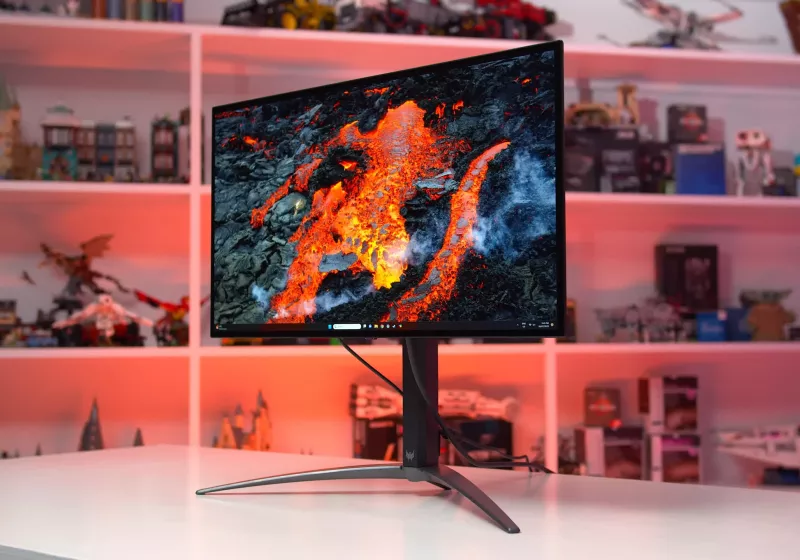
The Acer Predator X27U OLED is a 27-inch gaming monitor that pairs a 1440p resolution with a blistering 240Hz refresh rate. In its heyday, the X27U carried a lofty $1,000 MSRP, positioning it at the high end of premium gaming displays and limiting its appeal to enthusiasts who could justify the cost. With a notable price reduction to $429, the X27U now occupies a much broader sweet spot for gamers who want the advantages of OLED—exceptional contrast, vibrant color reproduction, and instantaneous pixel responses—without breaking the bank.
OLED panels distinguish themselves from conventional LCDs primarily through self-emissive pixels, delivering near-perfect blacks and outstanding dynamic range. When paired with a 240Hz refresh rate, the X27U claims to offer smooth motion rendering and reduced blur, which is especially beneficial for fast-paced genres like competitive shooters, racing sims, and action-adventure titles. The combination of 1440p resolution and 27 inches is well-suited to a high-perceived pixel density and sharp imagery, while the OLED technology helps maintain brightness and color fidelity across a wide viewing angle.
This review synthesis reflects a hardware-focused evaluation, emphasizing how the X27U performs in real-world gaming scenarios, its strengths in motion clarity and contrast, and the practical considerations a potential buyer should weigh—particularly when OLED-specific caveats such as potential image retention or burn-in risk come into play. The pricing shift from a premium position to a more approachable value tier underscores a broader market trend: OLED gaming displays are becoming more accessible as supply stabilizes and competition intensifies.
In-Depth Analysis
Display Technology and Core Attributes
– Panel and resolution: The Acer Predator X27U is a 27-inch OLED monitor delivering 1440p resolution. The combination aims to balance sharpness with fast response characteristics, enabling detailed images without excessive rendering demands on GPUs.
– Refresh rate and motion: At 240Hz, the X27U is designed to minimize motion blur and ghosting, which can be a critical advantage in first-person shooters and racing simulations. The high refresh rate works in tandem with OLED’s near-instantaneous pixel transitions to maintain clarity during rapid camera pans and fast on-screen action.
– Contrast and color: OLED panels inherently offer deep, near-perfect blacks and wide color gamuts. The X27U benefits from this native contrast, providing more impactful shadows and a sense of depth compared with conventional LCDs, particularly in HDR-capable content or scenes with a broad dynamic range.
– Brightness and HDR: While OLED panels can reach impressive contrast levels, peak brightness on some gaming OLEDs may be lower than high-end LCDs. Depending on the model’s HDR implementation and peak luminance, HDR experiences can vary, but the deep blacks often compensate in darker scenes.
Performance and Gaming Experience
– Motion handling: The combination of OLED response times and 240Hz refresh rate typically yields minimal blur and a crisp presentation during rapid movements. This is a meaningful advantage in competitive play where reaction timing and precise object tracking matter.
– Color accuracy and consistency: For gamers who value vivid color without sacrificing realism, the X27U’s OLED panel contributes to punchy yet nuanced color reproduction, with stable color performance across multiple viewing angles.
– Input lag: Fast gaming panels generally minimize input lag, a crucial aspect for sensitive titles. The X27U’s design prioritizes a responsive experience, aligning with expectations for high-refresh OLED displays.
Ergonomics, Build, and Usability
– Stand and adjustability: The X27U typically offers ergonomic stands with tilt, height, and swivel options to accommodate diverse setups. Proper positioning helps maximize the visual benefits of OLED while reducing glare and eye strain during long sessions.
– Connectivity: A modern gaming monitor of this class includes a robust set of inputs, often including HDMI 2.1 and DisplayPort 1.4 or 2.0, enabling high-bandwidth connections for console and PC gaming at high refresh rates. USB hubs and additional accessories may also be present, depending on the exact configuration.
– Panel longevity and burn-in considerations: OLED panels carry the risk of image retention or burn-in when static UI elements or logos persist on screen for extended periods. Manufacturers typically implement pixel-shift, protective screens, and usage recommendations to mitigate risks. Users should still practice good habits, such as varying game genres, avoiding long-duration static HUDs, and enabling screen-saving features when possible.
Value proposition at $429
– Price-to-performance: The $429 price point shifts the X27U from a niche enthusiast purchase toward a broader audience. At this level, the advantages of OLED—contrast, color, and fast motion—become more accessible, and the monitor’s 27-inch size and 1440p resolution align well with many gaming rigs and GPU configurations modern players already own.
– Competition: At this price, the X27U competes with high-refresh LCDs, including panels employing Mini-LED backlighting or advanced local dimming. OLED’s contrast and response times can set it apart, but considerations like maximum brightness, HDR performance, and potential burn-in may influence decisions versus LCD alternatives.
Durability, Warranty, and Support
– Lifespan and maintenance: OLED lifespans have matured, but users should still consider long-term care, firmware updates, and warranty coverage. A generous warranty can help address concerns about burn-in protection and panel performance.
– Service availability: Depending on the region and retailer, after-sales support and replacement policies play a significant role, particularly for OLED products where panel integrity is critical.
Practical Takeaways for Buyers
– For gamers who want the premium OLED experience without paying a premium price, the X27U’s current price point represents a compelling value proposition.
– The 27-inch, 1440p, 240Hz combination offers a balanced target for 1440p gaming, with motion clarity and image fidelity that can feel noticeably smoother than many LCD alternatives at similar resolution and refresh rates.
– Potential buyers should assess their tolerance for burn-in risk and ensure they can implement usage practices to minimize static image persistence over time.
– It is wise to compare against contemporary LCD monitors with strong local dimming or Mini-LED brightness capabilities, to determine which attributes matter most—contrast vs. brightness, latency vs. peak HDR performance, and price.
Perspectives and Impact
Market trends surrounding OLED gaming displays have evolved to favor accessibility and broader adoption. Historically, OLED panels carried premium pricing and limited production scale, which kept models like the Predator X27U outside the reach of many gamers. As production ramps up, and as retailers adjust pricing, the value proposition improves substantially. The X27U’s price drop to $429 exemplifies this shift, enabling more players to enjoy OLED advantages without sacrificing a large portion of their budget.

*圖片來源:Unsplash*
This pricing dynamic also stimulates competition among display makers. Manufacturers are incentivized to deliver OLED panels with higher peak brightness, improved burn-in resilience, and more robust feature sets at more palatable prices. In turn, gamers benefit from devices that deliver superior motion handling and contrast at a price point that aligns more closely with premium LCD options from a few years prior.
The X27U’s existence and price movement contribute to a broader discussion about OLED longevity in gaming. While OLED has superior contrast and response time, some enthusiasts still weigh the long-term risk of burn-in against the day-to-day advantages. For many players, the practical realities of gaming—ranging from the types of titles played to session length and UI design—play a decisive role in how OLED is valued. As the market matures, buyers will be better equipped to weigh these considerations against competing technologies such as Mini-LED and traditional LCD displays.
Future implications include continued price competition and potential new models that address burn-in risk with improved pixel-shift techniques, smarter power management, and more efficient color workflows. The X27U’s current position signals that OLED gaming displays have moved from niche luxury to mainstream option, where performance advantages can be realized without prohibitive costs.
User Experience and Real-World Usage
– Day-to-day gaming: In real gaming scenarios, the X27U’s 240Hz refresh rate is most beneficial in fast-paced titles. The perceived smoothness, combined with OLED’s instant pixel response, tends to deliver a fluid and immersive experience with less perceived motion blur.
– HDR considerations: If HDR content is a priority, the monitor’s dark scenes and vibrant highlights can deliver a compelling effect. The effectiveness of HDR can depend on the monitor’s peak brightness and local dimming behavior, and OLED HDR performance often emphasizes color volume and contrast rather than punchy brightness alone.
– Content creation and general use: For non-gaming tasks, the monitor remains capable with its color accuracy and wide viewing angles. However, OLED burn-in considerations may be a concern for long-term static content, such as UI elements in desktop usage or persistent toolbars.
Key Takeaways
Main Points:
– The Acer Predator X27U OLED combines 27-inch size, 1440p resolution, and 240Hz for high-motion clarity and responsive gaming.
– A price drop to $429 dramatically broadens its value proposition compared with its original $1,000 MSRP.
– OLED advantages (contrast, color, response) are compelling in this form factor, with burn-in risk requiring mindful usage.
Areas of Concern:
– Burn-in and image retention risk inherent to OLED technology, though mitigations exist.
– Peak brightness and HDR performance can vary and may not match the brightest LCD options.
– Availability, warranty terms, and regional support can influence long-term ownership experience.
Summary and Recommendations
The Acer Predator X27U OLED represents a notable shift in the gaming monitor landscape by delivering a high-end OLED experience at a substantially reduced price. The 27-inch, 1440p panel paired with a 240Hz refresh rate offers excellent motion clarity, strong contrast, and fast pixel response that can elevate competitive gaming and immersive experiences. At $429, the X27U moves from an aspirational premium product to a value-forward option that more gamers can consider. Its strengths lie in the OLED’s natural advantages—deep blacks, vibrant color, and responsive input—while its caveats revolve around burn-in risk, HDR brightness nuances, and the realities of long-term OLED use.
For potential buyers, the recommendation is to weigh personal tolerance for burn-in risk against the significant motion and image quality benefits. If OLED is appealing and burn-in risk is managed through usage patterns (e.g., varying content, enabling screen-saving features, rotating static elements), the X27U at this price point is a compelling contender among gaming monitors in its class.
To make a well-informed decision, readers should compare the X27U against contemporary high-refresh LCDs with robust local dimming and to consider their own gaming habits, preferred genres, and tolerance for potential OLED-specific caveats. Reading up-to-date reviews, checking the latest firmware features, and consulting warranty terms will further clarify long-term ownership expectations.
References
- Original: https://www.techspot.com/products/monitors/acer-predator-x27u.283974/
- Additional references:
- https://www.acer.com/ac/en/US/content/predator-monitor-x27u
- https://www.rtings.com/monitor/reviews/acer/predator-x27u

*圖片來源:Unsplash*