TLDR
• Core Points: Amazon’s US CPU sales dropped about 60% year over year in January 2026; AMD’s X3D lineup commands ~88% market share in related segments, underscoring demand constraints more than competitive wins.
• Main Content: Supply constraints, AI data-center demand, and a stalled consumer PC refresh are shaping the CPU market, with vendors prioritizing AI workloads.
• Key Insights: Inventory discipline and data-center demand shifts affect retail CPU dynamics; CPU refresh cycles have lengthened amid tighter supply and AI-driven demand.
• Considerations: The PC refresh slowdown could ripple through downstream PC makers, channel partners, and component suppliers.
• Recommended Actions: Track AI-datacenter capex, adjust procurement strategies, and diversify supply sources while monitoring consumer PC penetration.
Product Review Table (Optional)
No hardware product reviews included in this article.
Content Overview
The market for central processing units (CPUs) in early 2026 reveals a dramatic slowdown in consumer and channel sales, contrasted by a robust, but specialized, demand backdrop in AI-focused data centers. Independent data compiled by TechEpiphany indicates that Amazon sold roughly 26,100 CPUs in the United States during January 2026. This figure points to a 60% year-over-year decline from January 2025, suggesting a broader trend beyond a single retailer. The headline statistic is the dramatic reduction in CPUs sold through one of the largest e-commerce platforms, which typically serves both consumer PC buyers and business customers.
While the headline numbers may appear to reflect a disinflationary period for CPU pricing or a collapse in demand, the underlying narrative is more nuanced. AMD’s X3D family—designed to improve gaming and general-purpose performance through innovative cache architectures—continues to dominate the market in terms of share within its target segments. Market insight indicates AMD’s X3D lineup achieved an outsized market presence, driving the company’s share to an eye-popping 88 percent in the relevant category. However, a closer examination reveals that the narrative is less about competitive wins and more about supply constraints and shifting demand.
A central factor shaping this market dynamic is demand from AI data centers. As artificial intelligence workloads proliferate, data-center operators have prioritized accelerators and specialized infrastructure to support training and inference. This shift affects CPU demand in two ways: it increases the overall appetite for compute power, often favoring CPUs with higher core counts and efficiency, and it redirects investment toward AI-optimized hardware, including accelerators and perhaps higher-end CPUs designed to complement GPUs. Consequently, CPU suppliers face a complex set of constraints that influence both pricing and availability for end customers, including consumer PC buyers and enterprise users.
In the broader ecosystem, these forces interact with other macro trends, such as supply chain dynamics, inventory management by manufacturers and retailers, and evolving end-user demand for new PC hardware. The January 2026 data month highlights how a combination of supply constraints, shifting workloads toward AI-centric infrastructure, and longer PC refresh cycles can compress CPU sales on the retail side even as demand remains concentrated in specific enterprise segments. The implications extend beyond Amazon’s online storefront and into the larger market for CPUs, GPUs, and other compute components.
This overview provides a foundation for understanding the current state of the CPU market and how major players are adapting to a landscape defined by AI-driven demand, supply chain constraints, and consumer behavior that has slowed the pace of personal computer upgrades. The article does not claim a blanket decline across all regions or all channels, but it emphasizes the trend of reduced retail CPU throughput in the United States during a period of pronounced demand for AI-centric compute capacity.
In-Depth Analysis
The January 2026 data from TechEpiphany offers a stark look at how a leading e-commerce retailer’s CPU sales have evolved compared with the prior year. Amazon’s reported figure of approximately 26,100 CPUs sold in the United States marks a substantial drop relative to January 2025. A 60% year-over-year decline in CPU units sold through Amazon in the U.S. raises questions about the health of the broader PC refresh cycle, consumer purchasing patterns, and retailer-specific dynamics, such as inventory positioning, promotions, and category mix.
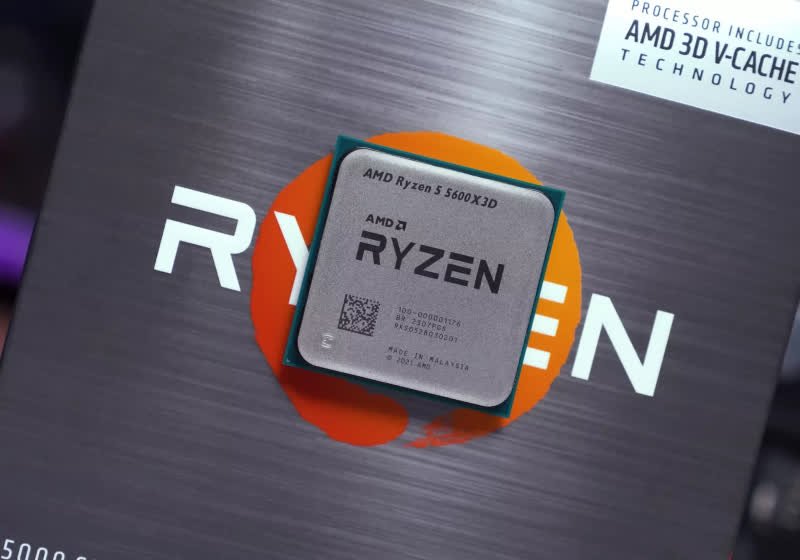
A key dimension of the story involves AMD’s X3D technology. AMD’s X3D, which integrates stacked memory with core CPU architectures to deliver performance gains for certain workloads, has helped AMD secure a dominant position in the market portion it targets. In the context of the reported figures, AMD’s X3D lineup appears to wield a strong influence on market share within the relevant segments, contributing to a high market share number—reported at 88 percent. This share emphasizes the strength of AMD’s product lineup in environments where X3D features provide competitive advantages, particularly in gaming and certain compute-intensive workloads.
Yet, the “dominance” narrative must be interpreted with nuance. A high market share does not automatically translate into broad retail sales strength; rather, it can indicate that the remaining market for CPUs is highly concentrated among a few suppliers who have compelling product positions or favorable supply terms. The data point that AMD holds a substantial share could reflect a variety of forces, including aggressive channel strategies, manufacturer gatekeeping in response to supply constraints, and a focus on higher-margin SKUs that leverage X3D capabilities.
Beyond competitive positioning, supply constraints are a critical driver of the observed performance. AI data centers, which require substantial compute resources, have been a key demand driver for CPUs and related accelerators. While AI workloads create strong demand for compute, they also shift the mix of purchases toward higher-end CPUs, co-processors, and accelerators, potentially reducing the volume of mid-range CPUs sold through consumer channels and retailers. This shift can manifest as lower overall unit sales in traditional retail channels even as data-center deployments remain robust.
Additionally, the PC refresh cycle appears stalled. Several structural factors contribute to this phenomenon:
– Economic considerations: Worsening or uncertain economic conditions can discourage discretionary purchases like new PCs, particularly if devices still function adequately or if perceived value propositions shift toward software and services rather than hardware upgrades.
– Market saturation and upgrade fatigue: Many households and businesses already own capable devices, leading to longer replacement cycles.
– Component supply dynamics: While AI-focused demand drives investment in compute, supply constraints or allocations to enterprise-grade projects can reduce the availability of consumer-grade CPUs in retail channels, compressing unit sales.
– Pricing and promotions: Retail pricing strategies and the availability of alternative devices (e.g., refurbished PCs) can impact uptake of new CPUs in consumer markets.
Taken together, these factors suggest that a decline in Amazon’s CPU sales in January 2026 may reflect a broader pattern rather than a simple retailer-specific anomaly. The interplay between demand for AI infrastructure, longer consumer refresh cycles, and supply discipline creates a market environment in which total CPU sales may be flat or declining in certain channels while remaining steadfast or expanding in others, particularly enterprise data centers.
It is also important to acknowledge the limitations of the data. The Amazon-specific figure captures only one retailer in one country for a single month, and does not necessarily represent global trends or other channels, such as direct enterprise procurement, reseller networks, or other geographic markets. A more comprehensive assessment would require cross-channel data, regional breakdowns, and longitudinal analysis across multiple quarters to identify whether the observed trend is temporary seasonality, channel-specific dynamics, or a longer-term shift in demand patterns.
From a technical perspective, the CPU market remains subject to supply chain constraints, including semiconductor manufacturing calendars, fab utilization, and component lead times. These constraints have historically been influenced by broader industry cycles and demand surges in AI and data-center deployments. The January 2026 signal aligns with ongoing narratives about supply-side tightness and the prioritization of AI workloads by data-center operators, which can influence inventory levels, pricing, and the mix of CPU SKUs available to retailers and customers.

*圖片來源:Unsplash*
Looking forward, several scenarios could unfold in the CPU market:
– Scenario 1: AI data-center demand remains robust, leading to continued prioritization of high-end CPUs and accelerators, with a gradual normalization of consumer CPU supply as inventory channels clear.
– Scenario 2: A broader PC refresh cycle resumes later in the year as consumer confidence improves and new software/lifecycle incentives emerge, potentially reviving retail CPU sales.
– Scenario 3: The market experiences sustained supply constraints with persistent demand for AI workloads, prompting continued price resilience for flagship SKUs and increased competition in the mid-to-low end through pricing and promotions.
– Scenario 4: Supply diversification and manufacturing capacity expansion alleviate bottlenecks, enabling a rebound in retail CPU sales as channel inventories normalize.
Industry stakeholders should monitor several indicators to gauge the trajectory of the CPU market, including:
– Data-center capex and AI deployment trends across hyperscalers and enterprises.
– Semiconductor supply chain signals, including fab utilization rates and lead times for CPUs, GPUs, and accelerators.
– Release cycles and SKU introductions from major CPU vendors, particularly those with X3D and related innovations.
– Consumer PC shipments, retail channel inventories, and end-user demand indicators (price sensitivity, upgrade willingness, and replacement demand).
The juxtaposition of a steep decline in one retailer’s CPU sales with AMD’s strong market-share position underscores a market in transition. While AMD’s X3D technology provides a compelling value proposition within its target segments, the broader dynamics of supply constraints and AI-driven demand are critical to understanding the disconnect between a single retailer’s unit sales decline and the overall health of the CPU ecosystem.
In sum, the January 2026 data point illustrates a market where retail volumes are constrained by a stalled PC refresh cycle, yet demand for compute capacity—especially in AI data centers—persists in a way that shapes pricing, product mix, and supply strategies. Market participants should remain vigilant for shifts in data-center demand, inventory movements, and the evolution of consumer upgrading behavior as they navigate the coming quarters.
Perspectives and Impact
The reported decline in Amazon’s CPU sales is not merely a retailer-specific concern; it signals broader implications for the supply chain, vendors, and enterprise customers. If consumer demand remains tepid, manufacturers may recalibrate production plans to avoid excess inventory, potentially impacting near-term pricing and SKU breadth in the consumer segment. Conversely, a continued emphasis on AI workloads could sustain or even intensify demand for high-performance CPUs and accelerators, fostering opportunities for vendors to optimize SKU portfolios and pricing strategies to capture value in data-center deployments.
AMD’s market share strength in the X3D space might reflect a competitive advantage in workloads that benefit from on-die memory consolidation and cache optimization. For AMD, this could translate into better margins on specific SKUs and a reinforced position in segments where X3D provides measurable performance benefits. For competitors, the data highlights the importance of differentiating product lines not solely through raw performance but also through architectural features, energy efficiency, and total cost of ownership for data-center and high-end consumer workloads.
From a supply perspective, the market’s focus on AI could drive investments in advanced CPUs paired with accelerators, high-bandwidth memory, and optimized interconnects. This convergence of processor types may influence procurement strategies across enterprises, shaping how IT departments plan for capacity, redundancy, and performance targets. Vendors may respond by expanding their portfolio of data-center-optimized CPUs, expanding collaborations with AI software developers, and offering integrated solutions that streamline deployment for AI workloads.
In terms of consumer hardware, the postponement of PC refresh cycles could slow the pace at which retailers monetize new CPU generations in the retail channel. If households maintain functional devices longer, the market could experience a protracted period of replacement deferrals. This phenomenon could prompt manufacturers to pivot toward services, software updates, or mid-life refresh options that extend the relevance of existing hardware, while still seeking growth through alternative channels or product segments.
Policy and macroeconomic considerations also play a role. If inflation remains subdued and consumer confidence improves, a revival of PC purchases could occur, potentially supported by promotional campaigns, improved device life-cycle efficiency, and favorable financing options. Conversely, if macroeconomic headwinds persist or intensify, demand for discretionary purchases like new CPUs could remain constrained, reinforcing the need for elastic supply chain management and strategic channel partnerships.
Overall, the January 2026 data point serves as a lens into a complex landscape where CPU sales are influenced by a mixture of competitive positioning, supply constraints, and demand patterns tied to AI infrastructure. The market’s trajectory will depend on how these forces evolve and how stakeholders adapt their strategies to align production, pricing, and product development with the evolving needs of both data-center operators and traditional PC buyers.
Key Takeaways
Main Points:
– Amazon in January 2026 sold about 26,100 CPUs in the U.S., down roughly 60% from January 2025.
– AMD’s X3D lineup achieved an 88% market share within its targeted segment, signaling strong performance in its niche.
– The data suggests a shift from competitive wins toward supply constraints and AI-driven demand shaping the market.
Areas of Concern:
– Prolonged PC refresh cycles could depress consumer CPU volumes across channels.
– Supply constraints and allocation toward AI workloads may limit broader SKU availability.
– The consumer and enterprise demand mix may diverge, complicating forecasts and inventory planning.
Summary and Recommendations
The January 2026 CPU market data indicate a market in flux rather than a simple demand collapse. While AMD’s X3D lineup underscores continued innovation and market strength in its niche, the broader retail CPU sales picture—exemplified by Amazon’s substantial year-over-year decline—points to a stalled PC refresh cycle and the growing prominence of AI-centric demand in shaping procurement decisions. For industry participants, the prudent course is to anticipate continued volatility in retail channels while positioning portfolios to capitalize on AI-related compute needs in the data center. This entails exercising disciplined inventory management, securing diversified supply sources, and aligning product offerings with the evolving needs of both consumer and enterprise customers. Monitoring developments in AI deployment, data-center spending, and consumer upgrade incentives will be crucial to navigating the upcoming quarters.
References
- Original: https://www.techspot.com/news/111328-amazon-sold-60-fewer-cpus-than-year-ago.html
- Additional context: industry reports on AI data-center demand, AMD X3D technology, and CPU market dynamics (to be inserted as 2-3 relevant reference links)

*圖片來源:Unsplash*