TLDR
• Core Points: A Bill Gates-backed fusion startup is advancing licensing for a cutting-edge reactor project in Tennessee, signaling renewed interest in practical fusion energy and reusing midwestern industrial sites.
• Main Content: The initiative follows the decommissioning of Tennessee’s Bull Run Fossil Plant, marking a transition from traditional fossil fuels to next-generation energy tech on a regional scale.
• Key Insights: Licensing activity reflects broader industry push, potential economic and workforce shifts, and regulatory milestones for fusion commercialization.
• Considerations: Projects face technical hurdles, safety and regulatory approvals, grid integration, and scale-up from pilot to commercial deployment.
• Recommended Actions: Stakeholders should monitor licensing milestones, engage with local communities, and assess supply chain and workforce implications for Tennessee.
Content Overview
For six decades, the Bull Run Fossil Plant in Claxton, Tennessee, stood as a symbol of the region’s reliance on fossil fuel energy. The plant’s operation supported local jobs and supplied power to a broad swath of eastern Tennessee. In a controlled demolition last year, the plant’s twin smokestacks collapsed, marking the end of an era and the beginning of a transition toward modern, potentially cleaner energy technologies.
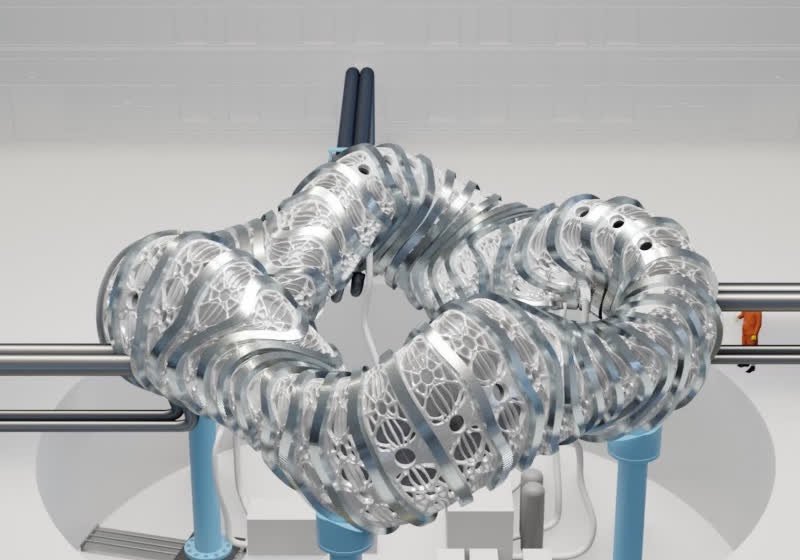
Across the energy landscape, a notable development accompanies this regional pivot: a fusion startup backed by high-profile investor Bill Gates has begun licensing activities for a futuristic reactor concept intended to operate in Tennessee. While details surrounding the reactor design and licensing scope have been guarded to protect intellectual property and project timing, the move underscores a broader movement to bring practical fusion energy closer to commercial reality. The Tennessee location—selected in part for its existing energy infrastructure and proximity to grid operators—illustrates a growing trend of repurposing former fossil fuel sites for new energy technologies, including pilots and demonstrations that could pave the way for future deployment.
This evolving narrative sits at the intersection of energy policy, technological innovation, and local economic development. Supporters argue that fusion, if scaled effectively, could deliver abundant, low-emission energy with a reduced waste profile compared with some other forms of low-carbon power. Critics point to the formidable scientific and regulatory challenges that fusion must overcome before it becomes a reliable, dispatchable source of electricity. The Tennessee project, positioned within this contest, raises questions about the pace of commercialization, safety standards, and the capacity of regional infrastructure to accommodate new generation sources.
This article provides a comprehensive look at the licensing process, the potential implications for Tennessee and the broader energy market, and the prospects for fusion technology to emerge as a practical component of the nation’s energy portfolio.
In-Depth Analysis
The central development described involves a fusion-focused startup with backers that include one of the technology and philanthropic leaders of the era, Bill Gates. The company is pursuing a licensing track for a reactor concept with ambitious performance targets and a design that emphasizes modularity, safety, and scalability. Licensing, in this context, refers to obtaining the necessary approvals, intellectual property rights, certifications, and regulatory clearances that would enable the construction and operation of the reactor at a designated site in Tennessee.
The Tennessee site choice builds on several favorable factors. First, the region has a history of energy production and a workforce experienced in plant operations, maintenance, and engineering. This institutional knowledge base can be valuable during the design, construction, and commissioning phases of a complex energy facility. Second, the proximity to grid infrastructure offers an opportunity for faster integration studies and potential collaboration with transmission operators and regional utility partners. Third, repurposing or reactivating a site with existing industrial facilities can reduce siting risk and streamline certain permitting pathways, aligning with policy efforts to accelerate cleaner energy transitions by leveraging established industrial corridors.
From a technology perspective, fusion startups aim to demonstrate a reactor that delivers significant energy output while maintaining robust safety margins. The licensing process for such a reactor typically encompasses multiple components:
– Regulatory approvals: Engagement with federal and state agencies to meet licensing requirements, safety standards, environmental impact assessments, and emergency planning provisions.
– Technical validation: Demonstrations of reactor physics, materials performance, tritium handling (if applicable), heat management, and overall system reliability.
– Commercial framework: Alignment with market mechanics, power purchase agreements, and financial risk assessments necessary to attract investors and customers.
– Safety culture and governance: Establishment of independent safety oversight, incident reporting protocols, and continuous improvement processes.
– Community and environmental considerations: Public outreach, impact analyses, and mitigation plans to address potential concerns from nearby populations and stakeholders.
The broader energy landscape provides context for this initiative. Fusion research has historically been characterized by long development horizons and incremental milestones. In recent years, there has been a shift toward practical demonstrations, staged deployments, and private-sector funding aimed at accelerating timelines. The involvement of high-profile backers signals investor confidence and the potential for accelerated innovation cycles, albeit with the caveat that commercialization timelines remain uncertain.
For Tennessee, the licensing activity could bring several benefits. Economic development opportunities may arise through job creation in construction, engineering, operations, and maintenance. The project could stimulate local suppliers and service providers, contributing to a more diversified energy economy. Additionally, if successful, Tennessee could become a focal point for a new wave of energy infrastructure, attracting research institutions, startups, and broader industry attention.
However, there are notable hurdles. Fusion technology must demonstrate consistent, safe, and scalable performance under real-world operating conditions. Regulatory bodies will scrutinize safety analyses, contamination controls, waste management practices (as applicable), and the reliability of the energy supply. Grid integration poses technical questions about how a fusion plant would interact with existing transmission networks, balancing demand, and maintaining grid stability during ramp-up and ramp-down cycles. Financial viability hinges on capital costs, operating expenses, and the ability to secure long-term power purchase agreements in a competitive energy market.
The historical context of the Bull Run Fossil Plant underscores a broader narrative about energy transitions in the United States. As the plant’s life concluded, it marked not just the retirement of a single facility but the closing of a chapter in which fossil fuels dominated a region’s energy mix. The decommissioning also reflects a surge in efforts to repurpose or rehabilitate legacy sites for new technologies that could offer cleaner energy outcomes and economic renewal for communities tied to traditional energy sectors. In this sense, Tennessee’s engagement with fusion licensing can be interpreted as part of a strategic evolution in the state’s energy identity—moving away from fossil dependence while seeking to attract cutting-edge technologies that promise long-term resilience and competitiveness.
Stakeholders in Tennessee—local governments, economic development agencies, utility partners, labor unions, and residents—will be watching licensing milestones closely. Transparent communication about progress, safety considerations, and potential economic benefits will be essential to sustaining public trust and ensuring community support. In parallel, policymakers may explore incentives, workforce development programs, and educational initiatives to prepare the local population for new roles in a future energy landscape that includes advanced reactor technologies.
From a research and industry perspective, the Tennessee licensing effort contributes to a growing body of experimentation at the intersection of private investment and public regulation. It reflects a broader trend toward de-risking frontier technologies through staged development, where pilots and demonstrators provide vital data, informing scaling strategies and policy frameworks. The balance between privacy around proprietary designs and the public’s right to safety and accountability remains a relevant tension in these ventures.
In summary, the Bill Gates-backed fusion startup’s licensing activity in Tennessee embodies a high-stakes experiment in next-generation energy. It sits at the crossroads of technological ambition, regulatory scrutiny, economic opportunity, and community impact. As the project advances, it will test not only the engineering and financial viability of fusion power but also the capacity of regulators, industry, and communities to collaborate in pursuing a cleaner, more resilient energy future.

*圖片來源:Unsplash*
Perspectives and Impact
The licensing process for a fusion reactor is not merely a technical exercise; it is a test of institutional readiness and a barometer of the pace at which society can translate breakthrough science into practical infrastructure. If the project achieves licensing milestones without compromising safety or environmental safeguards, it could help catalyze a broader ecosystem of fusion activity across the United States. Local and regional authorities may leverage the project to attract additional research funding, educational partnerships, and skill-building programs tailored to advanced manufacturing, high-security operations, and specialized engineering disciplines.
Economically, the presence of a high-profile fusion project in Tennessee could influence regional labor markets. Job opportunities would likely span design and engineering roles, project management, construction trades, site operations, and ongoing maintenance. Training partnerships with community colleges and universities could help cultivate a workforce adept at handling the unique demands of fusion facilities, including radiation safety culture where applicable, high-precision fabrication, and complex systems integration. Suppliers across sectors—ranging from metals and specialty components to diagnostic instrumentation—could experience increased demand, supporting a broader economic ripple effect.
From an environmental and societal perspective, the launch of a fusion licensing program raises questions about energy mix strategies and climate commitments. Fusion promises to deliver low-emission energy with minimal long-lived radioactive waste relative to some other energy technologies, though it is not without its own environmental considerations. Ongoing assessments will be necessary to ensure that the lifecycle impacts of the reactor—construction, operation, and eventual decommissioning—are properly managed and communicated to the public.
Regulatory environments will shape the trajectory of the Tennessee project. Agencies at the state and federal levels will need to align on safety standards, permitting pathways, and oversight mechanisms. The collaboration among regulators, the private sector, and the public will influence how quickly licensing milestones can be achieved while maintaining rigorous safety and environmental stewardship. This alignment is crucial for sustaining investor confidence and ensuring that the project can progress beyond conceptual or pilot stages toward scalable deployment.
In the broader context of energy strategy, successful licensing and subsequent development could influence policy discussions around energy diversification, grid resilience, and the role of advanced reactors in meeting decarbonization goals. If successful, Tennessee’s example could inform similar efforts in other states, encouraging a more distributed approach to research, development, and commercialization of fusion technologies. It could also contribute to a dialogue about how to reconcile the benefits of cutting-edge science with the realities of regulatory rigor, public accountability, and community impact.
The social dimension should not be overlooked. Communities near large energy projects often seek assurance about environmental justice, noise, traffic, and safety. Proactive engagement—through town halls, informative briefings, and accessible reporting—will be essential to building and maintaining trust. The historical memory of Bull Run’s smokestacks and the broader transition away from fossil fuels provides a poignant backdrop for discussions about what Tennessee hopes to become: a hub for innovation, a home to skilled workers, and a pioneer in demonstrating how advanced energy technologies can integrate with existing infrastructure and regional economies.
Looking ahead, the project’s success hinges on a confluence of factors: technical feasibility, regulatory clearance, market readiness, and robust stakeholder collaboration. If licensing milestones are achieved and the project proves viable in pilot phases, it could accelerate the maturation of fusion energy as a credible component of the United States’ energy future. Conversely, delays or setbacks in any of these areas could shift timelines, alter cost structures, or necessitate alternative siting strategies. In this dynamic landscape, the Tennessee venture embodies both the promise and the practical challenges of bringing a theoretical energy breakthrough into real-world service.
Key Takeaways
Main Points:
– A fusion startup backed by Bill Gates is pursuing licensing for a reactor concept in Tennessee.
– The project follows the decommissioning of the Bull Run Fossil Plant, signaling a shift toward new energy technologies.
– Tennessee’s site offers industrial continuity, grid proximity, and a platform for potential economic development.
Areas of Concern:
– Fusion technology remains technically and commercially challenging to scale.
– Regulatory approvals, safety assurances, and environmental considerations require careful navigation.
– Grid integration, capital costs, and long-term financial viability pose ongoing uncertainties.
Summary and Recommendations
The move to license a futuristic fusion reactor in Tennessee represents a strategic step in the broader transition from traditional fossil fuels to advanced energy technologies. While the prospect of fusion power is compelling—offering the potential for abundant, low-emission energy—the path to commercial deployment is complex and prolonged. The Tennessee licensing initiative illustrates how private innovation, supported by influential investors, seeks to accelerate progress by combining technical development with regulatory engagement and local economic impact.
For policymakers, regulators, and industry participants, the emphasis should be on creating clear, predictable licensing pathways that balance safety with timely advancement. Stakeholders should facilitate transparent communication with local communities, ensuring that environmental, health, and safety concerns are addressed and that the anticipated economic benefits are explained and measured. Workforce development and supplier readiness should be prioritized to maximize local economic gains and minimize disruption.
In the near term, monitoring licensing milestones, safety assessments, and grid integration studies will be essential. The Tennessee project could become a bellwether for future fusion efforts if it demonstrates credible progress, rigorous governance, and meaningful community engagement. If successful, this initiative could help catalyze a broader ecosystem of research, investment, and implementation of fusion power as part of a diversified and resilient energy portfolio for the United States.
References
- Original: https://www.techspot.com/news/111423-bill-gates-backed-fusion-startup-begins-licensing-futuristic.html
- Additional context on fusion licensing processes and regional energy transitions:
- U.S. Department of Energy: Fusion energy science and regulatory framework
- National Academies of Sciences, Engineering, and Medicine: Opportunities for fusion energy commercial deployment
- Tennessee Valley Authority discussions on advanced reactors and grid integration
Forbidden:
– No thinking process or “Thinking…” markers
– Article must start with “## TLDR”
Ensure content is original and professional.

*圖片來源:Unsplash*