TLDR
• Core Points: Blockbench is a free 3D modeling tool tailored for voxel and low-poly assets, popular for Minecraft models, game development, and simple animations. It emphasizes accessibility, real-time previews, and multiple export options.
• Main Content: It provides a streamlined interface, real-time previews, and versatile export formats to support game models and basic animations, making voxel work approachable for beginners and efficient for experienced users.
• Key Insights: By focusing on voxel and low-poly workflows, Blockbench lowers the barrier to entry for game asset creation while integrating well with Minecraft modding and broader game pipelines.
• Considerations: Users should assess export compatibility with their target engines and projects, and consider performance when handling larger scenes.
• Recommended Actions: Try Blockbench for quick voxel modeling, explore its export options, and integrate it into Minecraft-related projects or light game development workflows.
Content Overview
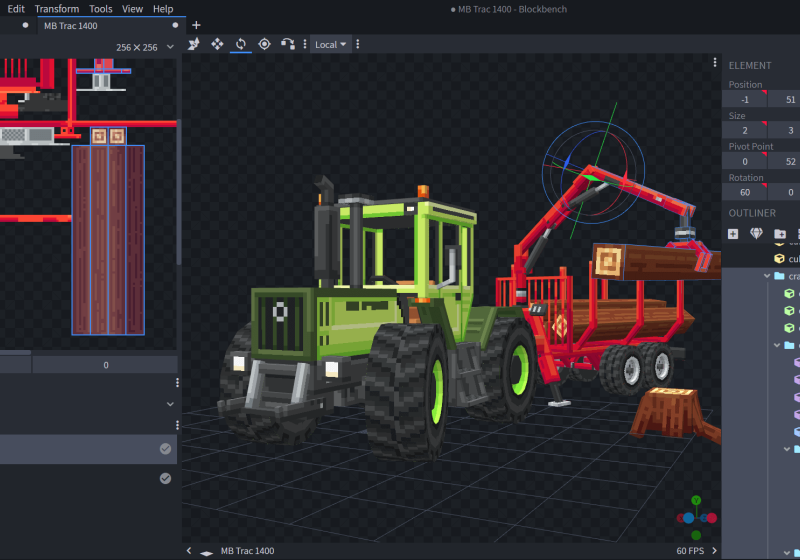
Blockbench is a free 3D modeling tool designed specifically for voxel and low-poly assets. It has become a popular choice among Minecraft modelers, indie game developers, and hobbyists who want to create simple animations and game-ready assets without wading through more complex, feature-heavy software. The tool emphasizes a clean and approachable user experience, providing real-time previews so creators can see how their models will look as they work, rather than after rendering. It also supports multiple export formats, which enhances its utility for a variety of workflows, from in-game Minecraft skins and models to assets intended for other game engines.
The rise of voxel-based aesthetics in games and the continued popularity of Minecraft have driven demand for tools that balance ease of use with practical capabilities. Blockbench positions itself in this space by offering a straightforward interface, a focused feature set, and a workflow that aligns with how voxel artists typically work. For beginners, this can be an entry point into 3D modeling, while for seasoned editors, Blockbench can serve as a fast, efficient tool to prototype concepts or to create assets for quick iteration.
The core value proposition of Blockbench lies in its combination of simplicity and purpose-built features. Its real-time previews give immediate feedback on geometry, texture mapping, and animation states, enabling users to refine models without the need for lengthy export-test-edit cycles. The ability to export to multiple formats also means that assets can be integrated into Minecraft mods, resource packs, or other game projects, depending on the specific export options supported by the software at any given version.
In addition to model creation, Blockbench supports basic animation workflows. This enables creators to build simple animations for their voxel models, which can be helpful for demonstrating movement, behavior, or presentation purposes in mod showcases or game concepts. Because many voxel projects involve consistent block textures and grid-aligned geometry, Blockbench’s toolset is well-suited to maintaining a cohesive visual style across assets.
This article reviews Blockbench’s core features, discusses its potential impact on the workflow of Minecraft modders and indie developers, and considers practical considerations when adopting the tool within larger production pipelines.
In-Depth Analysis
Blockbench focuses on three core areas: accessibility, real-time feedback, and export flexibility. Accessibility begins with its free pricing model and a user interface designed to minimize the learning curve. For beginners, the software offers a forgiving starting point to learn 3D modeling concepts, such as vertex manipulation, UV mapping, and texture application, within a voxel-structured paradigm. The voxel-first approach means that creators often work with fixed grid sizes and block-based geometry, which mirrors the visual language of Minecraft and related voxel-based games.
Real-time previews address a common hurdle in 3D modeling: understanding how edits will translate to the final render. Blockbench’s live preview capability helps users assess how changes in shape, texture, and animation affect the overall look. This iterative loop is particularly valuable for voxel art, where block alignment and texture tiling play significant roles in achieving a cohesive aesthetic. Real-time feedback reduces iteration time, speeds up learning, and can improve the quality of final assets.
Export versatility is another important facet. Although Blockbench is optimized for voxel-style workflows, it supports exporting to formats compatible with Minecraft resource packs, mods, and other game engines. This flexibility is crucial for users who work across different platforms or who need to test assets in various environments. The availability of multiple export options allows creators to tailor assets to specific pipelines, ensuring compatibility with target software and project requirements.
Animation support adds another layer of usefulness. Even basic animation capabilities can significantly enhance how voxel models are demonstrated in portfolios, mod showcases, or early-stage prototypes. While Blockbench is not a replacement for full-fledged animation suites, its animation tools are sufficient for simple rigging and motion previews that align with the low-poly, blocky aesthetic common in voxel art.
From a production perspective, Blockbench enables a workflow that is particularly well-suited to Minecraft-related content and similar projects. For many users, the tool’s strength lies in its alignment with the visual language of voxel art: the grid-based geometry, texture mapping that often uses a limited palette, and the modularity of block-based components. This synergy can streamline asset creation, reduce the gap between concept and playable asset, and support rapid iteration cycles.
However, several practical considerations are worth noting. First, exporters and importers evolve with software updates, so users should verify that their intended game engines or mod environments remain compatible with the chosen export formats. Second, while Blockbench excels at voxel modeling, it is not a full-featured general-purpose 3D tool. Projects requiring advanced sculpting, highly detailed textures, or non-voxel-centric workflows may necessitate additional software in the pipeline. Third, performance considerations can arise when modeling larger scenes or more complex animations, especially on less capable hardware. Users should be mindful of scene complexity, texture resolution, and polygon counts to avoid sluggish performance during editing or previews.
Community support and documentation are important attributes of free, niche tools like Blockbench. A robust user community can provide tutorials, shared assets, and troubleshooting tips that accelerate learning and project completion. Documentation that covers common game engine workflows, export steps, and animation basics helps reduce the friction often encountered when moving from model creation to in-game use.
In terms of impact, Blockbench contributes to broader discussions about accessible game development tools. By lowering barriers to entry, it enables aspiring designers to create shareable assets, participate in modding communities, and experiment with game design ideas without significant financial or technical overhead. This democratization of tool access aligns with trends in independent development, hobbyist experimentation, and educational use where students can learn modeling concepts through a focused, targeted platform.

*圖片來源:Unsplash*
Looking ahead, potential future directions for Blockbench could include deeper integration with popular game engines, expanded animation capabilities, more advanced UV mapping or texture painting tools, and improved performance for large or complex voxel scenes. Enhancement of collaborative features (such as cloud-based projects or version control for assets) could further support team-based workflows, particularly in classroom or studio settings. As voxel aesthetics continue to endure in indie titles, tools that maintain simplicity while expanding capability will likely remain in demand.
Perspectives and Impact
The rise of voxel-based aesthetics mirrors broader trends in accessible game development. Tools like Blockbench support a shift toward approachable, purpose-built software that targets specific pipelines rather than attempting to be all-encompassing. For Minecraft communities, Blockbench represents a practical solution for model creation, texture work, and animation, enabling creators to produce assets that align with the game’s visual language and technical constraints.
Educational settings stand to benefit as well. In classrooms and workshops where students explore digital art and game design, Blockbench can serve as an entry point for teaching 3D modeling concepts. The intuitive workflow helps learners grasp fundamental ideas such as coordinate systems, texture mapping, and animation timing without being overwhelmed by high-end software interfaces. As a result, students can focus on core design concepts, critique iterations, and build a portfolio of voxel assets early in their studies.
Industry impact stems from the ability to compose modular assets quickly. Voxel and low-poly models often favor reusability, where a single asset can be adapted for multiple scenes or gameplay situations. Blockbench’s export flexibility supports this modular approach, allowing creators to reuse blocks, textures, and animations across different projects. This capacity for rapid asset iteration aligns well with prototyping in game development, where speed can influence decision-making and pivoting during the early stages of a project.
Additionally, the tool’s relevance is augmented by the broad ecosystem of Minecraft modding and education-focused projects that value accessible content creation tools. The ability to generate models that fit into resource packs or mods provides a practical bridge between design concepts and playable experiences. For educators, Blockbench can be incorporated into curriculum modules that teach 3D modeling fundamentals within a familiar framework, making it easier to illustrate how texture mapping, rigging, and animation work in a tangible context.
Looking to the future, the continued popularity of Minecraft and voxel aesthetics suggests ongoing demand for streamlined tools. As voxel-based games expand into new genres and platforms, Blockbench may evolve to accommodate more complex rigs, improved texture workflows, and enhanced pipeline integrations. Collaboration features, cloud-based project storage, and community asset libraries could further strengthen its role in both individual and collaborative settings.
Key Takeaways
Main Points:
– Blockbench is a free, focused 3D modeling tool for voxel and low-poly assets.
– It emphasizes accessibility, real-time previews, and multi-format export options.
– The tool is especially relevant for Minecraft modelers, indie developers, and educators seeking a simple modeling workflow.
Areas of Concern:
– Export compatibility can shift with software updates; users should verify current pipeline support.
– It is not a substitute for full-featured 3D software when advanced modeling or texturing is required.
– Performance considerations may arise with larger scenes or higher texture resolutions.
Summary and Recommendations
Blockbench offers a practical entry point for creators interested in voxel art and Minecraft-related modeling. Its free access, user-friendly interface, and real-time previews make it an attractive option for beginners and experienced users who want a streamlined workflow for quick prototyping and asset creation. The emphasis on voxel and low-poly workflows, combined with flexible export options, supports a range of use cases from Minecraft resource packs to light game development pipelines. While it is not designed to replace comprehensive 3D software for complex projects, Blockbench delivers targeted capabilities that align well with its chosen niche.
For individuals exploring voxel aesthetics or Minecraft modding, Blockbench is worth trying. Start with simple models to learn the basics of vertex editing, texture application, and basic animation. As you gain experience, explore export formats to ensure assets integrate smoothly into your intended game environment. Consider complementing Blockbench with other tools for tasks requiring advanced features, such as high-detail texturing or sophisticated animation, and plan for updates to exporters and compatibility over time. Overall, Blockbench represents a valuable, accessible option for creators seeking to build Minecraft-style and voxel-based models without heavy software overhead.
References
- Original: techspot.com
- Additional references:
- Blockbench Official Website: https://www.blockbench.net
- Minecraft Modding Resources and Asset Pipelines: https://www.minecraft.net/en-us/resources
- Voxel Art and Low-Poly Modeling Concepts: https://www.kickstarter.com/blog/voxel-art-guide
Forbidden:
– No thinking process or “Thinking…” markers
– Article must start with “## TLDR”
Ensure content is original and professional.

*圖片來源:Unsplash*