TLDR
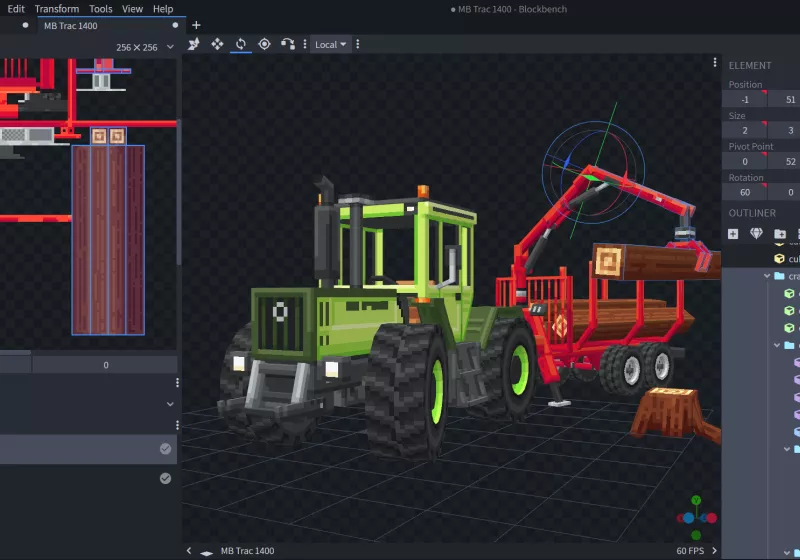
• Core Points: Blockbench is a free, accessible 3D modeling tool designed for voxel and low-poly assets, with strong use in Minecraft modeling, game development, and simple animations. It features a straightforward interface, real-time previews, and multiple export formats to fit varied workflows.
• Main Content: The software emphasizes ease of use, real-time feedback, and broad export options, making it a practical choice for hobbyists and developers creating game assets without deep 3D modeling expertise.
• Key Insights: By focusing on voxel and low-poly modeling, Blockbench fills a niche for rapid asset creation, though users may outgrow it for complex, high-poly projects.
• Considerations: Users should evaluate project scope, needed export formats, and animation requirements to determine if Blockbench aligns with their pipeline.
• Recommended Actions: Try Blockbench for Minecraft and voxel projects; assess workflow compatibility, and explore its tutorials and community resources for best results.
Content Overview
Blockbench is a free 3D modeling tool tailored toward voxel and low-poly assets, a specialization that aligns well with the needs of Minecraft modelers, indie game developers, and animators seeking a approachable solution. Its core premise is to simplify the process of creating game-ready models without requiring extensive background in traditional polygonal modeling. The software provides a clean, intuitive interface designed to lower the entry barrier for beginners while still offering features that meet the demands of more seasoned creators working with voxel-based aesthetics.
The tool’s emphasis on voxel-friendly workflows means that users can construct models using block-based geometry that mirrors the visual language of Minecraft and other block-centric games. This focus supports rapid prototyping, iteration, and customization—crucial aspects for individuals developing custom characters, items, tools, or environment assets. Beyond static models, Blockbench also supports basic animations, enabling creators to animate simple rigs and movements suitable for in-game display or short-form cinematic sequences.
Real-time previews are a notable feature, allowing creators to visualize how models will appear during gameplay as adjustments are made. This immediate feedback can streamline the editing process and reduce the cycle time between design and export. Additionally, Blockbench offers multiple export formats, which broadens its applicability across different game engines, platforms, or asset pipelines. By supporting a range of outputs, the tool helps users integrate assets into Minecraft modding environments, standalone indie games, or other voxel-based projects with relative ease.
In summary, Blockbench presents itself as a practical, approachable option for individuals working within the voxel and low-poly space. It is particularly well-suited for Minecraft-related modeling tasks, for those who value real-time previews, and for creators seeking a streamlined workflow from conception to export.
In-Depth Analysis
Blockbench’s design philosophy centers on accessibility and specificity. The creators recognize that many aspiring developers and artists are drawn to voxel aesthetics—and Minecraft in particular—but may not have formal training in complex 3D software. To address this gap, Blockbench offers a simplified environment where the essential steps of 3D modeling—defining dimensions, manipulating blocks, applying textures, and organizing models for animation—are presented in an intuitive manner.
The user interface is streamlined to minimize overwhelm. Core tools for translating, rotating, scaling, and extruding are laid out in a manner that mirrors common 3D packages, but the available toolset avoids some of the more intimidating controls characteristic of high-end software. This approach lowers the barrier to entry for beginners while still enabling those who prefer a fast, focused workflow to complete projects without unnecessary friction.
Real-time previews are a pivotal feature. When users adjust vertices, textures, or model geometry, the updated view reflects changes promptly. This capability reduces the guesswork often associated with voxel modeling and helps creators quickly validate proportions, silhouette, and overall design. For game developers, particularly those working within Minecraft or similar environments, real-time feedback is invaluable for ensuring that models meet in-game constraints and performance considerations.
Variety in export options is another practical strength. Blockbench supports exporting to formats that are commonly used in Minecraft modding and other game development contexts. By accommodating multiple output types, the tool helps users integrate assets into different engines or pipelines without requiring extensive post-processing or format conversion. The flexibility to export models and animations in compatible formats can save time and preserve work fidelity across stages of production.
The animation capabilities, while described as basic, are appropriate for the scope Blockbench targets. Simple rigs and animations enable models to move or display dynamism in inventories, menus, or cutscenes. For many voxel-based projects, complex skeletal animation may be unnecessary, and Blockbench’s animation workflow provides enough functionality to meet these needs without overcomplicating the process.
However, Blockbench is not without its limitations. Its voxel- and low-poly-centric design means it may not be the best tool for high-poly, photo-realistic modeling or tasks requiring advanced sculpting, organic detailing, or intricate character rigs. For teams working on expansive, AAA-style productions or projects demanding nuanced muscle dynamics, dedicated high-end 3D software might be more appropriate. In contrast, Blockbench excels as a rapid prototyping and asset-creation tool, enabling artists to iterate quickly and produce a large number of assets with consistent aesthetic and technical alignment.
Community and resources play a meaningful role in Blockbench’s ongoing usefulness. As with many niche modeling tools, a user community contributes tutorials, templates, and shared assets that can accelerate learning and project development. Beginners can leverage guided examples to understand best practices for voxel modeling, texturing, and simple animation, while more experienced users can exchange tips on optimization, texture mapping, and workflow efficiency. The availability of documentation and tutorials also matters, as it helps new users traverse common hurdles and make the most of the tool’s capabilities.
From a workflow perspective, Blockbench fits neatly into projects centered on Minecraft modding, custom skin packs, or stylized indie titles that embrace a blocky or voxel aesthetic. Its export formats and real-time previews can help align asset creation with the constraints and expectations of target platforms, ensuring assets render correctly within the intended game environment. For educators and hobbyists, Blockbench’s accessibility makes it a compelling option for demonstrations of modeling concepts, texture mapping, and animation basics without requiring specialized equipment or software.

*圖片來源:Unsplash*
In terms of future development, users might anticipate continued improvements in performance, expanded export compatibility, and more robust animation features. Enhancements could include advanced UV mapping tools tailored for voxel textures, improved animation timelines, or enhanced import paths for user-generated assets from other software. A growing library of templates and presets could also empower new users to produce polished models more quickly. The success of Blockbench will likely continue to hinge on maintaining its core strengths—simplicity, speed, and voxel-oriented design—while responding to the evolving needs of its community and the broader game development ecosystem.
Perspectives and Impact
Blockbench represents a notable trend in the game development community: the rise of accessible, purpose-built tools that democratize content creation. By focusing on voxel and low-poly modeling, Blockbench lowers barriers for hobbyists, students, and indie developers who want to contribute to Minecraft-inspired projects or voxel-based games without investing in expensive software or committing to steep learning curves.
The impact of such tools extends beyond individual projects. They contribute to a broader ecosystem in which learners can grasp fundamental 3D concepts—geometry, texture mapping, and basic animation—through a workflow that emphasizes visual feedback and rapid iteration. This educational dimension is particularly valuable in classrooms or community workshops where approachable tools can spark interest in digital art and software development.
In terms of industry trends, Blockbench aligns with the sustained popularity of Minecraft and voxel aesthetics. The continued demand for Minecraft add-ons, resource packs, and custom models creates a consistent need for user-friendly modeling solutions. As developers seek to prototype quickly or to experiment with game ideas before committing to more complex pipelines, Blockbench serves as a pragmatic entry point. It offers a practical pathway from concept to in-game asset with comparatively low overhead.
Looking forward, the role of Blockbench could expand as it integrates more export options, supports broader animation capabilities, and enhances interoperability with other popular engines and asset pipelines. If the tool continues to cultivate a vibrant community, it will benefit from an ecosystem of tutorials, shared assets, and best practices that help new users adopt voxel-based workflows more efficiently. The potential for educational adoption remains prominent, as educators seek accessible means to teach 3D modeling concepts through hands-on projects that align with modern, stylized aesthetics.
Nonetheless, Blockbench’s continued success will depend on striking a balance between simplicity and capability. While the tool’s current focus on voxel modeling is a strength, it must remain adaptable to accommodate users who graduate to more complex projects or who require more sophisticated features. Ongoing performance optimizations, expanded texture support, and more robust animation tools could help Blockbench retain relevance as the modeling landscape evolves.
Key Takeaways
Main Points:
– Blockbench is a free, user-friendly 3D modeling tool optimized for voxel and low-poly assets, with strong suitability for Minecraft-related modeling.
– Real-time previews and multiple export formats enhance usability and workflow integration for game development and simple animations.
– The platform is well-suited for beginners and hobbyists, as well as educators, while also supporting rapid iteration for indie developers.
Areas of Concern:
– It may not meet the needs of professionals working on high-poly, complex animations or highly detailed organic models.
– Users requiring advanced features such as heavy sculpting, photorealistic texturing, or complex rigging might outgrow Blockbench.
– Dependency on community resources and tutorials highlights the importance of active maintenance and documentation quality for long-term viability.
Summary and Recommendations
Blockbench offers a practical and approachable solution for creating voxel-based and low-poly game assets. Its free access, straightforward interface, real-time previews, and support for multiple export formats collectively enable faster iteration and integration into Minecraft-related projects, indie games, and educational contexts. For beginners, Blockbench provides a gentle onboarding experience that demystifies 3D modeling concepts while delivering tangible results. For more experienced users focusing on quick asset production within a voxel aesthetic, the tool’s streamlined workflow can be a time-saver.
However, potential users should carefully assess their project scope. If the goal involves high-detail, high-poly modeling, or advanced animation systems, Blockbench may be best viewed as a complementary tool in a broader production pipeline rather than a sole solution. Exploring the software’s tutorials, templates, and community resources will help maximize its benefits and reveal best practices for texture mapping, model optimization, and animation basics.
In conclusion, Blockbench serves as a valuable entry point into 3D asset creation for voxel-based projects and Minecraft modding. It fills a niche by prioritizing simplicity and speed without compromising essential capabilities needed for standard game development tasks. By leveraging real-time previews and flexible export options, creators can efficiently move from concept to playable assets, making Blockbench a noteworthy option in the landscape of beginner-friendly modeling tools.
References
- Original: techspot.com article on Blockbench: https://www.techspot.com/downloads/5931-blockbench.html
- Additional references:
- Blockbench official website and tutorials
- Minecraft modding asset creation guides
- Community forums and templates for voxel modeling workflows

*圖片來源:Unsplash*