TLDR
• Core Points: Bullet journals emphasize rapid logging and organization with a flexible framework; junk journals center on tactile, creative layering using found objects and mixed media.
• Main Content: Both approaches offer structured creativity but differ in methods, materials, and goals; choice depends on whether you seek efficiency, mindfulness, or expressive artistry.
• Key Insights: Clarity of intent, available time, and preferred materials shape which journal suits you; hybrids are possible but require mindful boundaries.
• Considerations: Aesthetics versus function, cost and sustainability of supplies, and potential overwhelm from too many formats.
• Recommended Actions: Try a minimal bullet journal to test structure; experiment with a starter junk journal; reflect on goals and adjust your approach accordingly.
Content Overview
Journaling has evolved far beyond a single genre. Among the popular options are the bullet journal and the junk journal. Each format serves a distinct purpose and appeals to different personality types and goals. The bullet journal, popularized by Ryder Carroll, offers a concise, flexible system for tracking tasks, events, and notes with rapid logging and monthly/weekly/daily spreads. It is designed to maximize productivity, organization, and time management while keeping content minimal and focused. In contrast, the junk journal emphasizes tactile engagement, texture, and storytelling through an eclectic mix of papers, ephemera, fabric, found objects, and hand-stitched elements. It prioritizes process, creativity, and personal expression, often with less emphasis on rigid structure.
The core question readers ask is straightforward: which approach aligns with their needs, lifestyle, and creative preferences? To answer this, it is helpful to examine the defining features, typical materials, advantages, drawbacks, and practical implications of both journaling styles. A clear understanding of these factors helps you choose or combine practices in a way that supports your goals—whether those goals include productivity, reflection, stress relief, or artistic experimentation.
In-Depth Analysis
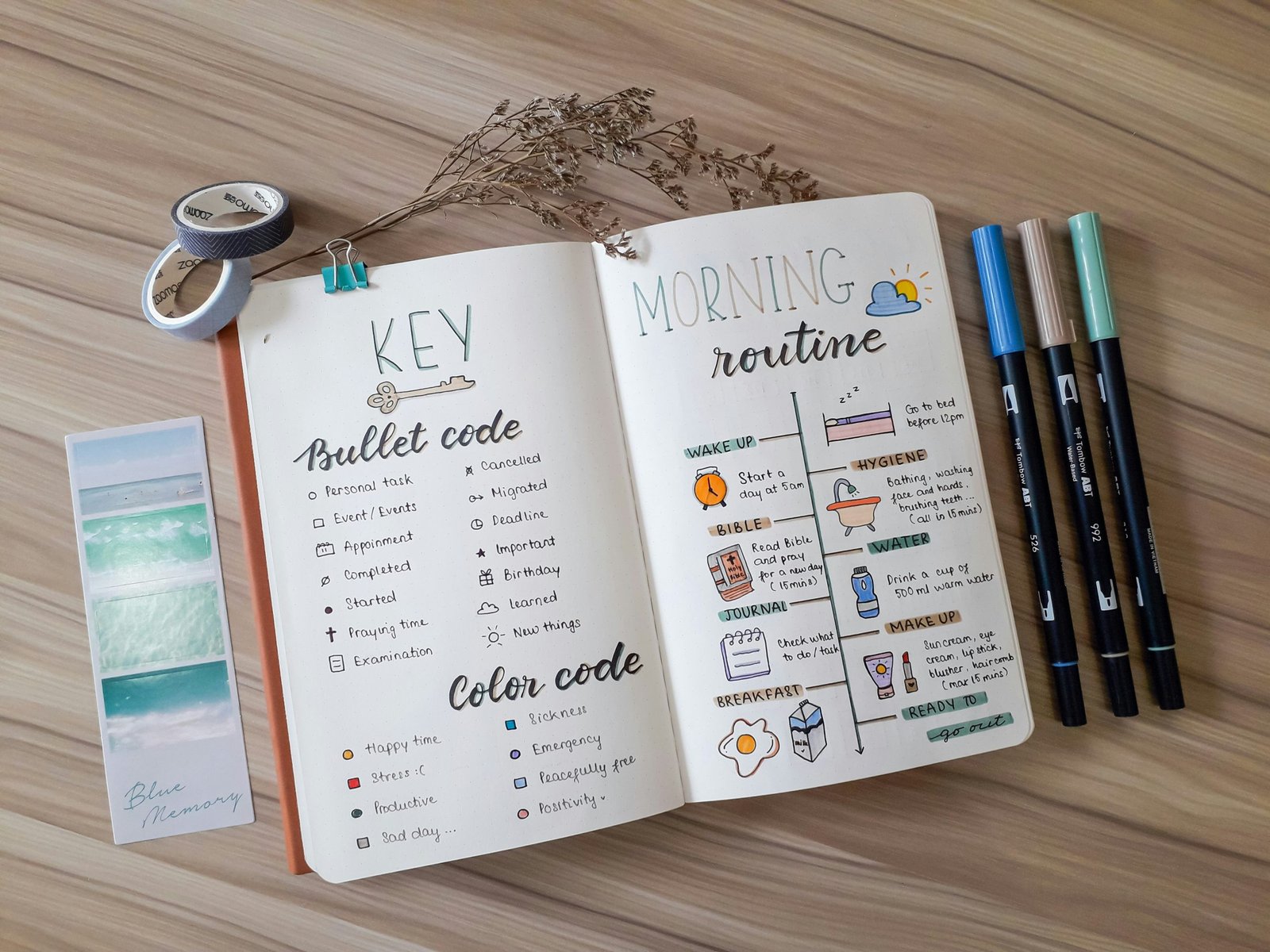
Bullet journaling rests on a simple premise: a compact, customizable system that consolidates planning, task management, and note-taking in one place. The backbone is rapid logging, a concise method of recording tasks (to-dos), events, and notes using short bullets and symbols. The original framework includes a monthly calendar, a daily log, and rapid collections, with optional index pages to improve navigability. The appeal lies in its efficiency: you can reduce cognitive load by having a single source of truth for commitments, goals, and reflections. Over time, many users develop personal adaptations—such as monthly habit trackers, future logs, and rapid-logging keys—that suit their routines and priorities.
Key strengths of the bullet journal include:
– Structure without rigidity: You can adopt as much or as little of Carroll’s method as you need.
– Portability and simplicity: A notebook and a pencil are often enough to start; digital tooling can be integrated later.
– Clear focus on action: The system is designed to help you get things done, with easy migration of tasks from one day to the next or into future planning.
However, bullet journaling also presents challenges. Some users experience friction with maintenance, especially when attempting to preserve a strict daily or weekly routine. The style can feel limited if your work involves a heavy emphasis on visual storytelling or if you enjoy tactile, material-based experimentation. For those who prefer a more freeform, art-centric approach, the structured pages of a traditional bullet journal can feel restrictive.
Junk journaling, on the other hand, centers on the material experience of journaling. It invites the creator to assemble pages from a wide range of found objects—such as scrap paper, tickets, stamps, fabric swatches, coffee-stained pages, dried flowers, and other ephemera. The process of collecting, collaging, stitching, painting, and layering becomes the main activity, and the end result is often a richly textured artifact that captures memory, mood, and personal associations. Junk journals can be highly thematic or experimental and frequently blur the lines between notebook, scrapbook, art book, and diary.
Important considerations for junk journaling include:
– Creative freedom: There is no fixed structure, which can be liberating for creative expression but potentially overwhelming for those who crave organization.
– Material abundance: The artful appeal comes from mixed-media experimentation, but sourcing materials can be time-intensive and may raise sustainability concerns if not managed thoughtfully.
– Process over product: The journey of making matters more than the final appearance, though many practitioners produce stunning, gallery-worthy pieces.
Both formats share common benefits, such as fostering regular writing and reflection, building a record of personal growth, and creating a dedicated space for ideas and memories. They can also complement each other. Some people maintain a lean, functional bullet journal for day-to-day planning and use a separate junk journal for artistic exploration, or they blend the two by adding decorative elements to minimal entries, thus marrying structure with texture.
Choosing between these paths—or crafting a hybrid approach—depends on several factors:
– Goals: Are you primarily seeking organization and task management, or do you want a space for creative experimentation and tactile engagement?
– Time and energy: Do you have the bandwidth to curate a detailed craft project, or do you need a quick, efficient planning tool?
– Materials and sustainability: Are you drawn to a minimalist setup or do you enjoy collecting ephemera and fabrics? How will you manage waste and the environmental impact of supplies?
– Aesthetic preferences: Do you prefer a clean, orderly aesthetic, or a rich, layered, collage-based appearance?
– Long-term commitment: Is this a casual hobby, a therapeutic practice, or a consistent productivity system?
In practice, many journaling enthusiasts experiment with both formats before settling on a preferred approach. A common pathway is to start with a minimal bullet journal to establish a productive routine, then gradually introduce elements of junk journaling—such as decorative borders, collage pages, or memory-laden inserts—into a dedicated section or a separate notebook. Conversely, some artists begin with a junk journal and gradually introduce structured pages for tracking goals or reflections, effectively blending improvisation with purpose.
Practical tips for those considering a transition, or a hybrid approach:
– Start small: For bullet journaling, begin with a simple monthly spread and a few daily logs. For junk journaling, assemble a starter kit with a few core materials to avoid overwhelm.
– Set boundaries: If you’re blending formats, designate specific notebooks or sections for different purposes to maintain clarity and prevent chaos.
– Focus on intentionality: Regardless of format, keep your entries meaningful. For bullet journals, that means actionable tasks and concise notes; for junk journals, prioritize memories, stories, and sensory experiences.
– Embrace adaptation: Your needs may evolve. Be flexible and adjust your system as your life, work, and interests change.
From a workflow perspective, bullet journals can streamline daily routines, help with goal setting, and facilitate event planning. Junk journals can serve as a therapeutic practice, a memento archive, and a platform for experimentation with color, texture, and mixed-media techniques. The choice is not necessarily binary; many readers find value in integrating aspects of both, depending on the moment and the task at hand.
Finally, it is essential to consider the social and cultural dimensions. The rise of online communities has expanded access to both formats, with countless tutorials, templates, and inspirational galleries. This openness can influence individual practice, encouraging experimentation or adherence to established conventions. What matters most is the relationship you build with your journal and the outcomes you hope to achieve—whether that is improved organization, reduced stress, enhanced creativity, or preservation of meaningful memories.

*圖片來源:Unsplash*
Perspectives and Impact
Looking ahead, the evolution of journaling is likely to reflect broader shifts in how people manage attention, creativity, and personal storytelling. Digital tools continue to influence traditional notebook practices, offering synchronization, cloud storage, and multimedia integration. Yet there is a growing appreciation for tangible journal artifacts as counterbalances to screen-based lives. The tactile, hands-on nature of junk journaling fulfills a sensory and emotional need that digital formats may not easily replicate.
For professionals and hobbyists alike, there is value in versatility. A productive approach can blend the efficiency and clarity of a bullet journal with the expressive richness of junk journaling. Such hybrid systems enable smoother task management while preserving opportunities for reflection, experimentation, and memory-keeping. In education and personal development contexts, journaling can support goal setting, creative thinking, and stress reduction. Programs and communities around journaling often emphasize mindfulness, presence, and intentional living—principles that resonate across different formats.
Sustainability also enters the conversation. If you choose to embrace junk journaling, consider mindful consumption: reuse paper, seek recycled or upcycled materials, and limit the acquisition of new supplies. The environmental footprint of any creative practice matters, and thoughtful sourcing can align your journaling with broader values such as reducing waste and conserving resources.
As trends continue to shift, it is likely that more people will experiment with hybrid practices that combine the best elements of both bullet and junk journaling. The future of journaling may emphasize flexibility, accessibility, and personal meaning rather than adherence to a single canonical method. The most impactful journaling practice will be the one that you can maintain consistently, supports your goals, and brings you a sense of purpose or joy.
Key Takeaways
Main Points:
– Bullet journals provide a concise, adaptable framework for task management, notes, and planning.
– Junk journals offer rich, tactile creativity and memory-keeping through mixed-media storytelling.
– A hybrid approach can leverage structure for productivity while preserving artistic expression.
Areas of Concern:
– Potential overwhelm from strict structures or from excessive material choices.
– Sustainability considerations regarding supply use and waste.
– Risk of fragmentation if multiple formats are not clearly organized.
Summary and Recommendations
If you are new to journaling, a practical starting point is to explore the bullet journal method to understand the benefits of a simple, efficient planning system. Create a minimal setup: a single notebook, a few basic pages (index, monthly log, daily logs), and a small set of symbols for rapid logging. Use this phase to gauge your comfort with structure, discipline, and daily writing. If you find value in the process but crave more creative expression, consider adding a dedicated junk journal or a mixed-section within your existing notebook. Begin with a modest starter kit—perhaps a few sheets of decorative paper, a glue stick, a pair of scissors, and some stamps—to experiment without committing to a full craft project. Allow yourself time to reflect on what you enjoy most: the clarity of a well-organized plan or the immersive, mindful act of making with your hands.
For long-term practice, tailor your journaling routine to fit your life. If you are highly organized and time-constrained, you may benefit most from maintaining a disciplined bullet journal, perhaps with simple decorative elements that do not compromise efficiency. If you value sensory engagement and memory-keeping, allocate space for a junk journal, while preserving a separate, functional planning system. Remember that there is no universal right or wrong approach—the best journaling method is the one you can maintain with consistency and joy. Experiment, reflect, and adapt, and you will discover a format that supports your goals and personal growth.
In summary, bullet journals and junk journals serve different, yet complementary purposes. The former champions efficiency, clarity, and logistical control; the latter champions tactile creativity, memory-making, and self-expression. By understanding their distinct characteristics, you can choose a path that resonates with your needs or blend elements to create a journaling practice that is both productive and personally meaningful.
References
- Original: https://abeautifulspace.co.uk/bullet-journal-vs-junk-journal-whats-the-difference/
- Additional references:
- A Practical Guide to Bullet Journaling: How to Start and Master Your Planner
- The Art of Junk Journaling: Creative Techniques and Materials for Ephemeral Books
- Mindful Journaling: Techniques for Reflective Writing and Personal Growth
Forbidden:
– No thinking process or “Thinking…” markers
– Article must start with “## TLDR”
Ensure content is original and professional.

*圖片來源:Unsplash*