TLDR
• Core Points: School districts in Washington champion AI education projects funded by Microsoft and the Gates Foundation; national research reveals districts struggle to quantify AI’s impact on outcomes.
• Main Content: Districts collaborate with tech giants to pilot AI in classrooms, while researchers push for robust metrics to measure effectiveness.
• Key Insights: Investment is growing, yet the evidence base for AI-driven learning gains remains uncertain without standardized evaluation.
• Considerations: Accountability, data privacy, equitable access, and long-term sustainability of AI initiatives require careful planning.
• Recommended Actions: Establish clear benchmarks, develop longitudinal studies, and share transparent results to inform policy and practice.
Content Overview
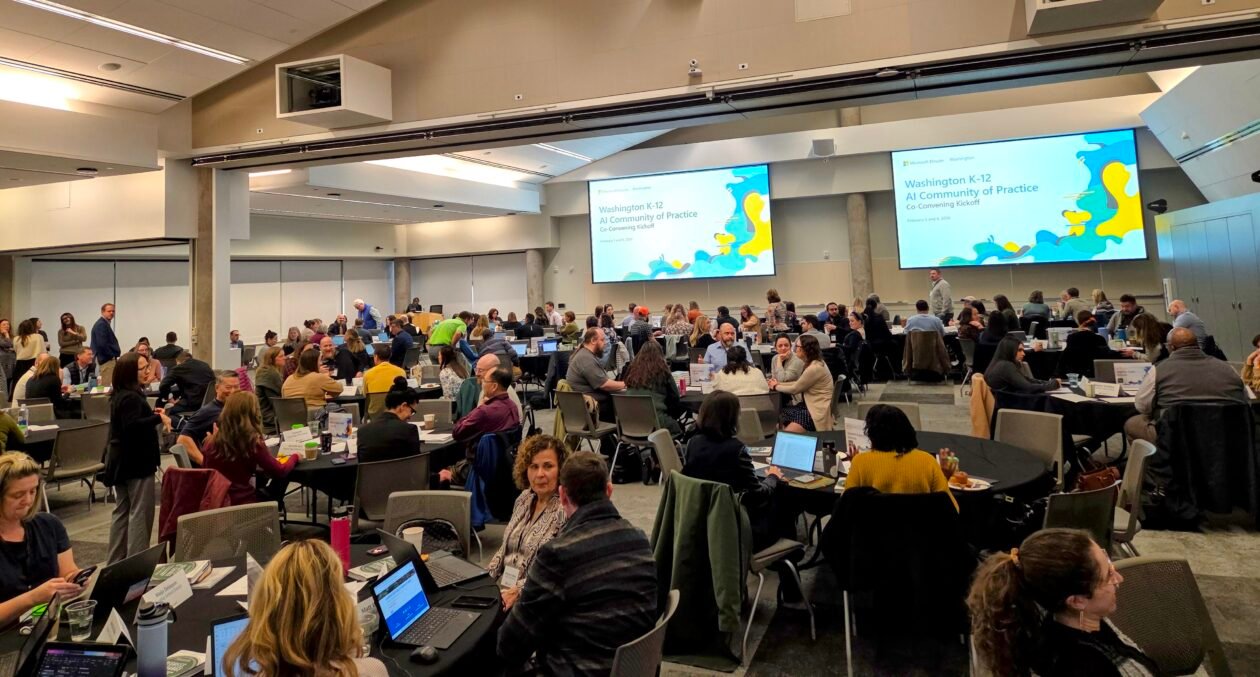
Across the state of Washington, multiple school districts gathered at a Microsoft campus to announce and kick off AI-related educational projects. These initiatives are part of a broader push to explore how artificial intelligence can support teaching and learning, with substantial financial backing from two high-profile sources: Microsoft and the Gates Foundation. The collaborations represent a concerted effort to translate the promises of AI into practical classroom tools—from personalized tutoring and adaptive assessment to content creation and administrative automation.
The immediate takeaway from the event was clear: while districts are eager to experiment with AI to boost student engagement and outcomes, there is a critical need to establish credible ways to measure whether AI implementations actually improve learning. National research presented at the gathering underscored this challenge, noting that even the most ambitious district pilots are struggling to determine a definitive link between AI usage and student achievement. This tension—between excitement for innovation and the demand for rigorous evidence—has become a defining feature of the current AI in education landscape.
What follows is a synthesis of how these Washington district initiatives are structured, the research questions guiding the field, the practical hurdles encountered by schools, and the potential implications for policy, practice, and the broader education system. The discussion places emphasis on governance, evaluation methods, equity considerations, and the pathway toward scalable, sustainable AI-enabled learning environments.
In-Depth Analysis
The momentum behind AI in education has accelerated in recent years as districts seek to personalize learning at scale, automate routine tasks for educators, and provide students with immediate feedback. In this context, the Washington projects funded by Microsoft and the Gates Foundation aim to test AI tools in real classrooms rather than in isolated pilots. The goal is twofold: to understand how AI can support differentiated instruction and to identify the kinds of infrastructure, training, and governance necessary to implement AI responsibly and effectively.
From a program design perspective, districts are pursuing several complementing strategies. First, AI-enabled personalized learning platforms promise to tailor instruction to individual student needs, pacing, and prior knowledge. These platforms can analyze performance data to recommend next steps and curate adaptive content. Second, AI is being explored as a support for teachers, including intelligent tutoring assistants, drafting assistance for lesson planning, and real-time feedback on student work. Third, there is attention to data workflows and privacy safeguards, ensuring that student information used to train and inform AI systems is handled under stringent safeguards and compliance standards.
A central theme across districts is the emphasis on measurement and accountability. The leaders leading these initiatives acknowledge that traditional metrics—such as test scores—may not capture the immediate or long-run impacts of AI deployments. Instead, researchers and district officials are advocating for a more nuanced evaluation framework that combines quantitative indicators with qualitative insights. Potential metrics include student engagement levels, time-on-task, rate of skill mastery, and the quality of feedback loops between students and educators. Process metrics—such as adoption rates, teacher satisfaction, and fidelity of implementation—are also critical. The aim is to build a comprehensive picture of how AI tools are used in practice and how those practices relate to learning outcomes.
One challenge highlighted by researchers is the attribution problem: when students show improvement or stagnation, isolating the effect of AI from other variables (instructional methods, curriculum changes, staffing, or external disruptions) is complex. This difficulty is amplified in real-world school settings where multiple initiatives occur simultaneously. Consequently, scholars emphasize the importance of robust study designs, including quasi-experimental methods, matched comparisons, and longitudinal observation, to strengthen causal inferences about AI’s impact.
Beyond measurement, equity considerations are front and center. District leaders worry that AI tools could exacerbate existing gaps if access to devices, broadband, or high-quality content is uneven. They stress the need for inclusive design—ensuring that AI applications support multilingual learners, students with disabilities, and historically underserved populations. Initiatives are being crafted with attention to device provisioning, offline capabilities, and scalable content that aligns with state standards while mitigating digital divide issues.
The role of governance and ethics is also prominent. As AI systems process student data, districts are developing data governance frameworks that delineate data ownership, access controls, and consent protocols. They are also engaging with families and communities to explain how AI is used, what data is collected, and how privacy is protected. Transparent communication is viewed as essential to building trust and ensuring that stakeholders understand both the potential benefits and the risks involved.
On the financial side, the partnership with Microsoft and the Gates Foundation provides substantial resources to pilot these AI initiatives. The funding supports technology acquisition, professional development for teachers, and research activities designed to generate insights about best practices. However, financial resources alone do not guarantee success. The districts recognize that thoughtful implementation—grounded in pedagogy, evidence, and stakeholder engagement—is necessary to realize meaningful gains for students.
From a policy perspective, the Washington case is part of a larger national dialog about AI in education. Policymakers and education leaders are examining what constitutes effective use of AI in schools, how to regulate data privacy and security, and how to construct evaluation ecosystems that produce credible evidence. The experiences of these districts could inform state and national guidelines on AI adoption, including standards for data governance, curricular alignment, and equitable access.
The event at Microsoft also highlighted the collaborative nature of modern educational innovation. Industry partners, philanthropic organizations, researchers, and district leaders are co-designing pilot programs that address real classroom needs. This collaboration underscores a shift from isolated technology rollouts toward integrated solutions that combine hardware, software, pedagogy, and evaluation in a coherent strategy. The emphasis on learning from ongoing practice—rather than relying solely on controlled experiments—reflects a pragmatic approach to innovation in a dynamic educational landscape.
Despite the forward-looking spirit, participants at the event tempered optimism with realism. The road to scalable, evidence-based AI in education is long and winding. Building a robust evidence base requires not only data but also the capacity to interpret it in meaningful ways. It requires investment in professional development so teachers can leverage AI tools effectively, as well as infrastructure that supports data interoperability and secure information sharing among devices, platforms, and school networks.
The sum of these efforts points to a broader narrative: AI can potentially transform education, but its success hinges on careful design, rigorous evaluation, and a shared commitment to equity and transparency. If implemented thoughtfully, AI tools can augment human instruction rather than replace it, enabling teachers to devote more time to high-impact interactions with students. The districts’ initiatives, backed by Microsoft and the Gates Foundation, represent an important experimental frontier for AI in education—one that seeks to translate promising technology into practical, scalable improvements in learning outcomes.

*圖片來源:Unsplash*
Perspectives and Impact
Experts in education technology caution that the promise of AI should be weighed against the realities of classroom practice. While there is enthusiasm for AI-enabled personalization, there is also recognition that student learning is influenced by a complex set of factors, including classroom culture, instructional quality, family engagement, and school resources. AI can be a powerful tool, but without rigorous measurement and careful implementation, the observed effects may be small or inconsistent.
One notable insight from discussions at the event is the necessity of a multi-method evaluation framework. Relying solely on standardized test scores risks missing important dimensions of learning, such as creativity, problem-solving, collaboration, and resilience. Learner engagement, motivation, and self-regulated learning skills are equally vital outcomes that AI initiatives should track. Pairing quantitative data with qualitative observations, teacher interviews, and student feedback can provide a richer understanding of what works and for whom.
Another impact area is teacher professional development. AI technologies inherently alter instructional workflows, requiring educators to develop new competencies in data interpretation, content customization, and classroom management in AI-augmented environments. The districts’ efforts include targeted professional development as part of deployment plans, aiming to empower teachers to integrate AI tools into daily practice in ways that align with curricula and assessment frameworks.
Equity remains a central concern. The digital divide—disparities in access to devices, connectivity, and high-quality learning resources—poses a risk that AI adoption will widen gaps if not addressed. Districts emphasize the importance of ensuring universal access to AI-enabled learning opportunities and ensuring assistive features and multilingual support are built into AI systems to serve diverse student populations effectively.
Longer-term implications involve policy and governance. The Washington projects could influence state-level guidance on AI use in schools, data privacy standards, and accountability measures. Policymakers are watching to determine how to balance innovation with protections for student data and how to establish evaluation benchmarks that are relevant across districts with varying resources and student demographics. The collaborative model involving industry, philanthropy, and public education institutions may become a blueprint for future partnerships, provided that outcomes remain transparent and outcomes-based.
For communities, transparency about AI deployments is crucial. Parents and community members seek clarity on how AI tools affect teaching and learning, what data is collected, how it is used, and what safeguards exist to prevent misuse. Ongoing communication and opportunities for feedback help build trust and ensure that AI initiatives reflect community values and expectations.
The future trajectory of AI in education, as reflected by these Washington district projects, is likely to hinge on the generation of credible, generalizable evidence. If districts can implement robust evaluation designs and share findings openly, they can contribute to a knowledge base that informs practice beyond their borders. The learning from these efforts could help establish standards and best practices that other districts can adopt, adapt, or critique, thereby advancing the field as a whole.
At the same time, the role of philanthropic and corporate funders will be closely scrutinized. While their support accelerates experimentation, it also raises questions about independence, potential bias, and alignment with broader educational equity goals. Ensuring that research agendas, data governance, and reporting frameworks remain rigorous and independent will be essential for maintaining credibility and public trust.
In sum, the Washington districts’ AI education initiatives exemplify a cautious, collaborative approach to integrating new technology into schooling. The projects aim to harness AI’s potential to personalize learning and support teachers while prioritizing equity, privacy, and robust evaluation. The outcomes of these efforts will matter not only to the participating districts but also to the broader education community seeking to understand how best to implement AI in classrooms at scale.
Key Takeaways
Main Points:
– Washington school districts launched AI education projects with backing from Microsoft and the Gates Foundation.
– National research presented at the event indicates difficulty in measuring AI’s impact on student learning.
– Implementations emphasize personalized learning, teacher support, data governance, and equity considerations.
Areas of Concern:
– Attribution: isolating AI’s effect on outcomes in real-world classrooms is challenging.
– Equity: ensuring universal access and avoiding widening gaps due to the digital divide.
– Data privacy and governance: managing student data responsibly in AI systems.
Summary and Recommendations
The Washington state initiatives illustrate a deliberate, collaboration-driven approach to integrating AI into K-12 education. By pairing district-level experimentation with the financial and technical strength of Microsoft and the Gates Foundation, educators are able to pilot AI-enabled tools at scale and explore how these tools can fit within established curricula and assessment structures. However, the event’s accompanying national research underscores a critical reality: without robust measurement and transparent reporting, it is difficult to demonstrate meaningful learning gains attributable to AI. To maximize the likelihood of future success, districts should pursue a multi-pronged strategy that combines rigorous evaluation with thoughtful implementation.
Key recommendations include:
– Develop and adopt a standardized evaluation framework that integrates both quantitative outcomes (e.g., mastery of skills, engagement metrics) and qualitative indicators (e.g., teacher and student experiences).
– Invest in longitudinal studies that track student progress over time and across different subjects, cohorts, and schools to better understand AI’s long-term effects.
– Prioritize equitable access by ensuring devices, connectivity, and high-quality AI-enabled content are available to all students, with particular attention to multilingual learners and students with disabilities.
– Strengthen data governance, privacy protections, and transparent communication with families and communities about data usage and safeguards.
– Build teacher capacity through targeted professional development that focuses on integrating AI into pedagogical practice, curriculum alignment, and interpretation of AI-driven insights.
– Encourage open sharing of results and lessons learned to inform policy and practice beyond the participating districts.
If these conditions are met, AI-enabled education projects backed by major philanthropic and corporate partners can contribute to a more personalized, efficient, and effective learning environment. The Washington district initiatives provide a valuable, real-world laboratory to explore both the potential and the limits of AI in classrooms, with the ultimate objective of delivering measurable improvements in student learning while upholding core values of equity, privacy, and public trust.
References
- Original: https://www.geekwire.com/2026/can-ai-pass-this-test-school-districts-start-projects-backed-by-microsoft-and-gates-foundation/
- 1) National Education Policy Center discussions on AI in schools and evaluation frameworks
- 2) U.S. Department of Education guidance on student data privacy and AI tools
- 3) Research articles on measuring AI impact in education and attribution challenges

*圖片來源:Unsplash*