TLDR
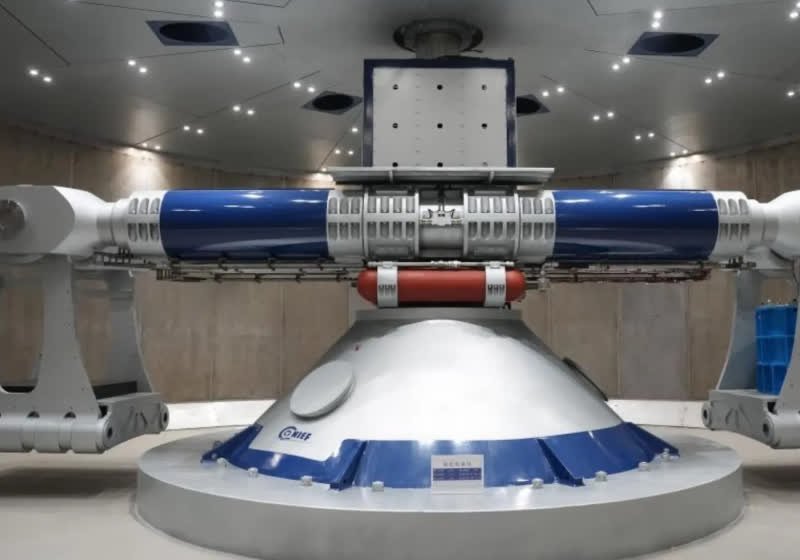
• Core Points: CHIEF1900, developed by Shanghai Electric Nuclear Power Group, is the latest milestone in China’s CHIEF program, delivering 1,900 g and surpassing CHIEF1300 in capability.
• Main Content: The system, part of the Centrifugal Hypergravity and Interdisciplinary Experiment Facility (CHIEF), advances high-gravity research and interdisciplinary experimentation beyond previous models.
• Key Insights: Higher g-forces enable unprecedented material, biological, and physical studies, but require rigorous safety, calibration, and facility infrastructure.
• Considerations: Construction scale, operational costs, and data integration across disciplines pose challenges for widespread adoption.
• Recommended Actions: Monitor ongoing experiments, assess safety protocols, and evaluate cross-disciplinary collaboration opportunities to maximize CHIEF1900’s research impact.
Content Overview
China has positioned itself at the forefront of high-gravity research by introducing CHIEF1900, the latest system in the Centrifugal Hypergravity and Interdisciplinary Experiment Facility (CHIEF). Built by Shanghai Electric Nuclear Power Group, CHIEF1900 generates up to 1,900 times Earth’s gravity (1,900 g), a leap beyond its predecessor, CHIEF1300, which was launched only months earlier. The rapid progression from CHIEF1300 to CHIEF1900 underscores China’s commitment to advancing experimental capabilities that leverage extreme centrifugal forces for interdisciplinary science. The CHIEF program situates these facilities within a broader national strategy to develop core competencies in materials science, life sciences, physics, and engineering through high-g environments. CHIEF1900 embodies both incremental innovation and a bold step forward in the scale of achievable g-forces, enabling researchers to probe phenomena under extreme stress, test novel materials, and study biological and physiological responses to intense gravity. The project also highlights the growing role of industrial partners, such as Shanghai Electric Nuclear Power Group, in advancing scientific infrastructure that supports cutting-edge research with potential applications across energy, aerospace, and manufacturing sectors.
In-Depth Analysis
CHIEF1900 represents a significant progression in the CHIEF initiative, which centers on centrifugal hypergravity to simulate environments far beyond standard terrestrial gravity. The system’s most notable attribute is its capability to produce 1,900 g, a substantial increase over previously deployed hypergravity platforms. This enhancement expands the experimental envelope for researchers investigating material properties under extreme compression, phase transitions, and fracture mechanics, as well as biological processes that respond to elevated gravitational loads.
Key technical considerations include the following:
System scale and mechanics: Achieving 1,900 g requires precise rotor design, bearing technology, and balance controls to minimize vibration and fatigue. The structural integrity of the centrifuge and its containment systems must withstand prolonged operation at high rotational speeds, with robust remote monitoring and emergency shutdown capabilities.
Safety and control systems: Extreme hypergravity environments pose heightened risks to operators and samples. CHIEF1900’s design likely incorporates layered safety protocols, including fail-safe braking, redundant sensors, real-time health monitoring of critical components, and advanced interlocks to prevent unsafe operating conditions.
Calibration and data accuracy: At high g-forces, sensor performance can drift, and environmental conditions within the rotor chamber may influence measurements. Calibration strategies, sensor redundancy, and validated data processing pipelines are essential to ensure reliable results across experiments spanning materials science to biology.
Interdisciplinary potential: The facility supports research across multiple domains. Materials scientists can examine high-pressure phase behavior, porosity changes, and failure modes of novel composites. Biologists may investigate cellular and organismal responses to sustained hypergravity, contributing to fields like space biology and physiology. Engineers could assess the reliability of structures, components, and systems under extreme loads, informing design criteria for aerospace, defense, and energy sectors.
Comparative context: CHIEF1900 follows the launch of CHIEF1300, positioning the program within a rapid development trajectory. The deployment cadence suggests a strategy of scaling experimentation capability bit by bit, allowing researchers to validate concepts on progressively more demanding platforms before committing to larger-scale facilities or more complex experiments.
Operational and strategic implications arise from this advancement. First, the ability to reach 1,900 g opens up experimental opportunities previously constrained by lower gravity simulations, enabling more rigorous stress testing and discovery in materials science. Second, the interdisciplinary nature of CHIEF enhances collaboration across fields, potentially accelerating the translation of research findings into practical technologies. Third, the involvement of Shanghai Electric Nuclear Power Group emphasizes the role of industry players in funding, constructing, and maintaining high-end research infrastructure, reflecting a growing model where government-led science goals align with industrial capability.
However, challenges accompany these progress gains. High-g systems demand substantial energy consumption, sophisticated maintenance, and specialized expertise to operate safely. Data integration from hypergravity experiments must be harmonized with external datasets to create a cohesive knowledge base. The economic and logistical costs of sustaining such facilities over long time horizons are non-trivial and warrant careful budgeting, long-term planning, and international collaboration where appropriate to share lessons learned and best practices.
Further context helps frame CHIEF1900 within a broader scientific landscape. Hypergravity research traces back to investigations of gravity’s influence on materials and biology, with early pioneers exploring how gravity affects crystallization, diffusion, cellular development, and tumor growth. Contemporary efforts, including CHIEF1900, aim to systematically map gravity-dependent phenomena, offering pathways to novel materials with enhanced properties, improved understanding of fundamental physical processes, and insights into how life might fare in non-Earth gravity environments. The potential applications range from more resilient aerospace components to improved medical and industrial processes that exploit gravity-induced effects in controlled settings.
In terms of experimental design, researchers aiming to leverage CHIEF1900 must carefully articulate hypotheses that are suited to extreme gravity contexts. This includes selecting materials with properties likely to exhibit pronounced shifts under high g, establishing measurable parameters (e.g., phase transition points, mechanical strength, diffusion rates), and devising biological readouts that can survive or reveal meaningful responses to elevated gravity while remaining interpretable in laboratory conditions. A robust experimental plan would also consider replication strategies, control conditions at lower gravity levels, and cross-validation with simulations and complementary high-pressure, high-temperature, or microgravity experiments to parse gravity-specific effects from other stressors.

*圖片來源:Unsplash*
The CHIEF program’s trajectory hints at several future directions. If CHIEF1900 proves effective in delivering stable, reproducible results at 1,900 g, researchers may push toward higher g capabilities, refine rotation control for even more precise experiments, and broaden the suite of available experimental modules within the facility. Long-term, the integration of hypergravity data with other extreme environments—such as ultrahigh pressure or high-temperature contexts—could foster a more holistic understanding of material behavior and biological resilience under compounding stressors. There is also potential for international collaboration, knowledge-sharing platforms, and joint research initiatives that leverage CHIEF’s capabilities while aligning with global scientific priorities.
From an innovation and policy perspective, CHIEF1900 signals China’s strategic emphasis on megascience infrastructure that can attract international researchers, catalyze interdisciplinary research ecosystems, and generate downstream economic and technological benefits. The project underscores the importance of public–private partnerships in building large-scale scientific installations, as well as the need for rigorous safety and governance frameworks to manage the risks associated with operating high-energy, high-stress laboratories. As CHIEF1900 and analogous facilities mature, policy-makers and researchers will likely pursue standardized methodologies for data reporting, ethical considerations in hypergravity biology experiments, and frameworks for equitable access to such powerful research platforms.
In summary, CHIEF1900 represents a landmark in hypergravity research, extending capabilities beyond its recent CHIEF1300 predecessor and broadening the research horizons for multiple disciplines. The system enables new explorations into how materials and living systems behave under extreme gravitational forces, with the potential to drive scientific discovery and technological innovation across energy, aerospace, and advanced manufacturing sectors. Continued development, careful governance, and strategic collaboration will determine how effectively CHIEF1900 translates its high-g potential into tangible scientific and societal benefits.
Perspectives and Impact
The unveiling of CHIEF1900 contributes to a shifting landscape in high-g research infrastructure, with implications across science policy, industry participation, and global collaboration. As nations invest in megascience facilities, CHIEF1900 exemplifies how targeted investments can yield scalable platforms that support diverse research portfolios. The system’s success will hinge on sustained funding, the ability to attract international researchers, and the development of standardized methodologies for experimentation under extreme gravity. By enabling deeper inquiries into the interplay between gravity and material behavior, CHIEF1900 could influence design paradigms for components subjected to high-stress environments in sectors such as aviation, space exploration, and energy generation. Moreover, the project highlights the importance of interdisciplinary ecosystems where engineers, physicists, biologists, and materials scientists converge to address complex questions that no single discipline can resolve alone.
Looking ahead, several future implications merit consideration. First, as data accumulates from CHIEF1900 experiments, researchers will gain more reliable models for gravity-dependent phenomena, informing both theoretical frameworks and practical applications. Second, the facility could catalyze new industries or improvements in existing ones, especially where high-stress materials performance is critical. Third, CHIEF1900 may inspire similar investments in other countries, fostering a more dynamic global research network focused on extreme-gravity science. Lastly, education and talent development around hypergravity research will be essential to sustain long-term progress, suggesting opportunities for training programs, partnerships with universities, and public outreach to cultivate broader understanding of high-g science.
These dynamics collectively suggest that CHIEF1900 is not merely a laboratory achievement but a strategic instrument for advancing scientific knowledge, technical capability, and economic competitiveness. The outcomes will depend on how researchers design experiments, how facilities are maintained, and how results are translated into practical innovations and policy decisions.
Key Takeaways
Main Points:
– CHIEF1900 produces 1,900 g, marking a leap beyond CHIEF1300 in the CHIEF program.
– The facility enables interdisciplinary research across materials science, biology, and engineering.
– Safety, calibration, and cross-disciplinary collaboration are essential for realizing meaningful results.
Areas of Concern:
– High operational costs and energy requirements.
– Safety risks associated with extreme gravity experiments.
– Data integration and standardization across diverse research domains.
Summary and Recommendations
China’s CHIEF1900 represents a consequential advancement in hypergravity research infrastructure, reflecting a strategic push to expand capabilities for interdisciplinary experimentation under extreme gravitational forces. By facilitating studies that probe material behavior, biological responses, and engineering performance at 1,900 g, CHIEF1900 broadens the investigative horizon beyond what CHIEF1300 offered and positions researchers to explore innovative materials, processes, and biological phenomena that respond uniquely to high gravity. The potential benefits span aerospace, energy, manufacturing, and life sciences, with implications for design principles, safety standards, and policy frameworks governing high-energy research facilities.
To maximize CHIEF1900’s impact, ongoing priorities should include strengthening collaborative networks that bring together scientists from diverse fields, ensuring robust safety and maintenance programs, and developing standardized data protocols to enable cross-study comparisons. Strategic funding should support long-term operation, sample-sharing arrangements, and international partnerships to exchange knowledge and best practices. In parallel, researchers should craft well-defined experimental programs that clearly articulate hypotheses, measurable outcomes, and replication plans to build a coherent body of evidence around gravity-dependent phenomena. If managed effectively, CHIEF1900 could accelerate discoveries that not only advance scientific understanding but also translate into tangible technologies and industrial benefits.
References
- Original: https://www.techspot.com/news/110795-china-new-hypergravity-machine-produces-1900-times-earth.html
- Additional references:
- CHIEF program overview and facilities (unofficial institutional pages or press materials);
- Reviews on hypergravity research methods and applications in materials science;
- Industry–government collaboration models for megascience infrastructure.

*圖片來源:Unsplash*