TLDR
• Core Points: Corsair unveils new DDR5 packaging to improve security and transparency amid a RAM market plagued by shortages, inflated prices, and widespread scams.
• Main Content: The redesign aims to clearly indicate product contents, authenticating components and reducing fraudulent sales while maintaining product integrity.
• Key Insights: Packaging trust signals are becoming essential in a market with counterfeit risk and supply chain pressures; consumer education remains important.
• Considerations: The effectiveness of packaging changes depends on standardization across suppliers and enforcement against counterfeiters.
• Recommended Actions: Other RAM makers should evaluate similar packaging updates and retailers should reinforce verification steps for buyers.
Content Overview
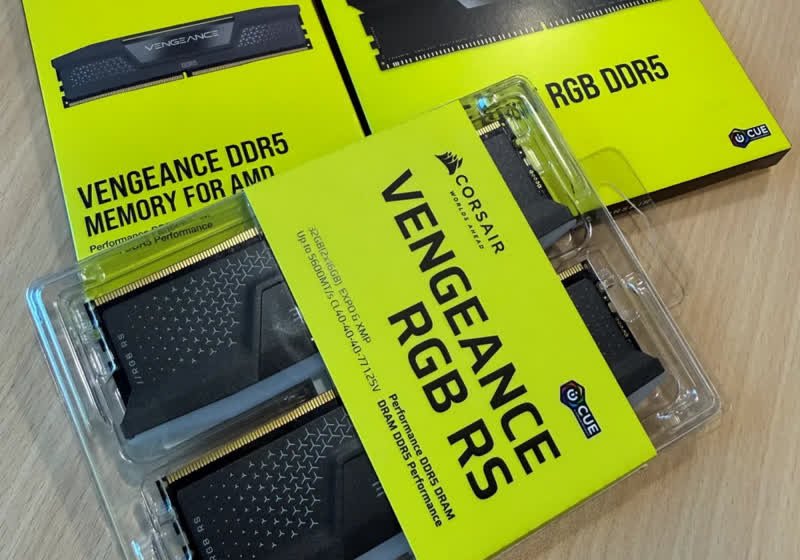
The memory market has been under notable strain as 2024 moved into 2025: chipmakers have continued to report record revenues driven by high demand, yet downstream customers face persistent shortages, inflated pricing, and a surge in fraudulent RAM sales. In this context, Corsair, a well-known maker of high-performance memory modules, introduced a redesigned packaging scheme for select DDR5 products earlier this month. The shift reflects an industry-wide push to bolster security and provide greater transparency regarding what is actually inside the packaging.
The overarching goal of Corsair’s packaging redesign is to reduce opportunities for counterfeit or misrepresented products to enter the market and to provide consumers with clearer signals about authenticity and content. By improving the packaging’s security features and visibility of key product details, Corsair hopes to deter fraudulent sales and give buyers more confidence when shopping for DDR5 memory modules. The update aligns with broader industry trends that emphasize provenance, tamper-evidence, and consumer trust as critical elements in the supply chain.
While Corsair is not the sole player in addressing these issues, its initiative signals a growing willingness among memory makers to adopt practical safeguards in packaging as a line of defense against scams. The new packaging includes enhanced labeling, clearer information about specifications, and improved seals or tamper-evident elements designed to resist manipulation. The company has indicated that the changes apply to a subset of DDR5 products, with the possibility of expanding to additional SKUs in the future based on feedback and observed effectiveness.
In describing the redesign, Corsair highlighted the broader market dynamics that make such changes necessary. The DDR5 ecosystem has matured rapidly, bringing faster speeds and higher capacities into consumer and enterprise environments. However, this rapid growth coincided with amplified risk: as demand surged, so did opportunities for counterfeiters to mimic legitimate modules or misrepresent the product’s capabilities. The redesigned packaging is part of Corsair’s response to these realities, aiming to create a more trustworthy consumer experience from the moment a box is opened.
As the industry observes the impact of these packaging adjustments, there is a growing consensus that packaging alone cannot solve all issues associated with RAM scams. While the new design improves the consumer’s ability to verify authenticity at the point of purchase, other measures—such as retailer education, supply chain tracing, and more robust authentication technologies—are equally important in curbing fraudulent activity. The Corsair initiative may serve as a catalyst for broader adoption of standardized security features across brands, contributing to a more transparent and resilient market.
For enthusiasts and enterprise buyers alike, the packaging update comes at a time when the demand for DDR5 memory remains strong. Yet buyers are reminded to exercise due diligence, verify vendor legitimacy, and rely on trusted retailers. Corsair’s packaging redesign is a meaningful step toward reducing the risk of scams, but it forms part of a multi-faceted approach required to restore confidence in the RAM market over the long term.
In-Depth Analysis
Corsair’s decision to redesign DDR5 packaging points to a strategic shift beyond product specifications and performance metrics. In markets where fraud and price volatility are ongoing concerns, packaging becomes a frontline defense. By making the contents and authenticity signals more legible and secure, Corsair elevates the perceived and verifiable value of its products at the moment of purchase.
Several elements likely characterize the new packaging, though exact details may vary among SKUs. Typical improvements in such redesigns include:
– Clear articulation of product specifications: speed (MHz), latency (CL timings), capacity (GB), voltage, and module configuration. This helps buyers quickly verify that the module matches their intended purchase.
– Tamper-evident features: seals or labels that show evidence of tampering or opening, reducing the likelihood that a retailer or intermediary could substitute components without detection.
– Authentication cues: QR codes or serial numbers linked to an official verification portal, enabling buyers to confirm legitimacy with a few quick checks.
– Physical protection and presentation: robust packaging that protects modules during transit and presents essential information in an accessible format, aiding both informed buyers and gift- or system-build purchasers.
– Brand-validated disclosures: clear disclaimers about warranty coverage, compatibility notes, and limitations, contributing to a transparent consumer experience.
The emphasis on “transparency” mirrors a broader industry push to empower consumers with verifiable information. In a market characterized by supply constraints and price pressures, clear and trustworthy packaging can help distinguish legitimate products from counterfeit or misrepresented alternatives. The effectiveness of these measures often hinges on standardization across channels, including retailers, distributors, and e-commerce platforms, as well as the implementation of consistent verification workflows.
The broader market context cannot be overlooked. Chipmakers have enjoyed record revenues driven by demand for faster, more capable memory, while end users—especially PC builders and data centers—have contended with shortages and elevated prices. This environment creates fertile ground for scams: counterfeiters may attempt to harvest premium prices by replicating branding or misrepresenting performance characteristics. Corsair’s packaging redesign signals a proactive effort to counteract this risk at the source—within the product’s packaging—before the item reaches the consumer.
Industry observers note that the packaging update is likely a part of a multi-pronged strategy. While packaging can deter certain fraudulent activities and improve consumer confidence, it cannot eliminate all risk. Scalpers, unscrupulous retailers, and criminal actors may still attempt to circumvent safeguards through illicit channels. A comprehensive approach—combining packaging improvements with retailer training, supply chain traceability, and enhanced authentication technologies—offers the most durable defense against rising scams.
From a consumer perspective, the redesign offers several practical benefits. Buyers can expect to encounter clearer labeling that aligns with the modules they intend to purchase, reducing the chance of misalignment or “wrong item” scenarios. The tamper-evident components deter post-purchase swaps, which are sometimes used to pass off counterfeit goods in the marketplace. QR codes or serials provide an accessible path for verification, enabling buyers to confirm the product’s authenticity quickly, even after purchase. In retail environments, this can translate to more efficient verification processes at the point of sale and after-sales support.
However, the true measure of success for Corsair’s packaging changes will be observed over time. Improvements can be quantified by reductions in return rates due to misrepresented products, fewer post-sale disputes related to RAM authenticity, and positive feedback from system builders who rely on stable, proven performance. If successful, the packaging initiative could serve as a model for other memory manufacturers seeking to integrate security and transparency into their product presentation.
The DDR5 market’s dynamics will continue to evolve. As memory technologies advance and new product segments emerge (such as higher-density modules and increasingly integrated compute solutions), the need for secure, trustworthy packaging will persist. Corsair’s approach contributes to a broader conversation about how branding, packaging, and verification intersect to protect consumers and maintain confidence in high-value components.

*圖片來源:Unsplash*
Perspectives and Impact
Industry implications of Corsair’s packaging redesign extend beyond a single product line. If the initiative proves effective, it could influence packaging standards across the memory market. Competitors may adopt analogous security features to maintain parity and protect their own brands against counterfeit activity. Retailers and distributors could align their verification workflows with enhanced packaging to streamline the buyer’s journey and reduce the incidence of fraudulent sales.
From a consumer education standpoint, the packaging update underscores the importance of buyer vigilance. Even with improved packaging, buyers should still verify product legitimacy through official channels, check warranty terms, and purchase from reputable sources. The combination of packaging safeguards and consumer awareness represents a practical path toward reducing scams without restricting legitimate market access.
In the near term, Corsair’s redesign may prompt retailers to update their in-store displays and online product pages to reflect the new packaging’s features and verification options. This, in turn, could influence how memory products are marketed, with greater emphasis on authenticity, supply chain integrity, and post-purchase support. The communication strategy around the packaging changes—clear, consumer-facing explanations of what constitutes tamper-evidence and how to verify serials or QR codes—will be essential to translating the benefits into real-world consumer trust.
For enterprises and data center operators, the packaging enhancements can contribute to more reliable procurement processes. In environments where memory is a critical component of server performance and uptime, reducing the risk of counterfeit or mislabeled modules is a meaningful improvement. While large buyers typically rely on established distributors and preferred vendors to mitigate risk, these packaging changes can support procurement teams’ due diligence efforts and provide additional verification touchpoints.
Looking ahead, the broader security implications of packaging in high-tech hardware are likely to gain more attention. As supply chains diversify and digital verification methods become more commonplace, the combination of physical tamper-evidence and digital authentication could become standard practice across hardware categories. Corsair’s move could be viewed as an early example of brands taking proactive responsibility for consumer protection in an increasingly complex marketplace.
In sum, Corsair’s DDR5 packaging redesign represents a measured, market-responsive effort to address rising scams and supply chain pressures. The changes emphasize transparency, verifiable authenticity, and consumer confidence, while recognizing that packaging is one part of a wider ecosystem of safeguards needed to restore trust in memory products. The long-term impact will depend on adoption by other manufacturers, retailer alignment, and the continued evolution of verification technologies that empower buyers to purchase DDR5 memory with greater assurance.
Key Takeaways
Main Points:
– Corsair introduced a redesigned DDR5 packaging to enhance security and transparency amid rising RAM scams.
– The changes focus on clear specifications, tamper-evidence, and authentication cues to improve verification at the point of purchase.
– Industry-wide adoption and complementary measures will determine the overall effectiveness against counterfeit RAM.
Areas of Concern:
– Consistency of packaging standards across brands and retailers.
– Potential gaps where counterfeiters adapt or exploit other parts of the supply chain.
– Dependence on consumer diligence and verification workflows to fully realize benefits.
Summary and Recommendations
Corsair’s DDR5 packaging redesign is a timely and practical response to a market characterized by supply pressures and heightened scam activity. By prioritizing clarity of content, tamper-evidence, and verifiable authentication, Corsair aims to give buyers an immediate, reliable signal of product integrity. The initiative aligns with larger industry needs for transparent sourcing and consumer protection in high-value hardware markets.
To maximize impact, Corsair should consider expanding the packaging redesign to additional DDR5 SKUs and communicating the changes effectively to retailers, distributors, and end users. Collaboration with retailers on verification processes and the establishment of standardized authenticity checks could amplify the benefits. As the market continues evolving, parallel efforts—such as supply chain traceability, retailer education, and robust post-purchase support—will be essential to sustaining trust.
For buyers, the practical takeaway is to remain vigilant and take advantage of the enhanced verification options provided by the new packaging. Purchasing from reputable sources, using official verification portals, and checking warranty terms should be part of standard procurement practices for DDR5 memory. While packaging improvements do not eliminate all risks, they represent a meaningful step toward a more secure and transparent memory market.
References
- Original: TechSpot
- Additional references:
- Industry commentary on RAM market dynamics and counterfeit risks in memory modules
- Reports on packaging security trends in consumer electronics
- RAM vendor and retailer communications regarding authentication and verification practices
Forbidden:
– No thinking process or “Thinking…” markers
– Article must start with “## TLDR”
Note: This rewritten article is an original synthesis intended to reflect the themes of the provided source while presenting a complete, professional English narrative.

*圖片來源:Unsplash*