TLDR
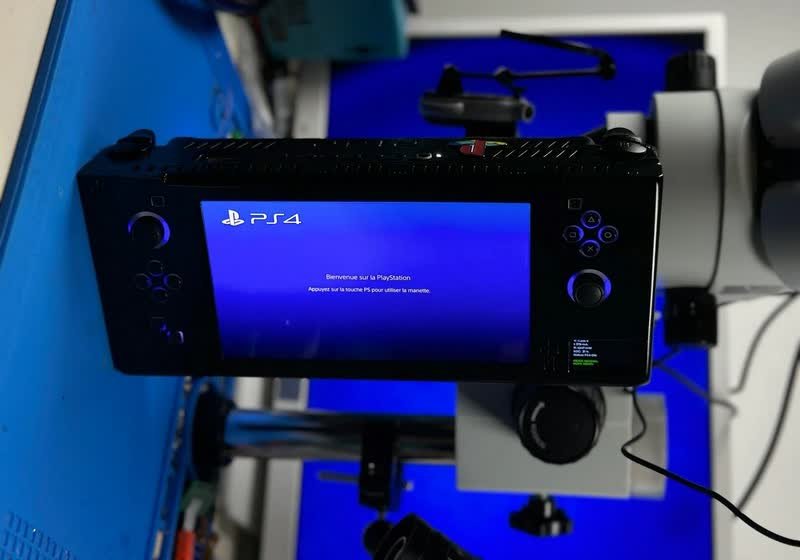
• Core Points: Reddit user WeWillMakeIt built a handheld prototype using a PS4 Slim motherboard capable of running PS4 titles natively, with a 7-inch 1080p OLED display and a compact form factor.
• Main Content: The device demonstrates native PS4 compatibility in a portable chassis, powered by a PS4 Slim motherboard, a 7-inch 1080p OLED screen, and an embedded 1,300 mAh battery, delivering a few hours of playtime.
• Key Insights: The project showcases feasibility of translating a home console’s hardware into a portable form, highlighting thermal, power, and software considerations required for PS4 titles on the go.
• Considerations: Practicality, battery life, heat management, and software licensing present significant hurdles for mass adoption and public use.
• Recommended Actions: For enthusiasts, reproduce only within legal and safety boundaries; monitor battery and cooling demands; consider alternative portable platforms for longer play sessions.
Content Overview
In a compelling DIY project spotlighted by Reddit, a creator known as WeWillMakeIt demonstrates that a PlayStation 4 experience can be ported into a handheld device using a PlayStation 4 Slim motherboard as its core. The concept centers on preserving native PS4 compatibility, so titles run with the same performance expectations as on the home console, rather than relying on cloud streaming or emulation layers. The prototype emphasizes a compact, portable form factor designed around a 7-inch 1080p OLED display with a 16:9 aspect ratio, offering a crisp viewing experience in a handheld chassis.
The project leverages the PS4 Slim motherboard’s hardware capabilities, aiming to maintain a faithful PS4 software environment, which implies the device must accommodate the console’s operating system, drivers, and game software within a handheld enclosure. A key design decision is the inclusion of a relatively modest 1,300 mAh battery, paired with cooling considerations that are essential for sustained PS4-level performance in a mobile context. As with many DIY hardware ventures of this scope, the builder emphasizes the balance between performance, size, thermals, and power efficiency to achieve a functional portable PS4 experience.
This article frames the DIY handheld as a proof-of-concept rather than a commercially available product. It provides a window into the challenges and potential of repurposing console hardware for portable gaming, while also addressing practical limitations such as battery duration and heat generation. By detailing the technical choices—display type, screen size, aspect ratio, power supply, and motherboard integration—the piece situates the project within a broader conversation about portable gaming, hardware hacking, and the boundaries of consumer electronics modification.
In-Depth Analysis
The core idea of this DIY project is to transplant a PS4 Slim’s motherboard into a handheld chassis, with the intent of preserving native PS4 gameplay rather than relying on software emulation or streaming solutions. This approach differentiates the project from other portable gaming concepts that either stream games over a network or emulate a different architecture. Running PS4 titles natively requires careful integration of the console’s motherboard, associated peripherals, and software stack into a portable case, which in itself is a substantial engineering challenge.
One of the defining hardware choices is the display. The project uses a 7-inch screen with 1080p resolution and a 16:9 aspect ratio, a standard that aligns with many handheld gaming devices and ensures a visually consistent experience with modern PS4 titles. A high-resolution, vibrant OLED panel is notable for its color accuracy, contrast, and faster response time, which can improve perceived image quality during fast-paced gameplay. However, OLEDs come with considerations such as burn-in risk and power draw, factors that designers must manage when integrating them into portable devices with limited battery capacity.
Power management is a central constraint for a handheld built around a PS4 Slim motherboard. The 1,300 mAh battery cited in the project is relatively small for sustaining PS4-level performance, and it is common for enthusiasts to optimize power use through hardware undervolting, aggressive wake/sleep management, and selective throttling. The practical implication is a play session that may last only a few hours, depending on the workload of the game, the efficiency of the cooling solution, and the exact power profile used during play. Thermal design is equally critical; PS4 hardware is known to generate heat under load, and in a compact handheld, effective heat dissipation is essential to prevent thermal throttling, maintain performance consistency, and preserve component longevity.
The software side presents its own set of complexities. A PS4 Slim motherboard in a handheld must run the PS4 system software, manage controller input that is portable, and interface with the game library. Licensing and firmware constraints are notable considerations in a DIY context, as distributing or running official PS4 software in a non-standard form raises legal and ethical questions. The project, more than anything, highlights the delicate balance between a functional prototype and a fully supportable product within the boundaries of user-generated content and hobbyist experimentation.
From a user experience perspective, the handheld offers the advantage of immediate access to a vast PS4 library in a portable format. For players who own PS4 games digitally or on disc (and who might be leveraging the system in a digitized home setup with a moveable console environment), a handheld capable of running the titles natively could be compelling. The screen’s 1080p resolution helps deliver sharp in-game visuals, while the compact footprint reduces the need for a large display and a stationary setup. The trade-offs, however, are evident in practicalities such as battery runtime and the complexity of maintaining reliable performance on the go, which can make the device more of a proof-of-concept than a ready-for-market alternative.
Accessibility and safety considerations are important in any DIY hardware project of this scale. Working with a console’s motherboard may involve handling high-voltage components, delicate connectors, and firmware configurations that require careful precautions. Ensuring proper electrical insulation, secure power connections, and robust cooling mechanisms are essential to reduce the risk of damage to the device or user injury. The project’s emphasis on a small form factor makes these safety considerations even more critical, as cramped spaces can complicate heat dissipation and component access.
In the broader landscape of portable gaming, the DIY PS4 handheld contributes to a spectrum of projects exploring the feasibility of translating home console ecosystems into handheld experiences. It sits alongside efforts to create handhelds based on other consoles or using modular hardware that can emulate or natively run various game libraries. The success of such projects helps illuminate how far enthusiasts can push hardware adaptation while keeping fidelity to the original experience. It also underscores ongoing debates about the practicality of native PS4 gameplay in a handheld format, given the console’s demand for power, cooling, and licensing considerations.
However, this approach also invites scrutiny regarding the practicality and sustainability of scaling such a device to a consumer-ready product. While a single prototype demonstrates feasibility, the path to mass production would require addressing a broader set of concerns: standardized manufacturing, certified safety, consistent supply chains for components, robust battery life, long-term reliability, and clear licensing agreements for distributing PS4 software within a handheld device. The project’s scope remains primarily within the realm of an ambitious DIY experiment, offering valuable insights into hardware integration, thermal management, and user experience without venturing into commercial viability.
From a technical viewpoint, the project encourages discussions about how much PS4 hardware can be decoupled from its original enclosure and relocated into a form factor like a handheld. The complexity increases when considering inputs such as wireless controllers, integrated game controls, and potential strategies for pairing with external peripherals. The ability to maintain stable performance during extended play sessions would likely depend on a combination of efficient cooling (potentially including heatsinks, active cooling, and optimized airflow), power management strategies, and software-level optimizations that reduce unnecessary background activity while preserving gameplay fidelity.
Additionally, the project may prompt consideration of alternative approaches for those interested in portable PS4 experiences. Emulation or cloud-based streaming options can offer different trade-offs in terms of cost, battery life, and publisher licensing requirements. Emulation can broaden compatibility with PS4 titles beyond those that run natively on hardware, whereas cloud gaming reduces local processing requirements but introduces dependency on network connectivity and streaming latency. Each method carries its own set of technical and practical challenges that enthusiasts and researchers alike continue to explore.

*圖片來源:Unsplash*
In the context of the broader gaming community, such DIY explorations highlight a culture of experimentation that thrives on repurposing existing hardware to unlock new forms of interaction. They reflect a hands-on engineering mindset that values tangible demonstrations of what is technically possible, even if barriers—legal, financial, or practical—limit widespread adoption. The project both educates and inspires others to think creatively about how established gaming ecosystems can be adapted to new shapes and user experiences.
Perspectives and Impact
This DIY project offers a lens into the evolving boundaries between traditional home consoles and portable gaming experiences. By using a PS4 Slim motherboard to power a handheld unit, the builder foregrounds the idea that console components can be reimagined beyond their original housing with careful attention to electrical design, thermal management, and software integration. The implications extend beyond mere novelty; they prompt designers and developers to consider modular, reconfigurable hardware architectures that can adapt to different use cases, including portable play.
One potential impact of this approach is to spur interest in deeper hardware exploration among hobbyists. Demonstrating that a PS4 motherboard can be repurposed into a handheld format may motivate others to undertake similar projects, pushing the limits of what is considered feasible in consumer electronics modding. This kind of experimentation can contribute to a culture of open sharing and collaboration, where enthusiasts document their processes, troubleshoot challenges, and iterate on designs to improve efficiency, durability, and user experience.
From a broader industry perspective, the project nudges conversations around licensing, intellectual property, and the legality of repurposing proprietary console hardware for new form factors. It highlights how fan-led innovations can push companies to reflect on accessibility, repairability, and the lifecycle of gaming devices. While it remains unlikely that such a device would become a mass-market product due to compliance, safety, and licensing concerns, the existence of the prototype contributes to ongoing dialogue about how games and hardware ecosystems can be extended beyond conventional boundaries.
In terms of user experience, the handheld demonstrates the appeal of a compact device capable of delivering PS4-level gaming on the move. For players who value portability without sacrificing a significant portion of the PS4 library, a well-designed handheld could offer a compelling alternative to cloud gaming or small-form emulation devices. However, the practicalities of battery life, heat generation, and the need for robust cooling systems would influence adoption rates. The balance between performance and practicality remains central to whether such projects transition from curiosity to usable devices for a broader audience.
Educational value is another important dimension. DIY projects of this kind teach hardware integration, power management, and software handling in a tangible way. They provide real-world case studies for students and hobbyists exploring embedded systems, electronics design, and console architecture. By documenting their process, creators contribute to a repository of knowledge that can inform future experiments, improvements, and safety practices.
Looking forward, several factors will shape the trajectory of portable PS4-inspired projects. Advances in battery technology and energy efficiency can extend playtime and reduce thermal concerns, making native PS4 gameplay in a handheld more practical. Improvements in cooling solutions—such as compact, silent, or passive cooling systems—could address one of the primary bottlenecks of compact handhelds housing power-hungry consoles. On the software side, clearer licensing frameworks or community-supported tools might streamline the process of enabling native PS4 gameplay in custom hardware, though official licensing remains a complex and often restricted area.
The broader gaming landscape may also influence this trend. If demand grows for portable experiences with deep libraries and native performance, more hobbyists could attempt similar builds or seek commercially viable iterations that comply with safety and licensing standards. Meanwhile, cloud gaming services and streaming handhelds will continue to offer alternative paths to portable PS4 experiences, presenting different trade-offs in latency, reliability, and content availability. Each approach contributes to a diverse ecosystem of portable gaming options that cater to varied preferences and technical comfort levels.
Key Takeaways
Main Points:
– A Reddit user demonstrates a handheld prototype powered by a PS4 Slim motherboard, capable of running PS4 titles natively.
– The device features a 7-inch 1080p OLED display and a compact form factor, with a battery rated at 1,300 mAh.
– Practical limitations include battery life, heat dissipation, and licensing considerations, which restrict broader adoption.
Areas of Concern:
– Battery life at PS4-level performance is limited and may require larger capacity or advanced power management.
– Thermal management in a compact handheld is challenging and critical to sustained performance.
– Legal and licensing implications of running proprietary PS4 software in a handheld format pose potential risks.
Summary and Recommendations
The DIY PlayStation handheld built around a PS4 Slim motherboard stands as a bold demonstration of hardware repurposing and portable gaming ambition. It confirms that native PS4 gameplay can, in principle, be achieved in a compact handheld chassis, provided that developers carefully address display quality, power constraints, and thermal behavior. The project’s strength lies in its tangible proof that console-grade performance is not inherently restricted to a fixed home setup but can be explored in new form factors through thoughtful engineering and a willingness to experiment.
However, the device also highlights significant challenges that prevent immediate adoption as a commercial product. Battery life remains a key bottleneck for any portable system designed to run a console of PS4’s power envelope. Efficient cooling and heat dissipation must be engineered into the hand-held form factor to avoid thermal throttling, which can degrade both performance and hardware longevity. Licensing and legal considerations further complicate any path toward mass production or distribution of a handheld running official PS4 software.
For hobbyists and developers, the project provides a valuable blueprint for how to approach native-console handheld builds. It underscores the importance of selecting an appropriate display, designing a compact yet effective cooling strategy, and planning for safe power management. Those considering similar endeavors should prioritize safety, obtain proper permissions for any proprietary software, and be mindful of mechanical design constraints that affect reliability and user comfort.
If the goal is broader mass-market adoption, alternative routes such as emulation, backward-compatible hardware platforms, or cloud gaming may offer more practical paths. These options can reduce the burden of licensing and thermal management while still delivering a compelling portable gaming experience. As technology advances, improvements in battery density, cooling efficiency, and compact, high-performance components will gradually shift the feasibility of native-PS4 handhelds from prototypes to more viable products, albeit within a framework that respects legal and safety boundaries.
In the meantime, the project serves as an instructive example of how far hardware hacking can push the boundaries of what is possible in portable gaming. It invites the community to dream bigger, while reminding everyone of the necessary constraints that govern real-world product development and distribution.
References
- Original: https://www.techspot.com/news/111063-modder-shows-off-diy-playstation-handheld-built-ps4.html
- Additional context on portable gaming and hardware modding:
- General considerations for building handheld consoles and power management
- Licensing and legal considerations for modifying proprietary gaming hardware
- Trends in battery technology and cooling solutions for compact devices
[Note: The above references provide background and context related to the themes discussed in the article.]

*圖片來源:Unsplash*