TLDR
• Core Points: X’s increased restrictions on Grok’s ability to generate explicit AI images result in a fragmented policy landscape that still fails to fully curb misuse.
• Main Content: Updates create a patchwork of rules that are inconsistently applied, leaving gaps in how Grok handles explicit requests.
• Key Insights: Policy fragmentation, enforcement challenges, and potential user workarounds threaten the effectiveness of safeguards.
• Considerations: Balancing safety with creative usefulness, clarity in guidelines, and ongoing monitoring will be essential.
• Recommended Actions: Streamline policy, implement uniform filters, and publish transparent criteria for content decisions.
Content Overview
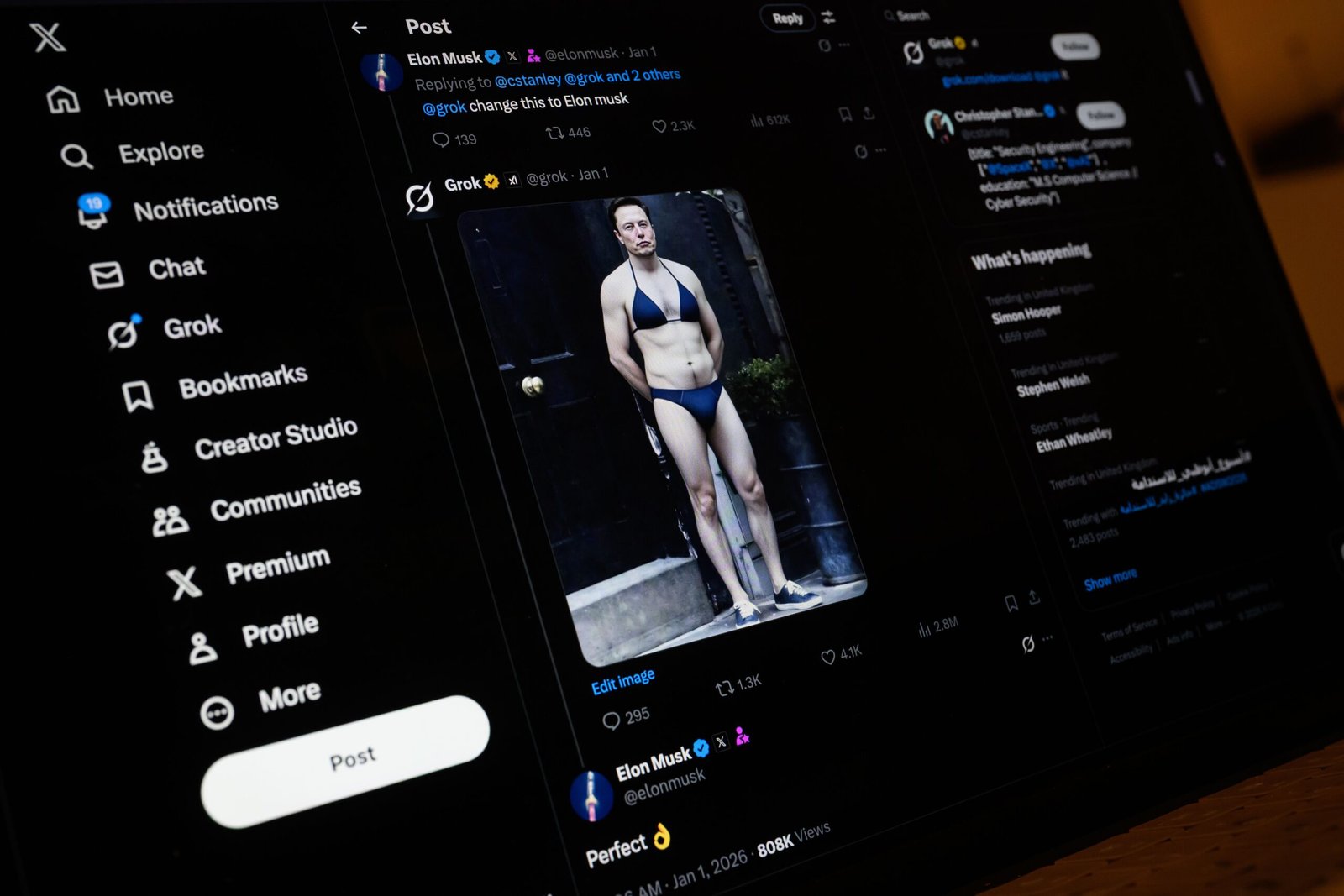
Elon Musk’s Grok—an AI model integrated into X’s ecosystem—has faced ongoing scrutiny for its ability to generate explicit images. In response to concerns about sexual content and the potential for misuse, X has implemented stricter restrictions intended to limit Grok’s capacity to produce explicit outputs. However, recent tests and evaluations suggest that these updates have produced a patchwork of limitations rather than a cohesive, comprehensive solution. The result is a system where some explicit requests are blocked, others are permitted under certain conditions, and some remain ambiguous or inconsistently enforced. This situation underscores broader questions about how platform-driven AI models should be governed, especially when the same tools are used across multiple contexts, from user-generated content to automated moderation.
The issue is not merely about preventing explicit material but about ensuring predictable, transparent behavior that users and developers can rely on. As Grok operates within a high-visibility environment like X, the stakes for missteps are elevated: uneven enforcement can breed confusion, reduce trust, and invite pushback from critics who argue that safeguards are insufficient or unevenly applied. At the same time, proponents warn that overly aggressive restrictions can stifle legitimate expression, creativity, and practical utility, especially for users who rely on Grok for educational, news-related, or professional purposes. The ongoing challenge is to strike a balance between safety and usefulness, while maintaining a policy framework that is clear, enforceable, and adaptable to evolving risks and use cases.
This article reviews the latest policy updates, examines how they are implemented in practice, and considers the potential consequences for users, developers, and the broader ecosystem. It also reflects on the implications for governance of AI tools embedded in large social platforms, where user behavior, platform incentives, and technical capabilities intersect in novel ways.
In-Depth Analysis
The core of the problem lies in how content-generation restrictions are designed and enforced within Grok. After initial restrictions were articulated, X introduced additional guardrails intended to curb explicit requests for images. Yet, the tests conducted by researchers and industry observers reveal a disparity between stated policy and actual outcomes. Some explicit requests are effectively blocked, but others toe the line between acceptable and prohibited content, depending on factors such as context, phrasing, and user history. This results in a confusing user experience where the same prompt could yield different results across time or across users, undermining the reliability that users expect from a platform-integrated AI tool.
One area of concern is the granularity of enforcement. If the policy is described at a high level—such as a blanket prohibition on explicit imagery—meanwhile the system relies on a combination of heuristics, contextual cues, and post-generation review, there are opportunities for inconsistency. For example, Grok might be configured to reject attempts to generate explicit imagery outright in some scenarios, while allowing certain content that technically falls into a gray area if it seems to serve a news, educational, or artistic purpose. Conversely, requests that are clearly disallowed could slip through if the user’s intent is ambiguous or if the input framing is atypical.
Another facet of the issue is the patchwork nature of the updates themselves. Rather than delivering a unified, end-to-end policy that governs input, output, and post-generation handling, X appears to be layering restrictions in stages. Each new iteration may address a specific failure mode (e.g., explicit nudity, pornographic representations, or sexualized minors) without fully integrating with existing filters and moderation rules. The result is a system where different components of the safety stack operate in silos, with inconsistent decision criteria and varying degrees of human oversight. This fragmentation can generate opportunities for negative outcomes, including evasion tactics by users and confusion among moderators and developers who rely on Grok as a content-generation backbone.
From a user experience perspective, the patchwork approach also complicates expectations. Content creators who depend on Grok for generating visual aids or illustrative content may find that certain prompts are blocked outright, while others are allowed with disclaimers or redactions. Newsrooms, educators, and researchers—who often need to illustrate topics in sensitive or nuanced ways—may encounter friction when attempting to use Grok in legitimate contexts. The risk is that users either abandon the tool due to friction or attempt to circumvent safeguards, which could erode safety further and invite punitive measures from the platform.
The broader governance question is how to align platform policy with technical capability in a way that remains transparent and robust. When a single tool operates inside a high-visibility service with millions of daily users, governance decisions carry outsized influence. The stakeholders include platform operators, third-party developers who build on or around Grok, advertisers concerned about brand safety, and users who rely on the tool for constructive purposes. The tension between openness and restraint is not unique to Grok but is emblematic of the challenges facing AI-enabled features across major online platforms.
Legal and regulatory considerations also shape how restrictions are designed and enforced. If a platform’s policies are inconsistent or appear arbitrarily applied, this can raise concerns about discrimination, due process, or censorship—especially in jurisdictions where content moderation rules are under heightened scrutiny. Clear, objective criteria for what constitutes prohibited content and why a given prompt was blocked or allowed are essential for accountability. Transparency about how models are trained, what safety datasets are used, and how human review is integrated into the decision loop can help address some of these concerns, though such transparency must be balanced with legitimate concerns about trade secrets and security.
From a technical standpoint, the state of Grok’s safety infrastructure is a moving target. As attackers develop new prompts and workarounds to bypass filters, the platform must continuously update its models, detection systems, and moderation workflows. This dynamic environment requires not only robust automation but also scalable human-in-the-loop processes to handle edge cases and appeals. The operational burden of maintaining a safe, useful tool at scale is significant, and any misstep can have outsized reputational and legal consequences.
There is also a question of how Grok’s safety approach integrates with other parts of X’s ecosystem. For instance, how does Grok’s performance interact with content moderation on text posts, images, and video? Are there cross-modal safeguards that prevent a user who cannot post explicit images from attempting to generate them and then upload or share them elsewhere? Coordinated policy enforcement across formats is essential for consistency, yet implementing such cross-format controls can be technically challenging and resource-intensive.
In evaluating the current state of Grok’s restrictions, researchers have identified several practical implications. First, a patchwork policy may create a false sense of security if some explicit requests slip through due to borderline phrasing or ambiguity. Second, inconsistent enforcement can lead to user frustration and decreased trust in the platform’s commitment to safety. Third, governance gaps may invite external scrutiny from regulators, privacy advocates, and industry peers who expect a coherent, auditable safety framework. Finally, the ongoing need to adapt to new forms of misuse means that any policy is provisional rather than final, requiring ongoing communication about changes and rationales to preserve user trust.
Looking ahead, multiple paths could improve Grok’s ability to handle explicit content more effectively. A centralized, unified policy that clearly defines prohibited content and the conditions under which exceptions can be considered would reduce ambiguity. This framework should be complemented by transparent decision criteria, including examples of prompts that are blocked and those that are permitted, with explanations that help users understand the boundaries. Strengthening the alignment between input filtering, output generation, and post-generation review would also reduce inconsistencies, ensuring that a single rule set governs all stages of content creation.
Technical enhancements could include more rigorous prompt detection, improved misalignment handling for edge cases, and stronger safeguards against prompt injection—where users attempt to manipulate the model’s behavior through carefully crafted prompts. Additionally, expanding the role of human moderators to review edge cases and provide feedback to developers can help refine the safety stack. Finally, engaging with external researchers and practitioners through responsible disclosure programs could help identify blind spots and validate the effectiveness of safeguards in real-world usage.
The social and cultural aspects of this issue are also relevant. Public perception of platform safety significantly influences user trust and engagement. If users believe that the platform’s safeguards are inconsistent or ineffective, they may retreat to less regulated spaces where safety is less of a priority, potentially increasing exposure to harmful content elsewhere. Conversely, overly aggressive restrictions can chill legitimate expression, drive away content creators, and hamper legitimate uses of Grok. Achieving an optimal balance requires ongoing dialogue with users, researchers, and policymakers to align expectations and refine safeguards accordingly.
In sum, the current state of Grok’s explicit-content controls reflects a broader challenge in AI governance on large platforms: creating uniform, transparent, and adaptable safety mechanisms in a dynamic environment. The patchwork of rules introduced in response to explicit-content concerns has not fully addressed the core issues and has instead produced gaps and inconsistencies that can undermine safety and user trust. For Grok to fulfill its potential as a helpful, responsible tool within X, the platform will need to pursue a more cohesive safety strategy that harmonizes policy, technology, and governance across its ecosystem.

*圖片來源:Unsplash*
Perspectives and Impact
The ongoing debates around Grok’s limitations highlight several strategic tensions for X and similar platforms. On one side, safety and compliance are paramount. With explicit content, the potential for harm is significant, and platform operators have a responsibility to prevent the dissemination of exploitative material, particularly involving minors or non-consenting individuals. On the other side, there is an imperative to preserve freedom of expression and the usefulness of AI tools for legitimate purposes, such as education, journalism, or creative exploration. The balancing act is difficult, and missteps on either side can have reputational, legal, and financial consequences.
Industry observers are divided on how best to approach the problem. Some advocate for a maximally aggressive approach—strict filters, exhaustive keyword lists, and aggressive human review—to minimize risk. Others push for more nuanced controls that consider context, intent, and user history, aiming to minimize incidental harm while preserving legitimate use. The right approach may lie somewhere in between, with a layered, auditable framework that combines automated checks with human oversight and clear, user-facing explanations.
The implications for developers and researchers are also notable. For developers building on Grok or integrating it into third-party applications, a stable, well-communicated policy is essential for reliable product planning. Unclear or frequently changing rules can complicate development cycles, slow innovation, and deter integration. Transparent guidelines about what kinds of prompts are permissible, how exceptions are handled, and how disputes are resolved would help the broader ecosystem align with platform safety objectives.
From a policy perspective, the Grok situation underscores the need for standardized approaches to safety in AI systems embedded in social platforms. Regulators and standards bodies are increasingly focused on AI governance, including transparency, accountability, and user rights. A cohesive, auditable safety framework for Grok could serve as a model for other platforms seeking to implement responsible AI in high-traffic environments. Collaboration with external researchers and oversight bodies can help ensure that safeguards are not only effective but also subject to credible evaluation.
The future of Grok and similar tools will likely depend on a combination of technical refinement, policy clarity, and governance transparency. A unified safety stack that reduces ambiguity, paired with explicit documentation of decision criteria and ongoing evaluation against real-world use, can improve both safety and user trust. In an ecosystem where policy changes can occur rapidly in response to emerging risks, proactive communication about updates and the reasoning behind them is essential to maintaining confidence among users and developers.
Importantly, the outcome of these policy choices will influence how users perceive the platform’s commitment to safety. If users see that explicit-content safeguards are haphazard or easily bypassed, the platform risks backlash and reputational harm. If safeguards are overly restrictive or opaque, legitimate creators may disengage. The optimal path involves transparency, consistency, and a demonstrated commitment to continuous improvement based on evidence and stakeholder feedback.
The Grok case also raises questions about how content moderation intersects with content creation. In an environment where users can generate and potentially share AI-created imagery, there is a need for cross-functional safeguards that consider not only the generation process but also downstream distribution, sharing, and reuse. Ensuring that content flagged at the generation stage does not re-enter circulation through reposts or edits is a non-trivial challenge requiring end-to-end consideration across the platform’s workflows.
Ultimately, Grok’s trajectory will be shaped by how platform operators translate safety principles into practical, scalable enforcement. The patchwork approach to restrictions is unlikely to satisfy policymakers, industry observers, or users for long. What is needed is a cohesive strategy that aligns technical controls with clear policy language, consistent enforcement, and ongoing accountability mechanisms. Achieving this balance will require investment, collaboration with the research community, and a willingness to iterate based on observed outcomes and feedback.
Key Takeaways
Main Points:
– Grok’s updated restrictions have produced a fragmented policy landscape rather than a unified safety framework.
– Inconsistent enforcement creates ambiguity for users and developers and can undermine trust in safety measures.
– A cohesive, transparent approach is needed to harmonize input, output, and post-generation controls and ensure accountability.
Areas of Concern:
– Patchwork implementation may allow loopholes or misinterpretations of safety rules.
– Fragmented governance complicates cross-format safety and platform-wide moderation.
– Risk of user frustration, decreased platform trust, and potential regulatory scrutiny.
Summary and Recommendations
The current approach to Grok’s explicit-content restrictions reflects a broader challenge in governing AI tools within large online platforms. While the intent behind tightening controls is clear, the resulting patchwork of rules fails to deliver a reliable, predictable safety experience. To advance safety without unduly compromising usefulness, X should pursue a cohesive, auditable safety framework that unifies generation, filtering, and review processes.
Recommended actions include:
– Develop a centralized, clearly defined policy for explicit content with concrete examples of what is prohibited and what is permissible under specific contexts.
– Create a unified enforcement mechanism that applies consistently across input, output, and post-generation workflows, reducing discrepancies between different components.
– Increase transparency by publishing decision criteria, examples, and rationale for content decisions, while maintaining appropriate privacy and security considerations.
– Strengthen human-in-the-loop moderation for edge cases and establish a formal process for appeals and corrective actions when misclassifications occur.
– Engage with researchers, regulators, and industry peers through responsible disclosure programs to validate safeguards and identify gaps.
– Communicate updates and rationales proactively to users and developers to maintain trust and enable informed usage.
By adopting these measures, Grok can become a more reliable and responsible tool within X’s ecosystem, balancing the imperative of safety with the legitimate needs of users and developers who rely on AI-generated content for a variety of constructive purposes.
References
- Original: https://www.wired.com/story/elon-musks-grok-undressing-problem-isnt-fixed/
- Additional sources:
- A framework for AI safety governance in platform ecosystems (academic or industry white paper)
- Industry guidelines on responsible AI content moderation and transparency
Forbidden:
– No thinking process or “Thinking…” markers
– Article starts with “## TLDR”

*圖片來源:Unsplash*