TLDR
• Core Points: An enthusiast demonstrates that an NVMe SSD can be coaxed to operate in a PCI-based Pentium III-era system through creative hardware and software workarounds, highlighting both potential and limits of backward-compatibility.
• Main Content: A Reddit hobbyist experiments with bridging modern storage technology to a 1990s-era PC, revealing both the ingenuity required and the bottlenecks imposed by legacy buses and drivers.
• Key Insights: Backward compatibility is possible in constrained forms, but performance, support, and stability are heavily sacrificed when forcing modern devices into old architectures.
• Considerations: This approach is educational and curiosity-driven, not a practical upgrade path; expect driver, BIOS, and I/O bottlenecks, plus reliability concerns.
• Recommended Actions: If you’re curious, study PCI/BIOS constraints, explore PCI-to-NVMe adapters or PCIe-to-PCI bridges for older systems, and manage expectations regarding speed and stability.
Content Overview
The article documents a creative experiment by a technology enthusiast who enjoys pushing the boundaries of old hardware. The core idea is to install an NVMe solid-state drive (SSD) into a computer that is built around a PCI bus, typically associated with late 1990s and early 2000s machines. The goal is to observe whether modern storage technology can be made to function within an environment that predates many contemporary storage protocols, drivers, and controller interfaces.
To set the stage, the author explains the historical context: NVMe SSDs represent a newer class of fast storage that relies on PCIe, a standard that did not exist in the era of the Pentium III. PCI-based machines from that era had limited bus bandwidth, archaic storage controllers, and operating systems that struggle with contemporary storage stacks. Despite this, the experiment seeks to bridge the gap by employing a combination of hardware adapters and software workarounds that could, in theory, allow the NVMe device to be recognized, initialized, and used for data storage.
The piece outlines the motivations of hobbyists who enjoy retro-computing and the thrill of seeing modern components function in an ancient framework. It also notes the practical challenges inherent in such pursuits: the mismatch between device interfaces, the absence of compatible drivers, BIOS limitations, and the overall performance ceiling dictated by the old system’s architecture.
While the article does not claim a practical use case in everyday computing, it highlights a broader interest in understanding how far hardware compatibility can be extended and what this reveals about the design of storage devices and system buses. It also points to the importance of careful experimentation, safety considerations (to avoid damaging vintage hardware), and the value of sharing findings with a community that appreciates tinkering and knowledge transfer across generations of technology.
In-Depth Analysis
The experiment centers on trying to mount and operate an NVMe SSD inside a PCI-based Pentium III-era machine. Theoretically, an NVMe drive requires a PCIe transport with a modern command set and software stack. The challenge is twofold: physical interface compatibility and the software/firmware stack that can recognize and drive the device.
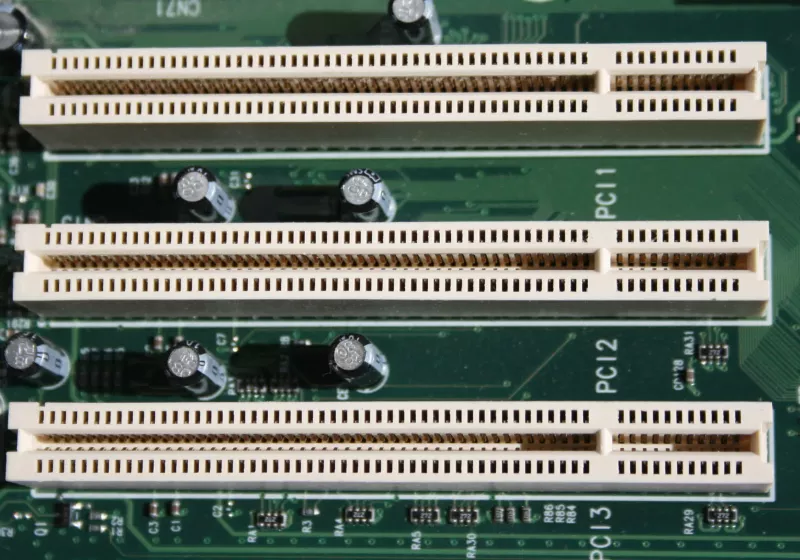
Physically, the PCI bus in a Pentium III system is a distinctly different interface from PCIe. PCIe is point-to-point with higher bandwidth and uses a serial, packet-based protocol. PCI, by contrast, is parallel and significantly narrower in bandwidth. The mismatch means that, at the hardware level, the NVMe SSD cannot directly communicate over a PCI bus without some form of bridge or adapter that translates PCIe transactions to PCI-compatible commands—and back again. The conventional PCI slot cannot natively host a PCIe-capable controller or a modern NVMe device.
To approach this problem, the enthusiast employs a combination of non-standard adapters and driver-level workarounds. One possible approach (and the kind of workaround reported in similar experiments) involves using a PCIe-to-PCI bridge device, which itself must be compatible with the older BIOS and the operating system. In addition, it would require an NVMe-to-USB or NVMe-to-PCI bridge that can translate the NVMe protocol into something the PCI bus can carry, with the caveat that performance will be severely degraded and stability uncertain. The old motherboard’s BIOS and boot firmware may not recognize such a device, so alternative boot strategies or post-boot initialization scripts could be necessary to initialize the bridge and the NVMe drive.
Operating system support is another critical hurdle. Modern operating systems come with kernels and drivers designed to interact with NVMe devices and PCIe hardware. An older operating system, often used in retro computing, would lack support for NVMe command sets, modern storage stacks, and the necessary PCIe hot-swapping or enumeration sequences. Even if a bridge-enabled device presents an NVMe drive to the OS in a compatible manner, the driver would still need to understand the translation layer and manage I/O scheduling, error handling, and power management under constrained memory and CPU resources.
Performance implications are stark. Even under ideal bridging, the maximum transactional bandwidth the old PCI bus could handle is dramatically less than modern NVMe devices’ capabilities. The system would likely be limited to a fraction of a megabyte per second, far below typical HDD speeds of the era and orders of magnitude slower than the NVMe drive’s nominal performance. Latency would be higher, and CPU overhead increased due to emulation layers and translation. This makes the arrangement more of an academic exercise or a demonstration of feasibility rather than a practical storage solution.
Stability and reliability represent further risks. Legacy hardware is prone to wear, failed components, and timing issues that modern drives and controllers are not designed to accommodate. Bridging components add another potential point of failure. The risk of data loss or corruption increases when operating outside the tested and supported configuration space for both the NVMe device and the vintage motherboard.

*圖片來源:Unsplash*
On the other hand, the experiment yields educational value. It provides a tangible look at how storage technologies evolved and how abstract concepts like command sets, bus architectures, and boot protocols interact in real-world hardware. It also reinforces the importance of driver and firmware support and demonstrates the engineering challenges involved in cross-generational compatibility. For hobbyists, the exercise can deepen understanding of system architecture, PCI/PCIe differences, and the complexities of modern storage.
Ethical and safety considerations are also relevant. Working with vintage hardware while attempting to integrate modern components requires careful static-safe handling, proper power management to avoid overvoltage or overheating, and appropriate data backups. The process should be documented and shared to allow others to learn from any missteps, while clearly labeling outcomes as experimental and not recommended for standard use.
The broader takeaway is not that NVMe drives belong in PCI-based Pentium III systems, but that the boundaries of compatibility can be explored with rigorous experimentation. The exercise highlights how modern storage relies on a suite of technologies—advanced buses, fast interconnects, firmware, drivers, and operating systems—that did not exist in the vintage era. It also underscores the ingenuity of retro-computing communities who seek to understand, preserve, and interrogate the evolution of computer hardware.
Perspectives and Impact
The broader implications of this experiment extend into educational and historical spheres as much as into practical technology. For students of computer science and hardware, attempting to bridge modern storage with a vintage motherboard can illuminate several key concepts, such as bus topology, command encoding, and the evolution of I/O subsystems. It also illustrates the importance of backward compatibility and the challenges involved when new technologies must operate within legacy constraints.
From a preservation standpoint, such experiments contribute to the culture of hardware archaeology. They document the limits and failures of older systems when confronted with contemporary components, providing a repository of knowledge about how far compatibility can be stretched and where it breaks down. This can inform future retrocomputing projects, informing decisions about which modern components can be meaningfully adapted to older platforms and which should be kept separate to avoid reliability issues.
In terms of future implications, the exercise sheds light on the complexity of bridging disparate eras of hardware. It reinforces the notion that software and firmware ecosystems evolve to leverage new capabilities in a way that older hardware cannot safely or efficiently emulate. The results of experiments like this can guide the design of educational tools and demonstrations that illustrate hardware evolution without risking data integrity or hardware damage.
Additionally, the project provokes consideration of the potential for modular, cross-era interfaces. If a stable, well-supported bridge existed that could reliably translate PCIe NVMe commands to legacy PCI buses without compromising data integrity, it would open possibilities for museums, educational labs, and hobbyists to demonstrate modern storage concepts in tangible, accessible ways. However, achieving such a bridge would require careful engineering, standardization, and extensive testing across diverse hardware configurations.
The social aspect of the endeavor—sharing methods, failures, and successes with a community of like-minded enthusiasts—also matters. It fosters collaboration, peer review, and collective learning, which are valuable in any field of applied technology. The openness of sharing detailed procedures, error messages, and experimental outcomes helps others avoid common pitfalls and accelerates the learning curve for complex hardware experiments.
Finally, this kind of project challenges the dichotomy between practicality and curiosity. While not a recommended upgrade path, it underscores the intellectual joy of problem-solving and the satisfaction of pushing the envelope in small, controlled ways. For many hobbyists, the value lies not in obtaining faster storage on an old system but in understanding the engineering boundaries and appreciating how far technology has progressed.
Key Takeaways
Main Points:
– An NVMe SSD can be explored in a PCI-based Pentium III system through experimental bridging and software workarounds, though it is not practical.
– The endeavor highlights the fundamental incompatibilities between modern storage protocols and legacy bus architectures.
– The outcome emphasizes educational value, hardware exploration, and the limits of backward compatibility.
Areas of Concern:
– Significant performance and stability limitations render this approach impractical for real-world use.
– BIOS, drivers, and firmware constraints may prevent reliable device recognition or data integrity.
– Potential risk to vintage hardware and data unless carefully managed and clearly labeled as experimental.
Summary and Recommendations
This exploration into forcing a modern NVMe SSD to operate within a PCI-based Pentium III system serves primarily as a demonstration of hardware curiosity rather than a practical upgrade path. The exercise underscores how storage technology has evolved, illustrating the vast differences between PCI and PCIe, and the reliance of NVMe on contemporary system software stacks. While theoretically feasible under highly controlled and experimental conditions, the likelihood of achieving reliable performance or long-term stability is extremely low. For hobbyists and educators, the project offers valuable insights into system architecture, compatibility constraints, and the importance of bridging technologies with careful engineering.
If you are inspired to pursue similar experiments, proceed with clear safety and data-protection plans. Consider researching and employing PCIe-to-PCI bridges or alternative educational demonstrations that can more safely illustrate the principles involved without risking the integrity of vintage hardware. Document your methods and results to contribute to the community’s collective knowledge and to foster responsible experimentation.
References
- Original: https://www.techspot.com/news/111217-enthusiast-makes-nvme-ssd-work-pentium-iii-system.html
- Additional references:
- Understanding PCI vs PCIe: taxonomy and historical evolution resources
- NVMe architecture and driver considerations: official storage protocol documentation
- Retrocomputing hardware guides: maintaining and experimenting with vintage PCs

*圖片來源:Unsplash*