TLDR
• Core Points: Former Fitbit founders James Park and Eric Friedman launch Luffu to shift health focus from individuals to families, using AI to quietly organize family health data.
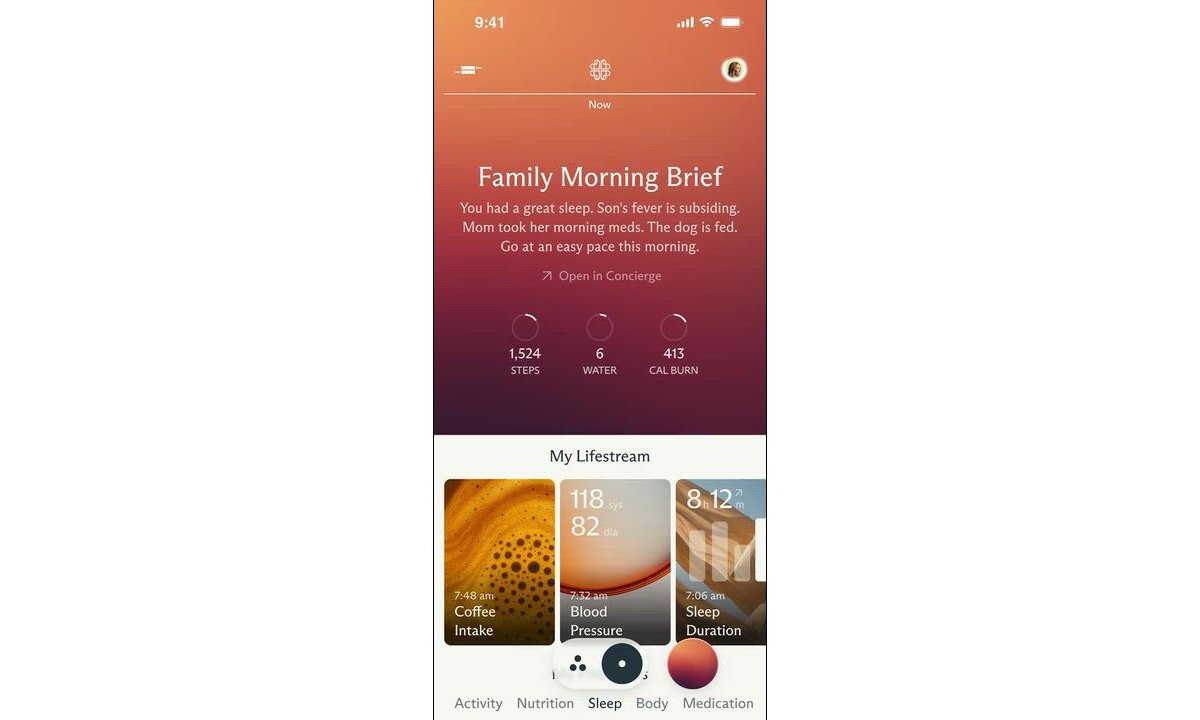
• Main Content: Luffu is a mobile app that aggregates and organizes family health information, emphasizing collective health management rather than personal metrics alone.
• Key Insights: The platform signals a broader move toward family-centric health data ecosystems, raising questions about privacy, data sharing, and interoperability with existing wearables.
• Considerations: Adoption hinges on data security, user consent across family members, and clear value beyond existing health apps.
• Recommended Actions: Evaluate privacy controls, assess how Luffu integrates with current devices, and monitor regulatory guidance on family health data.
Content Overview
In a notable pivot from their prior work with Fitbit, co-founders James Park and Eric Friedman have launched a new startup called Luffu. Emerging two years after Park and Friedman departed Google, Luffu aims to redefine how health information is collected, organized, and utilized by families. The core concept centers on shifting the focus from an individual’s health data to the health ecosystem of the entire household. The founders describe Luffu as a platform that leverages artificial intelligence in the background to unobtrusively gather and structure family health information. While the exact features and scope remain to be fully disclosed, early statements emphasize collaborative health management, where families can share insights, track trends, and coordinate care more effectively.
This pivot reflects a broader industry trend: the increasing prominence of data-driven health management that transcends single-user metrics. As wearables and health apps proliferate, there is growing interest in creating interconnected data environments that support caregivers, dependents, and relatives who influence health outcomes. Luffu’s approach suggests a move toward integrating disparate data sources—medical records, wearable data, medication schedules, and wellness activities—into a cohesive family health picture. The initiative also invites discussion about who can access family data, how consent is managed across members of varying ages, and how such systems align with existing privacy and security standards.
In-Depth Analysis
Luffu’s emergence highlights several strategic considerations in today’s health-tech landscape. By focusing on families rather than individuals, Park and Friedman signal a demand for collective health narratives that can inform care decisions, public health partnerships, and preventive strategies at the household level. The use of artificial intelligence “quietly in the background” implies an approach aimed at reducing friction for users—segregating complex data processing from the user interface while still delivering meaningful insights. This design philosophy could help overcome one of the most persistent barriers in health IT: user engagement. When data collection and analysis occur seamlessly, families may be more willing to participate in data sharing and collaborative health planning, provided robust privacy protections are in place.
Privacy and consent are central to any family-oriented data platform. A family data model raises nuanced questions: How is consent obtained for minors or dependents? Can adult family members opt out or control which data are shared with others in the household? How is sensitive information, such as genetic risk factors or mental health indicators, protected and compartmentalized? The success of Luffu will likely depend on transparent consent mechanisms, granular sharing controls, and clear explanations about how data may be used, stored, and potentially shared with third parties or healthcare providers.
Interoperability will be another crucial factor. For Luffu to realize its promise of an integrated family health picture, it must effectively aggregate data from a variety of sources. These include personal health devices (wearables), electronic health records (EHRs), pharmacy data, and possibly lab results. Achieving seamless integration requires partnerships with device manufacturers, healthcare systems, and data standards that enable secure data exchange. The privacy-by-design approach will be essential here to reassure users that their most sensitive information remains protected while still enabling meaningful cross-source insights.
From a product perspective, Luffu’s feature set will determine its value proposition. Potential capabilities could include:
- Family health dashboards that summarize aggregate indicators (activity levels, sleep quality, medication adherence, appointment schedules) for all household members.
- Care team collaboration features that allow family members to coordinate appointments, telehealth visits, and caregiver assignments.
- Care planning tools that enable goal setting, reminders, and shared task lists related to health management.
- AI-driven insights that identify patterns across family members, such as shared triggers for health events or opportunities for preventive interventions.
- Access controls tailored to different members, with age-appropriate data handling for minors.
However, several risks accompany these opportunities. Data security is paramount, given the sensitive nature of health information and the added complexity of family data ecosystems. Any breach or misuse could undermine trust across all household members. Additionally, the platform must address regulatory compliance across regions, as health data is subject to laws like HIPAA in the United States, GDPR in the EU, and other local privacy regulations. The competitive landscape also includes established health apps, hospital portals, and patient-centered platforms, all of which may adapt to offer similar family-oriented features if Luffu proves successful.
Industry observers may also consider the monetization and business model implications. Will Luffu operate on a freemium model with premium features for advanced analytics and integrations? How will data partnerships be structured, and what role will insurance and healthcare providers play in this ecosystem? The business model will significantly shape user adoption, perceived value, and long-term sustainability.
Contextually, the move from Fitbit’s individual-centric health metrics toward family-centric health data aligns with broader social and healthcare trends. Caregiving is increasingly a shared responsibility within households, and chronic disease management often requires coordination among multiple caregivers. A platform that consolidates family health information could streamline communication, reduce redundancies, and help families prepare for medical appointments with more comprehensive context. If executed well, Luffu could complement existing wearable ecosystems rather than replace them, acting as a layer that organizes disparate signals into a coherent family health narrative.
The two-year interval since Park and Friedman’s departure from Google indicates a period of strategic development and positioning. It remains to be seen how Luffu differentiates itself from other health data platforms and what unique value proposition it offers to families who already use multiple health apps and devices. Early demonstrations, pilot programs, or partnerships with healthcare providers could provide critical signals about the platform’s readiness, user experience, and practical impact on health outcomes.

*圖片來源:Unsplash*
In any case, Luffu represents a notable example of how veteran tech founders are reimagining health data ecosystems. By centering the family and leveraging AI to manage complex information flows, Park and Friedman are pushing the conversation beyond individual wellness toward a collective model of health stewardship. The coming months will reveal how robust the platform’s protections are, how effectively it integrates with existing devices and records, and whether families embrace a more collaborative, data-driven approach to managing health together.
Perspectives and Impact
The introduction of Luffu has several potential implications for the health-tech industry. First, it could accelerate the adoption of family-oriented data strategies among device makers, healthcare providers, and insurers. If families find value in a consolidated view of health data, there may be demand for interoperable standards and APIs that facilitate cross-platform data sharing while maintaining privacy controls. This, in turn, could prompt greater investment in privacy-preserving technologies, such as differential privacy, secure multi-party computation, and encrypted data transmission, as core features rather than afterthoughts.
Second, Luffu’s AI-backed approach, even if described as operating in the background, raises questions about transparency and explainability. Families who rely on AI-driven insights will want to understand the rationale behind recommendations, trend identifications, and flags that trigger alerts. Providing accessible explanations and actionable guidance will be essential to maintaining trust, particularly when sensitive health decisions may be influenced by automated analyses.
Third, the platform could influence caregiver dynamics within households. By offering collaboration tools and shared goals, Luffu might empower family members to take a more active role in health management. This democratization of data — where multiple caregivers can view and contribute to a shared health narrative — has the potential to improve adherence, preventive care, and timely medical interventions. On the flip side, it could also complicate decision-making if roles and permissions are not clearly defined or if conflicts arise over data sharing.
Fourth, as regulators increasingly scrutinize health data practices, Luffu’s trajectory will depend on its ability to demonstrate compliance and robust governance. Clear consent flows, age-appropriate access controls, and transparent data retention policies will be essential. Demonstrating a commitment to safeguarding minors’ data will be particularly important for broad family adoption.
Looking ahead, Luffu could serve as a proving ground for how families engage with health information beyond the boundaries of traditional medical systems. If the platform successfully fuses wearable-derived signals, electronic health data, and personal health records into an accessible family dashboard, it could reshape expectations about the centrality of family health data in personal wellness strategies. The broader impact would depend on user experience, reliability, and the platform’s ability to integrate with a wide range of devices and health information sources without compromising security or privacy.
Finally, the market’s response to Luffu will reveal whether there is appetite for a family-first health data paradigm or if users prefer maintaining separate, siloed apps under a more privacy-preserving approach. The outcome will influence future product strategies by Park, Friedman, and partners—and could either propel a wave of family-centric health platforms or reinforce a preference for modular, user-centric data ecosystems.
Key Takeaways
Main Points:
– Luffu represents Fitbit founders’ shift from individual health tracking to a family-centered health data platform.
– The app aims to quietly use AI to collect and organize family health information across household members.
– Privacy, consent, interoperability, and clear value will determine adoption and success.
Areas of Concern:
– Data security risks inherent in aggregating family health data.
– Complex consent models for minors and multiple adults within a household.
– Regulatory compliance across jurisdictions and potential privacy challenges.
Summary and Recommendations
Luffi t (Luffu) introduces a bold direction in health technology by targeting family-level data integration. The concept builds on the recognizable legacy of Fitbit in consumer health tech while expanding the scope to coordinate health information across households. If Luffu can deliver a secure, transparent, and user-friendly experience, it may offer meaningful benefits for care coordination, preventive health, and informed decision-making within families. However, its success will rely on rigorous data protection, thoughtful consent mechanisms, and robust interoperability with a wide range of data sources and devices. Stakeholders — including potential users, healthcare providers, device manufacturers, insurers, and regulators — will be watching how the platform balances utility with privacy and how it positions itself within the evolving landscape of health data governance.
Recommendations for prospective users and partners:
– Closely review data sharing controls and consent settings, especially for dependent or minor members.
– Explore integration capabilities with existing wearables, EHRs, and third-party health apps to assess true interoperability.
– Monitor privacy and security disclosures, including data retention policies and breach response plans.
– Seek clarity on the business model, data use, and potential partnerships with healthcare providers or insurers.
References
- Original: https://www.engadget.com/mobile/fitbit-founders-launch-luffu-a-way-to-integrate-your-familys-health-data-173251994.html?src=rss
- Additional references to be added based on article content (2-3 links) covering health data interoperability, family health data privacy, and AI in health data management.

*圖片來源:Unsplash*