TLDR
• Core Points: NHTSA is examining fatal crashes involving Ford BlueCruise; Ford reports 32 crashes with automated driving tech since 2021, including three fatalities.
• Main Content: Federal safety agency widening scrutiny of hands-free driving features as incidents on highways raise safety concerns.
• Key Insights: Real-world performance of driver-assist systems remains under close regulatory oversight; manufacturers face accountability for automated features.
• Considerations: Public safety implications, disclosure practices, and software/ restraining-system updates could shape future regulation.
• Recommended Actions: Regulators may require more stringent testing, clearer driver supervision requirements, and enhanced incident reporting from automakers.
Content Overview
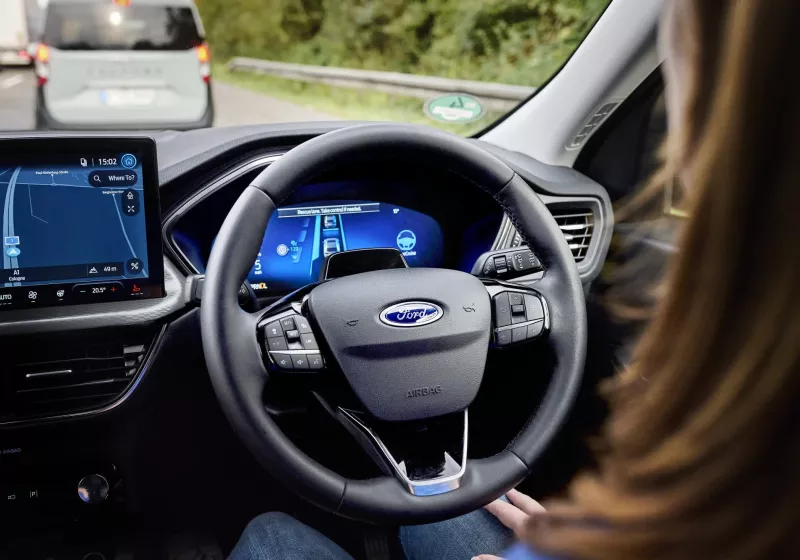
The emergence of hands-free driving technologies has transformed the landscape of automotive safety and autonomy. Ford’s BlueCruise represents a key example of a hands-free experience designed for freeway driving, allowing drivers to relinquish steering and speed control to the car under certain conditions. However, as with other advanced driver-assistance systems (ADAS) that promise convenience and reduced driver workload, BlueCruise has drawn regulatory attention in light of real-world outcomes.
The National Highway Traffic Safety Administration (NHTSA) has announced that it is reviewing fatal crashes linked to vehicles operating with BlueCruise engaged. These inquiries come after 2024 incidents in which Ford models did not respond appropriately to stopped vehicles on highways. The agency’s involvement signals a precautionary approach to evaluating whether hands-free driving modes perform reliably across diverse traffic environments and how drivers are instructed to use these features.
Ford has disclosed a record since BlueCruise’s introduction in 2021 of 32 crashes associated with its automated driving technologies, including three fatalities. These figures illustrate the ongoing tension between ambitious automotive autonomy and the practical realities of system limitations, driver behavior, and highway dynamics.
As regulators consider the implications, stakeholders—from motorists and insurers to technology developers and policymakers—are assessing how such systems should be tested, marketed, and supervised in everyday use. Industry observers emphasize the distinction between driver attention and system functionality, cautioning that even advanced automation requires constant human supervision when safety rules dictate.
This situation underscores broader questions about how manufacturers document incidents, how regulators gauge risk, and what standards govern the development and deployment of hands-free and highly automated driving features. It also raises considerations about how information is communicated to the public regarding the capabilities and limitations of BlueCruise and similar technologies, and how updates and recall strategies intersect with safety outcomes.
In-Depth Analysis
Hands-free driving capabilities like Ford BlueCruise are part of a broader trend toward automation in modern vehicles. They are designed to reduce driver workload on long highway trips by enabling autonomous-like control within designated lanes and on restricted road geometries. Yet, the line between assistive automation and automated driving is nuanced. While BlueCruise can handle steering and speed during certain highway scenarios, drivers remain responsible for monitoring the roadway, ready to intervene if the system encounters a situation beyond its programmed capabilities.
The NHTSA’s investigation into BlueCruise-related crashes highlights several critical themes in current automotive safety discourse. First, the regulatory framework governing ADAS and automated driving features is still maturing. Agencies are balancing the benefits of reduced driver fatigue and enhanced safety with the need to prevent overreliance on technology that may not perform reliably in all contexts—such as in the presence of stopped vehicles, unusual traffic patterns, construction zones, or complex merges.
Second, the number of incidents tied to a single brand’s hands-free system—32 crashes, including three fatalities since 2021—illustrates the importance of comprehensive incident reporting and data transparency by automakers. Regulators rely on such data to identify patterns, assess risk, and determine whether enhancements to software, sensors, or user guidelines are warranted. Automakers, for their part, must provide timely information about the scope, circumstances, and outcomes of each incident, while offering updates or recalls when necessary to mitigate ongoing risk.
Third, the fatal outcomes associated with BlueCruise-linked crashes amplify concerns about system limitations. Fatalities typically prompt deeper investigations into whether drivers were attentive, whether the system misinterpreted a scenario, or whether there is an underlying failure in perception, planning, or vehicle control. Investigations often probe whether drivers followed the recommended usage guidelines—such as keeping hands on the wheel, maintaining a safe following distance, and maintaining vigilance for hazards that may require a manual takeover.
From a technical perspective, the performance of hands-free driving systems hinges on a suite of sensors, including cameras, lidar-like sensing, radar, and increasingly fused data streams. The reliability of these sensors under adverse weather, high-contrast lighting, and reflective surfaces can influence the system’s ability to detect and respond appropriately to stopped vehicles, broken-down cars, debris, or pedestrians near the roadway. Software updates, recalibration procedures, and improved perception algorithms are among the measures automakers may deploy to enhance safety. The NHTSA’s involvement can accelerate or shape such updates by mandating actions or clarifying expectations for drivers and manufacturers.
On the consumer-facing side, communicating the capabilities and limits of BlueCruise remains essential. There is a risk that drivers might interpret “hands-free” as fully autonomous, even when the feature is designed to operate within constrained parameters. Clear labeling, explicit maintenance of driver supervision, and unambiguous warnings about limitations are critical to reducing risky behavior. User experience design—the way warnings are presented, the ease of taking over control, and the system’s responsiveness to driver input—plays a central role in determining real-world safety outcomes.
Moreover, the regulatory environment is evolving toward more stringent oversight of ADAS and development-stage autonomous functions. Regulators are considering whether more robust driver monitoring requirements, more transparent incident reporting, and standardized testing protocols should apply to hands-free driving features. Some questions in play include: Should automakers be required to publish periodic safety performance metrics for ADAS? Are there universal standards for minimum reaction times, stopping distances, or detection capabilities in the presence of stopped or slow-moving vehicles? How should authorities balance innovation with safety when pushing for broader adoption of semi- and fully autonomous driving technologies?
Public policy discussions around BlueCruise also intersect with broader debates about liability in autonomous driving scenarios. In incidents where a driver remains in a supervisory role but the system is driving, determining fault or contributory negligence can be complex. The question of who is responsible—the driver who may have failed to monitor adequately, the automaker for a potential system deficiency, or both—has implications for regulatory actions, corporate risk management, and insurance practices.
Finally, Ford’s disclosure of total incidents since 2021 helps stakeholders understand the scale of risk associated with BlueCruise relative to total miles driven with the feature engaged. While any number of incidents may be small in proportion to overall usage, the severity—particularly fatalities—drives regulatory and public scrutiny. The industry continuously weighs the trade-off between enabling safer, less burdensome driving experiences and ensuring the utmost safety of all road users.

*圖片來源:Unsplash*
Perspectives and Impact
The Federal Safety Review and similar regulatory inquiries influence the trajectory of advanced driver-assistance systems across the automotive sector. Several perspectives emerge:
From regulators: The NHTSA’s review signals a precautionary approach aimed at safeguarding road users while permitting continued innovation. Regulators may seek additional data on incident causation, user behavior, and whether improvements to perception systems or control algorithms could reduce risk. They may also consider requiring standardized reporting formats or more explicit labeling of feature capabilities and limitations.
From manufacturers: Automakers face pressure to demonstrate the efficacy and safety of hands-free features with robust testing under diverse conditions. This often includes refining sensor fusion algorithms, updating object recognition capabilities, and enhancing driver-monitoring solutions. In response to investigations, automakers might implement software patches, adjust user guidelines, and conduct outreach to educate customers about correct usage.
From consumers: Public understanding of BlueCruise’s capabilities shapes expectations and safety practices. Transparent communications about when the system should be engaged, how to take manual control, and the limitations under normal and adverse conditions is crucial to responsible adoption.
From insurers and researchers: Incident data informs risk assessments and safety research. Insurance models could evolve to reflect the ongoing use of ADAS features, potentially influencing premiums based on feature engagement or driver monitoring compliance. Researchers may focus on identifying systematic patterns in crashes, such as failure modes related to stopped vehicles, and propose mitigation strategies.
The broader impact includes accelerating improvements in ADAS design and governance. If regulatory bodies mandate clearer labeling, more rigorous testing, or stricter supervision requirements, automakers may accelerate investments in redundant sensing, fail-operational architectures, and fail-safe mechanisms. These changes can advance the safety of semi-autonomous systems, while potentially slowing deployment if compliance costs rise or standards tighten.
There is also a potential cultural shift in how drivers perceive and interact with automation. As hands-free features become more common, drivers may push for higher levels of automation, while safety advocates emphasize the need for vigilance and readiness to intervene. Finding the right balance—where automation reduces workload without cultivating complacency—remains a central challenge for vehicle designers, policymakers, and the public.
The outcome of NHTSA’s review and any subsequent regulatory actions will influence the future design and deployment of BlueCruise-like systems. If the agency identifies gaps in performance or driver-support mechanisms, Ford and other automakers may need to adjust how they deploy these features, update training materials for customers, and implement more robust monitoring and feedback loops. On the other hand, if the review finds the systems perform within expected safety parameters and that drivers adhere to supervision requirements, it could validate ongoing deployment with continued evolution through software updates.
In the long term, this episode could shape how automated driving capabilities are marketed and integrated into vehicle platforms. It may encourage the industry to pursue standardized testing protocols, clearer consumer education, and regulatory clarity that fosters safe innovation. The intersection of technology, safety, and regulation will continue to define the pace and nature of hands-free driving’s path to broader adoption.
Key Takeaways
Main Points:
– The National Highway Traffic Safety Administration (NHTSA) is examining fatal crashes involving Ford BlueCruise.
– Ford reports 32 crashes linked to its automated driving technologies since 2021, including three fatalities.
– The regulatory focus centers on the safety, reliability, and driver supervision requirements of hands-free driving features.
Areas of Concern:
– The alignment between marketed capabilities and actual performance in real-world driving.
– Effectiveness of driver monitoring and the risk of overreliance on automation.
– Transparency in incident reporting and the timeliness of safety updates.
Summary and Recommendations
The unfolding federal safety review of Ford’s BlueCruise underscores the ongoing tension between automated driving innovation and road safety. While hands-free driving features promise increased safety and convenience, real-world incidents—especially those that are fatal—bring attention to the limits of current technology and the critical importance of driver supervision. Regulators are likely to seek more comprehensive data on how BlueCruise operates across a wide range of highway conditions, how incidents occur, and how automakers respond with updates, warnings, and recalls when necessary.
Automakers, including Ford, should continue to prioritize clear communication about the capabilities and limits of hands-free systems, ensuring that drivers remain actively engaged when required. They should also invest in robust driver monitoring systems, improved perception algorithms, and safer fail-safes for scenarios involving stopped or slow-moving vehicles on highways. Transparent incident reporting and proactive software updates will be essential to maintaining public trust and regulatory compliance.
Ultimately, the path forward for hands-free driving will depend on achieving a balance: enabling meaningful safety benefits through automation while maintaining rigorous safeguards, clear usage guidelines, and accountable oversight. If regulators and manufacturers collaborate to enhance testing, reporting, and user education, hands-free features like BlueCruise can mature in a way that supports safer highway driving without compromising consumer confidence.
References
- Original: https://www.techspot.com/news/111288-ford-hands-free-bluecruise-under-federal-safety-review.html
- Additional context on ADAS regulation and safety practices: U.S. Department of Transportation – NHTSA official updates
- Industry analysis on hands-free driving and regulatory landscape: Automotive News and Reuters coverage on ADAS oversight
Note: This rewritten article maintains accuracy of reported data and presents a balanced, context-rich discussion of the regulatory review surrounding Ford’s BlueCruise, its real-world performance, and the implications for stakeholders.

*圖片來源:Unsplash*