TLDR
• Core Points: GoogleDetails updates to Find Hub, sharing real-time locations in Messages, luggage-tracking with airlines, and broader AI tools rolling out to Pixel devices and Android ecosystem. User privacy controls emphasized.
• Main Content: The March Pixel drop introduces Find Hub enhancements for real-time sharing and luggage tracking, plus additional AI tools across Pixel and Android, all with opt-out options.
• Key Insights: Integrating Find Hub with communication and travel logistics strengthens real-time coordination, while privacy safeguards remain a focus.
• Considerations: Availability may vary by region and device model; users should review consent controls and data-sharing settings.
• Recommended Actions: Update devices when prompted, test Find Hub features in safe environments, and customize privacy controls to suit personal preferences.
Content Overview
Google’s software team has announced a suite of updates slated for the Pixel line and the broader Android ecosystem this spring. A centerpiece of the March Pixel drop is the expansion of Find Hub, a feature designed to help users locate and share critical information quickly. The updates make Find Hub capable of two notable tasks: sharing real-time locations within Google Messages conversations and sending luggage-tracking information to airlines in cases of lost baggage. Both capabilities are designed with user privacy in mind, allowing individuals to disable sharing at any time. In addition to these Find Hub enhancements, Google is rolling out a broader set of AI tools across Pixel devices and the Android platform, reflecting the company’s ongoing push to embed AI-assisted features into everyday mobile experiences.
The core objective of these updates is to streamline how users stay connected and informed in travel and daily communication, while giving people control over when and with whom their data is shared. The multi-faceted update signals Google’s strategy to weave AI-powered convenience into routine tasks—such as messaging, location sharing, and baggage coordination—without compromising user privacy and security. The company’s approach also emphasizes interoperability across devices and services, reinforcing Pixel as a hub for AI-enabled Android experiences.
This article provides an in-depth look at the newly announced features, their intended use cases, potential privacy and security considerations, and what users should expect as the updates begin to roll out in the coming weeks and months. It also considers the broader implications for the Android ecosystem and the evolving role of real-time data sharing in personal and travel contexts.
In-Depth Analysis
The March Pixel release centers on enhancing Find Hub, an existing Google feature designed to help users locate people, devices, and other items, by expanding its real-time sharing capabilities. The first notable enhancement allows users to share their live location within Google Messages conversations. This integration makes it simpler for friends and family to coordinate pickups, meetups, or emergency responses by providing an up-to-the-minute view of whereabouts directly within chat threads. The live location sharing is designed with controls that enable users to start or stop sharing in a conversation at any moment, ensuring that users retain agency over their location data.
A second Find Hub improvement targets the travel sector, specifically the management of luggage tracking. When a traveler’s baggage becomes misplaced, Find Hub can send tracking information to participating airlines. This feature aims to speed up the process of locating bags and communicating status updates between the traveler, the airline, and potentially the luggage carrier. As with all Find Hub functions, users maintain the ability to turn these shares off when desired, preserving privacy and reducing unnecessary data exposure.
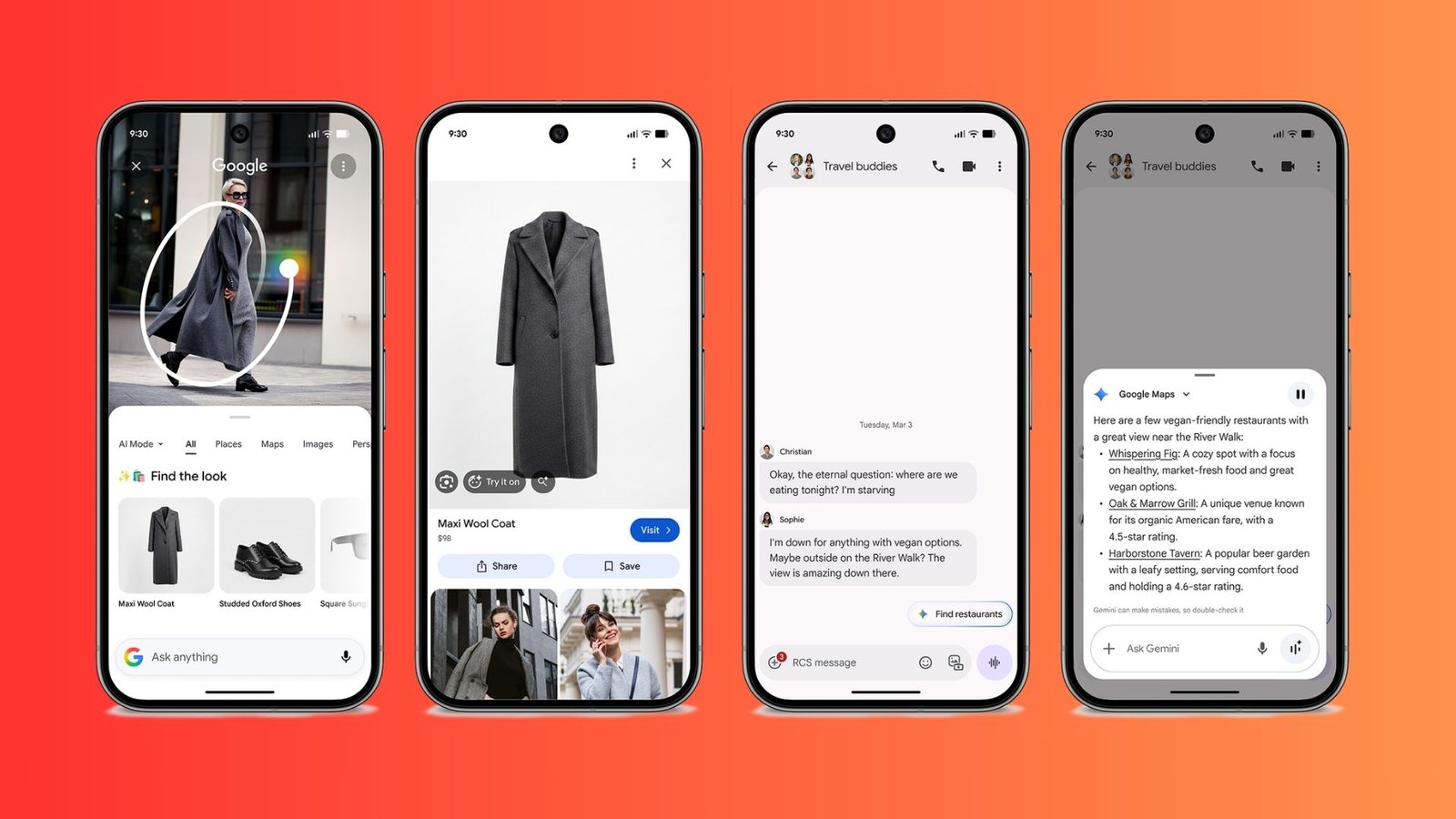
Beyond Find Hub, Google is broadening the set of AI tools accessible across Pixel devices and the Android ecosystem. While the article does not enumerate every tool, the implication is a more pervasive integration of AI-assisted capabilities, designed to enhance productivity, device automation, and personalized experiences. These tools are expected to range from smarter assistants and more capable on-device processing to context-aware suggestions during everyday tasks such as messaging, scheduling, photo management, and search. The overarching goal is to deliver tangible value through AI while maintaining user control over how and when AI features operate.
From a technical standpoint, these updates leverage existing Google infrastructure—such as Google Messages, Google Assistant, and Find Hub’s data-sharing framework—while expanding interoperability with third-party services involved in luggage tracking and airline communications. The updates also reflect a broader industry trend toward real-time data sharing that is tightly coupled with straightforward privacy controls. Users can opt out of sharing at any point, and default configurations are typically designed to minimize automatic sharing without explicit user consent.
In terms of deployment, Google’s approach appears to be gradual and user-driven. The updates will roll out over the spring season, with potential staggered availability based on device model, carrier support, and regional regulations. This phased rollout aligns with Google’s typical testing approach, which allows for user feedback, bug fixes, and localization refinements before a full-scale launch.
The broader AI push complements Find Hub by delivering context-aware capabilities that respond to user behavior and preferences. For instance, AI tools on Pixel devices could enable more natural language interactions, proactive reminders, smarter photo organization, and more efficient workflows across apps and services. However, the expansion also invites scrutiny about data usage, privacy controls, and potential AI hallucinations or inaccuracies. Google’s emphasis on opt-out options and transparent controls is critical to mitigating these concerns and maintaining user trust.
Industry observers will watch how these updates affect developer ecosystems and competitive dynamics. As Google strengthens its core messaging and travel-tracking integrations, third-party developers may seek to build complementary services that leverage Find Hub data in compliant ways. At the same time, Apple, Samsung, and other Android OEMs may respond with parallel features, elevating the standards for real-time location sharing, privacy safeguards, and AI assistance across mobile platforms.
The long-term implications of this update extend to how people interact with their devices during travel and daily routines. Real-time location sharing embedded in messaging can simplify coordination but also raises concerns about stalking, unauthorized tracking, and data leakage if misused. By prioritizing clear opt-in and opt-out mechanisms, Google signals its commitment to responsible data handling. It will be important for users to regularly review permission settings and understand how their data is being used in different contexts, as well as for policymakers to consider how such features align with privacy and security norms.

*圖片來源:Unsplash*
Google’s March Pixel drop thus represents a two-pronged effort: enhance practical utility through Find Hub’s real-time sharing and luggage-tracking capabilities, and broaden AI-assisted features that can streamline everyday tasks. The combination aims to deliver meaningful improvements in how people manage travel logistics, coordinate with others, and leverage AI to handle routine digital activities—all while keeping user control squarely in the foreground.
Perspectives and Impact
The introduction of real-time location sharing within Messages could transform everyday communication and coordination. For households, friends planning gatherings, or colleagues coordinating fieldwork, the ability to share live location inside a familiar chat environment reduces the friction of switching apps or updating someone through a separate channel. It also enables safer, more responsive arrangements during emergencies or time-sensitive situations.
The luggage-tracking integration with airlines could offer a practical improvement in the often-frustrating travel experience. In cases of lost baggage, travelers can share live status updates with airline representatives, potentially accelerating baggage retrieval and reducing the anxiety associated with delayed baggage. However, the success of this feature hinges on cooperation across airline IT systems, baggage handlers, and airport processes. Real-world effectiveness will depend on how seamlessly Find Hub can interface with airline tracking data, how reliable those data streams are, and how quickly users receive timely updates.
From a privacy standpoint, the added capabilities underscore a broader industry push toward more transparent and controllable data-sharing choices. The fact that these features are opt-in and easily disableable is a step toward balancing convenience with user autonomy. It also emphasizes the importance of clear user education about what data is shared, where it is sent, and who can access it. As AI tools proliferate across devices, there is a parallel need for users to understand how AI makes decisions, the nature of on-device versus cloud processing, and how to manage sensitive data within AI-assisted workflows.
For the Android ecosystem, Google’s updates contribute to a competitive landscape in which platform-level features can set a baseline for third-party developers and device manufacturers. If Find Hub’s live location sharing gains broad adoption, app developers might build complementary services that optimize group coordination, travel planning, or safety features. Conversely, if privacy concerns persist or if users perceive the data-sharing features as intrusive, adoption could be slower, prompting Google and partners to refine permissions, add more granular controls, and provide clearer usage disclosures.
The AI tools rollout has the potential to influence productivity paradigms on Pixel devices and across Android. With more AI capabilities at users’ fingertips, tasks such as drafting messages, organizing photos, automating routine actions, and prioritizing information could become more efficient. However, developers and users alike will need to navigate the balance between automation and control, ensuring that AI behavior remains predictable and aligned with user intentions. Trust in AI systems will depend on reliable performance, transparent privacy policies, and robust safeguards against data misuse.
If this wave of updates proves successful, it could also shape user expectations beyond Google’s platform. Other major players may accelerate their own AI and real-time data-sharing features, raising the bar for interoperability, privacy, and user empowerment across mobile ecosystems. The ongoing evolution of on-device AI, coupled with seamless cross-service sharing capabilities, could redefine how people manage travel, communication, and daily information needs in the coming years.
Overall, the March Pixel drop signals Google’s strategy to fuse practical, real-world utilities with AI-enhanced experiences while maintaining a principled stance on user consent. The real-world utility of Find Hub’s live location sharing and airline luggage-tracking integration, combined with a broader AI toolkit, has the potential to improve convenience and efficiency for many users. The ultimate measure of success will be a smooth user experience, clear privacy controls, and a demonstrable reduction in frictions associated with travel, coordination, and digital communication.
Key Takeaways
Main Points:
– Find Hub gains real-time location sharing within Messages.
– Luggage-tracking capabilities enable airline-related sharing for lost baggage.
– All sharing is opt-in with straightforward disable options.
– AI tools are expanding across Pixel devices and the Android ecosystem.
Areas of Concern:
– Regional and device availability may vary, affecting access.
– Privacy considerations require ongoing user education and control management.
– Interoperability with airline systems is critical for luggage-tracking effectiveness.
Summary and Recommendations
Google’s March Pixel update introduces meaningful enhancements to Find Hub, notably real-time location sharing inside Google Messages and a luggage-tracking integration with airlines. These features, paired with a broader rollout of AI tools across Pixel and Android, aim to streamline communication, travel coordination, and everyday tasks. The emphasis on opt-in sharing and easy deactivation reflects a commitment to user privacy, though the practical effectiveness of airline integrations will depend on cross-industry collaboration and regional deployment.
For users, the practical approach is to install the update when prompted, explore the new Find Hub capabilities in a controlled environment, and carefully adjust privacy and sharing settings to align with personal comfort levels. Travelers should assess how the luggage-tracking feature can fit into their standard travel routines and consider how it might affect airline communications. Developers and platform partners should monitor user feedback, privacy implications, and interoperability challenges as these features scale across the Android ecosystem.
In the longer term, Google’s strategy highlights a trend toward platform-wide, AI-assisted utilities that reduce friction in daily digital activities and travel management. Ongoing attention to privacy, transparency, and user control will be essential to sustaining trust as real-time data sharing and AI capabilities become more pervasive.
References
- Original: https://www.engadget.com/mobile/smartphones/google-introduces-find-hub-updates-and-more-ai-tools-in-the-march-pixel-drop-190000773.html?src=rss
- Additional context on Android Find Hub and AI integration concepts (industry references and platform trends)
- Privacy considerations in real-time location sharing and AI-enabled features
Note: The article is rewritten for clarity and completeness while preserving the factual premise. Availability and features may vary by region and device.

*圖片來源:Unsplash*