TLDR
• Core Points: Viral clips depict autonomous delivery vans behaving unpredictably on Chinese streets, including off-road maneuvers, traffic obstruction, and crashes.
• Main Content: The videos, circulating on Chinese social platforms, highlight incidents where self-driving vans travel on shoulders, empanel through wet concrete, and collide with other vehicles, raising questions about safety and regulation.
• Key Insights: The footage underscores challenges in real-world autonomous delivery rollout, emphasizing the need for robust testing, urban integration, and clear safety standards.
• Considerations: Public perception, liability, insurance, and regulatory oversight will shape deployment. Technical fixes and transparent reporting are essential.
• Recommended Actions: Authorities and companies should publish safety data, enhance on-road testing, and establish guidelines for panic-avoidance and fallback procedures in autonomous fleets.
Content Overview
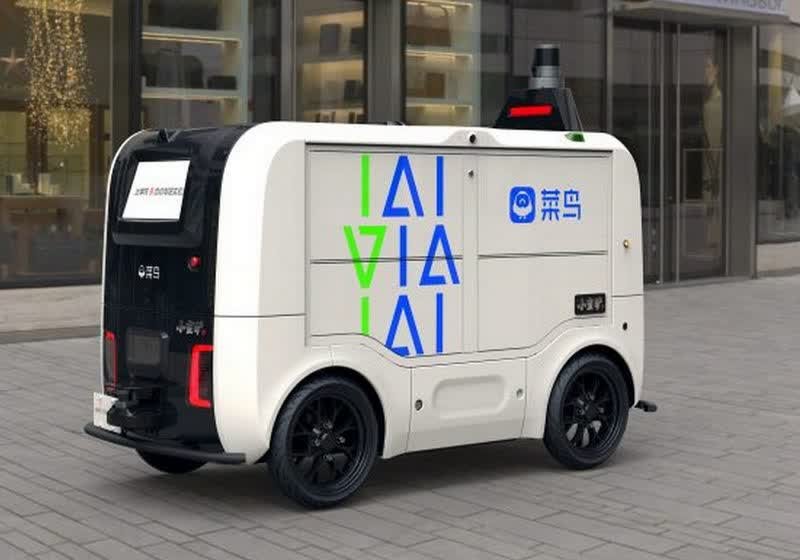
Autonomous driving technology has progressed rapidly in recent years, with many companies pursuing driverless delivery as a pathway to faster, more efficient service. In China, a wave of videos circulating on social media platforms has drawn attention to driverless delivery vans operating in urban environments. The clips, which appear to capture real-world tests and operations, show a range of behaviors that observers describe as chaotic or alarming. Reported incidents include vans leaving the roadway to travel along shoulders or embankments, navigating heavily potholed roads, blocking traffic, overturning barriers, and colliding with other vehicles. In at least one instance, a van is seen reportedly accelerating on a highway or major road, prompting discussions about the responsiveness of autonomous systems and the safeguards in place to handle unpredictable situations.
The material has attracted significant engagement online, with viewers debating the capabilities and limitations of current autonomous delivery technology, as well as the broader implications for city planning, traffic safety, and employment shifts. While some viewers frame the footage as evidence of the growing sophistication of driverless fleets, others caution that such videos may reflect test conditions, unique local contexts, or misinterpretations of what is happening in the footage. Regardless of interpretation, the videos have underscored a central question in the public discourse: how soon can fully autonomous delivery systems operate safely at scale in dense urban settings?
This phenomenon arrives at a moment when several technology firms and logistics providers are racing to deploy autonomous delivery solutions—ranging from small drones to ground-based vans—to supplement or replace human labor. The potential benefits include reduced labor costs, quicker last-mile delivery, and improved reliability, especially in high-demand periods. However, the incidents captured in the videos also highlight the risks and uncertainties that accompany on-road deployment. Engineers, regulators, and city officials are weighing how to balance innovation with safety, privacy, and public trust.
The following analysis provides context, examine possible explanations for the observed behavior, and explore the implications for the industry, policymakers, and the public.
In-Depth Analysis
Autonomous delivery vans rely on a combination of sensors, machine vision, lidar/radar, mapping data, and software that interprets the vehicle’s environment to make driving decisions. In controlled test environments, such systems can perform impressively, but busier urban streets introduce dozens of variables that can challenge even the best algorithms. The videos in question illustrate several recurring themes worth examining:
Off-road Maneuvers: Some clips show vehicles traveling on shoulders or embankments, possibly due to navigation errors, lane-keeping confusion, or attempts to maneuver around obstacles. Such behavior could stem from misinterpreted lane markings, ambiguous signage, or attempts to follow a route where the vehicle’s digital map does not perfectly align with reality.
Road Surface and Infrastructure Variability: Urban streets often present potholes, construction zones, and uneven surfaces. Autonomous systems must determine whether to slow, reroute, or proceed cautiously in these conditions. In some instances, the vehicles appear to traverse rough areas in ways that suggest the perception and planning stack may deprioritize user safety in order to maintain delivery schedules.
Traffic Interaction: Self-driving vans interacting with non-autonomous drivers, bicyclists, pedestrians, and irregular traffic patterns can lead to abrupt decisions. The footage indicates moments where vehicles impede other traffic or create bottlenecks, prompting questions about how the systems prioritize safety margins, what fallback behaviors are invoked in ambiguous scenarios, and how handoffs to human operators, if any, are managed during malfunction or loss of GPS/定位 data.
Barriers and Collisions: The appearance of vans colliding with barriers or other vehicles may reflect a combination of sensor limitations, delay in system updates, and insufficient redundancy in decision-making. It also raises concerns about the robustness of obstacle avoidance and emergency braking under real-world conditions, particularly in densely populated urban corridors.
Several factors could contribute to the observed behavior:
1) Testing Phases vs. Commercial Deployment: Some footage may originate from late-stage field tests rather than fully deployed fleets. Test environments often push systems to edge cases to identify failures, which could produce dramatic but non-representative results.
2) Model and Sensor Fusion Limits: The integration of data from cameras, lidars, radars, and maps must be seamless. Misfusion or latency can cause the vehicle to misjudge distances, speed, or intended paths, leading to unusual maneuvers.
3) Map and Localization Challenges: Urban environments can change rapidly—temporary road layouts, new construction, or incorrect map data can misguide a vehicle that relies on precise localization.
4) Weather, Lighting, and Dynamic Obstacles: Nighttime lighting, rain, and glare can degrade sensor performance, contributing to conservative behaviors or misinterpretations of the scene.
5) System Fallbacks and Safety Protocols: Autonomous fleets often have layered safety protocols, including conservative speed limits, geofenced operations, and emergency stop triggers. In some cases, these safeguards may be miscalibrated or insufficient for complex urban contexts.
From a policy and safety perspective, several questions arise:
Liability and accountability: When a driverless vehicle causes a disruption or accident, who is responsible—the manufacturer, the operator, or the fleet manager? Clear accountability is essential to ensure rapid investigation and remediation.
Public trust and perception: Dramatic footage can shape public opinion. Transparent sharing of safety data, incident reports, and corrective actions helps maintain trust and supports more informed discussion.
Regulatory frameworks: Jurisdictions vary in how they approve, monitor, and audit autonomous delivery systems. Robust standards for testing, reporting, cybersecurity, data privacy, and on-road behavior are increasingly central to policy debates.

*圖片來源:Unsplash*
- Urban planning and traffic safety: The integration of autonomous delivery fleets necessitates collaboration among technology providers, city planners, and transportation agencies. This includes evaluating lane usage, curb management, and parking patterns to minimize disruption and maximize safety.
Industry observers note that a comprehensive evaluation of these videos requires careful sourcing, verification, and context. Some content may be sensationalized or edited, which can magnify perceived risk. Nevertheless, the underlying concern—that autonomous delivery technology must demonstrate dependable performance in varied urban conditions—remains central to ongoing development and regulatory consideration.
Looking forward, several pathways could address the highlighted issues:
Enhanced software robustness: Companies are investing in more resilient perception, planning, and control stacks. Improvements may include better sensor fusion, redundancy, and rigorous testing regimes that incorporate edge-case scenarios.
Extensive on-road testing with safety monitors: Expanding supervised field tests with real-time monitoring and data capture can help identify and fix vulnerabilities before broader deployment.
Standardized safety reporting: Industry-wide standards for incident reporting, near-miss documentation, and post-incident analysis would bolster transparency and enable faster learning across teams.
Urban-specific adaptations: Tailoring autonomous systems to city contexts—such as adaptive speed controls, explicit geofenced corridors, and explicit decision policies for complex intersections—can reduce erratic behavior.
Public engagement and regulatory dialogue: Active collaboration among developers, policymakers, and the public helps establish acceptable risk levels and builds confidence in new mobility solutions.
Perspectives and Impact
The emergence of autonomous delivery fleets is part of a broader shift toward automated mobility. Proponents argue that autonomous vans can extend delivery windows, reduce labor costs, and improve reliability for 24/7 operations. They can potentially handle high-volume routes with consistent performance, particularly in predictable traffic conditions and well-mapped urban corridors. The ability to optimize last-mile logistics through autonomous fleets is appealing to retailers, food delivery networks, and e-commerce platforms seeking to shorten delivery times and lower costs.
However, the incidents captured in the videos underscore the complexities of operating in real-world environments. Urban spaces are dynamic, with unpredictable human behavior, evolving road layouts, and variable infrastructure quality. A system that performs admirably in a controlled setting may encounter significant challenges once exposed to the full spectrum of city life. The public record of incidents, responses, and improvements will shape public perception and regulatory trajectories.
Regulators are balancing innovation with safety. Some authorities are moving toward phased approvals that require accumulation of safety data, performance metrics, and independent assessments before broader operation. Others encourage pilots in designated zones or test corridors that minimize exposure to high-risk conditions while still enabling learning. Across the spectrum, a common theme is the need for rigorous safety frameworks, transparent reporting, and continuous improvement.
Economically, autonomous delivery offers potential productivity gains but also introduces transition risks for workers who may shift from traditional driver roles to other positions within the supply chain. Policymakers and companies face the task of managing this transition through retraining programs, social safety nets, and thoughtful workforce planning. Public infrastructure — including road design, curb management, and traffic signaling — will also influence how smoothly autonomous fleets integrate into daily life.
The incidents captured by the viral videos will likely continue to drive debate about the pace and manner of adoption. They highlight the reality that, while technology can deliver significant benefits, it must be implemented with careful engineering, robust safety measures, and transparent governance. For researchers and engineers, these events offer data points and case studies that can inform design choices and testing protocols. For policymakers, they underscore the importance of clear standards and oversight. For the public, they serve as a reminder that emerging mobility technologies carry both opportunity and risk.
Key Takeaways
Main Points:
– Real-world footage of driverless delivery vans on urban roads prompts scrutiny of safety and performance.
– Incidents may reflect testing conditions or limitations in perception, localization, and decision-making systems.
– Transparent safety data and robust regulatory frameworks are essential to gain public trust.
Areas of Concern:
– Liability and accountability in autonomous incidents.
– Public safety risks in high-density urban areas.
– Potential for misinterpretation or sensationalism in viral footage.
Summary and Recommendations
The viral videos of driverless delivery vans in urban China illuminate both the promise and the peril of autonomous mobility in real-world environments. They highlight how sophisticated technology must still navigate the complexities of city life, where road users, infrastructure, and conditions are in constant flux. While autonomous delivery has the potential to transform logistics by enhancing efficiency and reducing human labor, it also raises critical questions about safety, accountability, and governance.
To advance responsibly, the following recommendations are advisable:
– Require comprehensive incident reporting and public disclosure of safety performance metrics from autonomous fleets.
– Promote industry-wide safety standards that address perception, localization, planning, control, and emergency response.
– Invest in city-friendly designs, including dedicated corridors, curb management, and adaptive traffic systems, to ease integration.
– Ensure regulatory frameworks support rigorous testing, transparent evaluation, and timely remediation without stifling innovation.
– Facilitate workforce transition strategies to address employment impacts in the logistics and transportation sectors.
With measured progress guided by data, collaboration, and accountability, autonomous delivery can realize its potential while maintaining high safety and public trust standards.
References
- Original: https://www.techspot.com/news/110899-hilarious-viral-video-shows-driverless-delivery-vans-causing.html
- Additional references:
- [Relevant reference 1: Industry safety guidelines for autonomous delivery systems]
- [Relevant reference 2: Regulatory frameworks for on-road autonomous vehicle testing]
- [Relevant reference 3: Studies on perception and control in urban autonomous driving]

*圖片來源:Unsplash*