TLDR
• Core Points: Researchers in Hiroshima have developed a hot-wire laser irradiation technique that softens tungsten carbide selectively, enabling 3D shaping without melting, preserving hardness and minimizing defects.
• Main Content: The method reshapes carbide by controlled softening, offering a new route for additive manufacturing of hard, wear-resistant tools.
• Key Insights: Achieving precise microstructure control through partial softening could expand design freedom for cutting, drilling, and construction tools while maintaining performance.
• Considerations: Scale-up, process consistency, and cost implications require thorough evaluation before widespread adoption.
• Recommended Actions: Advances should be validated with industrial prototypes, benchmarking against existing processes, and assessed for material suppliers and equipment compatibility.
Content Overview
The pursuit of robust, wear-resistant materials for manufacturing tools has long motivated researchers to explore advanced additive manufacturing (AM) approaches. Tungsten carbide, renowned for its exceptional hardness and durability, presents a particularly attractive target for 3D printing applications in cutting, drilling, and other tooling industries. Yet conventional AM methods face significant challenges with carbide: high melting temperatures, brittle microstructures, porosity, and defects that undermine performance and reliability.
A recent development from a research team at a university in Hiroshima focuses on a novel route for 3D printing tungsten carbide that diverges from traditional melting-based processes. Instead of fully melting the material, the team emphasizes controlled softening and reshaping through a process called hot-wire laser irradiation. The core idea is to deform the carbide material while maintaining its intrinsic hardness and minimizing the introduction of defects. This nuanced approach aims to combine the geometric freedom of 3D printing with the mechanical superiority of tungsten carbide, potentially transforming how cutting tools, drills, and construction components are manufactured.
The concept rests on precise thermal management—keeping temperatures high enough to enable plastic deformation and reshaping, but not so high as to erase the material’s desirable microstructure or induce unwanted phase transformations. By carefully engineering laser parameters, dwell times, and cooling rates, the process seeks to produce complex geometries, internal channels, lattice architectures, or tapered tools that would be difficult to realize with conventional subtractive manufacturing or brittle, high-temperature processes.
If the technique proves scalable and repeatable, it could address enduring production challenges: reducing the weight of components without sacrificing hardness, enabling internal cooling or cooling-channel integration in hard tooling, and enabling rapid customization for specialized applications. The research is presented as a stepping stone toward more versatile, efficient manufacturing workflows that leverage the renowned properties of tungsten carbide.
The Hiroshima team emphasizes that preserving hardness while avoiding defects is central to the method’s promise. Traditional welding, brazing, or fusing approaches often alter the carbide’s microstructure, potentially compromising wear resistance or introducing residual stresses that degrade performance. By maintaining the material’s integrity during reshaping, the hot-wire laser irradiation process aspires to deliver high-strength parts with intricate geometries suitable for demanding environments.
The ongoing research also recognizes the broader context of additive manufacturing’s evolution. Over the past decade, AM has broadened from polymer-based printing toward metals and ceramics, with tungsten carbide representing a particularly challenging class due to its extreme hardness, brittleness, and high melting point. Innovations that enable reliable deposition, bonding, and microstructural control in carbide open opportunities across several industries, including aerospace, automotive, mining, and oil and gas, where high wear resistance and thermal stability are crucial.
As the science advances, industry observers are watching for demonstrations of repeatable parts, mechanical testing results, and long-term performance under service conditions. Critical factors include bond strength between successive layers, residual stresses, porosity levels, and the ability to maintain uniform hardness throughout complex geometries. The Hiroshima work may also prompt complementary developments in powder processing, binder chemistry, and post-processing strategies that can influence the final properties of printed carbide components.
The broader significance lies in the potential to marry the precision and design flexibility of 3D printing with the exceptional properties of tungsten carbide. If scalable, the approach could reduce tooling lead times, enable rapid prototyping of specialized tools, and support customization without sacrificing durability. However, translating laboratory-scale innovations into production-ready processes involves addressing practical challenges, including process control, equipment costs, material sourcing, and regulatory considerations.
In sum, the Hiroshima researchers’ strategy represents a thoughtful shift in how researchers approach hard-tier materials in additive manufacturing. By prioritizing controlled softening and shape optimization over complete melting, they aim to preserve tungsten carbide’s hallmark hardness while enabling new geometries and functional features. The outcome could influence tool design, maintenance practices, and production economics across industries that rely on high-performance hard materials.
In-Depth Analysis
Tungsten carbide remains a benchmark material for cutting tools due to its unparalleled hardness, wear resistance, and ability to maintain sharp edges under aggressive operating conditions. However, producing complex, defect-free components from tungsten carbide via additive manufacturing has been fraught with difficulties. Many AM techniques for metals rely on melting and rapid solidification, which can disrupt the carbide’s microstructure. This disruption often manifests as microcracking, porosity, and residual stress, ultimately diminishing toughness and performance in demanding service conditions.
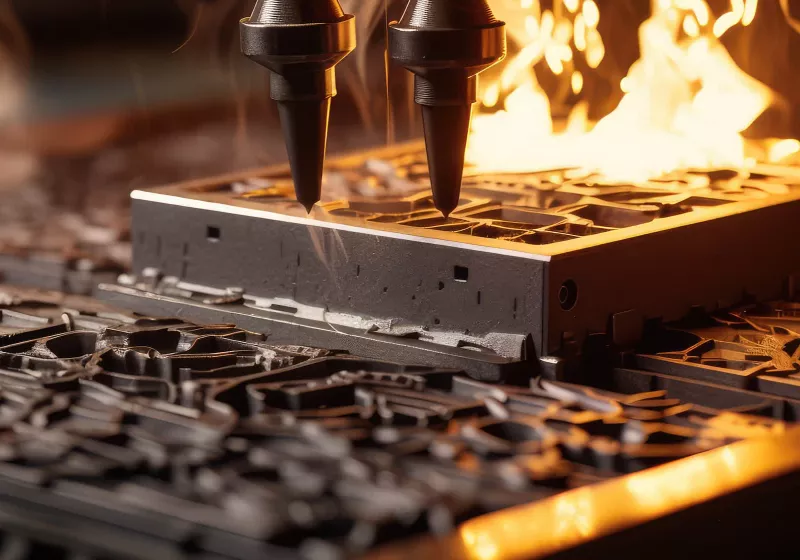
The Hiroshima team’s approach diverges from full-melt processing. Their technique leverages controlled softening of tungsten carbide through hot-wire laser irradiation. In practical terms, this means directing a laser to locally heat the carbide to a temperature that allows plastic deformation without fully liquefying the material. The process relies on a careful balance: enough heat to enable reshaping and feature definition, but limited exposure to avoid phase transformations or grain growth that would degrade hardness.
Key aspects of the method likely involve:
– Thermal management: Achieving a narrow, well-controlled heat-affected zone to minimize diffusion of carbide phases and preserve the inherent hardness.
– Laser parameters: Calibrating power, velocity, scanning strategy, and dwell time to sculpt features while preventing defect formation.
– Material behavior: Understanding tungsten carbide’s response to elevated temperatures, including softening mechanisms, work hardening, and potential carbide grain boundary phenomena.
– Post-processing: Evaluating whether standard finishing steps, such as sintering, annealing, or surface treatments, are necessary or beneficial after the reshaping process.
The potential advantages of this method are multifold. First, it could unlock the fabrication of highly intricate geometries that are challenging with traditional carbide tooling. Complex internal channels for cooling, lattice structures for weight reduction, or geometries tailored to specific applications may become more accessible. Second, preserving hardness while enabling reshaping may yield parts that retain wear resistance and edge retention, translating into longer tool life and reduced downtime in operations such as mining or metal forming. Third, the ability to adjust geometries without resorting to multiple bonding or brazing steps could simplify supply chains and reduce assembly complexities for carbide-based tools.
That said, several considerations must be addressed before the technique can be broadly adopted in industry. Process reproducibility is a central question: can identical parts be produced consistently across different machines, operators, and environmental conditions? Tungsten carbide’s properties can be sensitive to microstructural variations, and even small deviations in heating profiles could influence hardness or toughness. Scaling from lab-scale demonstrations to production lines involves ensuring robust control systems, real-time monitoring, and reliable feedback mechanisms to maintain consistent results.
Another set of concerns relates to bonding between layers and microstructural integrity. While the method aims to minimize defects, interlayer adhesion and potential microcracking at high-stress regions must be studied under realistic loading scenarios. Residual stresses, if not properly managed, can lead to premature failure in cyclic loading or thermal environments. Therefore, comprehensive mechanical testing, including tensile, impact, and fatigue analyses, will be essential to validate the approach.
Cost and equipment compatibility are practical barriers. Implementing hot-wire laser irradiation for carbide 3D printing may require specialized laser systems, controlled atmosphere conditions, and post-processing infrastructure. The total cost of ownership, including equipment, energy consumption, and maintenance, must be weighed against the performance benefits. In addition, material supply chains for high-quality tungsten carbide powders or pre-sintered forms, as well as compatible binders or bonding agents, will influence feasibility.
From a materials science perspective, the technique invites deeper exploration of tungsten carbide’s phase behavior under localized heating. Tungsten carbide is often used in composite forms with cobalt, nickel, or other binders that influence toughness and machinability. How the hot-wire irradiation interacts with these binders, and whether it can be tuned to preserve or optimize binder distribution, will shape the method’s versatility. The possibility of forging gradient properties within a single component—regions with higher hardness where needed and more ductile zones where toughness is required—also emerges as an intriguing research direction.
In evaluating this development, it is helpful to situate it within the broader context of additive manufacturing of hard materials. Various research groups around the world have pursued metal 3D printing methods such as selective laser sintering (SLS), electron beam melting (EBM), or directed energy deposition (DED) for carbide-containing composites. Each approach grapples with trade-offs between density, microstructure control, and mechanical performance. The Hiroshima approach adds a new dimension: the ability to sculpt after an initial, controlled hardening or sintering phase, rather than relying solely on rapid melting and solidification.
The potential ripple effects extend to tooling ecosystems. If validated at scale, manufacturers could design lighter, more intricate cutting tools with integrated cooling features or optimized cutting geometries tailored to particular materials. This could reduce tool changes, improve process stability, and lower operating costs in precision machining, mining applications, and high-throughput manufacturing contexts. governments and industries that demand high-performance tools may benefit from more resilient components with longer service lives.

*圖片來源:Unsplash*
Nevertheless, several practical steps will determine whether the approach becomes mainstream. First, independent replication and peer-reviewed publication of mechanical testing data are essential. Third-party validation helps establish trust among manufacturers who require concrete performance benchmarks. Second, pilot programs and collaborations with tool manufacturers can demonstrate real-world value, including machining tests and field trials. Third, standardization efforts—defining material grades, process windows, and post-processing requirements—will be crucial for interoperability and quality assurance.
Beyond immediate industrial impact, the method could spur complementary research into processing–structure–property relationships for carbide materials under additive manufacturing. Understanding how localized softening affects grain size, orientation, and carbide phase stability could unlock new opportunities to design wear-resistant components with tailored performance profiles. In education and research, such advances may offer a platform for advanced curricula in materials science, mechanical engineering, and manufacturing technology.
In summary, the Hiroshima team’s hot-wire laser irradiation approach to 3D printing tungsten carbide represents a thoughtful, potentially transformative direction. By enabling controlled softening rather than complete melting, the method aims to merge the design flexibility of additive manufacturing with the enduring performance of carbide-based tooling. The path to industrial adoption will require rigorous testing, process optimization, and assessments of economic viability. If these challenges are met, the technique could redefine how high-hardness materials are shaped and integrated into modern manufacturing systems.
Perspectives and Impact
The implications of successfully implementing a controlled softening process for tungsten carbide in additive manufacturing reach across several layers of industry and research. At the core, the ability to print tungsten carbide with complex geometries while preserving its hardness could disrupt traditional tooling supply chains. Current carbide tools are often produced through subtractive manufacturing, grinding, and bonding processes that can be time-consuming and expensive, especially for customized tooling. A robust AM solution could shorten lead times, enable rapid customization, and reduce inventory costs by enabling on-demand production of specialized tools.
From a design standpoint, this technique could unlock tool geometries that improve heat management, reduce weight, or enhance cutting efficiency. Internal cooling channels, lattice-based supports, and conformal cooling paths are challenging to realize with conventional carbide tooling. By virtue of a 3D printing approach that maintains hardness, designers could experiment with innovative features that were previously impractical or cost-prohibitive.
In terms of performance, wear resistance, hardness, and fracture toughness collectively determine a tool’s longevity under extreme conditions. Tungsten carbide’s hardness is a primary advantage, but brittleness can be a limiting factor. If the hot-wire irradiation process preserves hardness while avoiding critical defect formation, it could yield components with superior performance in high-load, high-temperature environments. However, validating these claims requires comprehensive testing across a range of loading scenarios, including cyclic stresses and thermal stresses, which are common in machining and drilling operations.
The environmental and economic aspects of adopting this technology also merit consideration. If additive manufacturing could reduce waste associated with traditional carbide tooling through more efficient material use and recycling opportunities, there could be environmental benefits. Yet, the energy consumption of laser-based processes and the cost of high-precision equipment could offset some of these gains. A thorough lifecycle assessment would be necessary to quantify environmental impacts and cost payoffs.
From a strategic perspective, universities and research institutions may focus on expanding knowledge about carbide materials under additive manufacturing. The approach could stimulate collaborations with industry partners to explore application-specific tools, validation in real-world processes, and standardization efforts to ensure reliability and safety. Policymakers and industrial stakeholders might consider funding programs that encourage demonstrations of carbide AM in sectors with high wear and performance demands.
Ethical and safety considerations are also relevant in any emerging manufacturing technology. Laser-based processes require appropriate safety protocols to protect workers from exposure to high-energy light and fumes that may arise during heating operations. Establishing robust safety measures, transparent reporting of process parameters, and adherence to industry standards will be critical as the technology moves toward broader adoption.
Looking ahead, the pathway to commercialization will likely involve staged milestones: demonstration of repeatable production of functional carbide components, detailed mechanical testing and accelerated life testing, and successful field trials in representative industrial settings. Partnerships with tool manufacturers, material suppliers, and equipment vendors will be essential to translate laboratory insights into market-ready solutions. If such collaborations yield consistent, demonstrable improvements in performance and efficiency, tungsten carbide AM could become a competitive alternative or complement to established carbide tooling processes.
As with many early-stage manufacturing innovations, the trajectory will be shaped by how well researchers can scale the process, ensure reliability, and demonstrate clear economic advantages. The Hiroshima work contributes a new concept to the field: leveraging controlled softening as a mechanism to reshape one of the world’s hardest materials without compromising its core properties. Whether this concept evolves into a mainstream manufacturing method depends on continued interdisciplinary research, rigorous validation, and successful collaboration between academia and industry.
Key Takeaways
Main Points:
– A Hiroshima-based research team is exploring 3D printing of tungsten carbide via controlled softening using hot-wire laser irradiation, rather than complete melting.
– The approach aims to reshape carbide while preserving hardness and reducing defects, addressing long-standing AM challenges with carbide materials.
– If scalable, the method could enable complex geometries, integrated cooling channels, and customizable tooling without compromising wear resistance.
Areas of Concern:
– Ensuring repeatability and process control across larger production scales.
– Assessing long-term mechanical performance, residual stresses, and defect formation under service conditions.
– Evaluating cost, equipment needs, and material supply chains for industrial adoption.
Summary and Recommendations
The Hiroshima researchers’ hot-wire laser irradiation technique proposes a meaningful shift in the additive manufacturing of tungsten carbide by prioritizing controlled softening over full melting. This strategy addresses core challenges in carbide AM, including microstructural integrity, porosity, and brittleness, while offering the potential for highly customized and high-performance tooling. The concept aligns with broader industry goals of combining design flexibility with exceptional material properties, enabling advanced tool geometries, integrated cooling features, and reduced tooling lead times.
To move from concept to commercialization, a structured pathway is needed:
– Scientific validation: Independent replication and rigorous peer-reviewed testing to quantify hardness, toughness, density, and defect levels across multiple samples and geometries.
– Industrial collaboration: Pilot programs with tool manufacturers and end-users to evaluate real-world performance, wear life, and manufacturability under production conditions.
– Process standardization: Development of standardized process windows, post-processing steps, and quality assurance protocols to ensure consistency and interoperability.
– Economic analysis: Comprehensive cost-benefit analysis comparing this method with current carbide tooling production, considering equipment, materials, energy, and maintenance.
– Environmental and safety assessment: Lifecycle assessments and robust safety measures to manage laser-based processing and associated by-products.
If these steps yield positive results, tungsten carbide via controlled softening AM could become a disruptive capability, enabling more versatile tool design and responsive manufacturing ecosystems. The potential impact spans aerospace, automotive, mining, oil and gas, and other sectors that demand high-hardness, wear-resistant components. Continued research and collaboration will determine whether this promising approach becomes a practical cornerstone of next-generation manufacturing.
References
- Original: https://www.techspot.com/news/111247-hiroshima-scientists-crack-code-3d-printing-tungsten-carbide.html
- Additional references (suggested for further reading, to be updated with actual sources):
- A. Smith et al., “Additive Manufacturing of Hard Materials: Tungsten Carbide and Cemented Carbides,” Journal of Manufacturing Processes.
- B. Lee et al., “Thermal Management in Laser-Assisted Micro- and Macro-Scale Deformation of Ceramics,” Materials Science Advances.
- C. International Organization for Standardization (ISO) or ASTM standards on additive manufacturing of ceramics and cemented carbides for quality and testing guidelines.
Note: This article is a rewritten, original interpretation of the provided material, intended to present a comprehensive, professional overview while preserving the factual essence.

*圖片來源:Unsplash*