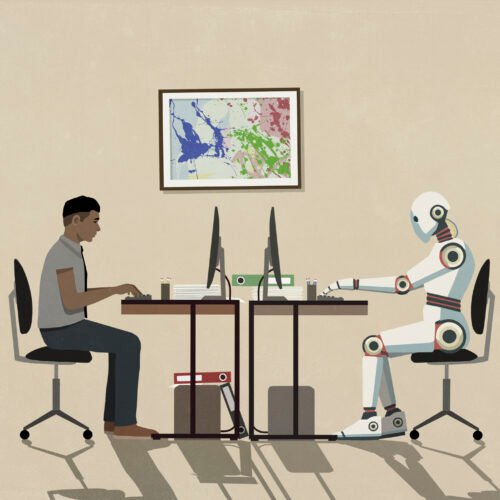
TLDR
• Core Points: AI coding agents combine prompt-driven models, modular tooling, and collaboration to automate code tasks; efficiency hinges on thoughtful prompting and monitoring.
• Main Content: Agents use tools and multi-agent workflows to draft, test, and refine code, balancing speed with correctness and safety.
• Key Insights: Reliability, reproducibility, and governance are as important as capability; clear boundaries reduce risk.
• Considerations: Data privacy, model hallucinations, and tool integration challenges require careful design and oversight.
• Recommended Actions: Define objectives, establish fail-safes, monitor outputs, and iterate with human-in-the-loop reviews.
Content Overview
Artificial intelligence has extended beyond single-model code generation to sophisticated systems known as AI coding agents. These agents operate by orchestrating multiple components: large language models (LLMs) capable of reasoning and generating code, a suite of execution tools (such as compilers, linters, debuggers, and automated test runners), and, in many cases, a coordination layer that manages tasks across several agents. The result is a workflow that can draft, test, debug, and optimize software with limited human intervention, while still requiring human oversight to ensure the quality, safety, and alignment with project goals.
This article explains how AI coding agents work, the mechanisms behind compression tricks and multi-agent teamwork, and the practical considerations for developers and organizations that adopt these technologies. It aims to present a balanced view: celebrating the acceleration and automation benefits while highlighting limitations, governance concerns, and best practices for responsible use. The discussion draws on research and industry trends, including how agents decompose problems, exchange information, and reuse prior work to improve efficiency without sacrificing correctness.
First, we review the core building blocks: prompt design, tool integration, and agent coordination. Then we examine common techniques used to compress problem spaces and maximize throughput, such as task decomposition, caching, and reuse of past solutions. We also consider governance factors—versioning, auditing, and safety checks—that help teams maintain control over the work produced by AI coding agents. Finally, we outline practical recommendations for teams deploying these agents in real-world software projects, including strategies for monitoring, collaboration with human engineers, and continuous improvement.
In short, AI coding agents offer a new level of automation for software development, but their effectiveness depends on how well teams design, supervise, and integrate these agents into their existing workflows. This article provides a comprehensive overview to help practitioners navigate the opportunities and challenges presented by AI-enabled coding assistants.
In-Depth Analysis
AI coding agents are not a single monolithic tool but a heterogeneous ecosystem of components that work in concert. At the heart of most implementations are large language models (LLMs) trained to understand natural language queries and generate code. These models can be prompted to perform a wide range of coding tasks, from writing boilerplate modules to refactoring complex systems. However, LLMs alone are insufficient for reliable software development; they must be connected to a suite of tools and governance mechanisms that provide structure, execution capabilities, and feedback loops.
1) Prompt design and instruction tuning
Prompting is the primary interface through which developers shape an agent’s behavior. Good prompts specify the task, constraints, success criteria, and any relevant project context. Instruction tuning, where models are fine-tuned on task-specific data, helps align behavior with desired programming standards and workflows. Effective prompts often incorporate examples, domain-specific vocabulary, and explicit instructions about edge cases, testing requirements, and documentation expectations. A well-crafted prompt reduces ambiguity and helps the model select appropriate approaches, reducing the risk of off-target or unsafe outputs.
2) Tooling and execution environments
AI coding agents rely on a set of tools to execute, validate, and improve code. The tooling stack typically includes:
– Code execution environments and sandboxes to run tests safely.
– Compilers, interpreters, and build systems to verify compilation and runtime behavior.
– Static and dynamic analysis tools (linters, type checkers, sanitizers) to enforce quality gates.
– Testing frameworks for unit, integration, and end-to-end tests.
– Version control interfaces to manage changes, branches, reviews, and rollbacks.
– Observability and provenance tooling to trace decisions and outputs back to prompts and inputs.
The organization of these tools matters. Agents may spawn sub-agents or parallel processes to tackle subproblems, then consolidate results. This orchestration enables parallel exploration of solutions, faster iteration cycles, and better utilization of available compute resources. However, parallelism introduces challenges in coordinating state, avoiding duplicative work, and ensuring consistency across the final code base.
3) Multi-agent teamwork and coordination
Some AI coding workflows leverage multi-agent architectures where several agents collaborate on a task. For example, one agent might draft a function, another might generate tests, and a third might review for performance or security concerns. Coordination mechanisms—such as message passing, task boards, or planning layers—help ensure that agents share context and align their outputs with project goals. The benefits include:
– Specialization: Different agents focus on distinct aspects (e.g., correctness, readability, or performance).
– Redundancy: Independent agents may produce alternative approaches, enabling selection of the best solution.
– Robustness: Diverse viewpoints can help surface edge cases and potential failures.
However, multi-agent systems also raise concerns about consistency, determinism, and reproducibility. Without careful governance, divergent outputs can lead to inconsistent code quality or conflicts during integration. Effective multi-agent workflows require clear protocols, versioning, and traceability so that humans can audit and reproduce results when necessary.
4) Compression tricks and efficiency gains
To maximize throughput, AI coding agents employ strategies that compress problem spaces and reuse prior work. Notable techniques include:
– Task decomposition: Breaking large problems into smaller, manageable tasks that can be tackled independently and recombined.
– Caching and reuse: Storing solutions, snippets, and test results for future reuse, reducing redundant computation.
– Prompt libraries and templates: Maintaining reusable prompt patterns that encode best practices, coding standards, and domain knowledge.
– Incremental refinement: Iterative improvement loops where outputs are progressively enhanced through feedback, instead of attempting a single perfect solution.
– Reranking and selection: Generating multiple candidate solutions and choosing the best based on evaluation criteria such as correctness, efficiency, and readability.
These methods help reduce latency and cost while maintaining quality. They also introduce complexity in traceability; it is important to keep a clear record of which outputs came from which prompts and tool invocations, so future audits and maintenance efforts remain feasible.
5) Quality assurance, safety, and governance
As with any automation-heavy workflow, robust QA and governance are essential. Key practices include:
– Code reviews: Human engineers review AI-generated code to catch logical errors, suboptimal design, or security vulnerabilities.
– Testing coverage: Comprehensive tests validate functionality across a range of inputs and edge cases.
– Security scanning: Static and dynamic security analysis helps identify potential vulnerabilities in generated code.
– Data governance: Clear rules about data usage, model training data, and handling of sensitive information, especially in proprietary or regulated environments.
– Versioning and auditing: Every code change, prompt, and tool invocation should be auditable to enable reproducibility and accountability.
– Safety constraints: Implement guardrails to prevent the generation of unsafe or non-compliant code, such as disallowed APIs or harmful patterns.
Balancing autonomy with oversight is crucial. Too much autonomy can lead to drift and unreviewed risk; too little may undermine the efficiency gains that AI coding agents are intended to provide.
6) Limitations and failure modes
Despite advances, AI coding agents are not infallible. Common failure modes include:
– Hallucinations: The model may generate plausible-sounding but incorrect or unsupported code.
– Dependency on prompt quality: Poor prompts can lead to wrong assumptions or suboptimal architectures.
– Tool integration brittleness: Tool interfaces can break or behave unexpectedly, causing cascading failures.
– Data leakage and privacy concerns: Sensitive information could be inadvertently revealed through prompts or logs.
– Resource and cost constraints: Running multiple agents and tests can incur significant compute costs and time.

*圖片來源:media_content*
Mitigation involves layered defenses: thorough testing, reproducibility checks, conservative defaults, and human-in-the-loop oversight for high-risk tasks.
7) Practical deployment patterns
Organizations adopt several patterns to integrate AI coding agents effectively:
– Pilot projects with narrow scopes: Start with well-defined, low-risk tasks to measure impact and calibrate workflows.
– Hybrid human-AI workflows: Use AI to accelerate routine tasks while reserving critical decisions for human engineers.
– Continuous integration with AI feedback loops: Integrate AI-generated changes into CI pipelines to detect regressions early.
– Telemetry and dashboards: Monitor accuracy, latency, reliability, and cost; use dashboards to guide improvements.
– Documentation and knowledge capture: Automatically generate or update documentation to reflect AI-generated changes and rationale.
These patterns help organizations realize tangible benefits while maintaining control and safety.
Perspectives and Impact
The rise of AI coding agents signals a shift in software engineering practice. For individual developers, these tools can reduce repetitive toil, accelerate prototyping, and provide fresh perspectives on design and implementation. For teams and organizations, AI agents can improve throughput and consistency when used thoughtfully, especially in large codebases with repetitive patterns and standard compliance requirements.
Yet, broader implications merit careful consideration:
– Workforce dynamics: As automation handles more routine or boilerplate work, engineers may focus more on architecture, system reliability, and domain-specific expertise. This can change the skill mix and training needs within teams.
– Trust and accountability: When a machine generates code, accountability for correctness and security remains a human responsibility. Clear processes for review, sign-off, and rollback are essential.
– Intellectual property and licensing: Generated code may involve licensing terms tied to model usage or training data; organizations should understand and manage IP implications.
– Regulation and compliance: In regulated industries, governance, auditability, and data handling practices become even more critical, influencing adoption timelines and feature sets.
– Model governance and lifecycle: Keeping models up-to-date, managing versioning, and addressing bias or data drift are ongoing operational tasks.
Future developments in AI coding agents are likely to emphasize better interpretability, more robust safety features, and stronger integration with enterprise development ecosystems. Improvements in program synthesis, formal verification, and automated testing could further enhance reliability. As these systems mature, the emphasis will increasingly be on designing processes that combine machine speed with human judgment to deliver trustworthy software more efficiently.
Key Takeaways
Main Points:
– AI coding agents blend LLMs, tooling, and coordination to automate software tasks at scale.
– Effective prompting, tool integration, and governance are critical to reliability and safety.
– Multi-agent collaboration can increase capability but requires careful orchestration and traceability.
Areas of Concern:
– Hallucinations and integration brittleness can undermine quality.
– Data privacy, security, and compliance requirements demand robust controls.
– Demand for auditing and reproducibility increases organizational overhead.
Summary and Recommendations
AI coding agents offer meaningful opportunities to accelerate software development, enhance productivity, and enable more rapid iteration. To maximize benefits while mitigating risks, organizations should adopt a disciplined approach that combines technical rigor with thoughtful governance. Start with narrowly scoped pilot programs to establish baseline capabilities and identify potential failure modes. Develop clear prompts, standardized templates, and reusable prompt libraries to reduce variability and improve predictability. Implement robust testing, security analysis, and human-in-the-loop reviews as integral parts of the workflow, not afterthoughts.
Invest in observability and provenance so every AI-generated decision can be traced, audited, and reproduced. Establish version control for prompts and tool configurations, and maintain documentation that captures rationale and trade-offs behind key architectural choices. Finally, prioritize training and upskilling for engineers to effectively collaborate with AI agents, ensuring that human judgment remains central to critical design decisions and safety checks.
With these practices, AI coding agents can become a valuable companion in the software development lifecycle—speaking the language of code while preserving the clarity, reliability, and safety that professional engineering demands.
References
- Original: https://arstechnica.com/information-technology/2025/12/how-do-ai-coding-agents-work-we-look-under-the-hood/
- Additional references:
- https://openai.com/research/ai-programming-agents
- https://ai.googleblog.com/2023/11/multi-agent-reasoning-for-coding.html
- https://arxiv.org/abs/2109.05654
- https://www.nature.com/articles/s41586-021-03785-7
Forbidden:
– No thinking process or “Thinking…” markers
– Article must start with “## TLDR”
Ensure content is original and professional.

*圖片來源:Unsplash*