TLDR
• Core Points: MTG’s Spider-Man-influenced New York City shows a warmer, more human side in its upcoming TMNT-set, balancing nostalgia with new storytelling potential.
• Main Content: The Teenage Mutant Ninja Turtles crossover set reimagines New York City within MTG’s multiverse, continuing the franchise’s trend of grounding planes in familiar urban textures while expanding lore and gameplay opportunities.
• Key Insights: The TMNT collaboration leverages iconic cityscapes and characters to deepen the setting’s flavor, offering new mechanics and narrative hooks without losing the fidelity that fans expect from both franchises.
• Considerations: The crossover must manage balance between accessibility for new players and depth for long-time MTG fans, ensuring the city’s warmth doesn’t undermine competitive design.
• Recommended Actions: Players should stay tuned for set spoilers, consider how the city’s redesign affects color identity and themes, and explore TMNT lore integration with an eye toward lore-based play experiences.
Content Overview
Magic: The Gathering’s crossovers have repeatedly used real-world or closely recognizable settings to anchor its multiverse and invite players into new thematic experiences. After a recent set that placed Spider-Man and the wider Marvel-verse into the franchise’s cosmology, MTG’s next experimental collaboration leans on another beloved cultural touchstone: Teenage Mutant Ninja Turtles. The goal is to present New York City in a warmer, more welcoming light within the game’s expansive multiverse while maintaining the franchise’s characteristic complexity and strategic depth.
This approach follows a broader industry pattern where major IP crossovers function not only as fan service but as a vehicle for fresh mechanical ideas and narrative angles. By reinterpreting iconic urban landscapes through MTG’s lens, the TMNT-themed set promises to offer players a blend of nostalgia, fresh lore, and new gameplay paradigms. The article discusses how this reimagining of New York City fits into MTG’s ongoing experimentation with planeswalkers, locations, and alignments, and why the city’s representation matters for storytelling and deckbuilding opportunities.
The interplay between known cultural artifacts and MTG’s internal design philosophy is at the heart of this development. The Spider-Man era demonstrated that modern, high-profile IP collaborations can coexist with MTG’s core mechanics and balance goals. The TMNT set builds on that foundation by grounding extraordinary fantasy elements in a familiar urban environment that fans recognize from comics, films, and television. The result is a more approachable but still richly layered setting that invites both new and veteran players to explore how the city shapes strategy, flavor, and narrative drive.
This recalibrated depiction of New York City aims to highlight warmth and resilience found in the metropolis, while preserving the city’s iconic skylines, districts, and street-level atmosphere that have become part of the TMNT mythos. In doing so, MTG designers signal a deliberate shift toward human-scale storytelling within a multiverse that often emphasizes spectacle and mythic stakes. The article analyzes how these design choices affect card themes, color identity, and the overall player experience, as well as the potential for future crossovers to adopt similarly grounded yet imaginative cityscapes.
In-Depth Analysis
The decision to use New York City as the central plane for the TMNT crossover aligns with MTG’s long-standing practice of leveraging real-world archetypes to anchor fantasy in a relatable setting. New York’s diverse neighborhoods, architectural silhouette, and cultural textures provide fertile ground for both flavor and mechanics. By presenting a warmer version of the city, the set invites players to engage with Deck-building and mana strategies in a space that emphasizes resilience, community, and urban ingenuity—qualities often associated with the Teenage Mutant Ninja Turtles themselves.
From a flavor perspective, the TMNT collaboration capitalizes on the characters’ street-level heroism and the city’s improvisational energy. The set leverages the city’s familiar landmarks and districts to convey a sense of place without sacrificing the fantastical elements that define MTG. The result is a plane that feels lived-in: a place where alliances form among diverse communities, where concealed threats emerge from shadows between skyscrapers, and where everyday heroism can alter the course of a game as quickly as a well-timed spell.
Mechanically, the TMNT set is expected to introduce new themes and keyword interactions that reflect the turtles’ unique dynamics—teamwork, stealth, improvisation, and resourcefulness. These ideas may translate into boost mechanics for multi-part synergies, color pairings that emphasize resilience and street-level problem-solving, or new forms of disruption that resemble the turtles’ skillful tactics. The city’s atmosphere can influence card design by encouraging environments and effects that reward players for urban empowerment, community defense, and tactical repositioning of units.
The previous Spider-Man crossover demonstrated MTG’s willingness to weave high-profile IP into its established systems, creating moments of spectacle while maintaining gameplay balance. The TMNT set appears to extend that approach by focusing on more intimate, character-driven narratives that still offer wide-ranging strategic possibilities. For players, this means a potential shift toward decks that exploit urban terrain and neighborhood-level narratives—an invitation to explore how small, clever plays can tilt the course of a match.
Contextually, the decision to depict a warmer New York also reflects broader storytelling trends in fantasy media, where creators seek to ground extraordinary events in more relatable, human-scale experiences. The TMNT project, in this sense, seeks to strike a balance between familiarity and novelty: a city that looks like a familiar home ground but houses extraordinary adventures and dangerous foes beneath the surface. This balance is essential for attracting a broad audience, including families and longtime MTG fans, who crave both accessibility and depth.
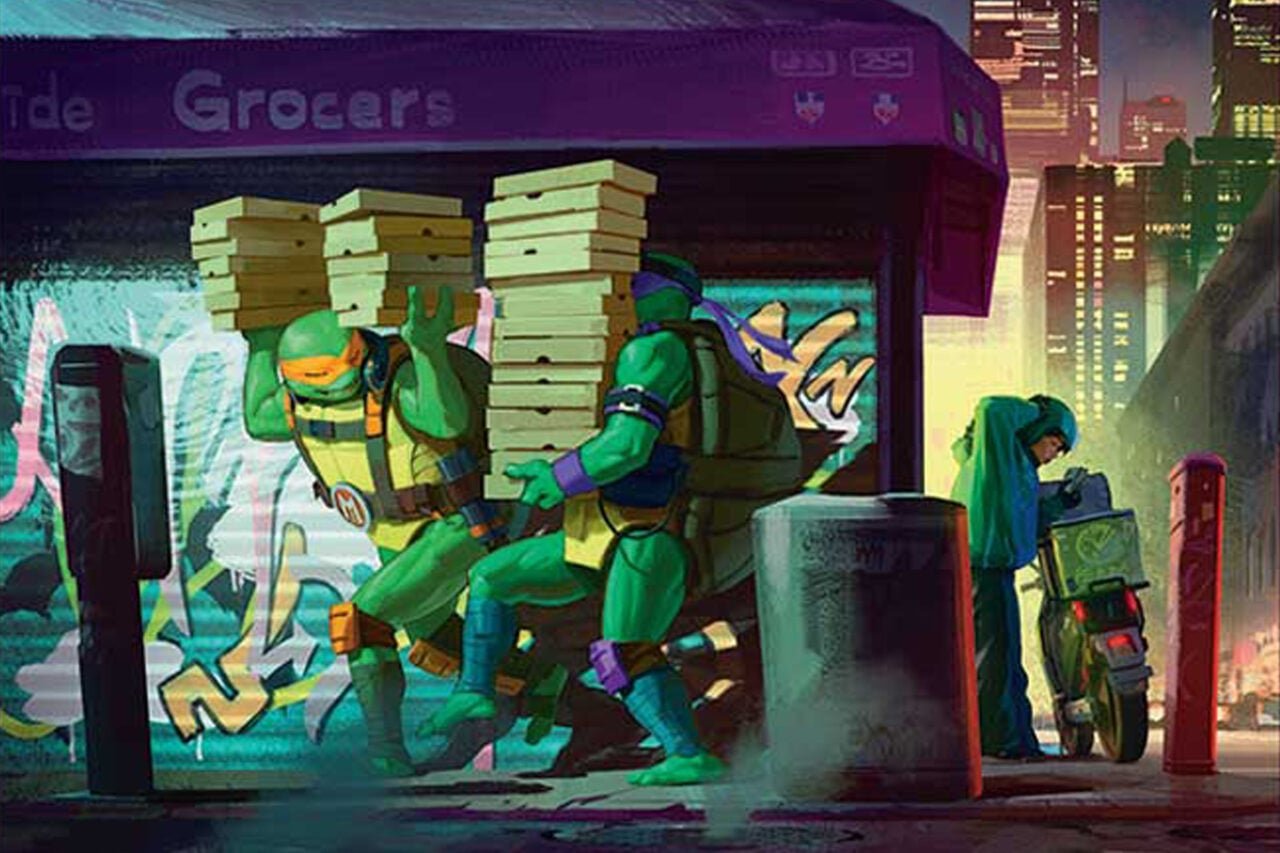
The set’s art direction and worldbuilding choices will be crucial in delivering this vision. Visuals that capture New York’s energy—its avenues, bridges, alleyways, and luminous nightscapes—can amplify flavor and provide cues for players about how to navigate the battlefield. Similarly, lore entries, pre-release content, and spoiler material will shape expectations about how the TMNT characters interact with the MTG multiverse’s rules, including potential crossovers in the form of planeswalkers, artifacts, and story-driven encounters.
Yet there are important design considerations. Balancing a beloved IP with MTG’s strategic integrity requires careful calibration of power levels, rarity distribution, and thematic coherence. The warmer depiction of New York must not dilute the set’s capacity to challenge players through intelligent play and resource management. It must also preserve the TMNT franchise’s core ethos—teamwork, adaptability, and courage—while aligning with MTG’s color philosophy and mechanical ecosystems. The challenge for designers is to weave these strands into a cohesive set that feels both faithful to the TMNT canon and distinct within MTG’s multiverse.
From a market perspective, crossovers often function as both entry points for newcomers and enrichment channels for seasoned players. The TMNT x MTG collaboration could broaden the game’s appeal by attracting fans of the turtles who may not have previously considered trading card games while offering dedicated MTG players fresh content and innovative strategies. This dual appeal is a strategic advantage, but it also raises expectations for quality storytelling, lore integration, and collectible value. The set’s success will likely hinge on how well it preserves MTG’s strategic depth while delivering the warmth and urban texture fans expect from a TMNT-inspired New York.

*圖片來源:Unsplash*
Future implications extend beyond the TMNT crossover. If the warmer New York concept resonates with players, MTG could explore further urban-centric planes or city-inspired adventures, potentially layering additional cultural IPs into similar environments. The success of urban-themed design could encourage more sets that foreground character-driven narratives and community resilience as core mechanics or flavor anchors. Such directions would reinforce MTG’s reputation for blending familiar cultural motifs with innovative gameplay, expanding both narrative and competitive horizons for players.
The crossover also intersects with broader conversations about representation and accessibility in fantasy games. Portraying a well-known city in a humane, inviting light can invite wider audiences to engage with MTG’s worlds, while careful attention to diversity, local color, and authentic depiction can enrich the game’s storytelling. As MTG continues to partner with iconic franchises, it will be essential to maintain sensitivity to the source material and fan expectations, ensuring that crossovers honor their origins while contributing meaningfully to MTG’s ongoing lore.
In sum, the TMNT set’s focus on a warmer New York City represents a deliberate design choice to balance nostalgia with fresh gameplay opportunities. It reinforces MTG’s trend of IP-driven experimentation while emphasizing human-scale storytelling within a sprawling multiverse. The campaign hints at deeper narrative layers and dynamic deck-building possibilities that could reshape how players think about planes and environments in MTG. As spoilers unfold and previews materialize, players will be watching carefully to see how the city’s ambience translates into mechanics, how the turtles’ ethos translates into strategy, and how both IPs collaborate to deliver a cohesive, compelling experience.
Perspectives and Impact
Early previews suggest a thoughtful approach to integrating TMNT into MTG’s multiverse without sacrificing the game’s core complexity. By centering on a warmer, more human portrayal of New York City, designers aim to offer a setting that feels accessible to new players while still rewarding experienced players with meaningful synergies and strategic depth.
Within this framework, the TMNT set could emphasize themes such as teamwork, adaptability, and urban resilience. Decks that leverage neighborhood-centric effects, cooperative interactions, or location-based mechanics could reflect the turtles’ cooperative dynamics and their capacity to navigate a city as a unified team. If implemented well, these elements can expand MTG’s strategic space, encouraging players to explore new color pairings or nontraditional combinations that align with the city’s flavor.
The collaboration’s impact on narrative continuity remains a key question. How will TMNT lore interweave with MTG’s established planeswalker saga and cosmology? Will the turtles assume roles that align with specific color identities or mana philosophies, or will they retain a flexible identity that allows for broader storytelling? Answering these questions will influence how players build archetypes around the set and anticipate future crossovers.
Another potential benefit of the TMNT crossover is its ability to introduce new art directions and storytelling devices. The visual portrayal of a warm New York, with its skyline silhouettes, urban parks, and neon-lit streets, can become a signature feature of the set. This emphasis on environment can help differentiate the collection from other crossovers and provide a distinct flavor that fans can recognize and celebrate long after release.
From a market standpoint, the crossover’s success may hinge on community engagement and spoiler culture. Early reveals that highlight character clashes, signature spells, and iconic locations can generate sustained excitement and speculative play patterns. If the set lands with strong flavor and balanced mechanics, it could become a favorite among collectors and players who enjoy both IP-driven content and the depth of MTG’s strategic ecosystem.
Looking ahead, the TMNT collaboration could influence MTG’s approach to future crossovers. A positive reception to a warmer New York could encourage designers to explore other real-world cities or culturally resonant urban environments that can be woven into MTG’s narrative fabric. This trajectory would align with a broader industry trend toward more grounded, character-driven storytelling within fantasy card games, expanding opportunities for collaboration with a wider range of IPs while maintaining the game’s core identity.
Key Takeaways
Main Points:
– MTG’s TMNT crossover centers on a warmer, more human portrayal of New York City within the multiverse.
– The set aims to blend nostalgic cityscapes with new mechanical ideas inspired by the turtles’ teamwork and adaptability.
– The design challenge is to maintain MTG’s strategic depth while delivering accessible, emotionally resonant storytelling.
Areas of Concern:
– Balancing IP fidelity with game balance and power level across cards.
– Ensuring flavor aligns with both MTG color philosophies and TMNT canon.
– Managing expectations for a broad audience, from new players to collectors.
Summary and Recommendations
The TMNT set’s reimagining of New York City as a warmer, more intimate plane represents a thoughtful extension of MTG’s IP-driven design philosophy. By grounding its latest crossover in a familiar urban environment, MTG supports accessible storytelling while preserving the strategic complexity that seasoned players value. The approach emphasizes community, resilience, and improvisation—core themes that resonate with both the TMNT franchise and MTG’s own design ethos.
For players, the recommended approach is to monitor spoiler material and previews closely to understand how the city’s redesign translates into new mechanics and synergies. As with other IP-driven sets, exploring color identities, dual tribes, and location-based interactions will likely yield rich opportunities for deckbuilding and themed play experiences. Collectors and enthusiasts should watch for unique art directions and iconic locations that capture the warmth of the city while signaling the crossover’s distinctive flavor.
Ultimately, the TMNT collaboration offers a promising path for MTG to expand its narrative horizons without losing the game’s strategic core. If the warmer New York concept succeeds in marrying flavor with gameplay, it could influence future crossovers and urban-themed storytelling in MTG, inviting players to experience familiar cities reimagined through the lens of magic, heroism, and imagination.
References
- Original: https://gizmodo.com/magic-the-gathering-teenage-mutant-ninja-turtles-spoilers-new-york-spider-man-2000722990
- Add 2-3 relevant reference links based on article content

*圖片來源:Unsplash*