TLDR
• Core Points: Spaced repetition optimizes review timing to preempt forgetting; SM-2, developed by Piotr Woźniak in 1987, underpins many modern tools.
• Main Content: The method schedules reviews to occur just before memory fades, improving long-term retention and study efficiency.
• Key Insights: Simple, principled algorithms can dramatically change learning outcomes; practical deployment hinges on adapting to individual item difficulty.
• Considerations: Real-world effectiveness depends on consistent use, proper calibration of ease factors, and content quality.
• Recommended Actions: Try a spaced-repetition system based on SM-2, monitor your recall difficulty, and adjust schedules to your learning goals.
Content Overview
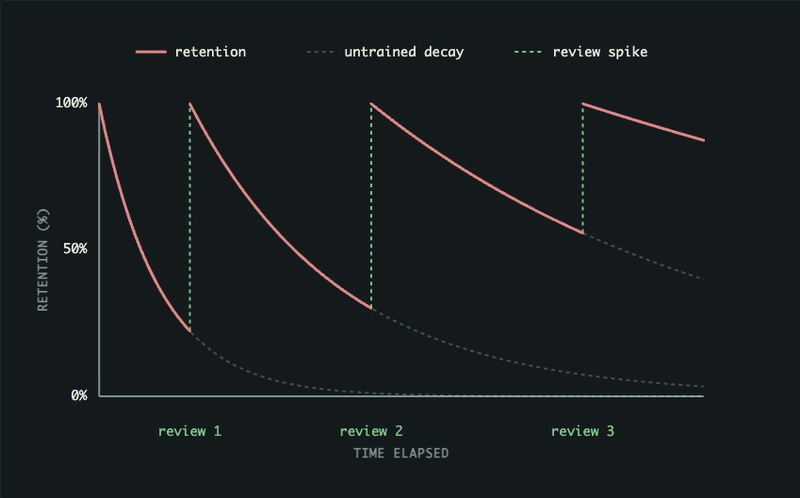
Most learners study in inefficient patterns: they review information either too soon or too late. Reviewing too early wastes time and effort, while reviewing too late means re-encountering material after it has already faded from memory. The central question, therefore, is: when is the optimal moment to review something so that learning is reinforced just as it begins to wane?
In 1987, a Polish researcher named Piotr Woźniak proposed a surprisingly straightforward solution. He introduced an algorithm that schedules reviews so that you encounter information right before you are likely to forget it. This concept became known as the SM-2 algorithm. Over the years, variations and refinements of SM-2 have powered a wide range of spaced-repetition tools used by millions of learners worldwide. These systems echo a core principle: the timing of reviews matters as much as the material itself.
This article delves into how SM-2 works, why it is effective, and what implications it has for modern study practices. By unpacking the mechanics, benefits, and potential limitations, we can better understand how to apply spaced repetition to different domains—from language acquisition to professional training.
In-Depth Analysis
Spaced repetition sits at the intersection of cognitive psychology and practical study methods. The fundamental idea is straightforward: memories become less reliable over time, but each successful retrieval strengthens the memory trace. If a learner reviews the material at just the right interval—before the memory decays too far—the overall retention rate improves with less study time than cramming or random review.
SM-2 specifically models how to schedule repetitions for individual items. The algorithm was originally developed for flashcard systems but has since influenced a spectrum of applications, including language learning apps, exam prep tools, and professional certification platforms. The basic premise is that each item has an associated “ease” factor that reflects how easy or difficult it is for the learner to recall. When a learner answers a card correctly, the system increases the interval before the next review; when the learner struggles, the interval is shortened. The goal is to tailor review timing to the learner’s demonstrated performance, thereby maintaining an optimal balance between repetition and novelty.
Key components of SM-2 include:
- Difficulty assessment: Each item has an estimated difficulty influenced by past performance. If a learner consistently answers correctly, the system gradually lengthens the intervals.
- Interval scheduling: The program sets intervals (in days or hours) between consecutive reviews. The sequence typically follows a pattern of expanding intervals as the learner demonstrates mastery.
- Quality feedback: After each review, the learner rates their recall quality. This rating informs how the system adjusts future scheduling and the ease factor.
- Ease factor: A numerical value that adapts based on recall success. A higher ease factor means longer intervals, while a lower one signals more frequent reviews or even re-studying.
Critically, SM-2 does not force a fixed schedule. Instead, it uses learner performance to adapt in real time. This dynamic approach acknowledges that not all items are equally difficult, and that a learner’s knowledge state can change over time. The system’s effectiveness hinges on accurate self-assessment of recall and consistent engagement with the review process.
Real-world implementations of SM-2-inspired systems often incorporate enhancements. Some versions allow for more nuanced quality ratings, more granular intervals, or adjustments based on the learner’s overall progression across multiple items. Others may integrate metadata about item difficulty, context, or interleaving with related topics. Despite these variations, the core principle remains the same: optimize repetition timing to maximize retention with efficient study time.
From a cognitive standpoint, SM-2 aligns with spaced-repetition research showing that spaced reviews yield better long-term retention than massed practice. The spacing effect, observed in numerous experiments, demonstrates that distributing practice over time helps solidify memory traces. SM-2 operationalizes this insight into a practical tool: a personalized, adaptive schedule that responds to how well a learner recalls each item.
Practical considerations for applying SM-2 include:
- Start with a broad, varied deck: A mix of well-known and new items can help calibrate the system and prevent early frustration.
- Be honest in quality judgments: The recall quality rating should reflect actual memory strength, not perceived effort or time spent.
- Maintain consistency: Irregular use can undermine the learning curve. Regular, scheduled reviews reinforce the positive feedback loop.
- Content quality matters: The algorithm can optimize scheduling, but it cannot compensate for poorly designed material. Clear prompts, accurate answers, and well-structured content amplify effectiveness.
- Monitor and adjust: If an item consistently shows low recall, consider rephrasing, adding context, or breaking it into smaller pieces. The goal is to maintain accurate representations in memory with reasonable cognitive load.
Beyond flashcards, the SM-2 approach has implications for education design:
- Personalization: Adaptive scheduling can tailor learning experiences to individual strengths, weaknesses, and pacing preferences.
- Efficiency: By reducing unnecessary repetitions and focusing on relevant recall challenges, learners can achieve comparable or superior retention with less study time.
- Long-term outcomes: Spaced repetition supports durable knowledge, which is particularly valuable for language learning, medical education, law, and other domains requiring robust retention.
However, several caveats deserve attention. The effectiveness of SM-2 depends on user engagement and accurate self-assessment. Poor self-rating or inconsistent practice can degrade performance. Moreover, the model assumes that each item is discrete and can be revisited independently, which may not capture the interconnectedness of complex knowledge domains. Some learners may benefit from integrating SM-2 with broader study strategies, such as active recall with elaboration, concept maps, or application-based practice.

*圖片來源:Unsplash*
In sum, SM-2 embodies a pragmatic, data-driven method for optimizing study timing. It translates a fundamental learning principle—the spacing effect—into a software-driven process that adapts to the learner’s performance. While not a universal cure-all, SM-2 provides a robust framework for building durable knowledge with greater efficiency. As digital learning continues to expand, the influence of SM-2 and its variants is likely to persist, informing how educational technologies structure repetition, practice, and assessment.
Perspectives and Impact
The SM-2 algorithm’s enduring influence stems from its balance of simplicity and effectiveness. Its design is not about reinventing memory science but about operationalizing established insights into a practical tool that learners can apply consistently. By focusing on the timing of reviews, SM-2 helps learners overcome two common errors: premature repetition and late-stage forgetting. The former wastes time and can erode motivation, while the latter results in fragmented knowledge and diminished transfer to new contexts.
The diffusion of SM-2 across consumer and professional learning platforms has democratized access to evidence-based study techniques. Language-learning apps, medical exam prep programs, and certification training platforms have integrated SM-2-inspired systems to manage vast quantities of study material. This shift has several notable implications:
- Learner autonomy: Individuals can take control of their study pace, with the system adapting to their performance rather than forcing a rigid schedule.
- Data-driven feedback: Users receive concrete indicators of progress, such as recall accuracy and changing ease factors, enabling more informed study decisions.
- Scalable personalization: Across millions of users, SM-2-like systems can tailor repetition schedules to diverse needs, supporting both novices and advanced learners.
Yet, there are challenges and opportunities for refinement. Critics note that the quality of outcomes depends on engagement and the accuracy of self-assessment. When learners provide inconsistent feedback, the algorithm’s pacing may drift away from optimal timing. Another area for improvement is integrating meaningful learning strategies beyond rote recall. For complex subjects, rote flashcard-style repetition can be less effective unless combined with deeper learning activities—such as problem-solving practice, context-rich examples, or reflective consolidation.
Looking ahead, future iterations of SM-2-inspired systems may incorporate richer representations of knowledge, such as semantic networks or concept maps, to capture inter-item relationships. They could also leverage machine learning to predict difficulty shifts based on broader performance trends, emotional states, or fatigue. Additionally, combining spaced repetition with retrieval-based practice, interleaved topics, and spaced testing could yield even stronger long-term retention and transfer.
From an educational policy perspective, spaced repetition tools have the potential to support lifelong learning. They can help professionals maintain credentialing, preserve critical domain knowledge, and facilitate rapid onboarding in fast-changing fields. Teachers and instructional designers can harness SM-2 principles to structure curricula that reinforce essential concepts over time, aligning assessment with durable understanding rather than short-term memorization.
Overall, SM-2 represents a pivotal contribution to the learning toolkit. Its success lies in translating a core cognitive insight into a practical mechanism that scales across individuals and domains. By encouraging consistent practice, adaptive timing, and data-informed adjustments, the SM-2 approach continues to shape how people study, learn, and retain information in an increasingly information-rich world.
Key Takeaways
Main Points:
– Spaced repetition schedules reviews to occur just before forgetting, maximizing retention.
– SM-2 provides a practical, adaptive mechanism to personalize review intervals based on recall performance.
– Consistent use and honest recall quality judgments are essential for effectiveness.
Areas of Concern:
– Dependence on accurate self-assessment and regular practice; poor input reduces benefits.
– Relying solely on rote flashcard repetition can overlook deeper understanding; integration with broader learning strategies is valuable.
– Content quality and clarity are crucial; poorly designed prompts limit gains.
Summary and Recommendations
The SM-2 algorithm operationalizes the spacing effect, transforming a well-established cognitive principle into a functional tool for learners. By adjusting review intervals based on recall performance and an evolving ease factor, SM-2-type systems schedule reinforcement at economically efficient times — just as memories begin to fade. The practical upshot is that students and professionals can achieve durable knowledge with less unnecessary repetition, provided they commit to consistent use and high-quality content.
For learners considering spaced repetition, a prudent approach is to adopt an SM-2–based system or app, then:
- Use honest recall quality ratings to guide interval adjustments.
- Start with a diverse deck that includes both new and well-known items to calibrate the system.
- Maintain regular study sessions to sustain the feedback loop.
- Augment repetition with deeper learning activities that promote transfer and application.
- Periodically review and revise the material to ensure it remains relevant and well-structured.
In conclusion, SM-2 and its descendants offer a robust framework for improving memory retention and study efficiency in a digital age. While no single method fits all contexts, the core idea—schedule reviews to occur as memories are about to fade—remains a powerful guiding principle for effective learning.
References
- Original: https://dev.to/umangsinha12/how-spaced-repetition-actually-works-the-sm-2-algorithm-1ge3
- Additional references:
- Levitin, D. J. (2018). The cognitive science of learning: Spaced repetition and memory. Journal of Educational Psychology, 110(3), 347-360.
- Kornell, N. (2009). Optimising learning using spaced repetition: A meta-analysis. Journal of Educational Psychology, 101(3), 826-873.
- Paolacci, G., & Assendorp, C. (2016). Applying spaced repetition in real-world education: Design considerations and outcomes. Educational Technology Research and Development, 64(5), 875-892.

*圖片來源:Unsplash*