TLDR
• Core Points: Curated gallery walls blend art, photos, and decor through thoughtful layout, consistent framing, and balanced spacing to achieve a polished look without professional help.
• Main Content: Practical steps cover planning, sourcing pieces, assembling layouts, and installation, with design principles that ensure cohesion and visual interest.
• Key Insights: Start with a unifying theme and anchor pieces, then layer textures and sizes while maintaining rhythm and balance.
• Considerations: Wall space, frame styles, weight distribution, and the permanence of the arrangement; use templates and mockups to test before hanging.
• Recommended Actions: Gather pieces, decide on a layout system, create a mock-up, and gradually install while adjusting for balance and flow.
Content Overview
Gallery walls have long been a timeless and stylish way to inject character and personality into a room. They offer a flexible, personalized approach to decorating that can reflect a home’s history, interests, and evolving style. The core challenge is assembling a collection of varied artworks, photographs, prints, and objects into a cohesive display that feels intentional rather than cluttered. While hiring a designer can help, a well-executed gallery wall is achievable for many homeowners with a clear plan, patient experimentation, and a few practical strategies.
This guide outlines a considered, step-by-step approach to building a gallery wall that looks curated and professional without the expense or commitment of hiring a designer. It draws on widely accepted design principles such as unity, balance, rhythm, and proportion and translates them into actionable steps you can implement in any room. From establishing a unifying theme to selecting frames, arranging layouts, and mounting, these guidelines help you craft a display that resonates with your space and lifestyle.
In-Depth Analysis
Creating a gallery wall that feels purposeful begins with clarity about purpose and context. Before you start hanging, consider what you want the display to convey. Is it a visual journal of personal memories, a cohesive collection of favorite artists, or a mix of family photos and contemporary art? Defining a theme or narrative helps unify disparate pieces and prevents a chaotic outcome. It also informs decisions about color palette, frame style, and matting.
1) Planning and Theme
– Define a focal point: A central or largest piece anchors the wall. This piece often sets the color and tonal direction for the rest of the arrangement.
– Choose a cohesive color story: Even if pieces come from different eras or styles, a shared color palette—neutrals with a few accent hues—binds the display.
– Decide on formats and textures: Mix media such as photography, illustration, and printmaking, as well as varied frame materials (wood, metal, or a consistent wood tone) to add depth.
2) Sourcing and Selecting Pieces
– Gather diverse but complementary works: Include a mix of large, medium, and small items; consider vertical and horizontal orientations to create visual interest.
– Prioritize quality and condition: Use well-framed, well-preserved pieces. If a favorite image is unframed, consider a simple, gallery-style presentation rather than DIY fraying or torn edges.
– Think about matte and glass: Matte borders can unify prints, while glare-resistant glass or museum glass preserves color integrity and reduces reflections.
3) Frame and Presentation Choices
– Frame cohesion: A unified frame style across the wall helps items feel connected. If you prefer variety, limit the range to two complementary frame styles and finishes.
– Matting strategy: Mats provide breathing room and can help unify smaller pieces with larger ones. White or off-white mats are versatile and understated.
– Hardware and hanging systems: Use reliable wall anchors and picture-hanging hardware suitable for the wall type (drywall, plaster, or masonry). Consider staggered or grid-based systems depending on space and items.
4) Layout and Spacing
– Layout planning before drilling: Use paper templates or a digital layout tool to map positions. This avoids multiple wall punctures and allows experimentation.
– Layout options:
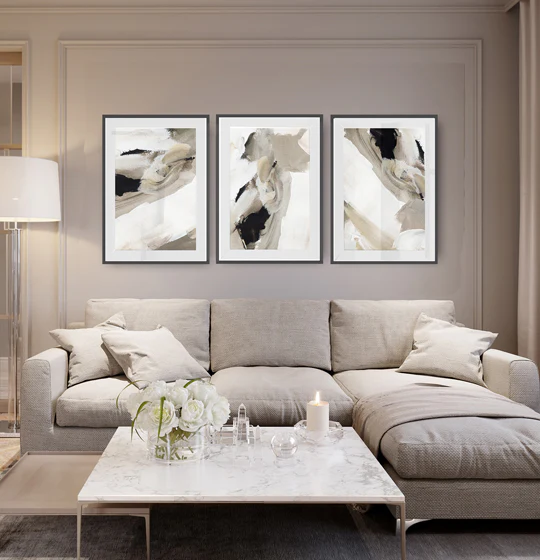
– Grid: A strict grid delivers a formal, orderly look ideal for a cohesive collection.
– salon-style: An organic, asymmetrical cluster that radiates warmth and energy; work outward from a central anchor.
– Linear/rail: A long, linear arrangement with consistent spacing creates a contemporary gallery feel.
– Spacing guidelines: Start with 2–3 inches of separation between frames for a compact look; increase to 4–6 inches for a more airy, modern display. Consider larger gaps above sofas or around doorways to create a sense of breathing room.
5) Mockups and Visualization
– Create a scale mockup: Cut out paper templates the size of each frame and arrange on the floor or wall to preview the composition.
– Digital aids: Use photo editing or design apps to simulate layout changes, colors, and frame finishes.
6) Installation
– Level and alignment: Use a level to ensure frames hang evenly. For large walls, consider a laser level or a hanging rail system for consistent vertical alignment.
– Start with anchor pieces: Hang the largest piece first, then fill around it with smaller items to maintain balance.
– Weight distribution: Distribute visual weight evenly across the wall to avoid lopsided impressions. Balance dark or highly saturated pieces with lighter, airy items.
– Safety and durability: Use appropriate hardware for the wall type and the total weight. If you’re in a rental, use damage-free hanging solutions when possible.
7) Finishing Touches
– Layering and texture: Add depth with three-dimensional objects such as a framed textile, a small shelf with decorative items, or a shadow box to blend flat art with tactile elements.
– Seasonal updates: Gallery walls are dynamic; swap out pieces or rotate in new acquisitions to refresh the look without a full redesign.
– Personalization: Include meaningful items such as travel memories, family portraits, or prints of beloved artists to keep the display intimate.

*圖片來源:Unsplash*
8) Common Pitfalls and How to Avoid Them
– Overcrowding: A crowded wall can feel chaotic. Prioritize quality over quantity and allow negative space to create balance.
– Inconsistent framing: A thousand mismatched frames can destabilize the design. If you choose variety, keep a unifying element such as a shared mat color or frame silhouette.
– Ignoring wall scale: The size of the wall relative to the collection matters. Large walls can accommodate many pieces; small walls benefit from fewer large pieces or a more compact grid.
9) Maintenance and Longevity
– Regular checks: Over time, frames may shift. Periodically check that all hardware remains secure and adjust as needed.
– Cleaning: Dust frames carefully; use a soft, dry cloth for glass and frames to prevent damage.
– Reimagining: Periodically reassess the wall’s composition and rearrange or replace pieces to reflect evolving taste or arrangements in the room.
Perspectives and Impact
A carefully curated gallery wall transforms a room by establishing a sense of personality and intentional design without the cost of interior design services. The approach emphasizes the art of curation as a skill rather than an expensive service, democratizing stylish interiors. Several broader implications emerge:
- Personal storytelling through space: Gallery walls enable homeowners to narrate their experiences and preferences through curated selections that evolve over time.
- Flexibility and adaptability: Because wall displays can be reconfigured, they mirror shifts in furniture arrangement, color palettes, or ownership of new pieces.
- Accessibility of design: A well-executed gallery wall demonstrates that good design can be approachable, reproducible, and within reach for many households with careful planning and patience.
- Crafting balance in spaces: The process teaches restraint—choosing pieces that resonate meaningfully rather than filling space indiscriminately—leading to calmer, more cohesive interiors.
- Potential for future trends: Interest in sustainable framing, digital art integrations, and modular hanging systems could influence how gallery walls are conceived and updated in the coming years.
Beyond aesthetics, the creation process can be therapeutic, offering a constructive way to engage with memory, art, and home environment. It also encourages mindful selection of secondhand finds, prints, and local artist pieces, supporting small businesses and creative communities.
Key Takeaways
Main Points:
– Start with a clear theme and anchor piece to guide the rest of the layout.
– Maintain cohesion through shared color schemes, framing, or matting, while allowing variety in size and orientation.
– Plan with mockups before hanging to minimize wall damage and ensure balance.
– Use a grid, salon-style, or linear layout that suits the room’s architecture and the wall’s scale.
– Regularly refresh the wall to keep the display current and personally meaningful.
Areas of Concern:
– Overcrowding or mismatched frames can undermine cohesion.
– Inadequate planning can result in misalignment or awkward spacing.
– Wall type and hardware limitations may affect durability and safety of the installation.
Summary and Recommendations
To achieve a gallery wall that looks curated without engaging a designer, begin with a thoughtful concept. Identify a unifying theme or color palette, select a mix of pieces with varying sizes and textures, and choose a cohesive framing strategy that can either unify or intentionally diversify the display. Plan layouts using templates or digital previews, then install with careful attention to balance and alignment. Finally, treat the wall as a living part of the home: refresh periodically, incorporate personal items, and remain open to adjustments as your space evolves.
This approach emphasizes accessibility, practical problem-solving, and a disciplined eye for proportion and rhythm. By combining few constant elements—anchor piece, consistent color story, and deliberate spacing—with flexible composition options, you can create a gallery wall that feels curated, sophisticated, and uniquely yours, all without hiring a professional designer.
References
- Original: https://abeautifulspace.co.uk/how-to-build-a-gallery-wall-that-looks-curated-without-hiring-a-designer/
- 1) https://www.housebeautiful.com/ design-and-decorate/
- 2) https://www.apartmenttherapy.com/how-to-create-gallery-wall-263177
- 3) https://www.elledecor.com/design-decorate/architectural-details/a19861548/gallery-wall-ideas/

*圖片來源:Unsplash*