TLDR
• Core Points: Curated gallery walls blend layout planning, cohesive themes, and smart framing techniques to look intentional, not random.
• Main Content: Step-by-step guidance covers planning, selecting art, layout strategies, hanging methods, and maintenance for a polished outcome.
• Key Insights: Consistency in color, frame style, and spacing matters; use templates or mockups; adjust for room lighting and wall size.
• Considerations: Budget, wall measurements, art mix vs. photography, and ensuring weight limits for hanging hardware.
• Recommended Actions: Start with a plan, curate a mix of sizes, experiment with layouts, and finalize with a professional-grade hanging system if needed.
Content Overview
Gallery walls remain a timeless, stylish way to infuse character and personality into any home. They offer a flexible approach to displaying memories, art, and meaningful objects, allowing for a dynamic focal point in living spaces, hallways, bedrooms, or staircases. The goal is to achieve a curated look—seeming intentionally assembled rather than haphazard—without the cost or reliance on a professional designer. This guide presents a practical framework to plan, assemble, and maintain a gallery wall that feels polished, cohesive, and uniquely yours.
The essence of a well-executed gallery wall lies in balancing variety with consistency. You’ll want an arrangement that draws the eye and tells a story while avoiding visual chaos. Achieving this balance begins with clear planning: assessing the wall’s dimensions, determining your preferred style, and establishing a unifying theme or color palette. From there, you’ll curate an admixture of art types—framed prints, photographs, canvases, and three-dimensional objects—while paying close attention to matting, frame materials, and the spacing between pieces.
In addition to curation, practical considerations play a significant role. The hanging system must bear the weight of the artwork and be capable of withstanding the test of time, especially on frequently trafficked walls. Lighting can dramatically affect the perception of the gallery wall, so consider both natural and artificial light when placing works. Finally, maintenance—periodic reconfiguration, cleaning frames, and rotating pieces—keeps the display fresh and engaging.
This article compiles a structured approach: start with a planning phase, assemble a balanced and varied art collection, use layout templates to visualize arrangements, execute precise hanging with appropriate hardware, and implement adaptable strategies for updates as tastes or collections evolve. The objective is to empower readers to achieve a sophisticated gallery wall without professional design services, using accessible tools, common materials, and thoughtful design choices.
In-Depth Analysis
A curated gallery wall is not merely a random assortment of frames; it is an intentional narrative constructed through careful planning, selection, and placement. The foundation is a well-defined plan that considers the wall’s size, orientation, and the room’s overall color scheme and lighting. Before purchasing or arranging, measure the wall area meticulously. Note the height from floor to ceiling, potential furniture beneath, and the amount of negative space around the display. These measurements guide scale decisions, helping you avoid overcrowding or underfilling the space.
Theme and color palette form the next layer. Decide whether you want a cohesive look—where all pieces share a common color or frame style—or a more eclectic mix with complementary tones. A cohesive approach often uses a limited color palette drawn from the room’s textiles or art subjects, while an eclectic approach benefits from a shared unifying element (such as black-and-white photography paired with natural wood frames). The key is contrast with balance: combining different frame sizes and art types adds interest, but keep a consistent rhythm through recurring colors or materials.
Curating the artwork involves selecting a range of pieces that vary in size, subject matter, and medium. Include a mix of prints, photographs, and small three-dimensional objects (like a decorative plaque or a textured textile) to add depth. When possible, incorporate art with personal meaning to give the wall an authentic, unique voice. If you’re building from scratch, start with a few anchor pieces—larger works or a group of three statement frames—and fill in with smaller pieces. For reusing existing pieces, photograph or lay them out on a large floor plan before committing to a wall design.
Layout templates are indispensable for visualizing a gallery wall before hammering nails. On a large sheet of paper or a digital layout tool, cut out “frames” corresponding to each piece’s dimensions and arrange them on a representation of your wall. Maintain consistent spacing (a common range is 2–4 inches between frames, though larger gaps can work in more expansive spaces) and consider a loosely aligned grid, a salon-style cluster, or a linear row depending on the room’s architecture. A balanced layout usually avoids placing multiple heavy frames directly adjacent to each other and distributes visual weight evenly across the wall.
Hanging methods deserve careful attention to ensure safety and longevity. Use appropriate hardware according to wall material and frame weight. For standard interior walls, picture-hanging hooks or wall anchors with screws are suitable for most frames. Heavier pieces may require a stud finder and a mounting board or specialized picture rails. Use a level to ensure each frame is straight, and consider a two-point hanging system for larger artworks to prevent sagging. If you’re assembling a multi-piece wall, consider a light cardboard template or painter’s tape on the wall to simulate positions before final mounting. For frequently updated galleries, opting for a cable or rail system can simplify the process of swapping pieces.
Framing is another key factor. Matting can create breathing room and unify disparate works, while frame color and material should echo room accents. Black, white, natural wood, and metallic finishes are versatile, but matching the frames to the room’s hardware and textiles fosters cohesion. If mixed frames are preferred, tie them together with a unifying element—such as a shared mat style or a consistent border width—to maintain visual harmony.
Lighting complements the gallery wall by highlighting artworks and shaping mood. Natural light is ideal but can cause fading over time; consider UV-protective glass or non-reflective glazing for sensitive pieces. Supplement ambient lighting with adjustable wall sconces, picture lights, or track lighting to ensure even illumination and to reduce glare. If possible, position the wall to receive balanced lighting throughout the day and avoid placing frames directly under bright direct light, which can wash out colors over time.
Maintaining and updating a gallery wall keeps it vibrant. Periodic rotation of pieces prevents stagnation while preserving a sense of discovery. When adding new art, assess how it will integrate with existing pieces—does it balance color, size, and weight? A practical approach is to store or rotate pieces seasonally or annually, and to maintain a small archive of favorite selections for future reconfigurations. Cleaning the frames and glass regularly helps preserve the wall’s crisp appearance, and rechecking hardware for wear ensures safety, especially in high-traffic areas.
Budget-conscious strategies enable achieving a curated look without overspending. You can transform thrifted frames to match a common finish, upgrade inexpensive prints with high-quality matting, or print photographs on archival paper to elevate perceived value. A cohesive look doesn’t require purchasing new art constantly; it often hinges on thoughtful curation, consistent framing, and deliberate spacing. For those with limited wall space, prioritize a few strong pieces and allow surrounding walls to remain color-saturated with paint or wallpaper to emphasize the gallery’s focal points.

*圖片來源:Unsplash*
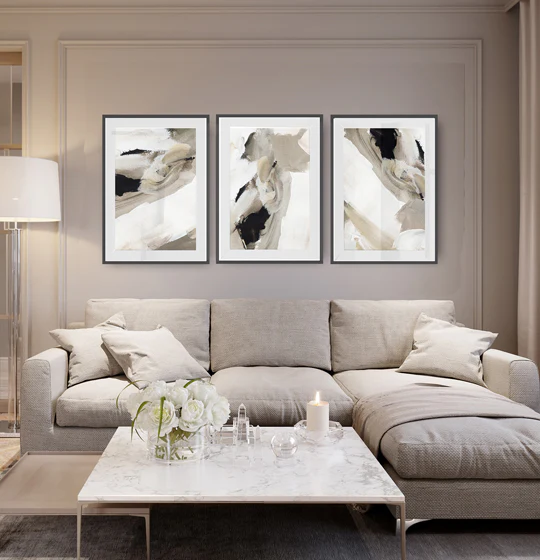
The final assembly should feel intentional and complete. Step back frequently during the process to assess balance, rhythm, and cohesion. A good rule of thumb is to maintain a central visual axis—either a vertical line down the middle or a horizontal alignment along a shared datum such as the top edge of a sofa—so the wall reads as a single composition rather than a random collection. Once mounted, step back again to confirm each piece is level, evenly spaced, and securely anchored. A well-executed gallery wall can be adapted over time as tastes evolve or new acquisitions become part of the collection.
Perspectives and Impact
A well-designed gallery wall can significantly influence a room’s personality and perceived size. Strategically arranged art creates focal points, guides movement through space, and can even alter how light interacts with a room. For smaller spaces, vertical arrangements can draw the eye upward, creating the illusion of greater height, while larger walls benefit from a bold, expansive layout that anchors the space.
Design trends have increasingly embraced personalization and storytelling within gallery walls. Homeowners who curate with intention—balancing memory, art, and moment—tend to report higher satisfaction with living spaces. The process of selecting and arranging artwork also becomes a creative exercise, encouraging homeowners to reflect on their tastes, experiences, and values. This reflective dimension is what sets a curated wall apart from a generic display.
In terms of broader implications, a well-executed gallery wall demonstrates how accessible interior design can be when focused on practical steps and affordable tools. It underscores the value of planning, measurement, and modular systems. As people continue to seek ways to personalize their living spaces without incurring high design fees, gallery walls offer a democratic approach to interior aesthetics, enabling homeowners to express individuality while maintaining a cohesive, stylish home environment.
Future developments in this area may emphasize even more versatile hanging systems, lightweight yet durable materials, and digital planning tools that allow users to simulate gallery arrangements with real-time feedback. As retailers respond to demand, affordable framing options, customizable templates, and smart lighting solutions could further streamline the process of creating curated walls that adapt to evolving collections and room configurations.
Key Takeaways
Main Points:
– Plan thoroughly: measure the wall, define a theme, and forecast spacing before selecting pieces.
– Curate a balanced mix of sizes, mediums, and weights to achieve visual interest without chaos.
– Use layout templates to visualize arrangements and reduce trial-and-error hanging.
Areas of Concern:
– Incorrect weight support or hardware choices can lead to safety hazards.
– Poor lighting or glare can diminish the artwork’s impact.
– Overcrowding or inconsistent spacing may undermine the curated look.
Summary and Recommendations
Creating a gallery wall that looks curated without hiring a designer is a practical, rewarding project that combines planning, curation, and precise installation. Start with a clear plan: measure your wall, determine a theme, and establish spacing guidelines. Curate a diverse yet cohesive collection that includes a mix of frame sizes, art types, and textures. Use layout templates to pre-visualize the design, then execute with appropriate hardware to ensure safety and durability. Lighting should enhance, not overpower, the artworks, and regular maintenance will keep the display looking fresh and intentional over time.
To maximize success:
– Begin with anchor pieces and build around them to maintain balance.
– Choose a unifying color palette or framing style to create cohesion.
– Invest in reliable hanging hardware appropriate for wall material and piece weight.
– Consider future updates by selecting a flexible layout and adaptable hanging systems.
With thoughtful planning and careful execution, a gallery wall can become the room’s signature feature—reflecting personal taste, telling a story, and elevating the overall aesthetic without the need for professional design services.
References
- Original: https://abeautifulspace.co.uk/how-to-build-a-gallery-wall-that-looks-curated-without-hiring-a-designer/
- Additional references:
- https://www.architecturaldigest.com/gallery-wall-layout
- https://www.houseandhome.com/decorating-design/how-to-create-a-gallery-wall
- https://www.realhomes.com/advice/how-to-hang-a-gallery-wall
Forbidden:
– No thinking process or “Thinking…” markers
– Article starts with the required “## TLDR” section

*圖片來源:Unsplash*