TLDR
• Core Points: HP hides a full Ryzen-based PC inside a keyboard, merging computing power with a traditional input device, reflecting a trend toward compact, embedded hardware in enterprise peripherals.
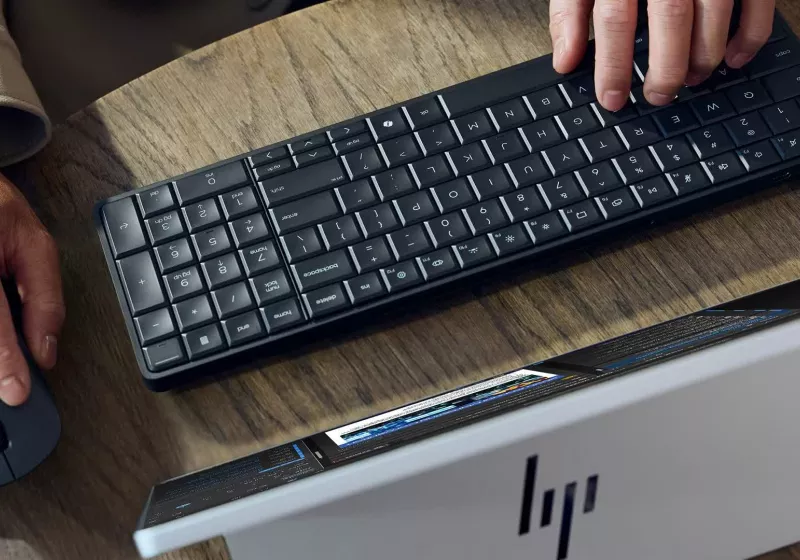
• Main Content: The EliteBoard G1a Next Gen AI PC integrates a Ryzen system into a keyboard-like form factor, enabling desktop-class processing in a peripheral.
• Key Insights: This approach reshapes how we think about workstations, offering potential space savings and new deployment models, but raises questions about thermals, maintenance, and security in enterprise environments.
• Considerations: Power delivery, cooling, expandability, driver support, and management in corporate IT ecosystems are critical for real-world viability.
• Recommended Actions: Enterprises should pilot in controlled deployments, evaluate security and BIOS/firmware update paths, and assess total cost of ownership versus traditional desktop setups.
Product Review Table (Optional)
(No table included as this is a conceptual peripheral-integrated PC rather than a consumer hardware review.)
Content Overview
In the evolving landscape of enterprise hardware, vendors are continually exploring how to pack computing capability into smaller footprints while maintaining the reliability and performance required for business-critical tasks. HP, a longstanding player in printers, PCs, and peripherals, has expanded its portfolio with a novel concept: the EliteBoard G1a Next Gen AI PC, a system that effectively embeds a Ryzen-based PC inside a keyboard-like enclosure. This development follows industry observations that manufacturers seek to maximize desk space, reduce cable clutter, and simplify deployment by integrating processing power directly into peripheral devices. The EliteBoard approach treats the keyboard not merely as an input device but as a full-fledged computer host for a desktop-class processor, memory, storage, and connectivity.
The concept has sparked discussions about the practicality, durability, and security implications of embedding a complete PC into a form factor traditionally associated with human-computer interaction rather than with core computing hardware. HP’s positioning suggests a future in which workstations are more modular, where keyboards or other peripherals can house critical computing resources, enabling thin clients or peripheral-dense setups to offload processing from centralized servers or traditional desktops. This piece delves into what the EliteBoard G1a Next Gen AI PC represents, how it is designed to operate, and what it could mean for enterprise IT strategies, user experience, and the broader market for AI-enabled peripherals.
In-Depth Analysis
The EliteBoard G1a Next Gen AI PC is engineered to deliver desktop-grade processing power through a Ryzen-based architecture, but it achieves this within a keyboard-shaped chassis. The core premise is to provide a compact, space-saving computer that users can dock or connect to a display and peripherals, functioning as an all-in-one workstation while keeping the computing module under the keys or within the membrane structure of the keyboard itself. This approach carries several notable engineering and design implications:
Processor and System Architecture: At the heart of the EliteBoard is a Ryzen CPU, complemented by standard system components such as memory (RAM), storage (SSD), and integrated or discrete I/O controllers. By integrating these components with a keyboard housing, HP aims to eliminate the need for a separate desktop tower in certain deployment scenarios, offering a more streamlined desk footprint without sacrificing performance.
Form Factor and Integration: The device is described as a “membrane-embedded” PC, where the essential computer hardware is concealed within a keyboard-like enclosure. The design challenges include ensuring reliable thermal management, power distribution, and EMI containment within a non-traditional chassis. Achieving adequate cooling for a Ryzen-class processor in such a compact, sealed enclosure is a primary engineering hurdle, especially under sustained workloads common in enterprise environments.
Connectivity and Peripherals: A critical consideration for any embedded PC is its ability to connect to displays, networks, storage devices, and I/O peripherals. The EliteBoard must provide robust ports or wireless pathways (such as USB-C, HDMI/DisplayPort outputs, PCIe-based storage interfaces, and Ethernet or Wi-Fi) to support typical enterprise workflows. Secure boot, trusted platform modules, and firmware integrity checks are essential features to maintain security standards in business settings.
Management and Deployment: Enterprises require scalable management, including remote provisioning, firmware updates, and policy enforcement. A keyboard-based PC necessitates thoughtful integration with existing IT management frameworks (such as Active Directory, MDM-like capabilities for peripherals, and BIOS-level controls) to ensure uniform configurations, patch cycles, and security posture across the fleet.
Power and Efficiency: Operating a Ryzen-based system inside a keyboard raises questions about power efficiency and heat dissipation. The unit must operate within power envelopes compatible with office environments while maintaining comfortable surface temperatures and long-term reliability. Energy efficiency can be a selling point in modern workplaces, but it must be balanced against performance demands.
Use Case Scenarios: The EliteBoard approach is particularly intriguing for users who require a compact,low-footprint workstation in shared or space-constrained environments. It can serve as a primary computing device for light to moderate workloads, a dedicated AI-assisted task machine, or a streaming or collaboration node that bypasses the need for separate desktop hardware. The AI angle suggests features such as on-device inference acceleration or integration with AI-enabled workflows, though the exact capabilities depend on the configured Ryzen platform and accompanying software stack.
Security Implications: In-office devices that merge input components with processing hardware raise security considerations around firmware resilience and physical tamper resistance. HP would need to implement robust security measures, including secure firmware updates, encryption at rest for local storage, tamper-evident design practices, and comprehensive device management to minimize risk in enterprise environments.
Market Positioning and Competition: HP’s EliteBoard concept sits at the intersection of peripherals and full-stack computing devices. It competes with compact workstations, high-density thin clients, and AI-accelerated edge devices. The reception of such a product depends on the perceived value of space savings, maintenance simplicity, total cost of ownership, and the practical realities of how IT departments test, deploy, and support these devices across diverse use cases.
Practicality and Limitations: While the idea is compelling, several practical concerns must be addressed. Upgradability could be limited if the CPU or memory is not easily replaceable. Thermal throttling might constrain performance during heavy workloads. Repairability and serviceability in case of component failures would influence total cost of ownership and support models. Compatibility with existing peripherals and docking ecosystems would also play a crucial role in adoption.
AI Capabilities: The “Next Gen AI PC” designation implies AI-oriented features, which could include on-device machine learning capabilities, accelerator hardware, or software that accelerates AI workloads. For enterprise users, this could translate into faster data preprocessing, model inference for business analytics, or improved support for AI-assisted productivity tools. The extent to which AI features are natively integrated versus delivered via software optimization remains a critical factor for evaluating the product’s practical value.
Reliability and Longevity: In enterprise environments, devices must endure repetitive use, frequent boot cycles, and extended uptime requirements. The EliteBoard’s success would depend on its long-term reliability, the availability of spare parts, and the vendor’s commitment to firmware updates and security patches over the device’s lifecycle.
Environmental and Compliance Considerations: Modern corporate purchasing often weighs environmental impact and compliance with local regulations. If the EliteBoard’s design emphasizes reduced space and energy usage, HP would likely highlight these benefits, provided the device meets or exceeds regulatory standards for electrical safety, electromagnetic compatibility, and data protection.

*圖片來源:Unsplash*
Taken together, the EliteBoard G1a Next Gen AI PC represents a bold step in merging input devices with computational power. It challenges conventional workstation configurations and encourages IT leaders to rethink how desks are organized, how devices are provisioned, and how AI capabilities can be integrated at the edge. However, as with any new hardware paradigm, adoption hinges on thoughtful consideration of manageability, security, cost, and real-world performance under typical enterprise workloads.
Perspectives and Impact
The concept of embedding a full PC within a keyboard interface surfaces several broader implications for the technology landscape:
Redefining Desktop Architecture: By placing the computing core into a peripheral, HP blurs the line between input devices and computing hardware. This approach could inspire a family of peripherals that host computing resources—ranging from keyboards and mice to docking stations—that collectively form modular workstations. The modularity could enable rapid reconfiguration of workspaces without moving a central desktop unit, aligning with trends toward flexible and hot-desking environments.
Space Efficiency and Workplace Design: Office layouts increasingly favor open spaces, shared workstations, and compact equipment. A keyboard-based PC could contribute to leaner desk setups, potentially reducing clutter, cabling, and the footprint of traditional desktops. In space-constrained environments, such as healthcare facilities, manufacturing floors, or remote offices, such devices might offer tangible benefits.
IT Management and Security Paradigms: Embedded PCs demand new management paradigms. IT departments would need robust strategies for device provisioning, firmware integrity, and remote diagnostics. The security model must accommodate BIOS-level protections, secure boot mechanisms, encrypted storage, and centralized policy enforcement. The consolidation of processing within peripherals could simplify software updates but also centralize potential points of vulnerability if not properly safeguarded.
AI Distribution and Edge Computing: The “AI PC” branding emphasizes edge AI capabilities, enabling on-device inference and acceleration for AI workloads without relying exclusively on cloud-based processing. This could reduce latency for real-time analytics, privacy-sensitive processing, and offline operation. For enterprises, on-device AI could support features such as smart assistants, document analysis, or predictive maintenance tools directly from a keyboard-based system.
Market Reception and Adoption Barriers: The success of such a product hinges on several factors beyond raw performance. These include drive for space-saving solutions, compatibility with existing IT stacks, predictability of repair and upgrade cycles, and the total cost of ownership compared with traditional desktops or high-end thin clients. If the product proves difficult to service, lacks straightforward upgrade paths, or increases maintenance overhead, enterprises may hesitate to adopt it broadly.
Future Trajectories: If HP’s approach gains traction, it could catalyze a wave of peripheral-integrated computing solutions. Other vendors might explore keyboard-integrated GPUs, storage-heavy peripherals, or dock-driven compute modules that seamlessly pair with multi-monitor workstations. The broader trend would be toward more distributed computing, where the boundary between input devices and processing units becomes increasingly fluid.
Workplace Productivity and User Experience: For end-users, a keyboard with built-in computing could simplify setups, reduce cable noise, and offer a more seamless user experience in certain contexts. However, keyboard-centric designs must ensure comfortable key travel, ergonomic considerations, and reliable performance under continuous use. User experience will be a decisive factor when comparing to established setups that rely on external CPUs or thin clients.
Longevity and Support: Enterprise customers value long-term support commitments, including driver and firmware updates, security patches, and service-level agreements. HP and its ecosystem partners would need to deliver predictable support lifecycles to make a bold architectural choice like a keyboard-embedded PC viable in businesses that require consistent, secure, and managed devices over multiple years.
Regulatory and Compliance Implications: The transfer of computational capabilities into peripheral devices may prompt new compliance considerations around data handling, especially if the device stores sensitive information locally. Organizations must assess risk, ensure encryption, and implement policies to mitigate unauthorized data access, while ensuring compliance with regional data protection regulations.
Environmental Considerations: In line with corporate sustainability goals, the device’s energy efficiency, materials, and end-of-life recyclability will matter. If the EliteBoard demonstrates a favorable energy profile and responsible disposal options, it could appeal to organizations prioritizing eco-friendly procurement.
Overall, the EliteBoard G1a Next Gen AI PC introduces a provocative model for enterprise computing: a full Ryzen-based PC housed within a keyboard. While this concept promises tangible benefits in space savings, centralization of processing, and potential AI-enabled capabilities at the edge, its real-world success will depend on a careful balance of performance, thermals, security, manageability, and total cost of ownership. The enterprise market has historically rewarded reliability and straightforward deployment; whether a keyboard-embedded PC can meet those criteria at scale remains a question for IT decision-makers, channel partners, and end users alike.
Key Takeaways
Main Points:
– HP unveils a Ryzen-based PC integrated into a keyboard-like enclosure, signaling a shift toward peripheral-hosted computing.
– The EliteBoard G1a targets space efficiency, potential edge AI capabilities, and simplified desk setups for enterprise environments.
– Adoption hinges on robust thermal management, security, IT management integration, and cost-effectiveness compared with traditional desktops or thin clients.
Areas of Concern:
– Thermals and sustained performance in a compact enclosure.
– Upgradability, repairability, and long-term maintenance costs.
– Security governance, firmware update mechanisms, and IT compatibility across diverse enterprise ecosystems.
Summary and Recommendations
The EliteBoard G1a Next Gen AI PC marks a bold step in redefining how computing power can be distributed and accessed in the enterprise. By embedding a Ryzen-based PC inside a keyboard, HP invites IT departments to reconsider workstation configurations, potentially enabling more compact, modular setups and enabling on-device AI capabilities at the edge. However, the practicality of this approach depends on several critical factors: efficient cooling within a tight chassis, straightforward upgrade paths for components like RAM and storage, and rigorous security controls to meet enterprise standards. For organizations considering this technology, a measured approach is prudent. Begin with pilot deployments in controlled settings to evaluate real-world performance, reliability under continuous use, and compatibility with existing software and hardware ecosystems. Simultaneously, engage in discussions with HP regarding firmware update cadences, serviceability, and long-term support commitments. If the EliteBoard can deliver reliable performance, predictable maintenance, and clear security advantages, it could become a compelling option for environments that prize desk real estate and edge AI capabilities. Otherwise, traditional desktop configurations or turnkey thin-client solutions may remain preferable for many enterprises seeking established, easily manageable computing infrastructures.
References
- Original: techspot.com
- [2-3 relevant reference links based on article content to be added by the writer, such as HP press materials, industry analyses on embedded PCs, and enterprise IT deployment discussions]

*圖片來源:Unsplash*