TLDR
• Core Points: Hyundai aims to mass-produce humanoid robots by 2028, leveraging Boston Dynamics’ Atlas and a new factory capable of 30,000 units annually; deployment anticipated at the Georgia plant in 2028, with broader rollout expected thereafter, raising union concerns about workforce impact.
• Main Content: Hyundai showcased Atlas at CES, outlines a scalable production plan, and signals gradual integration of humanoids into manufacturing, paired with labor union warnings about job displacement.
• Key Insights: The project signals a broader push in the auto industry toward automation; successful implementation will hinge on manufacturing economics, safety, worker transition programs, and regulatory alignment.
• Considerations: Economic viability, public perception, safety protocols, training for workers, and milestones for deployment and retraining will shape outcomes.
• Recommended Actions: Stakeholders should establish transparent timelines, invest in worker retraining, explore phased integration, and monitor labor impact with independent reviews.
Content Overview
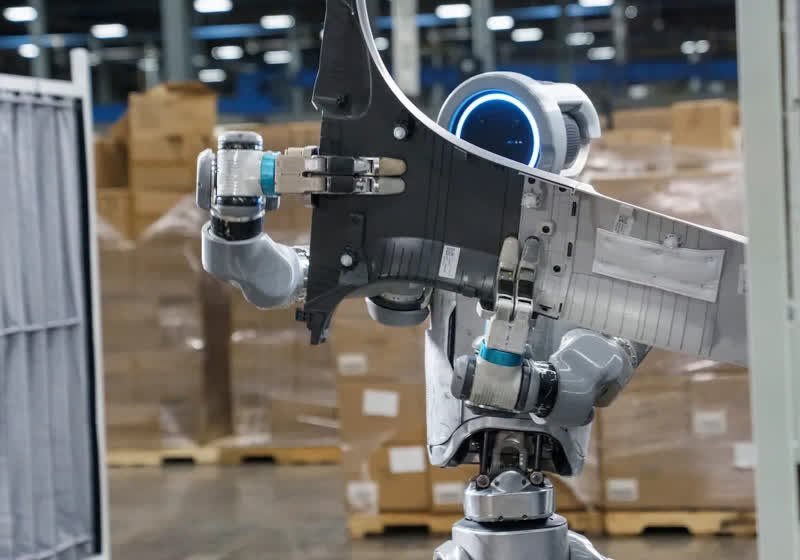
Hyundai Motor Group has embarked on a bold initiative to bring humanoid robots into mainstream automotive manufacturing, signaling a potential shift in how factories operate and how work is performed. At the Consumer Electronics Show (CES) held earlier this year, Hyundai demonstrated its interest in humanoid robotics by featuring Boston Dynamics’ Atlas robot, a landmark manifestation of advanced mobility and manipulation capabilities in a bipedal platform. The demonstration underscored Hyundai’s strategic intent: to leverage cutting-edge robotics technology to bolster productivity, enhance safety, and address labor challenges typical of large-scale manufacturing environments.
Hyundai’s plan centers on developing a factory capable of producing up to 30,000 humanoid robots per year by 2028. This ambitious production target indicates a bid to scale robotics manufacturing in tandem with the broader automotive ecosystem and the urgent need to address labor costs, productivity constraints, and the demand for flexible, adaptable automation solutions. The company has stated that it expects to begin deploying humanoid robots at its Georgia plant in 2028, with an ongoing strategy to expand rollout in subsequent years. The Georgia facility, one of Hyundai’s major manufacturing sites in the United States, is positioned as a test bed for integrating humanoid robots into real-world production lines, maintenance tasks, and quality control processes.
The union representing Hyundai’s U.S. workers has responded with caution, warning of potential job losses and the broader implications for workers and communities. Unions frequently raise concerns about automation displacing workers, arguing for robust retraining programs, phased implementation, and safeguards to protect livelihoods. Hyundai’s leadership, meanwhile, emphasizes the potential for robots to handle repetitive, dangerous, or precision-based tasks, potentially reducing injuries and enabling human workers to focus on higher-value roles, planning, programming, maintenance, and systems optimization. The tension between workforce protection and technological advancement is a common theme in the auto industry as manufacturers pursue productivity gains through automation.
This evolving story sits at the intersection of technology, labor rights, and corporate strategy. As Hyundai progresses from concept to production readiness, observers will pay close attention to milestones such as the development of a scalable, cost-effective robot manufacturing process, the safety and reliability of Atlas-based deployments in industrial settings, and the effectiveness of retraining pathways for employees who may be affected by automation. The broader question remains: can humanoid robots deliver meaningful, verifiable gains in efficiency and safety without eroding the job security and wages of workers who have long contributed to the success of large manufacturing operations?
In-Depth Analysis
Hyundai’s announcement marks a pivotal moment in the relationship between automotive manufacturing and robotics. By showcasing Atlas at CES, Hyundai aligns itself with one of the most capable humanoid platforms currently available for research, development, and potential industrial adaptation. Atlas, developed by Boston Dynamics, is renowned for its mobility, balance, and manipulation capabilities, including the ability to navigate varied terrain, perform dynamic tasks, and interact with real-world objects. While Atlas has primarily served as a research and development platform, Hyundai’s interest signals a trajectory toward industrialized humanoid robotics in which such platforms could perform a range of factory tasks.
The proposed factory capable of producing 30,000 humanoid robots annually by 2028 is a bold production target. Realizing this objective will require advances in multiple domains:
– Manufacturing scale: Creating a production line that can consistently manufacture humanoid robots at this volume involves high-volume, automated assembly, robust supply chains for components, and rigorous quality control. It also requires standardization to enable cost reductions and efficient maintenance.
– System integration: Robots must be integrated with Hyundai’s existing manufacturing ecosystems, including logistics, automation software, machine vision, safety systems, and human-robot collaboration protocols. Seamless interoperability will be essential for realizing productivity gains.
– Safety and reliability: Industrial deployment of humanoids raises safety concerns, particularly around human-robot interaction, fall risk, power and actuation failures, and potential software glitches. Hyundai will need comprehensive safety standards, risk assessments, and redundant systems.
– Workforce transition: A critical component of any large-scale automation plan is managing the impact on employees. This includes retraining programs, new roles in robot maintenance and programming, and clear pathways for workers to transition into higher-skill positions.
Hyundai’s decision to begin deploying humanoid robots at the Georgia plant in 2028 indicates a phased approach that balances experimentation with the realities of large-scale manufacturing. The Georgia site has historically been a focal point for Hyundai’s U.S. manufacturing footprint, and leveraging this facility as a deployment hub could provide valuable data about robot performance in real production environments, including cycle times, uptime, maintenance needs, and the interplay with human workers on the floor.
From an economic perspective, the viability of humanoid robots in manufacturing depends on several key metrics:
– Total cost of ownership (TCO): Initial capital expenditure, ongoing maintenance, software updates, and parts replacement will shape the long-term cost-benefit analysis. Robotics startups and legacy automation providers are continually reducing TCO, but cost remains a critical consideration for mass deployment.
– Productivity gains: The degree to which humanoid robots can outperform traditional automation or manual labor in specific tasks—such as heavy lifting, precision assembly, or hazardous handling—will determine how quickly the investment pays off.
– Labor cost savings: While robots can reduce labor costs, the actual savings depend on task complexity, variability, and the need for human oversight. Replacement scenarios may also be offset by the need to hire for robot maintenance and specialized programming.
– Flexibility and scalability: One of the promises of humanoid robotics is adaptability to changing production lines and product variants. The ability to rapidly reprogram and reconfigure robots for different tasks can provide a competitive edge.
The union’s warnings touch on longstanding concerns about automation in manufacturing. Historically, automation has been associated with job displacement, especially for repetitive or physically demanding tasks. Unions often advocate for proactive retraining, wage protections, and job placement assistance to mitigate potential negative impacts on workers. Hyundai’s plan to deploy humanoid robots by 2028 may prompt negotiations around:
– Training and retraining guarantees: Ensuring that workers have opportunities to transition to robot maintenance, programming, systems integration, and quality assurance roles.
– Compensation and benefits: Protecting workers from abrupt wage declines or reduced hours associated with automation and providing pathways to higher-skilled positions.
– Workforce planning: Collaborative efforts to map out which tasks will be automated, which will be retained, and how to manage shifts and staffing levels during transitions.
The broader context includes a trend toward automation across the automotive sector. Automakers are increasingly exploring robotics, artificial intelligence, and digital twins to optimize production, reduce downtime, and improve ergonomics and safety for workers. Hyundai’s initiative aligns with other industry moves toward more autonomous and semi-autonomous systems that can operate alongside humans in shared spaces. The success of such programs often hinges on careful change management, transparent communication with labor groups, and a robust safety and ethics framework.
Key technical questions surround the Atlas-based approach in an industrial setting. Atlas is designed for mobility and manipulation, but applying it to factory floors requires customization of gripper end-effectors, payload handling, and precision control for assembly tasks. Battery life, charging strategies, and on-board sensing must be tailored to minimize downtime. Additionally, software ecosystems must support continuous learning, predictive maintenance, and seamless updates to robotics operating systems. This requires collaboration between Hyundai, Boston Dynamics, and third-party integrators with expertise in industrial automation.
Public perception will also play a role. Consumers, investors, and employees may scrutinize Hyundai’s automation goals to understand how they will affect product quality, job security, and corporate social responsibility. Transparent communication about timelines, safety measures, and the benefits of automation for job safety and manufacturing efficiency can help manage expectations.
In terms of future implications, Hyundai’s entry into humanoid robotics could accelerate research and development in the broader robotics industry. A large-scale deployment in a major manufacturing operation would provide valuable field data on robot reliability, maintenance needs, and performance under real-world conditions. Competing automakers and technology firms may respond with similar investments, intensifying competition but potentially driving down costs and spurring innovation.
However, several uncertainties remain. The timeline for a factory to produce 30,000 robots annually by 2028 is aggressive. Real-world milestones will likely include pilot deployments, modular production lines, and iterative improvements before full-scale commercialization. Regulatory considerations, safety standards, and potential supply chain constraints for critical components (actuators, sensors, and control systems) could influence the pace of progress. The degree to which humanoid robots can perform a broad range of tasks with the reliability and safety required for automotive manufacturing remains a critical question.

*圖片來源:Unsplash*
Hyundai’s approach also prompts broader policy discussions about the role of automation in jobs, wage dynamics, and regional labor markets. As companies contemplate large-scale automation, policymakers and industry groups may explore measures to support workers through retraining programs, wage insurance, and transition assistance, ensuring a smoother adaptation process for communities dependent on factory employment.
Perspectives and Impact
The introduction of humanoid robots in Hyundai’s manufacturing ecosystem could have significant, long-term implications for production paradigms, workforce composition, and the global competitiveness of automakers. If Hyundai successfully validates a scalable approach to humanoid robotics, other manufacturers may follow suit, pushing automation deeper into assembly lines, inspection stations, and logistics operations. This could lead to a redefinition of roles for human workers, with increased specialization in robot maintenance, programming, and systems integration rather than manual, repetitive tasks.
From a workforce perspective, the transition will require robust strategies to mitigate disruption. Training and upskilling initiatives can help workers transition to roles that complement automated systems. Programs could focus on robot diagnostics, preventive maintenance, software updates, and systems integration. Collaborative human-robot work arrangements (cobots) that emphasize safety, efficiency, and ergonomics could emerge as new operating norms. The effectiveness of these efforts will shape union perspectives and bargaining priorities, potentially leading to new collective bargaining frameworks that address automation-related concerns.
In the broader economic landscape, Hyundai’s plan reflects a growing appetite for automation in manufacturing across sectors. The automotive industry has long been a leader in process optimization, and humanoid robotics represent a step toward more flexible, resilient production capabilities. The potential benefits include improved safety by offloading dangerous tasks from human workers, enhanced precision in assembly operations, and reduced downtime through around-the-clock production capabilities. On the downside, the upfront capital investments, maintenance costs, and the need for specialized skills create new dependency on suppliers and technology providers, which can influence long-term pricing and competitiveness.
The success of Hyundai’s program will depend on several critical factors:
– Incremental milestones: Rather than waiting for 2028, clearly defined intermediate goals (pilot deployments, partial line integrations, performance metrics) will provide early indicators of feasibility and allow course corrections.
– Safety frameworks: Rigorous safety protocols, risk assessments, and compliance with occupational safety regulations are non-negotiable for any humanoid deployment in manufacturing environments.
– Worker engagement: Transparent dialogue with the workforce and unions about planned changes, training opportunities, and career pathways is essential to maintaining morale and productivity.
– Data-driven optimization: Collecting and analyzing data on robot performance, maintenance needs, and collaboration outcomes will inform continuous improvement and cost-benefit assessments.
– Environmental and social considerations: The broader impact on communities, wage dynamics, and regional employment must be addressed through policy and corporate responsibility initiatives.
Key Takeaways
Main Points:
– Hyundai plans to mass-produce humanoid robots (Atlas-based) and deploy them at the Georgia plant by 2028, with a production capability of up to 30,000 robots per year by 2028.
– The move signals a significant emphasis on humanoid robotics as a strategic tool for manufacturing efficiency, safety, and flexibility.
– Labor unions caution about potential job losses and emphasize retraining and worker protections as automation progresses.
Areas of Concern:
– Job displacement and wage impact for workers in affected roles.
– Safety, reliability, and maintenance complexity of humanoid robots in factory settings.
– Economic viability given cost, supply chain stability, and integration challenges.
Summary and Recommendations
Hyundai’s announcement to deploy humanoid robots by 2028, including the establishment of a production facility capable of 30,000 units per year and pilot deployments at the Georgia plant, signals a high-stakes effort to integrate humanoid robotics into mainstream automotive manufacturing. The approach aligns with broader industry trends toward automation, emphasizing safety, productivity, and adaptability. However, achieving these goals will require overcoming substantial technical, economic, and social challenges.
From a technical perspective, Hyundai must demonstrate that Atlas-based humanoid robots can reliably perform a range of manufacturing tasks with appropriate end-effectors, control software, and maintenance strategies. The company should pursue an incremental deployment plan with clearly defined milestones, allowing for the identification and remediation of issues around performance, safety, and system integration before scaling to full production.
Economically, a 30,000-unit annual production capacity represents a major investment. Hyundai should publish transparent cost-benefit analyses, including TCO projections, expected productivity gains, and scenarios for labor cost savings. Financial modeling should incorporate contingencies for component supply, software updates, and maintenance requirements.
For workers and communities, proactive engagement with unions and employees is essential. Comprehensive retraining programs, clear career pathways, and protections for workers’ wages and benefits will be critical to maintaining morale and ensuring a smoother transition. Companies that invest in human capital alongside automation tend to achieve more stable, long-term outcomes.
Regulators, policymakers, and industry groups have an opportunity to shape favorable conditions for responsible automation. Collaboration on safety standards, workplace integration guidelines, and retraining incentives can help balance innovation with social and economic stability.
In the coming years, Hyundai’s progress will be closely watched as a potential bellwether for humanoid robotics in manufacturing. If successful, this initiative could accelerate automation adoption across the auto sector and beyond, prompting broader shifts in labor markets, supply chains, and corporate strategy. Stakeholders should advocate for transparent communication, measurable milestones, robust safety practices, and a commitment to workforce development to maximize the positive impact of this ambitious plan.
References
– Original: https://www.techspot.com/news/111026-hyundai-humanoid-robot-plans-trigger-union-warnings-mass.html
– Additional context:
– Boston Dynamics Atlas overview and capabilities
– Hyundai Motor Group corporate strategy and robotics initiatives
– U.S. automotive manufacturing labor relations and automation impact studies
Note: The above article is a reformulation of the original reporting, preserving reported facts while enhancing clarity, structure, and context.

*圖片來源:Unsplash*