TLDR
• Core Points: Rumors suggest the iPhone 18 Pro will adopt a corner camera cutout and an under-display Face ID system, enabling concealment of front components behind the glass.
• Main Content: The change would align with a redesigned Face ID under-display technology, potentially hiding infrared components beneath the display.
• Key Insights: A corner camera layout and invisible sensors could streamline the front aesthetics, but may raise questions about durability, repairability, and performance.
• Considerations: Implementation feasibility, user experience changes, and the timeline for production readiness are key considerations.
• Recommended Actions: Monitor official confirmations, assess any early hands-on impressions, and evaluate how this design impacts accessibility and repairability.
Product Review Table (Optional):
(Not applicable—this article reports on rumors about a future smartphone design rather than a specific hardware product in the current market.)
Product Specifications & Ratings (Product Reviews Only)
| Category | Description | Rating (1-5) |
|---|---|---|
| Design | Future iPhone 18 Pro may feature a corner camera cutout and under-display Face ID | N/A |
| Performance | N/A | N/A |
| User Experience | N/A | N/A |
| Value | N/A | N/A |
| Overall: N/A |
Content Overview
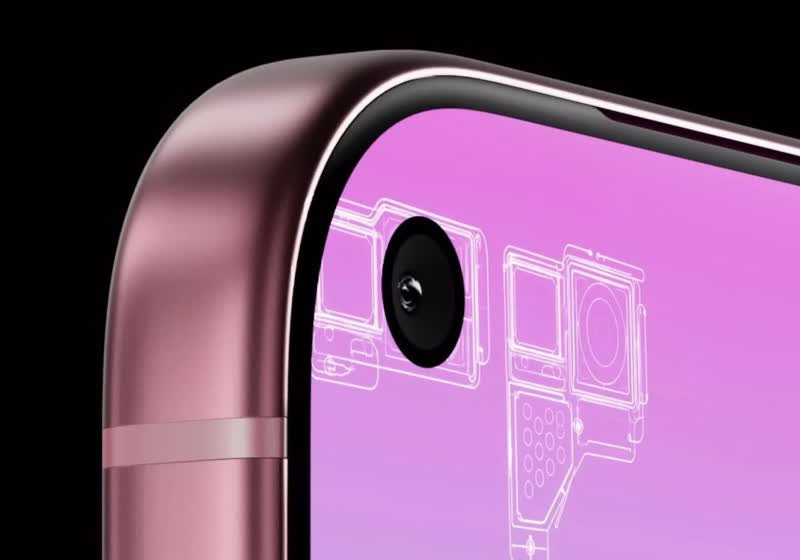
Rumors surrounding the iPhone 18 Pro point toward a notable shift in industrial design and biometric technology. According to Jon Prosser of Front Page Tech, Apple may move away from a traditional notch or dynamic island approach in favor of a corner camera configuration on the front glass, paired with an under-display Face ID system. If realized, this combination would represent a twofold evolution: a minimized or relocated front-facing camera cutout and a more centralized, under-screen biometric authentication mechanism. The proposed under-display Face ID would conceivably hide key infrared components—such as the flood illuminator—beneath the front glass, contributing to a cleaner, more seamless front-facing surface.
The broader tech community has long debated how Apple might refine the balance between device aesthetics, camera performance, and security. The rumored changes for the iPhone 18 Pro would fit within a historical pattern of Apple pursuing more integrated, edge-to-edge displays and ever-smaller sensor footprints. While the sources cited are speculative, they reflect ongoing industry interest in how future iPhone generations could reimagine biometric sensors and front-facing optics.
This article synthesizes the reported claims and places them within the context of existing display and biometric trends, including the technical challenges and potential implications for users, repairability, and overall device durability. It is important to note that rumors of this nature should be interpreted cautiously until corroborated by official Apple announcements or multiple independent reports.
In-Depth Analysis
The notion of a corner camera cutout represents a design reversal from the conventional center-aligned notch, dynamic island, or front-facing punch-hole strategies seen in recent iPhone iterations. A corner placement could be motivated by several goals: optimizing display real estate, accommodating new camera modules with improved capabilities, or pursuing a more symmetrical front surface that aligns with a hypothetical under-display biometric system.
A corner camera cutout would imply that Apple is rethinking the front camera’s layout to maximize usable screen area while preserving sensor quality. Depending on the engineering approach, this configuration could affect how the TrueDepth system or selfie camera output is integrated. Some possible scenarios include distributing sensors around a corner, staggering components to minimize bezel intrusion, or employing a dual-use design that leverages software engineering to adapt to a new geometry.
The other major component of the rumor is an under-display Face ID system. Apple has historically used the TrueDepth camera array, which includes infrared (IR) sensors, flood illumination, and dot projectors, in conjunction with a front-facing camera. Shifting Face ID beneath the display would mark a significant technical achievement, as it would require the IR flood illuminator and other sensing hardware to operate through the glass while maintaining robust depth-sensing accuracy, speed, and reliability in varied lighting conditions.
Key technical considerations for under-display Face ID include:
– Optical transparency: The display layer must allow sufficient IR transmission without introducing unacceptable noise or color shifts.
– Protection and durability: The infrared components must be shielded from moisture, dust, and mechanical wear, while preserving performance over long device lifecycles.
– Power and heat management: Additional processing and sensor activity beneath the display could affect battery life and thermal dynamics.
– Calibration and reliability: Under-display sensors must remain accurately calibrated despite display aging, screen pressure, or environmental factors.
– Repairability: Concealed components may complicate field servicing or component-level repairs, a consideration for both consumers and authorized service providers.
Concealing infrared hardware under the glass would likely necessitate a redesign of not only the Face ID hardware but also the front glass and related protective layers. The user experience could improve aesthetically, with fewer visible seams or extraneous sensor housings. However, developers and accessory makers would need to adapt to any altered gestures, calibration routines, or diagnostic checks associated with the new sensor placement.
Another aspect to consider is how a corner camera cutout interacts with other iPhone features, such as augmented reality (AR) experiences, front-facing photography, and autofocus performance in varying lighting. If the camera module’s physical placement shifts toward a corner, software optimization may be required to maintain consistent selfie and video results across different angles. Apple has a history of tightly integrating software with hardware to optimize image processing, computational photography, and biometric performance. Any deviation from proven layouts would rely on substantial software refinement to preserve user expectations.
Industry observers also weigh the potential impact on repairability and maintenance. A fully integrated under-display Face ID system, along with concealed IR components, could complicate repairs or part substitutions. Apple’s existing repair ecosystem emphasizes specialized tooling and procedures, and any new architecture would likely necessitate updated service manuals and training for technicians. For users, this could translate into longer repair turnaround times or higher costs if replacement parts are more complex to source.
Timeline considerations are another critical factor. Rumors about next-generation iPhones often surface well before launch events, creating anticipation while leaving room for revision. Even if Apple is exploring a corner camera cutout and under-display Face ID, the practical realization could be contingent on breakthroughs in display technology, sensor materials, and manufacturing processes. The iPhone design language has evolved through iterative refinements, and Apple’s willingness to overhaul foundational biometric components would signal a major strategic pivot.
In evaluating these rumors, it is important to note the source’s track record and corroborating reports from other industry insiders. While Prosser has a history of accurate previews, independent verification through multiple outlets is essential to distinguish genuine developments from speculative designs. Additionally, any official statements from Apple would carry the most weight, providing clarity on the feasibility, timeline, and user experience implications.
From a consumer perspective, the potential introduction of a corner camera cutout and under-display Face ID invites questions about security, convenience, and accessibility. Face ID has become a rapid and reliable method for device authentication, and any transition to an under-display system would need to demonstrate parity or improvement in recognition rates, despite the constraints of display technology. Accessibility considerations include ensuring that individuals with visual or motor impairments can still authenticate quickly, as well as maintaining a comfortable user experience for all.

*圖片來源:Unsplash*
Overall, the rumors reflect an ongoing exploration of how Apple might reconcile design minimalism with the functional demands of modern biometric security and high-quality front-facing photography. The success of such a transition would hinge on achieving reliable biometric performance without compromising display clarity or durability. As always with hi-tech speculation, prudent skepticism is warranted until more concrete evidence emerges from trusted sources or official disclosures.
Perspectives and Impact
If Apple pursues a corner camera cutout in combination with an under-display Face ID, the broader smartphone industry could feel its influence in several ways. First, competitors might explore alternative biometric solutions or display-integrated sensors to replicate a similar aesthetic and functional approach. The potential move could accelerate research into transparent or semi-transparent display layers that can accommodate sensors without visible housings, pushing the boundary of what is possible with front-facing technology.
Second, consumer expectations for seamless design could intensify. As devices move toward edge-to-edge displays with fewer physical bezels, there is growing demand for front sensors to disappear entirely or become nearly invisible. A successful under-display Face ID system would set a new benchmark for how biometrics are integrated into mobile devices, potentially affecting everything from device unlocking speed to privacy considerations and advertising of biometric reliability.
Third, supply chain and manufacturing implications would be notable. Realizing an under-display biometric solution would require close collaboration between display manufacturers, sensor suppliers, and Apple’s own hardware teams. The development and calibration of under-display sensors would likely influence the pricing and availability of related components, with potential ripple effects across the broader ecosystem of devices that rely on advanced biometrics and display technologies.
Another dimension is durability and repairability. If front sensors and IR components are embedded behind the display, repair strategies would need updating. Apple’s ecosystem has historically emphasized serviceability constraints and standardized parts distribution for authorized repair channels. A new architecture could mean revised service tooling, diagnostics, and training programs, which in turn could impact repair times and costs for customers.
From a security perspective, under-display Face ID would need to demonstrate resilience against spoofing and unauthorized access. If the display layer can be compromised, even inadvertently, the system’s integrity hinges on robust anti-spoofing measures, reliable liveness detection, and secure data handling. The transition would likely come with enhancements to the secure processing environment and potentially additional on-device or cloud-assisted verification mechanisms to maintain user confidence.
In terms of consumer adoption, the market response would depend on tangible benefits. A cleaner front surface with fewer visual interruptions could enhance perceived premium quality, while any perceived latency or reliability concerns could temper enthusiasm. The success of such a design would thus depend on delivering a seamless, fast, and secure user experience that surpasses current expectations.
Looking forward, analysts will be watching for official confirmations or more corroborated leaks as Apple prepares for future product unveilings. The interplay between hardware design, biometric engineering, and software optimization will shape how quickly and convincingly Apple can realize a corner camera cutout and under-display Face ID. If realized, the change could mark a milestone in how mainstream smartphones balance aesthetic minimalism with the technical sophistication required for advanced biometric authentication.
Key Takeaways
Main Points:
– Rumors suggest a corner camera cutout on the iPhone 18 Pro.
– An under-display Face ID system is proposed to conceal infrared components beneath the front glass.
– The combination aims to produce a cleaner front surface but requires overcoming significant technical and manufacturing challenges.
Areas of Concern:
– Feasibility of reliable under-display facial recognition in varying conditions.
– Potential impact on repairability and serviceability.
– Durability, screen protection, and long-term component reliability.
Summary and Recommendations
The report of a corner camera cutout paired with under-display Face ID for the iPhone 18 Pro reflects ongoing industry interest in pushing biometric and display technologies toward sleeker, more integrated designs. While the prospect is intriguing for users who crave minimal bezels and a seamless front surface, several substantial hurdles remain. Realizing under-display Face ID would demand advances in display transparency, sensor integration, calibration, and robust protection of IR components beneath the glass. The corner camera arrangement would also necessitate careful optimization of software algorithms to maintain high-quality front-camera performance and alignment with the new hardware geometry.
For consumers, the most prudent approach is to treat these rumors as speculative until there is official confirmation from Apple or corroboration from multiple independent credible sources. If future disclosures provide concrete details, potential buyers and technology enthusiasts can better assess the anticipated benefits against potential drawbacks such as repair complexity, cost, and long-term reliability.
In the near term, it remains valuable to monitor coverage from established tech analysts and Apple insiders, as well as any developer or accessory ecosystem implications that arise from a major design shift. Hands-on previews, durability testing, and real-world biometric performance data, when available, will be essential to forming a definitive verdict on whether the corner camera cutout and under-display Face ID represent a meaningful leap forward or a bold but speculative concept.
References
- Original: https://www.techspot.com/news/111002-iphone-18-pro-rumors-point-corner-camera-cutout.html
- Additional context on display technology and biometric integration:
- General discussion of under-display sensors and challenges in consumer devices
- Industry perspectives on future iPhone design trends and biometric architecture

*圖片來源:Unsplash*